
WeRead Powered by ReaderPub
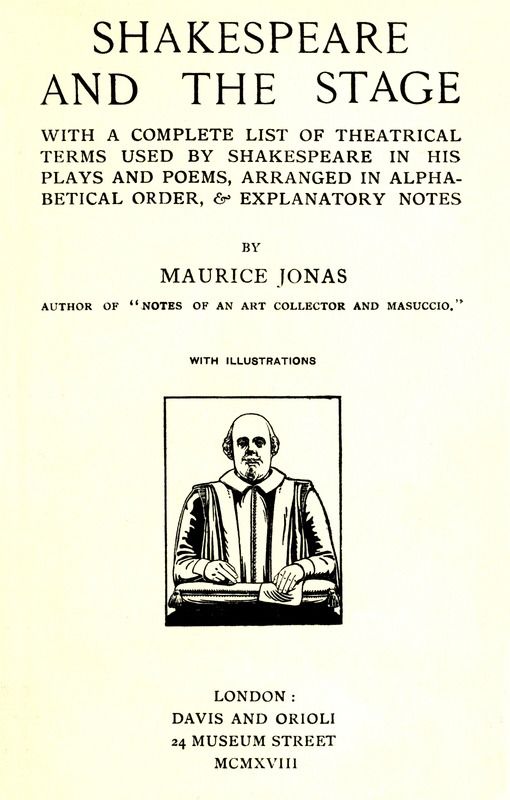
Shakespeare and the Stage / With a Complete List of Theatrical Terms Used by Shakespeare in His Plays and Poems, Arranged in Alphabetical Order, & Explanatory Notes cover

Shakespeare and the Stage / With a Complete List of Theatrical Terms Used by Shakespeare in His Plays and Poems, Arranged in Alphabetical Order, & Explanatory Notes

Chapter 76: OTHELLO
Open in WeRead

About This Book

A historical and practical study of dramatic performance and stagecraft that traces how medieval religious spectacles gave way to secular comedy and tragedy, examines inn-yard presentations and purpose-built playhouses, and surveys company organization, acting practice, court performances, and theatrical allusions. The work describes theatre architecture, audience arrangements, production practices, and contemporary documents and illustrations, and concludes with an alphabetically arranged glossary of stage terms associated with Shakespeare, each entry supplied with explanatory notes to clarify period usage and theatrical meaning.

OTHELLO

PROMPTER.

Were it my cue to fight, I should have known it without a prompter.

I, 2, 84.

In a special theatrical sense, the prompter denotes a person stationed out of sight of the audience to prompt or assist any actor who is at a loss in remembering his part. In early days of the drama, the usual word for this official was book-holder, and is so quoted in Higgins’ Junius Nomenclator, 1588: “He that telleth the players their part when they are out and have forgotten. The prompter or book-holder.”

Ben Jonson uses the word book-holder in several of his plays, likewise many dramatists of this period. The word is now obsolete.

Other references:

PROLOGUE.

Is he often thus?
’Tis ever more the prologue to his sleep.

II, 3, 134.

An index and obscure prologue.

II, 1, 264.

CUE.

Were it my cue to fight, I should have known it without a prompter.

I, 2, 84.