
WeRead Powered by ReaderPub
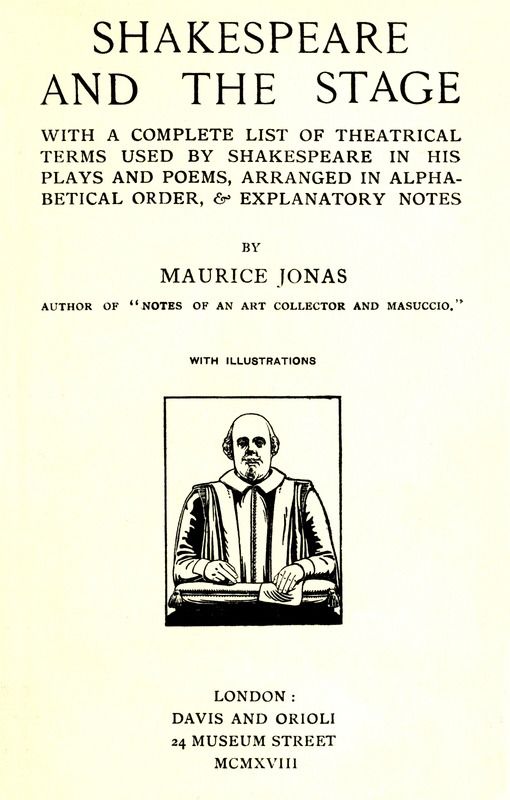
Shakespeare and the Stage / With a Complete List of Theatrical Terms Used by Shakespeare in His Plays and Poems, Arranged in Alphabetical Order, & Explanatory Notes cover

Shakespeare and the Stage / With a Complete List of Theatrical Terms Used by Shakespeare in His Plays and Poems, Arranged in Alphabetical Order, & Explanatory Notes

Chapter 79: RICHARD II
Open in WeRead

About This Book

A historical and practical study of dramatic performance and stagecraft that traces how medieval religious spectacles gave way to secular comedy and tragedy, examines inn-yard presentations and purpose-built playhouses, and surveys company organization, acting practice, court performances, and theatrical allusions. The work describes theatre architecture, audience arrangements, production practices, and contemporary documents and illustrations, and concludes with an alphabetically arranged glossary of stage terms associated with Shakespeare, each entry supplied with explanatory notes to clarify period usage and theatrical meaning.

RICHARD II

ACTOR. THEATRE. STAGE. ENTERS.

As in a theatre the eyes of men,
After a well grac’d actor leaves the stage,
Are idly bent on him that enters next,
Thinking his prattle to be tedious.

V, 2, 24.

This passage is an excellent example of the use Shakespeare made of theatrical metaphors in giving life and reality to his dialogue. The well graced actor can only refer to Richard Burbage, the creator of Shakespeare’s most important characters. He was a fellow member of the same company of actors as Shakespeare, both belonging to the Lord Chamberlain’s company.

SCENE.

Al owing him a breath, a little scene to monarchise.

III, 2, 164.

Our scene is altered from a serious thing.

V, 3, 79.