
WeRead Powered by ReaderPub
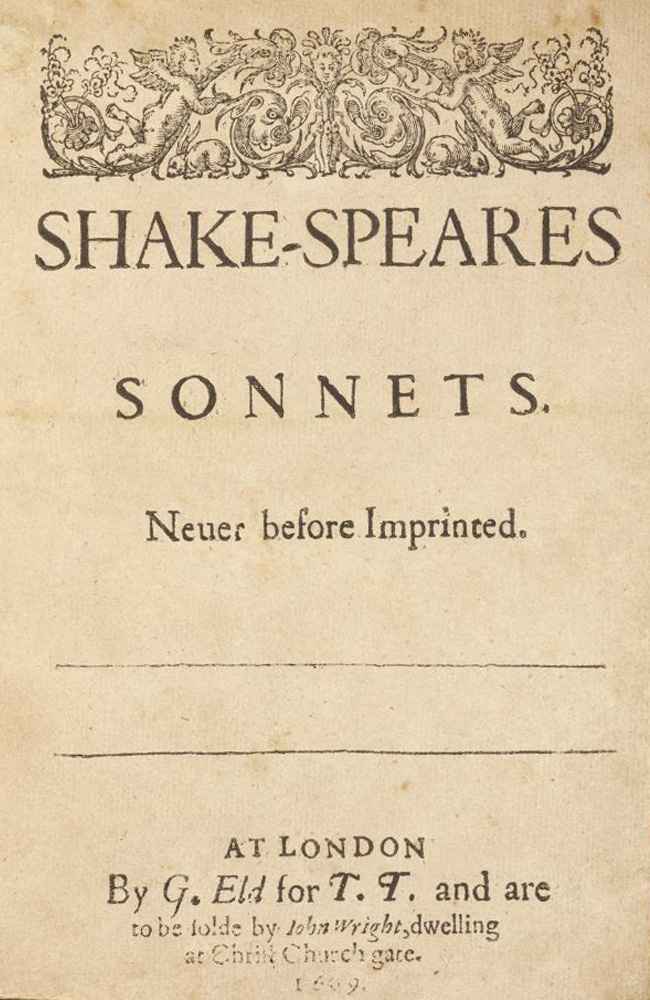
Shakespeare's Sonnets cover

Shakespeare's Sonnets

Chapter 102: CI
Open in WeRead

About This Book

A sequence of lyric sonnets presents a speaker who examines love, beauty, time, and mortality through intimate, shifting addresses. Many poems urge a beloved to preserve beauty through progeny, while others meditate on aging and the ravages of time; a contrasting strand records erotic passion, jealousy, and betrayal. The pieces vary tone from pleading to defiance and experiment with sonnet form and rhetorical argument, often asserting poetry’s power to memorialize. Recurring images and contrapuntal voices probe desire, artistic rivalry, and the tension between physical love and spiritual admiration.

CI

O truant Muse what shall be thy amends
For thy neglect of truth in beauty dy’d?
Both truth and beauty on my love depends;
So dost thou too, and therein dignified.
Make answer Muse: wilt thou not haply say,
‘Truth needs no colour, with his colour fix’d;
Beauty no pencil, beauty’s truth to lay;
But best is best, if never intermix’d’?
Because he needs no praise, wilt thou be dumb?
Excuse not silence so, for’t lies in thee
To make him much outlive a gilded tomb
And to be prais’d of ages yet to be.
    Then do thy office, Muse; I teach thee how
    To make him seem long hence as he shows now.