
WeRead Powered by ReaderPub
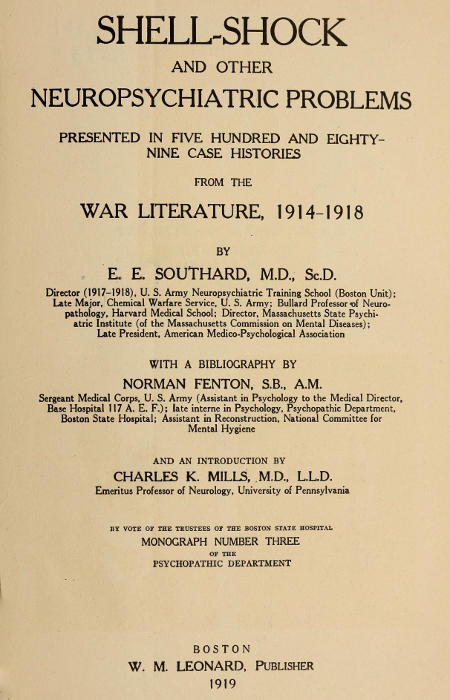
Shell-shock and other neuropsychiatric problems cover

Shell-shock and other neuropsychiatric problems

Chapter 31: Case 22. (Duco and Blum, 1917.)
Open in WeRead

About This Book

The work assembles nearly six hundred clinical case histories drawn from wartime medical literature to document combat-related neuropsychiatric disorders. It presents concise case protocols illustrating varied symptom patterns, diagnostic dilemmas, malingering and simulation, therapeutic interventions, and treatment outcomes, and includes bibliographic references and introductory commentary. Sections juxtapose cases to illuminate contested diagnoses and to inform postwar rehabilitation and mental-hygiene efforts, aiming to provide clinicians and reconstruction workers with detailed clinical material for recognizing, classifying, and managing neuropsychiatric consequences of war.

Shell-explosion; burial: Tabes dorsalis incipiens.

Case 22. (Duco and Blum, 1917.)

A French soldier was buried by effects of shell explosion September 8, 1914. He sustained no wound or fracture.

Incontinence of urine developed. Anesthesia of penis and scrotum. Reflexes absent; pupils sluggish. Wassermann reactions suspicious.

The diagnosis tabes dorsalis incipiens was made (hematomyelia of conus terminalis eliminated).

The patient was estimated to be “40% incapacitated,” according to the French “échelle de gravité” of conditions. A full pension would not be justified in the opinion of the French authors.