
CHAPTER VI.
MILKING THE COW.
"What let's do now?" said the child.
They had had dinner; a most exciting dinner, all coming out of tin boxes and delightful china pots. It was almost as good as Little Two-Eyes' feasts in "Little Kid Milk, Table Appear," as the child preferred to call the story. The child shut her eyes and said what she wanted, and when she opened them, there it mostly was, standing on the table before her. At least, that was the way it happened when she said chicken, and jam, and Albert biscuits; but when she said sponge cake, there was none, and the dwarf was mortified, and said he would tell the people they ought to be ashamed of themselves.
"Where all do you get them?" asked the child. "Do you stamp your foot on the floor, and say, 'JAM!' like that, hard, just as loud as you can? do you? does it come up pop through holes? will you do it now, this minute?"
No, the dwarf could not do it now, he had not the right kind of shoes on. Besides, there were other reasons.
"Well, then, what let's do?" asked the child again.
"Let us go and milk the cow," said the dwarf.
Oh, that was exciting! Was it a truly cow? did it turn into things all day, and be a cow at night, or the other way? what did it turn into? Sometimes they were fawns and sometimes they were ducks, and sometimes—what would he like to be if he didn't have to be a dwarf? could he be things if he wanted to? was he only just playing dwarf, and by and by he would turn into a Beautiful Prince all gold and silver, wiz diamond clothes and a palace all made of candy? would he?
"And then you could marry me, you know!" said the child. "I shall be grown up by that time—"
"Yes, I think you will!" said the dwarf.
"And we will be married, and I will wear a dress like the sun, and we will go in a gold coach, wiz six black horses—or do you say white, Mark?"
"I say white."
"So do I say! and fezzers on their heads; and—and—so—well, anyhow, you will show me all your treasures, you know, dwarf. You haven't showed me any yet, not any at all. Where are they?"
"I haven't but one," said the dwarf. "And that I stole."
"Really stole it? but stealing is wicked, don't you know that? can dwarfs do it? Mans can't, unless they are bad. Are dwarfs like mans at all much, Mark?"
"Not much, Snow-white. But, after all, I did not steal my treasure, I only found it."
The child was greatly relieved. That made it all right, she assured him. Always everybody could keep the things they found, though of course the wicked fairies and dragons tried to get the treasure away. She cited many cases from the Fairy Books, and the dwarf said he felt a great deal better.
"Tell me all about it," she urged. "Tell me that story what you said you knew. You haven't told me any story at all yet, Mark!"
She looked at him with marked disapproval. "It isn't the way they do!" she explained. "Why, when the Bear came to Snow-white and Rosy Red's house, he told them stories all the time till he turned into a prince."
"Yes, but I am not a bear," said the dwarf, "and I am not going to turn into a prince, you see. However, I will tell you a story, Snow-white, I truly will; only, you see, that poor cow has to be milked."
"All I forgot her!" cried the child. "Now we will hurry, Mark, and run. We will run all the way. You can't run much faster than me, 'cause your legs is short, too. Are you glad? I am! 'Most I wish I was a dwarf, to stay little like you."
"Come!" said the man. His voice sounded rough and harsh; but when the child looked up, startled, he took her in his arms, and kissed her very tenderly, and set her on his back. He would be her horse now, he said, and give her a good ride. And wasn't the hump comfortable to sit on? now she must hold on tight, and he would trot.
He trotted gently through the green wood, and the child shouted with joy, and jumped up and down on the hump. It was a round, smooth hump, and made a good seat.
They did not get on very fast, in spite of the trotting, there was so much to see by the way. Little paths wound here and there through the forest, as if some one walked in it a great deal. The trees in this part were mostly pine and hemlock, and the ground was covered with a thick carpet of brown needles. The hermit thrush called them from deeper depths of woodland; close by, squirrels frisked and chattered among the branches, and dropped bits of pine-cone on the child's head. Were they tame? she asked; the dwarf said she should judge for herself. They sat down, and he bade her keep still, and then gave a queer whistle. Presently a squirrel came, then another, and another, till there were half a dozen of them, gray and red, with one little striped beauty. They sat up on the brown needles, and looked at the dwarf with bright, asking eyes. He took some nuts from his pocket, and then there was a scramble for his knee and his shoulder, and he fed them, talking to them the while, they whisking their tails and cocking their heads, and taking the nuts in their paws as politely as possible. One big gray fellow made a little bow, and that was charming to see.
"Good boy!" said the dwarf. "Good old Simeon! I taught him to do that, Snow-white. You need not be afraid, Sim. This is only Snow-white. She has come to do my cooking and all my work, and she will not touch you. His name is Simeon Stylites, and he lives on a pillar—I mean a dead tree, with all the branches gone. Simeon, if you are greedy, you'll get no more. Consider the example you have to set!"
"Why is he named that?" asked the child.
"Because when he sits up straight on top of his tree, and folds his paws, he looks like an old gentleman of that name, who used to live on top of a pillar, a long time ago."
"Why did he? but why couldn't he get down? but how did he get up? what did he have to eat? why don't you tell me?"
"I never thought much about his getting up," said the dwarf. "I suppose he must have shinned, don't you? and as for getting down, he just didn't. He stayed there. He used to let down a basket every day, or whenever he was hungry, and people put food in it, and then he pulled it up. What did they put? Oh, figs, I suppose, and black bread, and honey. Rather fun, don't you think, to see what would come up?"
The child sprang up and clapped her hands. "Mark," she cried, "I will be him!"
"On a pillar?" said the dwarf. "See, you have frightened Simeon away, and he hadn't had half enough; and you couldn't possibly climb his tree, Snow-white."
"In your tree! in the hole! it will be just as good as Little Kid Milk. Not in any of the stories a little girl did that; all mineself I will do it. I love you, Mark!"
She flung her arms around his neck and hugged him till he choked. When the soft arms loosened their hold, his eyes were dark.
"You love me because I have a tree?" he said, "and because you like the things in the china pots?"
"Yes!" said the child, "and because you are a dwarf, and because you are nice. Most because you are nice, Mark, when those other dwarfs is yellow and horrid and all kinds of things."
"All right!" said the dwarf. "I love you, too. Now soon we are coming to the cow. We must hurry, Snow-white."
But it was not easy to hurry. He had to look and see how the ferns were unrolling, and to say what they looked like. The child thought they were like the little brown cakes, only green, what you bought them at the cake-shop. Didn't he know the cake-shop? but could he buy things? did they let dwarfs buy things just as if they were mans? could he have money, or did he have to dig up pearls and diamonds and rubies, out of the ground? was there a place here where he dug them up? when would he show it to her?
Then there were the anemones just out; and at sight of them the child jumped up and down, and had to be told what they were. The name was very funny, she thought.
"I can make a song wiz that!" she said, and then she sang:
"It hasn't any money, this frower hasn't. All it's white, just like milk. Do you like money, Mark?"
"No, I hate it!"
"Me, too!" cried the child, bubbling into a laugh. "In my bank, I had lots and lots of money; and the man with the black shirt said about the poor children, and so I took it out and gave it to him, and then they said I couldn't have it back!"
"Who said so?" asked the dwarf.
"Miss Tyler! Well, but so I said I would, and so she punished me, and so I beat her, and she said to stay in my room, and I runned away. Are you glad I runned away, Mark?"
"Very glad, to-day, Snow-white; I don't know how it will be to-morrow. But tell me what you wanted to do with your money!"
It appeared that the child wanted to buy candy, and a pony, and a watch, and a doll with wink-eyes and hair down to her feet, and a real stove, and a popgun, and—what was this place?
The wood broke open suddenly, and there was a bit of pasture-land, with rocks scattered about, and a little round blue pond, and by the pond a brown cow grazing. At the sound of voices the cow raised her head, and seeing the dwarf, lowed gently and began to move leisurely toward him.
The child clapped her hands and danced. "Is she saying 'hurrah'?" she cried. "Does she love you? do you love her? is she"—her voice dropped suddenly—"is she real, Mark?"
"Real, Snow-white? Why, see her walk! Did you think I wound her up? She's too big; and besides, I haven't been near her."
The child brushed these remarks aside with a wave. "Does she stay all the time a cow?" she whispered, putting her mouth close to the dwarf's ear. "Or does she turn at night into a princess?" She drew back and pointed a stern finger at him. "Tell me the troof, Mark!"
The dwarf was very humble. So far as he knew, he said, she was a real cow. She mooed like one, and she acted like one; moreover, he had bought her for one. "But you see," he added, "I don't stay here at night, so how can I tell?"
They both looked at the cow, who returned the stare with unaffected interest, but with no appearance of any hidden meaning in her calm brown gaze.
"I think," said the child, after a long, searching inspection, "I think—she's—only just a cow!"
"I think so, too," said the dwarf, in a tone of relief. "I'm glad, aren't you, Snow-white? I think it would be awkward to have a princess. Now I'll milk her, and you can frisk about and pick flowers."
The child frisked merrily for a time. She found a place where there were some brownish common-looking leaves; and stepping on them just to hear them crackle, there was a pink flush along the ground, and lo! a wonder of mayflowers. They lay with their rosy cheeks close against the moss, and seemed to laugh out at the child; and she laughed, too, and danced for joy, and put some of them in her hair. Then she picked more, and made a posy, and ran to stick it in the dwarf's coat. He looked lovely, she told him, with the pink flowers in his gray coat; she said she didn't care much if he never turned into anything; he was nice enough the way he was; and the dwarf said it was just as well, and he was glad to hear it.
"And you look so nice when you smile in your eyes like that, Mark! I think I'll kiss you now."
"I never kiss ladies when I am milking," said the dwarf. And then the child said he was a horrid old thing, and she wouldn't now, anyhow, and perhaps she wouldn't at all ever in her life, and anyhow not till she went to bed.
By and by she found a place where the ground was wet, near the edge of the pond, and she could go pat, pat with her feet, and make smooth, deep prints. This grew more and more pleasant the farther she went, till presently the water came lapping cool and clear over her feet. Yes, but just then a butterfly came, a bright yellow one, and she tried to catch it, and in trying tripped and fell her length in the pond. That was sad, indeed; and it was fortunate the milking was ended just at that time, for at first she meant to cry hard, and the only thing that stopped her was riding home on the dwarf's hump, dripping water all over his gray velvet clothes. He didn't care, he said, so long as she did not drip into the milk.
CHAPTER VII.
THE STORY.
"I aspect, Mark," said the child,—"do you like better I call you Mark all the time than dwarf? then I will. I do really aspect you'll have to get me a clean dress to put on."
She held up her frock, and the dwarf looked at it anxiously. It was certainly very dirty. The front was entirely covered with mud, and matters had not been improved by her scrubbing it with leaves that she pulled off the trees as they came along.
"Dear me, Snow-white!" said the dwarf. "That is pretty bad, isn't it?"
"Yes," said the child; "it is too bad! You'll have to get me another. What kind will you get?"
"Well," said the dwarf, slowly; "you see—I hardly—wait a minute, Snow-white."
He went into the house, and the child waited cheerfully, sitting in the root-seat. Of course he would find a dress; he had all the other things, and most prob'ly likely there was a box that had dresses and things in it. She hoped it would be blue, because she was tired of this pink one. There might be a hat, too; when you had that kind of box, it was just as easy to have everything as only something; a pink velvet hat with white feathers, like the lady in the circus. The child sighed comfortably, and folded her hands, and watched the robins pulling up worms on the green.
But the dwarf went into the bedroom, and began pulling out drawers and opening chests with a perplexed air. Piles of handkerchiefs, socks, underwear, all of the finest and best; gray suits like the one he had on—but never a sign of a blue dress. He took down a dressing-gown from a peg, and looked it over anxiously; it was of brown velvet, soft and comfortable-looking, but it had evidently been lived in a good deal, and it smelt of smoke; no, that would never do. He hung it up again, and looked about him helplessly.
Suddenly his brow cleared, and his eyes darkened. He laughed; not his usual melodious chuckle, but the short harsh note that the child compared to a bark.
"Why not?" he said. "It's all in the family!"
He opened a deep carved chest that stood in a corner; the smell that came from it was sweet and old, and seemed to belong to far countries. He hunted in the corners, and presently brought out a folded paper, soft and foreign looking. This he opened, and took out, and shook out, a shawl or scarf of Eastern silk, pale blue, covered with butterflies and birds in bright embroidery. He looked at it grimly for a moment; then he shut the chest, for the child was calling, "Mark! where are you?" and hastened out.
"Never I thought you were coming," said the child. "See at that robin, Mark. He ate all a worm five times as longer as him, and now he's trying to get away that other one's. I told him he mustn't, and he will. Isn't he a greedy?"
"He's the greediest robin on the place," said the dwarf. "I mean to put him on allowance some day. See here, Snow-white, I'm awfully sorry, but I can't find a dress for you."
The child opened great eyes at him. "Can't find one, Mark? Has you looked?"
"Yes, I have looked everywhere, but there really doesn't seem to be one, you know; so I thought, perhaps—"
"But not in all the boxes you've looked, Mark!" cried the child. "Why, you got everything, don't you 'member you did, for dinner?"
Yes; but that was different, the dwarf said. Dresses didn't come in china pots, nor in tin cans either. No, he didn't think it would be of any use to stamp his foot and say to bring a blue dress this minute. But, look here, wouldn't this do? Couldn't she wrap herself up in this, while he washed her dress?
He held up the gay thing, and at sight of it the child clasped her hands together and then flung them out, with a gesture that made him wince. But it was the most beautiful thing in the world, the child said. But it was better than dresses, ever and ever so much better, because there were no buttons. And she might dress up in it? That would be fun! Like the pictures she would be, in the Japanesy Book at home. Did ever he see the Japanesy book? But it was on the big table in the long parlour, and he could see it any time he went in, but any time, if his hands were clean. Always he had to show his hands, to make sure they were clean. And she would be like the pictures, and he was a very nice dwarf, and she loved him.
In a wonderfully short time the child was enveloped in the blue silk shawl, and sitting on the kitchen-table cross-legged like a small idol, watching the dwarf while he washed the dress. He was handy enough at the washing, and before long the pink frock was moderately clean (some of the stains would not come out, and could hardly be blamed for it), and was flapping in the wind on a low-hanging branch. Now, the child said to the dwarf, was the time for him to tell her a story. What story? Oh, a story about a dwarf, any of the dwarfs he used to know, only except the Yellow Dwarf, or the seven ones in the wood, or the one in "Snow-white and Rosy Red," because she knowed those herself.
The dwarf smiled, and then frowned; then he lighted his pipe and smoked for a time in silence, while the child waited with expectant eyes; then, after about a week, she thought, he began.
"Once upon a time—"
The child nodded, and drew a long breath of relief. She had not been sure that he would know the right way to tell a story, but he did, and it was all right.
"Once upon a time, Snow-white, there was a man—"
"Not a man! a dwarf!" cried the child.
"You are right!" said Mark Ellery. "I made a mistake, Snow-white. Not a man,—a dwarf! I'll begin again, if you like. Once upon a time there was a dwarf."
"That's right!" said the child. She drew the blue shawl around her, and sighed with pleasure. "Go on, Mark."
"The trouble is," he went on, "he—this dwarf—was born a man-thing, a man-child; it was not till his nurse dropped him that it was settled that he was to be a dwarf-thing, and never a man. That was unfortunate, you see, for he had some things born with him that a dwarf has no business with. What things? Oh, nothing much; a heart, and brains, and feelings; that kind of thing."
"Feelings? If you pinched him did it hurt, just like a man?"
"Just; you would have thought he was a man sometimes, if you had not seen him. The trouble was, his mother let him grow up thinking he was a man. She loved him very much, you see, and—she was a foolish woman. She taught him to think that the inside of a man was what mattered; and that if that were all right,—if he were clean and kind and right-minded, and perhaps neither a fool nor a coward,—people would not mind about the outside. He grew up thinking that."
"Was he quite stupid?" the child asked. "He must have been, I think, Mark."
"Yes, he was very stupid, Snow-white."
"Because he might have looked in the glass, you know."
"Of course he might; he did now and then. But he thought that other women, other people, were like his mother, you see; and they weren't, that was all.
"He was very rich, this dwarf—"
The child's eyes brightened. The story had been rather stupid so far, but now things were going to begin.
Did he live in a gold house? she asked. Did he have chariots and crowns and treasure, bags and bags of treasure? was there a Princess in it? when was he going to tell her about her? why didn't he go on?
"I can't go on if you talk, Snow-white. He was rich, I say, and for that reason everybody made believe that he was a man, and treated him like one. Silly? yes, very silly. But he was stupid, as you say, and he thought it was all right; and everybody was kind, and his mother loved him; and so—he grew up."
"But he still stayed a dwarf?"
"Yes, still a dwarf."
"What like did he look? was he puffickly frightful, wiz great goggle eyes and a long twisty nose? was he green? You said once you was green, Mark, before you turned brown."
"Yes, he was rather green; not a bright green, you understand; just a dull, blind sort of green."
"Wiz goggle eyes?"
"N-no! I don't know that they goggled particularly, Snow-white. I hope not.
"Well, when he was grown up,—only he never grew up!—his mother died."
The child was trying hard to be good, but her patience gave out at last, the man was silent so long.
"What is the matter wiz you, Mark? I think this is a stupid story. Didn't anything happen to him at all? why do you bark?"
"Yes, things happened to him. This is a slow story, Snow-white, and you must have patience. You see, I never told it before, and the words don't come just as I want to have them."
The child nodded sympathetically, and promised to be patient; she knew how it was herself sometimes, when she tried to tell a story what she didn't know it very well. Didn't he know this one very well, perhaps? was there another he knowed better?
"No, no other I know half so well, little girl. His mother died, I say and then—then he met the Princess."
The child beamed again. "Was she beautiful as the day? did she live in a Nivory tower, and let her hair down out of the window? was there dragons? did the dwarf fall in love wiz her right off that minute he seed her?"
"The tower was brown," said the dwarf, "brown stone. No, she didn't let her hair down, and there were no dragons; quite the contrary, the door was always open—always open, and the way seemed clear. But she was beautiful, and he fell in love with her. Oh, yes! she had soft clear eyes, and soft pale cheeks, and soft dark hair; everything about her was soft and sweet and—
"Well, this dwarf fell in love with her, and wanted to marry her. Yes, as you say, they always do. For a long time, a very long time, he did not dare to think of its being possible that she could love him. He would have been content—content and thankful—just to be her friend, just to be allowed to see her now and then, and take her hand, and feel her smile through and through him like wine. But—her eyes were so soft—and she looked at him so—that he asked her—"
"Mark, what for do you keep stopping like that? never you must, when you are telling a story; always they go right on."
"What was I saying?" The dwarf looked at the child, with eyes that seemed not to see her, but something beyond her. "What was I saying, Snow-white?"
"He asked her would she marry him!" said the child, promptly. "And she said no indeed, she wouldn't do noffin of the kind, she was going to marry a beautiful Prince, wiz—"
"I beg your pardon, Snow-white; you are wrong this time. She said she would marry him. She looked at him with her soft eyes, and said she loved him. She said—the kind of things his mother had said; and the dwarf, being stupid, believed her."
The child bubbled over with laughter. "Wasn't he silly? but of course she didn't, Mark!"
"Of course not. But he thought she was going to; so he built a house,—well, we'll call it a palace if you like, Snow-white; perhaps it was as good as some palaces. At any rate, it was the best he could build. And he filled it full of things,—what kind of things? Oh, pictures and statues and draperies, and,—yes, silver and gold and jewels, any quantity of jewels; and he sent abroad for silks and satins and shawls,—"
"Like this what I've got on?"
"Very like it. He meant to have in the house everything that her heart could desire, so that when she wished for anything, he could say, 'Here it is, ready for you, my Beloved!'
"Well, and so the dwarf worked away, and heaped up treasures, the regular dwarf way, and saw the Princess every day, and was happy; and she looked at him with her soft eyes, and told him she loved him; and so it came near the time of the wedding. Then—one day—"
"The Prince came!" cried the child, jumping up and down and clapping her hands. "I know! let me tell a little bit now, Mark. May I? Well, the Prince came, and he was tall and handsome, wiz golden hair and blue eyes, and he was ever and ever so much richer than the dwarf; and so the Princess falled in love wiz him the minute she seed him, and he falled in love wiz her, too; and he said, 'This is my Princess!' and she said, 'This is my Prince!' Isn't that the way, Mark?"
"Precisely!" said the dwarf. "I couldn't have told it better myself, Snow-white; perhaps not so well. The Prince was richer, and handsomer, and younger, and that settled it. It always does, doesn't it?"
"And then what became of the dwarf, Mark?"
"Oh! it doesn't matter what became of the dwarf, does it? He was only a dwarf, you know. The story always ends when the Prince and Princess are married. 'They lived happily ever after.' That's the end, don't you remember?"
The child reflected, with a puzzled look.
"Yes," she said, presently. "But you see, Mark, this is a different kind of story. That other kind is when you begin wiz the Princess, and tell all about her; and then the dwarf just comes in, and is puffickly horrid, and then the Prince comes, and so—but this story began wiz the dwarf, don't you see?"
"What difference does that make, Snow-white? nobody cares what becomes of a dwarf."
"But yes, but when it is his own story, Mark. But aren't you stupid? and besides, them all was horrid, and this was a nice dwarf. Was he like you, Mark?"
"A little—perhaps."
"Then he was very nice, and I love him. Like this." The child threw her arms around the dwarf, and gave him a strangling hug; then she drew back and looked at him.
"It seems," she said, "as if most likely p'r'aps I loved you better than Princes. Do you s'pose could I?"
The dwarf's eyes were very kind as he looked at her, but he shook his head, and loosed the little arms gently. "No, Snow-white," he said, "I don't believe you could. But as to this other dwarf, there isn't very much to tell. He gave her back her freedom, as they call it in the books, and then he shut up the fine house and went away."
"Where did he go?"
"Oh, he went everywhere, or pretty near it. He travelled, and saw strange places and people. But nothing mattered much to him, and at last he found that there was only one country he really cared to see, and that was the country that has never been discovered."
"Then how did he know it was there, Mark? but where was it? was it like 'East o' the Sun and West o' the Moon,' and old womans told him about it?"
"Yes, perhaps; at least, his mother used to tell him about it. But he never thought then—he didn't think much about it. But now he was tired, and nothing mattered, and so he thought he would go and see that country—if it were really there—and possibly he might find his mother, if the things she said were true. So—did I say his mother was dead? So I did! Oh, well, never mind that now. So he bought a key that would open the door of that country—yes, something like that thing I called a key—and then he came to a place—well, it was something like this place, Snow-white. He wanted to be quiet, you see, for some time, before he went away. He wanted to be alone, and think—think—gather up the threads and thoughts of his life and try to straighten them into something like an even skein. Then, if he were allowed, if there should be any possibility that he might take them with him, he could say to his mother—he could excuse himself—he could tell her—"
"Mark," said the child, "do you know what I think?"
The man started, and looked at her. "What you think, Snow-white?"
"Yes! I think you are talking puffick foolishness. I don't know one word what you are saying, and I don't believe do you either."
"No more I do, Snow-white. I think this is enough story, don't you? You see I was right, it didn't matter what became of the dwarf. Let us come out and feed the birds."
"Let's," said the child.
CHAPTER VIII.
THE KEY OF THE FIELDS.
"The question before the court is, what next?"
It was Mark Ellery who spoke. He was sitting on the green at the foot of the buttonwood-tree. It was noon, and the birds were all quiet, save one confidential titmouse, who had come to make a call, and was perched on the tip of the dwarf's shoe, cocking his bright eye at him expressively.
"Tweet-tweet," said the titmouse.
"Precisely," said the dwarf. "What next?"
Was he speaking to the bird, or was it merely that the sound of his own voice had grown friendly to him during these silent years? He went on.
"How if I waited still a little longer, and took a little pleasure before I go?
"Do you agree, Brother Titmouse? See now. She—they—went away and left their treasure. I did not send them away, did I? No fault of mine in that, at least. Fate—or something—call it God, if you like—brought the treasure to my door; have I no right to keep it, for a little, at least? The joy I might have! and I have not had too much, perhaps. They have each other. This is a solitary little creature, living in her fairy stories, left pretty much to nurse and governess; no mother touches to tell another kind of story. The Prince and Princess"—again his laugh sounded like a bark, the child would have said—"don't need her very much, if they can go off for two months and leave her, the little pearl, the little flower, the little piece of delight, alone with strangers. I could make her happy; I could fill her little hands full, full. She should have all the things that are waiting there shut up; those, and as many more, ten times over. We might have our play for a few weeks or a few months; and then, when she was tired—no, before she was tired, oh, surely before that!—I would give her back. Give her back! and how should I do that? there are several ways."
He moved his foot, tossing the bird up in the air. It fluttered, hovered a moment over his head, then settled on his wrist, and smoothed its feathers in absolute content.
"Well, brother, well," said Mark Ellery. "You like me pretty well, do you? You find me pleasant to live with? You think I could make a child happy?"
The titmouse flirted its tail and looked at him; it seemed a pity it could not smile; but it rubbed its bill against his hand, and he understood all it wanted to say.
"Several ways," the dwarf repeated. "I could simply take the child in my hand and go to them; hobble up the steps,—I hear their house is twice as fine as the one I built,—and stand at the door humbly, asking admission. 'Here is your child, madam; you left her to wander about uncared for, and she came to me. You took all else I had, take now this also, as a gift from the dwarf.' I think I could bring the trouble into her eyes, and the colour into her soft pale cheeks. If only she would not speak! if I should hear her speak—
"Or I might send for her to come to me. That would be the dramatic thing to do! Wait for her here, under the tree. It might be a time like this, the little one asleep up there.
"'I sent for you, madam, to ask if you had lost anything. Oh, I don't know how greatly you value it,—a child, a little girl, who wandered here some time ago. She was lost in the wood; it is a wonder she did not starve. She came to me barefoot and hungry, and I took her in. She is asleep now, up in her favourite chamber in yonder tree. It seems a pity to wake her; she sleeps very sweetly. Oh, I would gladly keep her, and I think it might not be difficult; at least, she has never tried to run away; but we are old neighbours, and I thought it right to let you know that she was here.'
"Then to wake the child, and bring her down, flushed with her lovely sleep, clinging with both arms round my neck—no horror of the hateful dwarf, no shrinking; the little velvet cheek pressed against my brown, rough face, the sweet eyes looking at me—me, Mark Ellery—with love in them. Yes, by Heaven, love; no lying here! Ah, yes, that would be the dramatic thing. The trouble is, I am not a dramatic figure; am I, Brother Titmouse?
"Well, then, there remains the third way, the easy, clear, blessed way, and I swear I believe I'll do it. Just let things take their own course; let fate—or God, if you like—have right of way, do the work without me. Why should I meddle? He is capable, surely? The child is here; very well, let them find her, since they lost her. Keep my jewel, treasure it, make much of it, till they search far enough afield. They are sure to do that. They will send out search-parties—very likely they are afoot now. It would be a pity, if they could not find this bit of forest, only a few miles from the town. Private property, belonging to the eccentric dwarf millionaire who threw over his life, and went abroad seven years ago? that will not hinder them from searching it. When I hear them coming, call my lamb, fill her hands with trinkets,—Phillips can get me trinkets,—kiss her good-bye, push her into their arms. 'Lost child? surely! here she is. How should I know whose child it was, living so retired? Take her! make my apologies to the parents for saving her life, and feeding and caring for her these days, or weeks.'
"Then, when she is gone, and the house empty again, and dark—how dark it will be!—why, then, the key of the fields!"
He whistled softly to the titmouse, which ruffled and cheeped in answer; then glanced upward at the tree, and repeated, "The key of the fields!"
It was days since he had held it in his hands, his favourite toy, the smooth shining thing he had played with so long. He had been afraid the child might get hold of it, so had left it untouched on its shelf. He missed the habit that had grown upon him of taking it out every day, holding it in his hand, polishing it, pressing the cold circle of the barrel against his temple, and fancying how it would be. How often—he could not tell how often!—he had said, "It shall be to-day!" and had set things in decent order and looked forward to his journey. But always he had decided to wait a little, and again a little; till the young birds were fledged, till they were flown, till the autumn trees brightened, till the snow was gone and he could find the first mayflowers once more. The world was so fair, he still put off leaving it, since at any time he could go, since the key was in his hand, and rest under the crook of his finger.
But when the child was gone, he would not stay behind alone. It would be different now; he must make haste to be gone on his journey—that is, if there were a journey! Some flight of the spirit from the crumpled, unsightly chrysalis, some waking in new, unthinkable conditions; unthinkable, not unimaginable. He had no knowledge that he might not see his mother's face, and feel her hand on his head. There was no proof against it. Then, if it might be, he would tell her all, as he had so often told her, alone here in the wood. How he had come near to what we call heaven, here on earth; how he had drunk the waters of hell,—six streams, were there? Styx, Acheron, Phlegethon, Lethe—only one never could get a taste of that! Scraps of school Latin ran together in his head; sleepy, was he? But as he was saying, he would tell his mother all—if she existed, if he should still exist; if—
Or on the other hand, if it should be rest simple, rest absolute, no sound or sight for ever,—why, then,—all the more should the key be turned, since then could be no question of right or wrong, sin or virtue, heaven or hell. Sleep! Meantime, he was alive, on a day like this! No one could think of shutting his eyes for ever, or of starting on a pilgrimage,—or a wild-goose chase,—on a day like this.
The sunlight of early May, softly brilliant, came sifting down through the branches of the great tree. The leaves rustled, and the sound was hardly rougher than if all the flocks that nestled in its deep, airy bowers should plume themselves at once. The birds slept their noonday sleep with the child; even the titmouse was gone now to his siesta; but other wildwood creatures came and went at their ease across the green, hardly even glancing at the familiar gray figure curled up at the foot of the tree. That was where he often sat. It seemed stupid, when there were branches to swing on, pleasant burrows under the forest-mould; since he even had his own nest, bigger than any fish-hawk's, up there in the tree itself; but it was his way. Brother Chipmunk, passing by on an errand, regarded him benignantly. He was a harmless monster, and often useful in the way of victual. If smoke came out of his mouth now and then, what did Brother Chipmunk care? That was the way the creature was made; the question of importance was, had he any nuts in his side-pouches?
The pretty creature ran up the man's leg, and sat on his knee, looking at him with bright, expectant eyes; but he met no friendly answering glance; the brown eyes were closed, the man was asleep. Yet, that was his kind of note, surely! Was he speaking? No; the sound came from above. Oh! listen, Brother Chipmunk; kind little forest brother, listen! and let the sound speak to you, and warn you to wake the slumbering figure here, ere it be too late, ere horror seize him, and despair take his heart for her own. What is that voice above? Wake, wake, Mark Ellery, if there be life in you!
A sleepy babble at first, the waking murmur of a happy child; then a call, "Mark! Mark, where are you?" Silence, and then a livelier prattle.
"I guess most prob'ly p'r'aps he's getting dinner; that's what he is. Well, then, I'll play a little till he comes; only there's noffin' here to play wiz. Oh! yes, there is Mark's silver key, what looks like a pistol. I believe it is a pistol, and he doesn't know, 'cause he's a dwarf. Dwarfs has swords and daggers and things; never a dwarf had a pistol, not even the yellow one. Well, Mark said I mustn't; well, of course, I won't, only just I'll take it down and see what it is. You see, that can't possumbly do any harm, just to look and see what it is; and if it is a pistol, then he ought not to have it there, 'cause they go off and kill people dead. And when they aren't loaded, in the newspapers all the same they kill people; and—just I can reach it if I stand on my tippy-toe-toes—my tippy-toe-toes—and—"
Mark Ellery woke. Woke, staggering to his feet, with a crack shattering his ears, with a cry ringing through his soul.
"Mark! Mark! it killed me!"
Then silence; and the man fell on his knees, and the pistol-smoke drifted down, and floated across his face like a passing soul.
Was it a heart-beat, was it a lifetime, before that silence was broken? The forest held its breath; its myriad leaves hung motionless; there was no movement save the drifting of that blue cloud, that was now almost gone, only the ragged edges of its veil melting away among the tree-trunks. Surely neither sound nor motion would come from that gray image kneeling under the tree, its hands locked together till the nails pierced the flesh, its eyes set and staring.
Is it Death they are staring at? Lo! this man has been playing with Death; toying, coquetting, dallying with him, month after month, sure of his own power, confident that his own hand held both scythe and hour-glass. Now Death has laughed, and reached behind him and taken his own. O God! can this thing be? God of terror and majesty, working thine awful will in steadfastness while we play and fret and strut under thy silent heavens—has he sinned enough for this, this terrible damnation? Is there no hope for him, now or hereafter through the ages?
But hark! oh, hark! O God, once more! God of mercy and tenderness; God who givest sight to the blind, and bringest the dead heart into life again—is this thy will, and has he won heaven so soon? What sound now from above? A bird, is it, waked from its sleep in fear? No! no bird ever sobbed in its throat; no bird ever cried through tears like this.
"Mark! I want you, Mark! Not killed I is, but I's frightened, and I want you, Mark, my Mark!"
When the child was going to bed that night the dwarf took her in his arms, and held her a long, long time, silent. Then he said: "Snow-white, I want you to say your prayer with me to-night."
"Wiz you, Mark? I thought never dwarfs said prayers."
"Kneel down with me here, Snow-white, little darling child. Hold hands with me—so! Now say after me the words I say."
And wondering, the child repeated after him:
"'Whither shall I go from thy spirit? or whither shall I flee from thy presence? If I ascend up into heaven, thou art there; if I make my bed in hell, behold, thou art there. If I take the wings of the morning, and dwell in the uttermost parts of the sea: even there shall thy hand lead me, and thy right hand shall hold me. Amen.'"
"Amen," said the child. "That's kind of a funny prayer, isn't it, Mark? I like that prayer. I think I'll have that for mine, 'stead of 'Now I lay me.' Mark!"
"Yes, Snow-white."
"Is you terrible glad I wasn't killed wiz that pistol key?"
"Yes, Snow-white; terrible glad!"
"Is you glad enough not to be cross wiz me 'cause I took it? 'cause I was naughty, 'cause you told me not."
"Yes, Snow-white."
"Not one single bit cross?"
"Not one single bit, my little darling child."
The child drew a long sigh of content, and put up her arms. "Here I want to go to sleep," she said. "Your lap is so nice, Mark; and your shoulder comes just right for my head. Is you comfy so, Mark?"
"Very comfy, Snow-white."
"Do you love me?"
"Very much, little one; very, very much."
"Me too you. Good-night, Mark. I'm glad—you was—a dwarf, and—just right—for me!"
Through the long night those tender arms held her. Her sweet head rested on his shoulder; he never moved; he timed his breathing so that it might come and go with hers, softly rising, softly falling, hour after hour. Only toward morning, when the dawn chill came on, he laid the lax limbs and heavy head on the bed, and covered them tenderly, and sat and watched beside the bed till day. It was more than the child's mother had ever done, but why should she do it, when the nurses were always there?
CHAPTER IX.
RESTORED TO LIFE.
So it came to pass that James Phillips, driving in painful state toward the forest, met the third great surprise of his life. The first had been when, as a child, he was snatched from the hands of the brutal father whose lash still, whenever he thought of it, whistled its way down on his cringing body. He often recalled that moment; the centring of agony in one nerve and another of his tortured frame as the blows fell, the setting of his teeth to keep the screams back because that other should not have the pleasure of hearing him scream; then the sudden flash, the cry, the little figure, no bigger than his own, standing over him, ablaze with wrath, the hulking bully cowering abject, the lash dropped and never raised again. Following this, the years of kindness without intermission; the watching, befriending, educating. Phillips was not a man of expression, or he would have said that, if God Almighty created him, Mark Ellery made him. And always so wise, so kind, with the light in his eyes, and the smile that people would turn in the street to look after.
And on all this had come the second surprise. Suddenly, with no reason given—or asked—the light gone out of his master's kind eyes, the smile coming no more, though he would still laugh sometimes, a harsh, unlovely laugh, in place of the mellow sound that used to warm the heart like wine. Then—the life changed with the nature; the grave cares, the beneficent responsibilities cast aside, the ceaseless flow of cordial kindness checked, all business thrown into his own willing but timid hands. The wandering life abroad, of which a few random lines dropped now and then had told him; then the return, unguessed by any save himself alone; the seclusion in the bit of lonely forest that bordered the wide Ellery domain, the life—or death-in-life—for to Phillips it seemed that his master might as well be nailed in his coffin as living like this. So it had seemed, at least; but now, it appeared that yet worse might be. At least the man, Mark Ellery, had been there, alive and sane, however cruelly changed. But now, if his mind were indeed failing, if some obscure and terrible disease were depriving him of his faculties,—what would happen? what must happen? So far he, Phillips, had simply obeyed every dictate, however whimsical and fantastic. Here he was, for instance, the carriage filled with things which for very shame and grief he had hidden in boxes and baskets,—toys, cushions, frippery of every description. He had bought them with a sinking heart; he could have wept over every foolish prettiness, but he had bought sternly and faithfully, and every article was the best of its kind. What did it mean? His best hope was that some farmer's child, straying near the wood, had struck and pleased his master's wandering fancy; his worst—but when he thought of that, James Phillips straightened his shoulders, and a dark flush crept over his sallow cheek.
To him, thus riding in state and misery, came, I say, the third great surprise of his life. Suddenly the coachman uttered an exclamation, and checked his horses. Now the coachman, like all Mark Ellery's servants, was as near deaf and dumb as was possible for a man possessed of all his faculties. Phillips raised his eyes, and beheld two figures advancing along the road toward him. His master, Mark Ellery, walking erect and joyful, as he used to walk, his eyes alight, his mouth smiling the old glad way; and holding his hand, dancing and leaping beside him, a child. No farmer's child, though its feet were bare, and bare its curly head, and though the pink frock fluttered in torn folds about it. The child who was now mourned as dead in the splendid house where till now careless pleasure had reigned prodigal and supreme. The child whose dainty hat, dripping and broken, but still half-filled with flowers, had this very day been brought to the distracted woman who now lay prone on her velvet couch, waking from one swoon only to shriek and moan and shudder away into another,—for in most women the mother nature wakes sooner or later, only sometimes it is too late. The child for whose drowned body the search-parties were fathoming every black pool and hidden depth in the stream that, flowing far through woodland and meadow, had brought the flower-laden hat to the very gates of the town, to the very feet of her father, as he rode out on his last frantic search. The same child, not dead, not stolen or lost or mazed, tripping and dancing and swinging by Mark Ellery's hand, talking and chattering like any squirrel, while her curls blew in the May wind.
"They is white! Mark, the horses is white, just the way you said. Oh, I do love you! Who is that? is it a man? is he real? why like a doll does he look wiz his eyes? does he wind up behind? what for is his mouth open? can he speak?"
"No, he can't speak!" said the dwarf, laughing. "At least, he'd better not. It isn't good for his health,—is it, Phillips? See, Snow-white, the carriage has stopped now, and we will get in and go home to mamma. Oh! yes, you do want to go, very much indeed; and she'll have brought you something pretty from New York, I shouldn't wonder."
"Always she mostly sometimes does!" said the child. "But I am coming back here; very soon I am coming, Mark? both together we are coming back to live parts of the times? because you know, Mark!"
"Yes, I know, Snow-white! Yes, if mamma—and papa—are willing, we will come back now and then."
"Because the squirrels, you know, Mark!"
"Yes, I know."
"And the birds! do you think all day those crumbs will last them, do you? do you think Cousin Goldfinch understood when you asplained to him? do you think Simeon is lonely? poor Simeon! why don't you speak and tell me, Mark? Mark!"
"Well, Snow-white?"
"The cow!"
"What of her, my child?"
"Mark, who will milk her? you know—whisper!" She put her mouth to his ear. "You know real cows has to be milked; and we said she was real, both we did, Mark!"
"This man will milk her," said Mark, smiling at the speechless image opposite him. "Did you ever milk a cow, Phillips?"
But Phillips did not speak, and the child said, openly, that he needed winding up.
So they drove back to the town and through the streets, where people started at sight of them, and stared after them, and whispered to one another; to the splendid house where, above the marble steps, the white ribbons waved on the door, with white roses above them to show that a child was mourned as dead. The child wanted to know why the ribbons were there, and whether it was a party, and a party for her; but for once no one answered her. The carriage stopped, and she flung her arms around Mark Ellery's neck, and clung tight.
"You will take me in, Mark?"
"Yes, Snow-white!"
"You will carry me up the steps, and into the house?"
"Yes, Snow-white."
"Because I love you! because I love you better as—"
"Hush, my child! hush, my little darling child!"
The white-faced butler tore down the ribbons and flung them behind him as he opened the door. He could not speak, but he looked imploringly at the stately gentleman who stood before him with the child in his arms.
"Yes," said Mark Ellery, "I am coming in, Barton. Take me to your mistress."
James Phillips sat in the carriage outside, and faced the gathering crowd. The rumour spread like wildfire; men and women came running with eager questions, with wide incredulous eyes. Was it true? could it be true? who had seen her? Here was James Phillips; what did Phillips say? was the child found? was she alive? had Mark Ellery brought her back?
They surged and babbled about the carriage. Phillips, who had received his instructions in a few quiet words, turned an impassive face to the crowd. Yes, he said, it was true. Mr. Ellery had found the little girl. Yes, she was alive and well, had no hurt of any kind. Yes, Mr. Ellery had taken her into the house; he was in the house now. He had come back; his own house was to be opened; he would be at the office to-morrow.
"Where has he been?" cried several eager voices. For here was a fresh wonder, almost as great as that of the dead restored to life. "Where has Mark Ellery been, James Phillips?"
James Phillips searched his mind for a painful instant; groped for some new light of imagination, but found none; could only make the old answer that he had made so many times before:
"He has been in Thibet—hunting the wild ass!"
CHAPTER X.
GOOD-BYE.
The birds did not know what to make of it. At first—for several days—they flew at the windows, as they were in the habit of doing when they felt that a little change from worms would be pleasant. It had come to be an understood thing that when they came to the places where the air was hard, they should flap and beat against it with wings and beak. Then their friend would push up the hard air, or open his tree and come out, and would scatter food for them, food which they could not name, but which was easy and pleasant to eat, and did not wriggle. Then they would flutter about him, and perch on head and hand and shoulder, and tell him all the news. He was always interested to hear how the nest was getting on, and how many eggs there were; and later, of the extraordinary beauty and virtue of the nestlings. He listened to all the forest gossip with evident pleasure, and often made noises as if he were trying to reply; though, having no bill, of course he only produced uncouth sounds. He meant so well, though, and was so liberal with his food, that all loved him, and not the youngest titmouse ever thought of making fun of him.
Now he was gone, and the birds did not know what to make of it. They flew and beat against the hard air spaces, but there was no movement within. They consulted the squirrels, and the squirrels went and told Simeon Stylites, who came down from his pillar in distress, and climbed down the hard red hollow tree that stood on top of the house. He was gone some time, and when he reappeared the squirrels and birds screamed and chattered in affright, for he had gone down a gray squirrel, and he came up black as a crow. But he soothed them, and explained that the inside of the tree was covered with black fur which came off on him. Moreover, all was as usual in the place below where their friend lived; only, he was not there. He had found some nuts, but intended to keep them for his trouble; and so he departed.
For a long time the birds called and sang and swooped about the house; but no friendly face appeared, no voice answered their call, no hand scattered the daily dole. The creepers rustled and swung their green tendrils down over the house, but it remained senseless, silent, crouched against the wall of gray rock behind it.
So it stands, and the forest blooms and fades and shrivels round it, year after year. Only, once in every year, when the mayflowers are blossoming warm and rosy under the brown leaves, the owner of the house comes back to it. Comes with weary step and careworn brow,—life being so full, and the rush of it bringing more work and thought and anxiety than the days can hold,—yet with serene countenance, and eves full of quiet peace, ready to break on the instant into light and laughter. In his hand he brings the child, growing every year into new beauty, new grace, and brightness. And there for a happy week they live and play, and wash the pretty dishes, and feed the birds, and milk the brown cow which is always mysteriously there in the pasture, ready to be milked.
"Do you know, Mark?" said the child once, when they had patted the cow, and were turning away with their shining pail full—the child was a big girl now, but she had the same inconsequent way of talking—
"Know what, Snow-white?"
"I really did think perhaps she was a Princess, that first time. Wasn't that funny?" she bubbled over with laughter, just the old way.
"But we can play just as well now, can't we, Mark?"
"Just as well, Snow-white."
"And I am not so horribly big, Mark, am I?"
"Not yet, Snow-white. Not yet, my big little girl."
"But you will love me just the same if I do get horribly big, Mark?"
"Just the same, Snow-white! a little more every year, to allow for growth."
"Because I can't help it, you know, Mark."
"Surely not, my dear. Surely Mark would not have you help it."
"But always I shall be the right size for you, Mark, and always you will be my own dwarf?"
"Always and always, Snow-white!"
"Because I love you!" says the child.
So the two saunter back through the wood, and the ferns unroll beside their path, and the mayflowers peep out at them from under the leaves, and overhead the birds flit and the squirrels frisk, and all is as it has always been in the good green wood.
Only, when the milk is carefully set away, Mark Ellery comes out of the house, and stands under the great buttonwood-tree, silent, with bent head. And seeing him so, the girl comes out after him, and puts her arms around his neck, and leans her head on his breast, and is silent too; for she knows he is saying his prayer, the prayer that is now this long time his life, that she means shall guide and raise her own life, and bring it a little nearer his. "Even there shall thy hand lead me, and thy right hand shall hold me!"
THE END.
Books by Laura E. Richards.
"Mrs. Richards has made for herself a little niche apart in the literary world, from her delicate treatment of New England village life."—Boston Post.
THE CAPTAIN JANUARY SERIES
CAPTAIN JANUARY.
A charming idyl of New England coast life, whose success has been very remarkable. One reads it, is thoroughly charmed by it, tells others, and so its fame has been heralded by its readers, until to-day it is selling by the thousands, constantly enlarging the circle of its delighted admirers.
MELODY. The Story of a Child.
"Had there never been a 'Captain January,' 'Melody' would easily take first place."—Boston Times.
MARIE.
"Seldom has Mrs. Richards drawn a more irresistible picture, or framed one with more artistic literary adjustment."—Boston Herald.
"A perfect literary gem."—Boston Transcript.
NARCISSA, and a companion story, IN VERONA.
"Each is a simple, touching, sweet little story of rustic New England life, full of vivid pictures of interesting character, and refreshing for its unaffected genuineness and human feeling."—Congregationalist.
JIM OF HELLAS; or, IN DURANCE VILE, and a companion story, BETHESDA POOL.
ROSIN THE BEAU. A sequel to "Melody."
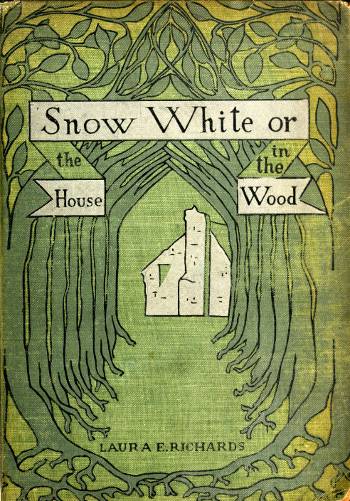
SNOW-WHITE; or THE HOUSE IN THE WOOD.
ISLA HERON.
A charming prose idyl of quaint New England life.
NAUTILUS.
A very interesting story, with illustrations.
FIVE MINUTE STORIES.
A charming collection of short stories and clever poems for children.
THREE MARGARETS.
One of the most clever stories for girls that the author has written.
MARGARET MONTFORT.
The second volume in the series of which "Three Margarets" was so successful as the initial volume.
PEGGY.
The third volume in the series of which the preceding ones have been so successful.
RITA.
The fourth volume in the series, being an account of Rita, the Cuban Margaret, and her friends.
LOVE AND ROCKS.
A charming story of one of the pleasant islands that dot the rugged Maine coast. With etching frontispiece by Mercier.
Dana Estes & Company, Publishers, Boston.