
WeRead Powered by ReaderPub
Sonnets from a prison camp cover

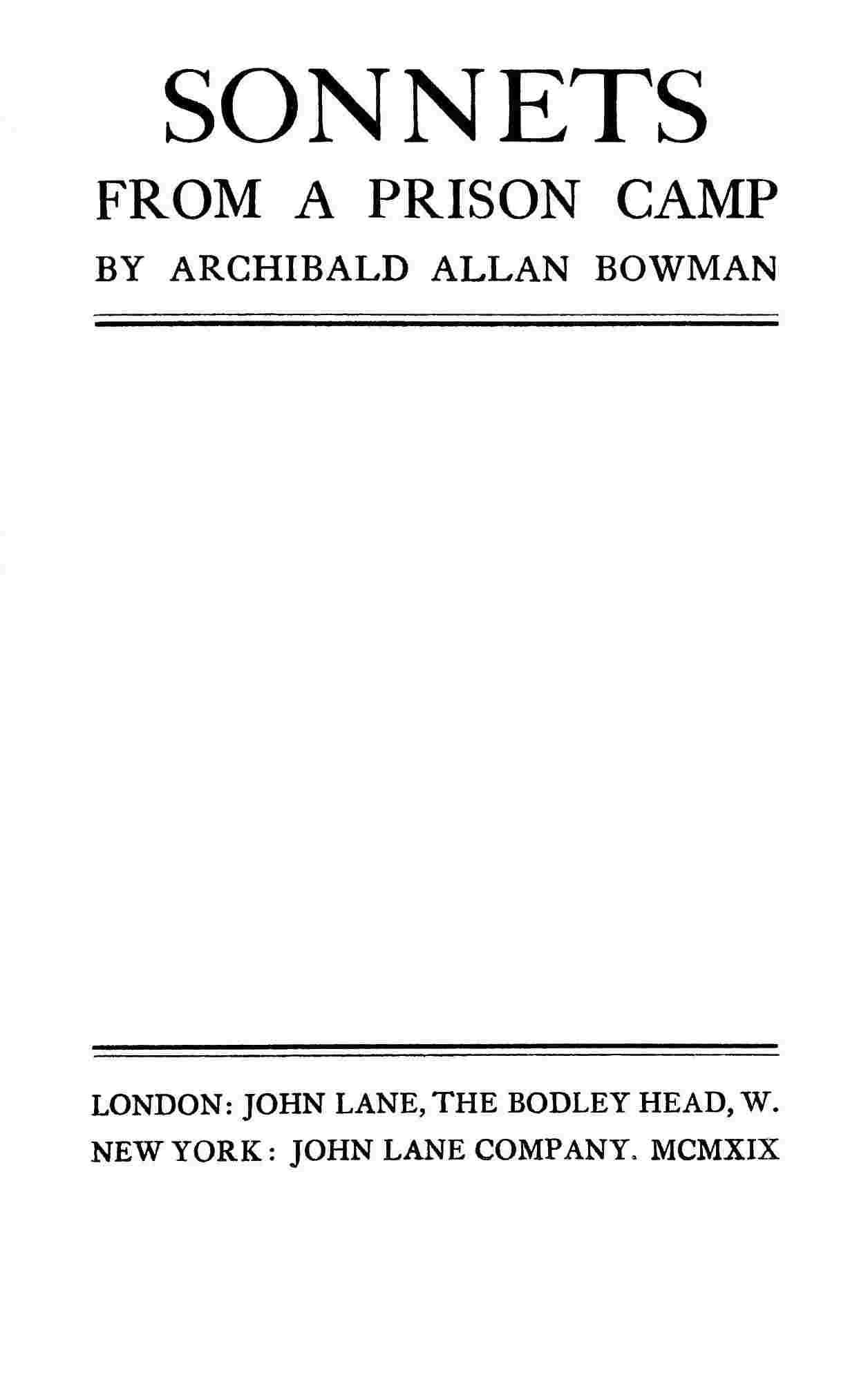
Sonnets from a prison camp

Chapter 54: I
Open in WeRead

About This Book

A sequence of sonnets composed by a soldier in enemy captivity during the First World War, recording frontline violence, the suddenness of bombardment, marches and captures, the strain of waiting and the loss of comrades, and the solace found in memory and poetic labour. Many poems juxtapose immediate scenes—exploding shrapnel, crowded billets, marches, and internment camps—with reveries of homeland landscapes and classical or moral reflections. Sections move between field incidents, the nadir of imprisonment, thoughts of home and influences, and short epigrams or maxims, showing how verse acted as a mental bulwark against despair while exploring themes of fate, endurance, and the persistence of inner freedom.

I

As are the features of some well-loved face,
On which a life’s prolixity is writ
In moving characters much conned and fit
Across a single soulful ground to trace
Feeling and thought and purpose, like the grace
Which motion adds to loveliness (there flit
The spirit’s shades, and there the lamp is lit
That lights twin souls to a lifelong embrace);
So to the city-dweller hath the town,
Much conned, its moving physiognomy,
Which oft in exile, as the sun goes down,
Teams in the caverned dusk of memory
With haunting visions of dear streets, that crown
Night’s sorrow with entrancing imagery.

Hesepe, 19th May