
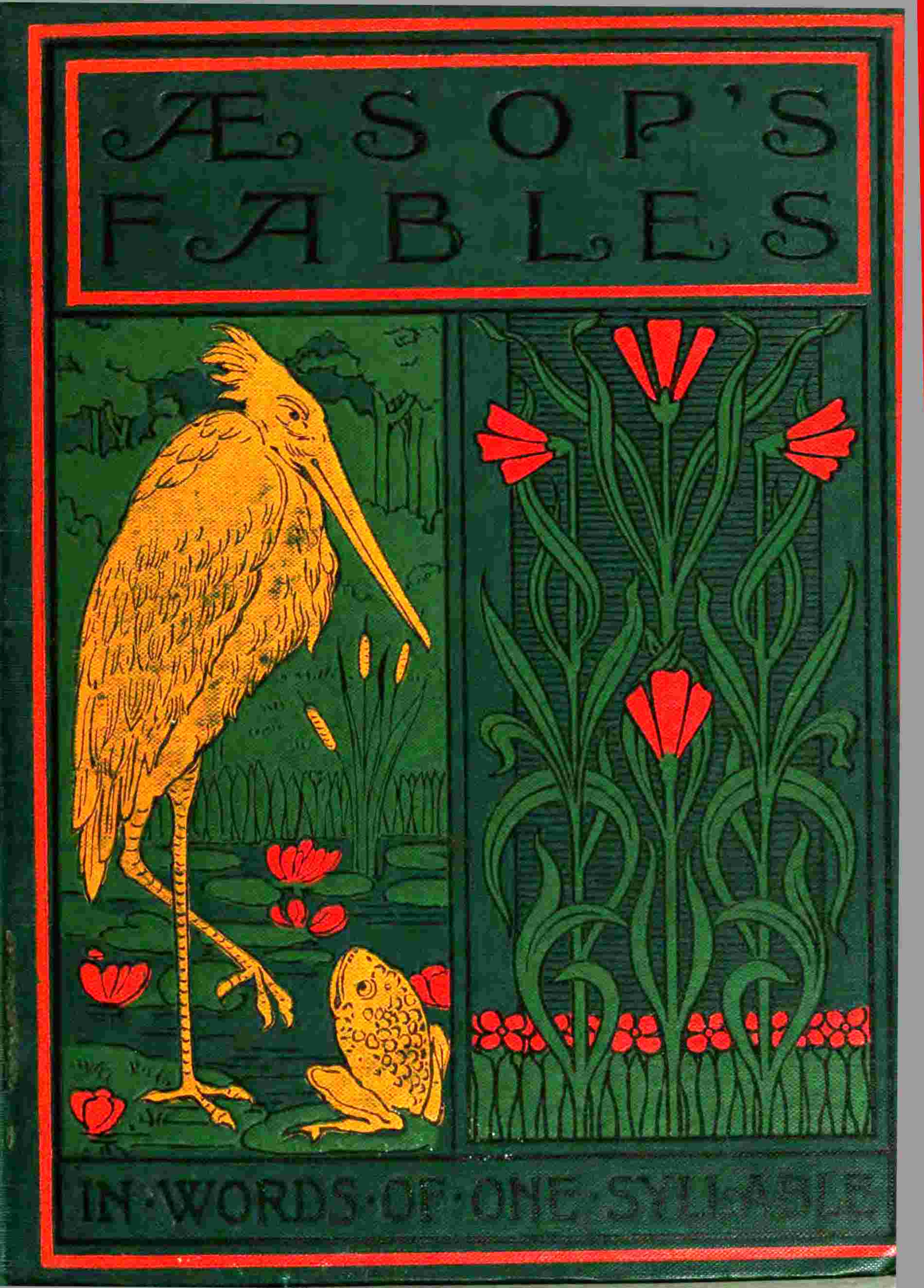
THE FOX AND THE STORK.
One day the fox had a mind to play the wag with the stork, and said, “You must come and dine with me to day, for I have had good luck, and the soup will be rich.” When the time came for them to dine, the stork found to her grief, that the dish in which the soup was put was so flat that she could but dip in the point of her bill, while the fox could lap it up with his tongue. “It grieves me,” said he, “to see you make so poor a meal; I fear it is not to your mind.” The stork did not say much, but told her host that it was now his turn to come and dine with her. So he came, true to the hour. “Good day,” quoth the stork. “Now I hope you will feel that you are quite at home.” The smell of the stew was fine, but it was put in a jar with a thin neck, down which the stork thrust her long bill with ease, but all the fox could do was to lick the brim of it; and when the time came for him to take his leave, he made his bow with a bad grace. The stork told him that she had but paid him off in his own coin.
Tit for tat.
Good cat, good rat.
The Fox and the Stork.—Page 54.
Æsop.