
Introduction.
Months previous to the time that the recent Constitutional Convention met, Conservatives and Reformers, announced publicly their intention to disfranchise the Negro in South Carolina.
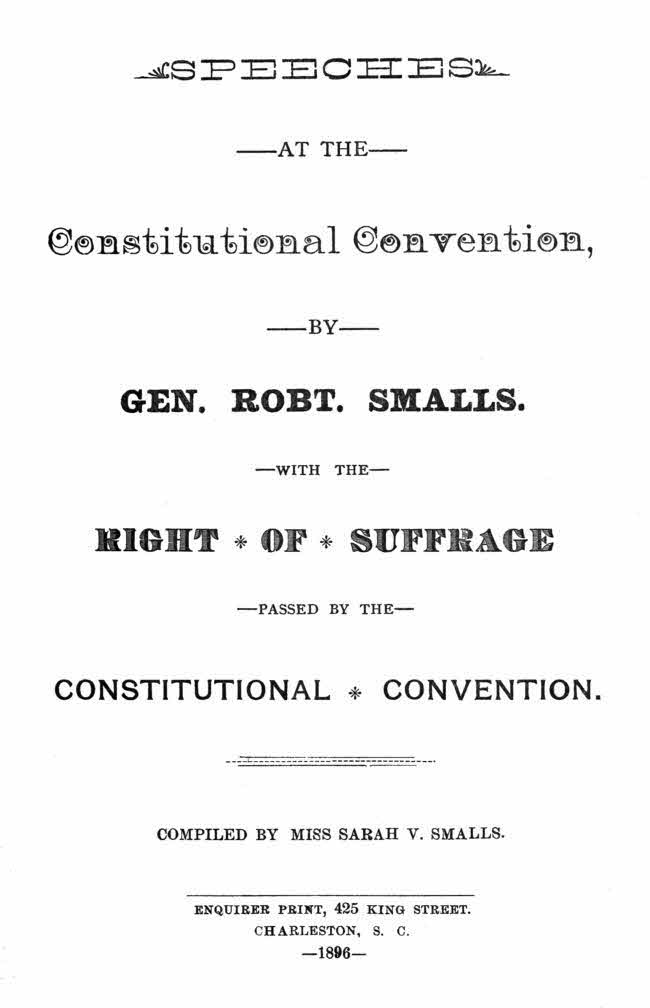
For this pamphlet such portions of the new Constitution have been selected as affect the colored people, together with the speeches made thereon by my father Robert Smalls; several editorials from leading newspapers; also a few of many letters received by him from all parts of the country congratulating him for the manly spirit displayed by him and the other colored delegates, whenever the rights of their race were in jeopardy.
Indeed, it may have been an object lesson, planned by the All-wise God, to teach the haughty, boastful sons of Carolina that there are Negroes capable and amply qualified in every respect to protect themselves whenever it becomes necessary to do so; that those few representatives of the race were but a very small part of the rising host that time and education are bringing forward day by day in spite of lynching, caste prejudice or any methods used against them.
No stenographers were employed by the Convention, the speeches were not written, and are therefore not given in full, but just as they were published in the papers of the State.
SARAH V. SMALLS.