
CAPE COD FISHING——
Excitement of Catching Tuna
In The Traps
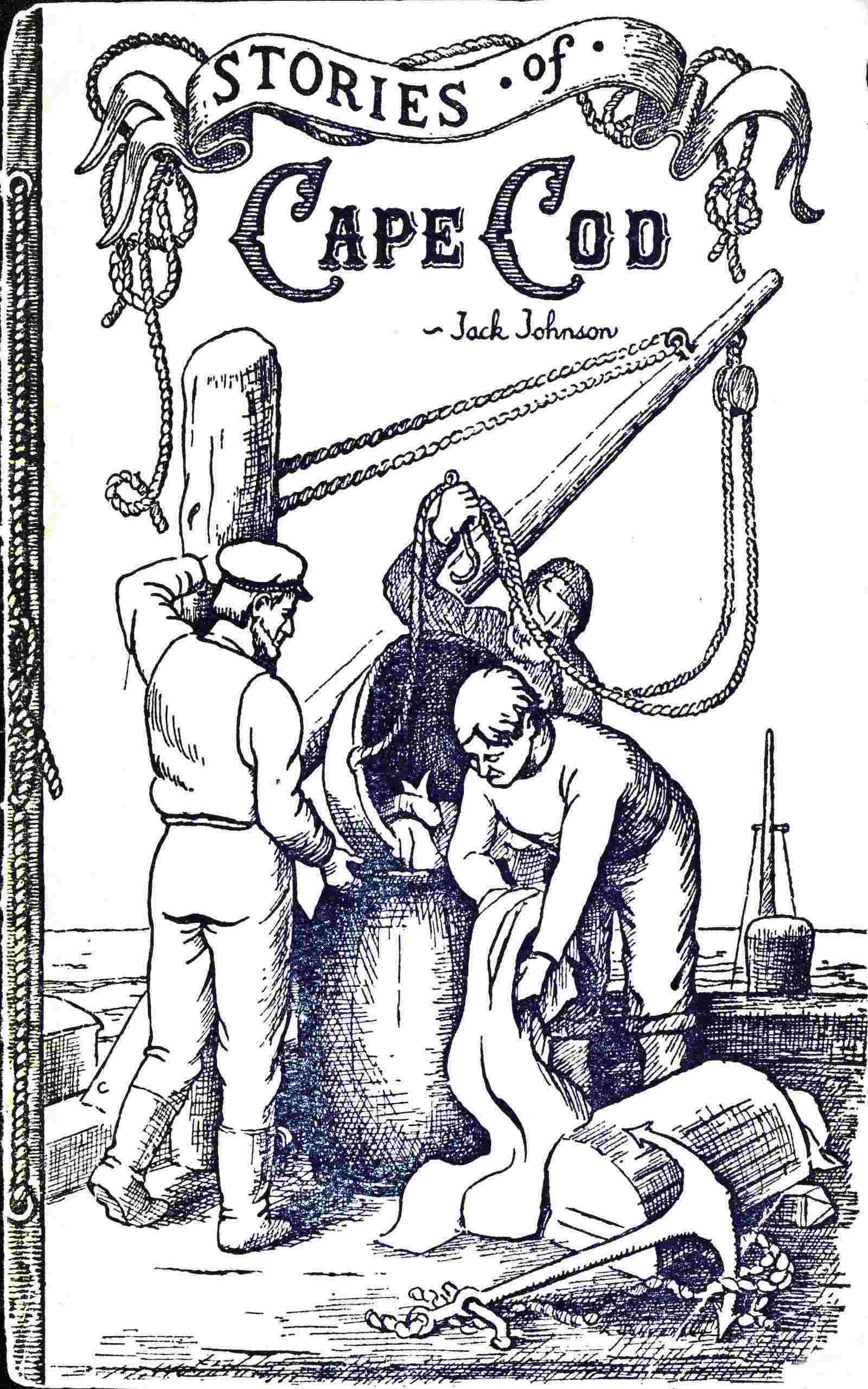
A hefty axe is the main implement of a trap-fishing crew when the tuna run is on in Cape Cod waters. A tuna may weigh 50 to 1,000 pounds and often a net is crowded with them. A crew of five men, operating a 50-foot boat, have their hands full when they move into the confines of a big pole-net to take the clumsy and frantic fish. So, the stout-handled axe is brought into play before the tuna are brought aboard.
The killing technique is a thoroughly gory business. The axe-swinger, a seasoned hand, rarely misses when he aims a lusty blow at the lump that is atop the tuna’s head. One expert blow on this vital spot usually kills the fish instantly, but, the process of maneuvering the tuna for the kill is highly active, calling for a nimble foot and split-second judgment. Thereon the blood flies freely and profusely.
Sometimes, in these wild jousts, a man goes overboard. Occasionally an arm or a leg is broken during the topside excitement. But the tuna, for all its size, does not attack. The fisherman has only to keep a weather eye peeled to keep clear of its mighty tail.
A trapper relates an experience he had when he tried “a new way” of dispatching a tuna. “I shoved the gaff down his mouth with everything I had. A few minutes later I woke up in the bottom of the boat with a big goose-egg on my head.” Another trapper was dragged overboard, gaff and all, and the tuna towed him clear out of the trap. He let go as the tuna dived under and escaped, gaff and all.
FIND WHALES, TOO
Once in a while old leviathan himself stumbles into one of Cape Cod’s fish traps. He’s usually a finback whale, valueless to present-day fishermen, and just a nuisance. His great, threshing flukes threaten death. The trap has to be partially dismantled so that the crew, working at a safe distance, can shoo him out. Then follows a whole day’s work of repairing the damage.
In Cape Cod waters there are more pole-traps, or weirs, than in any other section of the Atlantic coast. Most of them are off Provincetown, and part of the large profits they yield help enrich the town government coffers. Long poles of tough hickory are shipped in from Connecticut. Seventy of these are needed to drape the nets of a single trap. First in the structure of a trap is the “leader”, a 900-foot subterranean fence. This fence begins in shoal water and extends offshore to the main body of the trap. When fish swim into it, they do not turn inshore. As a rule they follow along the fence and swim offshore.
Thus, the schools obligingly move into the mouth of the trap. From there they go into the trap “heart”, which is the first stage of their captivity, and thence into the “bowl”. Once inside the bowl the baffled finny tribes are completely hoodwinked and rarely escape into open water. Here they swim around and around until the trapping crew pays the morning visit and the net is hauled up and pursed for the bailers to go into action.
Commercial fishing in Cape Cod Bay provided the means for establishing Massachusetts’ public school system. The Pilgrims appropriated the profits to public uses. Portions of the fishery fund were allocated to various towns. Barnstable, Cape Cod, being one of the beneficiaries in 1683.
When the Pilgrims went to King James to get his consent for the Mayflower voyage to America, the King, according to Edward Winslow’s narrative, inquired, “What profit might arise?” A single word was the Pilgrims’ response: “Fishing.” James was satisfied: “So God have my soul, ’tis an honest trade, ’twas the Apostle’s own calling.”
ROMANTIC EARLY DAYS
Subsequently, Captain John Smith, after he had pocketed a profit of $7500 on a shipment of dried Cape Cod fish to Spain, is credited with the statement that the richest mine in Spain was not as valuable as the Cape Cod fisheries.
Whales first were caught in these waters. When they became scarce vessels were fitted to go out in search of them. On one voyage, Capt. Jesse Holbrook of Wellfleet, active in the Revolutionary War period, killed 52 sperm whales. His skill was so good a London company employed him for 12 years to give instruction to their employees.
Franklin Atkins was a Cape Codder who had a rare experience while whaling in West Indies waters. Leviathan’s flukes struck the small boat he was in and sent the boat kiting from the sea. In his descent Mr. Atkins fell directly into the whale’s gaping mouth. He was gashed and bruised, but managed to free himself. A boat crew picked him up and he lay in a critical condition for four weeks. In later years Mr. Atkins would boast, “Jonah and me were the only two persons that have been in a whale’s mouth and come out alive.”
Ambergris, a secretion found in the intestines of an occasional sperm whale, and worth more than its weight in gold, was a prize the old whalemen always were on the alert for. The story is told of how a Cape Cod crew, jittery with excitement over an ambergris find in a whale they were spading alongside the vessel, lost it. In their eagerness of hauling up the treasure they fumbled. The ambergris chunk slipped from the slings. The crew stared with blank dismay as they watched the prize worth $25,000 slowly vanish in 60 fathoms of water.
It’s small boat, inshore fishing in these modern times. Yet there is a constant yield of millions of pounds of fish taken by net or hook. There are whiting, mackerel, cod, haddock, herring, butterfish, bluefish, squid, sea bass, pollock and many other species.