
WeRead Powered by ReaderPub
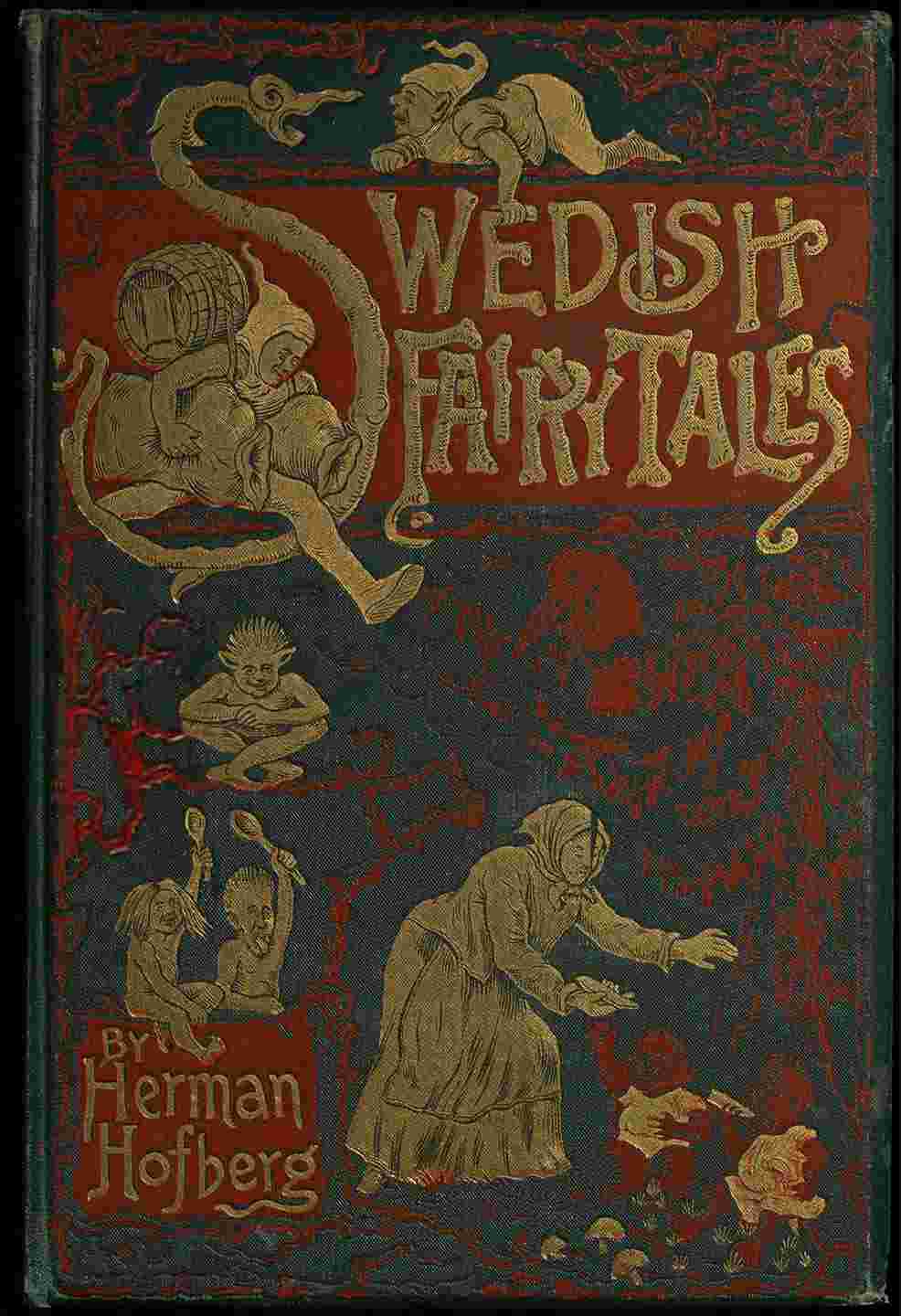
Swedish fairy tales cover

Swedish fairy tales

Chapter 2: Author’s Preface.
Open in WeRead

About This Book

A curated collection gathers folk tales and oral traditions from rural communities, presenting myths, legends, and local narratives shaped by repetition and regional variants. Each tale is accompanied by historical and ethnographic notes that trace variants and contextualize origins and local associations. The selection emphasizes representative and typical traditions rather than exhaustive compilation, and illustrations by contemporary artists complement the texts. A translator's brief preface outlines the intent to render the material faithfully for readers in another language.

The Project Gutenberg eBook of Swedish fairy tales

This ebook is for the use of anyone anywhere in the United States and most other parts of the world at no cost and with almost no restrictions whatsoever. You may copy it, give it away or re-use it under the terms of the Project Gutenberg License included with this ebook or online at www.gutenberg.org. If you are not located in the United States, you will have to check the laws of the country where you are located before using this eBook.

Title: Swedish fairy tales

Author: Herman Hofberg

Translator: Willard Henry Myers

Release date: March 3, 2024 [eBook #73093]

Language: English

Original publication: Chicago: Belford-Clarke Co, 1888

Credits: Jeroen Hellingman and the Online Distributed Proofreading Team at https://www.pgdp.net/ for Project Gutenberg (This file was produced from images generously made available by The Internet Archive/American Libraries.)

*** START OF THE PROJECT GUTENBERG EBOOK SWEDISH FAIRY TALES ***
[Contents]

[1]

SWEDISH FAIRY TALES

CHICAGO:
BELFORD-CLARKE CO.
1890.

[2]

[Contents]

Author’s Preface.

It is probably known to most readers that there is a distinction between Tradition and Saga. Tradition has, or at least seems to have, to do with facts, usually designating some particular spot or region where the incident is said to have taken place, often even giving the names of actors, while the Saga is entirely free in its scope, equally as regards incident, and the time and place of its happening. Not infrequently the traditions of a people are founded upon actual historical occurrences, which, often repeated in the naïve manner of the peasantry, become, finally, folk-lore. A great many are, however, drawn from ancient myths, which, in time, become clad in historical garb, and are located in some particular place.

We already possess various collections of traditions drawn from the rich treasury of our peasantry, but up to the present there has been no attempt at a formulated compilation of Swedish folk-lore. As I now put into the hands of the public such a collection, I ought to state that I have thought it better to select the most typical of our traditions than to gather everything that I might in this line, much of which has already been written, and which would require a many times larger volume, and occasion a repetition of the same matter when occurring, as many do, in different localities. Instead, I have accompanied each tale with a historical and ethnographical note in which I have so stated if the tradition is found in different places.

The illustrations are the product of several among our best artists. Without doubt, the book has thereby been added to greatly, not only in outer adornment, but even in national and intrinsic value. [4]

[Contents]

Translator’s Preface.

An interest in the Swedish people, their language, their literature and history; the important part the traditions of a people play in their history, character and domestic life, and that the traditions of the world play in its history and that of mankind, and that I would, if possible, add to the growing interest in that far-away, beautiful country, and that generous, hospitable people, have been the incentives to the labor involved in this translation; a labor not unmixed with pleasure, and not a little of that pleasure coming from the encouragement of my Swedish acquaintances.

No embellishment and not more than a faithful reproduction of the author’s ideas have been attempted, and I shall be happy, indeed, if I have done so excellent a writer as Mr. Hofberg, approximate justice in this regard.

I have taken the liberty to leave out a number of the author’s notes as unimportant, and not likely to interest the general reader, also to follow the stories with their notes instead of grouping them in the back of the book as in the original. [5]

[Contents]

Contents.

PAGE.
AUTHOR’S PREFACE, 3
TRANSLATOR’S PREFACE, 4
SKÅNE.
LJUNGBY HORN AND PIPE, 31
STOMPE PILT, 15
THE GHOST AT FJELKINGE, 28
THE GIANT FINN AND LUND’S CATHEDRAL, 17
THE LORD OF ROSENDAL, 20
THE MASTER OF UGERUP, 23
THE SURE SHOT, 11
BLEKINGE.
THE KNIGHT OF ELLENHOLM, 39
THE SWAN MAIDEN, 35
SMÅLAND.
DAME SOÅSAN, 47
EBBE SKAMELSON, 60
JOHAN AND THE TROLLS, 65
KATRINEHOLM MANOR, 55
KETTIL RUNSKE, 45
THE GIANT PUKE, 52
THE LOST TREASURE, 69
THE TROLLS OF SKURUGATA, 42
GÖTLAND.
THE BYSE, 77
THE SEA NYMPH, 75
THE TEN FAIRY SERVANTS, 71
ÖLAND. [6]
THE BRIDGE OVER KALMARSOUND, 78
HALLAND.
ELSTORPS WOODS, 84
THE FREEBOOTER’S GRAVE, 89
THE PIGMY OF FOLKARED’S CLIFF, 86
THE YOUNG LADY OF HELLERUP, 80
BOHUSLÄN.
GLOSHED’S ALTAR, 95
HÅLDE-HAT, 99
KING RANE AND QUEEN HUDTA, 107
THE BRIDAL PRESENT, 97
THE CHILD PHANTOM, 105
THE GIANT MAIDEN IN BORÅSERÖD MOUNTAIN, 91
THE GOLDEN CRADLE, 102
VESTERGÖTLAND.
BISHOP SVEDBERG AND THE DEVIL, 117
THE COUNTESS OF HÖJENTORP, 111
THE GIANT OF SKALUNDA, 113
THE KNIGHTS OF ÅLLABERG, 109
THE TREASURE IN SÄBY CREEK, 119
THE TROLLS IN RESSLARED, 115
ÖSTERGÖTLAND.
LADY BARBRO OF BROKIND, 129
THE CAT OF NORRHULT, 126
THE TOMTS, 122
THE TROLL SHOES, 134
THE URKO OF NORTH WIJ, 131
DAL.
BURIED ALIVE, 140
THE MOUNTAIN KITCHEN, 138
THE WOOD AND THE SEA NYMPHS, 136
VERMANLAND. [7]
JONAS SPITS, 141
LADY RANGELA OF EDSHOLM, 143
SAXE OF SAXEHOLM, 145
THE HARVESTERS, 149
THE POLITE COAL BURNER, 147
NÄRIKE.
KATE OF YSÄTTER, 155
RUGGA BRIDGE, 153
THE ELVES’ DANCE, 159
THE FIDDLER AND THE SEA NYMPH, 162
THE ULFGRYT STONES, 150
VESTERMANLAND.
BOLSTRE CASTLE, 174
THE COAL BURNER AND THE TROLL, 169
THE SNIPE, 164
TIBBLE CASTLE AND KLINTA SPRING, 166
SÖDERMANLAND.
LAKE GOLDRING, 184
THE CHANGELINGS, 176
THE LADY OF PINTORP, 179
THE TROLL GARDEN AT STALLSBACKE, 187
UPLAND.
HERR MELKER OF VECKHOLM, 189
THE OLD MAN OF LOGGA, 192
DALARNE.
BÖLSBJÖRN, 197
THE LAPP IN MAGPIE FORM, 200
THE PLAGUE, 203
THE TREASURE SEEKERS, 198
THE WATER NYMPH, 194
GESTRIKLAND.
THE VÄTTERS, 205
HELSINGLAND.
FORSSA CHURCH, 208
MEDELPAD.
STARKAD AND BALE, 209
ÅNGERMANLAND. [8]
THE BELL IN SJÄLEVAD, 212
HERJEDALEN.
THE VÄTTS STOREHOUSE, 214
JÄMTLAND.
THE STONE IN GRÖNAN DAL, 216
VESTERBOTTEN.
THE VOYAGE IN A LAPP SLED, 218
LAPPLAND.
KADNIHAK, 227
THE CUNNING LAPP, 224
THE GIANT’S BRIDE, 221
THE LAPP GENESIS OR THE FIRST OF MANKIND, 219

[9]