
| PLATES | ||
|---|---|---|
| BIG WILLIE, MOTHER OR CENTIPEDE, ORIGINAL MARK I TANK | Frontispiece | |
| PLATE | FACING PAGE | |
| I. | LITTLE WILLIE AND MARK IV TANK (FEMALE) | 26 |
| II. | GROUND OPERATED OVER BY TANKS DURING THE BATTLE OF MESSINES, SHOWING PRELIMINARY BOMBARDMENT ON JUNE 5, 1917: AND GROUND OPERATED OVER BY TANKS IN AUGUST 1917, DURING THE THIRD BATTLE OF YPRES | 122 |
| III. | MEDIUM MARK “A” TANK (WHIPPET) | 176 |
| IV. | FRENCH SCHNEIDER TANK AND FRENCH ST. CHAMOND TANK | 186 |
| V. | MARK V TANK (MALE) | 204 |
| VI. | FRENCH RENAULT TANK AND GERMAN TANK | 214 |
| VII. | GUN CARRIER AND MARK V STAR TANK (FEMALE) | 220 |
| DIAGRAMS | ||
| 1. | SCOTTISH WAR CART, 1456 | 3 |
| 2. | VALTURIO’S WAR CHARIOT, 1472 | 5 |
| 3. | HOLZSCHUHER’S BATTLE CAR, 1558 | 6 |
| 4. | SIMON STEVIN’S LANDSHIP, 1599 | 7 |
| 5. | THE APPLEGARTH TRACTOR, 1886 | 10 |
| 6 and 6A. | THE BATTER TRACTOR, 1888 | 12 and 13 |
| 7 to 15. | TANK TACTICS | 75 and 77 |
| 16. | GERMAN ARTILLERY TACTICS | 115 |
| MAPS | ||
| I. | THE BATTLE OF ARRAS, APRIL 9, 1917 | 84 |
| II. | THE SECOND BATTLE OF GAZA, APRIL 17, 1917 | 100 |
| III. | THE BATTLE OF MESSINES, JUNE 7, 1917 | 110 |
| IV. | THE THIRD BATTLE OF YPRES, JULY 31, 1917 | 120 |
| V. | THE BATTLE OF CAMBRAI, NOVEMBER 20, 1917 | 146 |
| VI. | THE BATTLE OF SOISSONS, JULY 18, 1918 | 192 |
| VII. | THE BATTLE OF HAMEL, JULY 4, 1918 | 206 |
| VIII. | THE BATTLE OF MOREUIL, JULY 23, 1918 | 208 |
| IX. | THE BATTLE OF AMIENS, AUGUST 8, 1918 | 222 |
| X. | GENERAL MAP | End of Volume |
About This Book
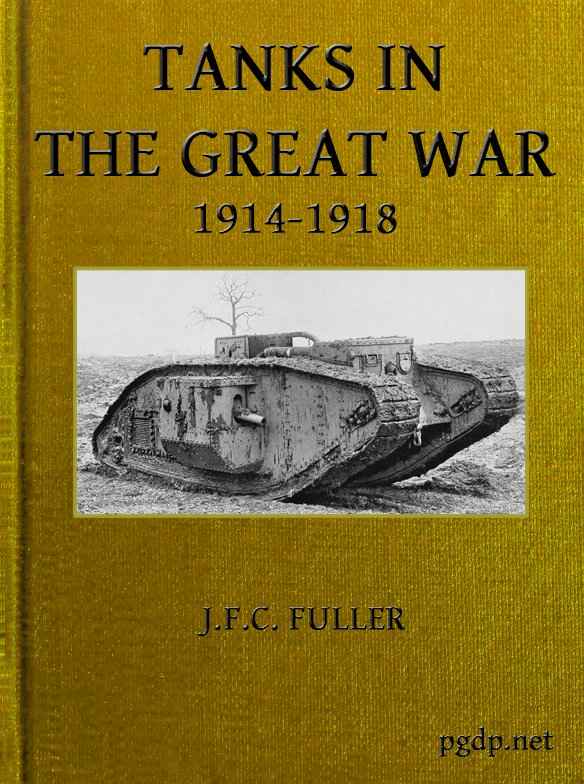
The author chronicles the conception, technical development, and battlefield employment of the first armored tracked vehicles during the Great War, combining firsthand staff recollections, reports from pioneers and engineers, and unit diaries. Chapters trace early experiments, design evolution, organizational formation, training and supply arrangements, and descriptions of combat operations and tactical lessons learned across multiple theaters. The narrative balances technical explanation of chassis, armament and mobility with accounts of crew experience, logistical challenges, and doctrinal debates, concluding with reflections on the invention’s impact on contemporary military practice and the collaborative effort of designers, manufacturers and crews that brought the weapon into service.