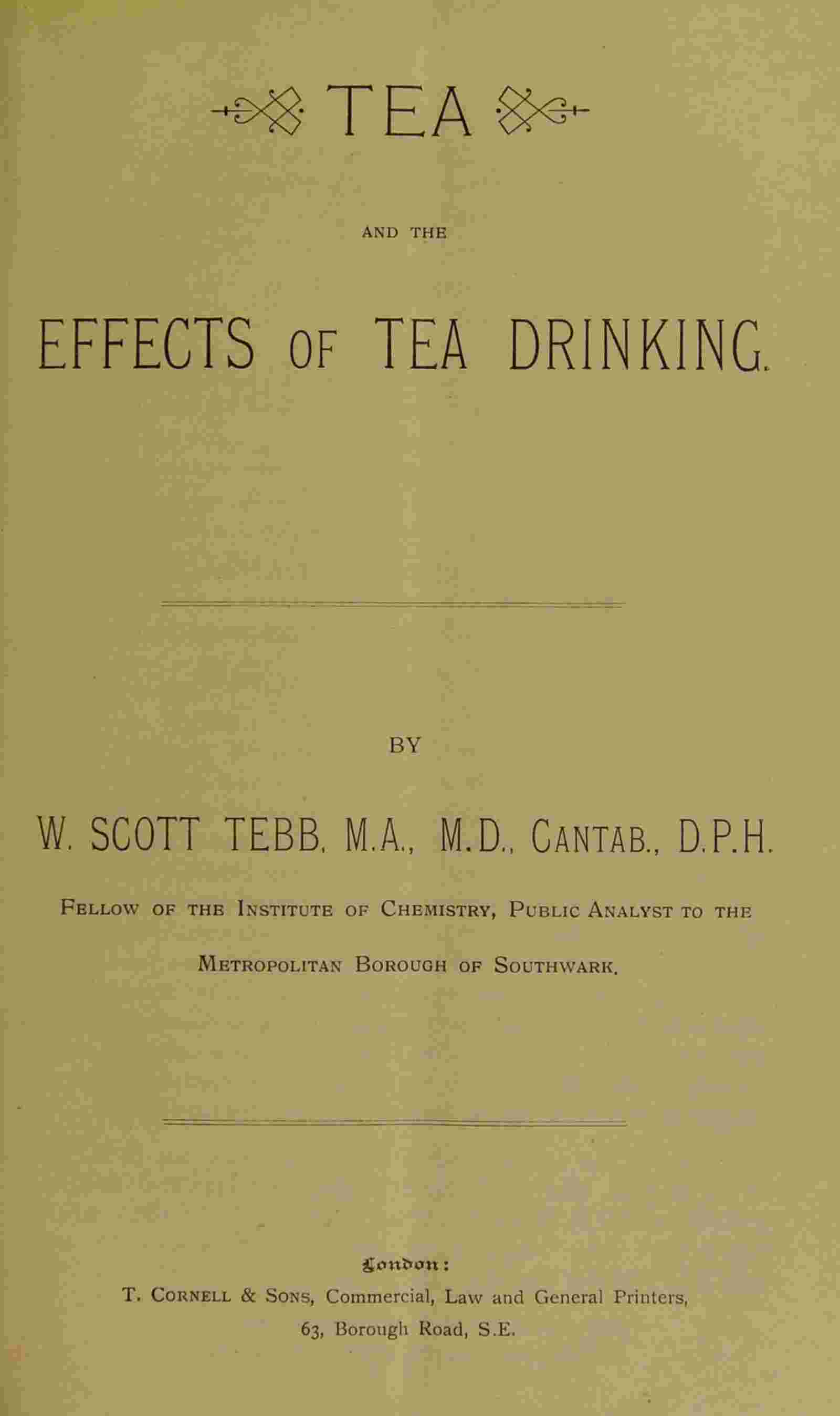
The author provides a botanical and practical description of the tea plant, its cultivation, picking cycles, and the processing steps that differentiate green and black teas. He then traces the drink's early use and spread from China and Japan to Europe, citing travelers, merchants, and contemporary advertisements. A substantial portion reviews reported health effects and physiological responses, noting how manufacturing and preparation influence stimulation and other symptoms. Finally, the work presents chemical examinations of commercial samples commissioned by a municipal inquiry, discusses possible adulterants and injurious constituents, and offers conclusions about whether the characteristic effects can be obtained without harmful consequences.