
About This Book
The author examines the role of critical intellect in creating scientific revolutions, using Galileo as a central example. He contrasts a meticulous, doctrinal criticism that reforms form with a transformative critique that alters scientific substance, and argues that Galileo combined rigorous experimental practice with mathematical reasoning to inaugurate a new scientific approach. The essay situates this intellectual shift among other Renaissance thinkers, compares differing assessments of Galileo's methods, and emphasizes the importance of properly posed problems and methodological clarity for advancing knowledge.
About the Author

More Books by This Author
5 picks
You May Also Like
6 picks
 "My country, 'tis of thee!" / Or, the United States of America; past, present and future. A philosophic view of American history and of our present status, to be seen in the Columbian exhibition.
by Willis Fletcher Johnson
"My country, 'tis of thee!" / Or, the United States of America; past, present and future. A philosophic view of American history and of our present status, to be seen in the Columbian exhibition.
by Willis Fletcher Johnson
 "Their Majesties' Servants." Annals of the English Stage (Volume 3 of 3)
by Dr. Doran
"Their Majesties' Servants." Annals of the English Stage (Volume 3 of 3)
by Dr. Doran
 1811 Dictionary of the Vulgar Tongue
by Francis Grose
1811 Dictionary of the Vulgar Tongue
by Francis Grose
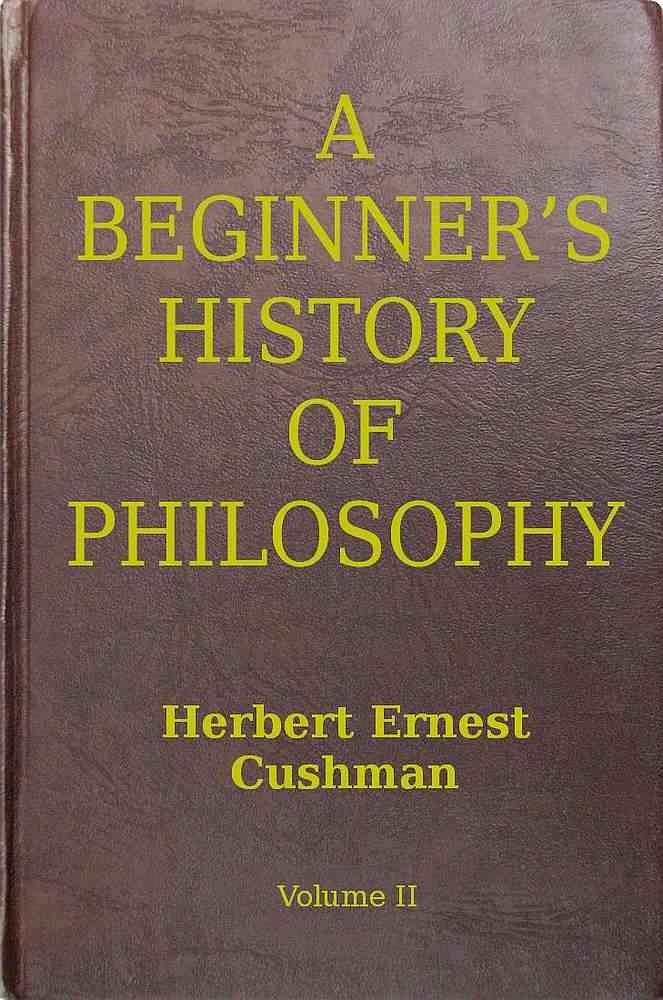 A Beginner's History of Philosophy, Vol. 2: Modern Philosophy
by Herbert Ernest Cushman
A Beginner's History of Philosophy, Vol. 2: Modern Philosophy
by Herbert Ernest Cushman
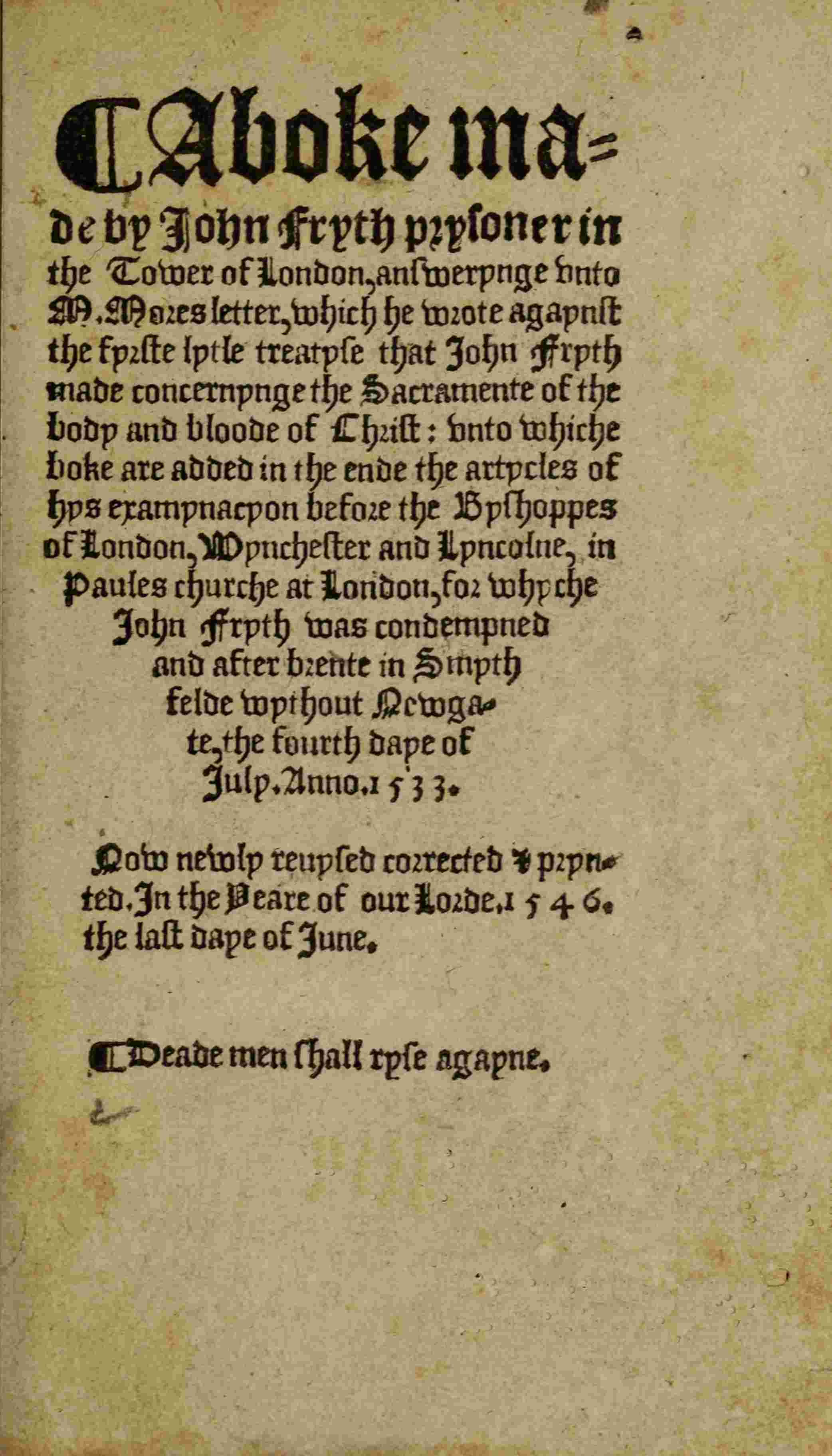 A boke made by John Fryth, prysoner in the Tower of London / answerynge unto M. Mores letter, which he wrote agaynst the fyrste lytle treatyse that John Fryth made, concernynge the sacramente of the body and bloude of Christ
by John Frith
A boke made by John Fryth, prysoner in the Tower of London / answerynge unto M. Mores letter, which he wrote agaynst the fyrste lytle treatyse that John Fryth made, concernynge the sacramente of the body and bloude of Christ
by John Frith
 A Brief Account of the Destruction of the Indies / Or, a faithful NARRATIVE OF THE Horrid and Unexampled Massacres, Butcheries, and all manner of Cruelties, that Hell and Malice could invent, committed by the Popish Spanish Party on the inhabitants of West-India, TOGETHER With the Devastations of several Kingdoms in America by Fire and Sword, for the space of Forty and Two Years, from the time of its first Discovery by them.
by Bartolomé de las Casas
A Brief Account of the Destruction of the Indies / Or, a faithful NARRATIVE OF THE Horrid and Unexampled Massacres, Butcheries, and all manner of Cruelties, that Hell and Malice could invent, committed by the Popish Spanish Party on the inhabitants of West-India, TOGETHER With the Devastations of several Kingdoms in America by Fire and Sword, for the space of Forty and Two Years, from the time of its first Discovery by them.
by Bartolomé de las Casas