
WeRead Powered by ReaderPub
Text book of veterinary medicine, Volume 3 (of 5) cover

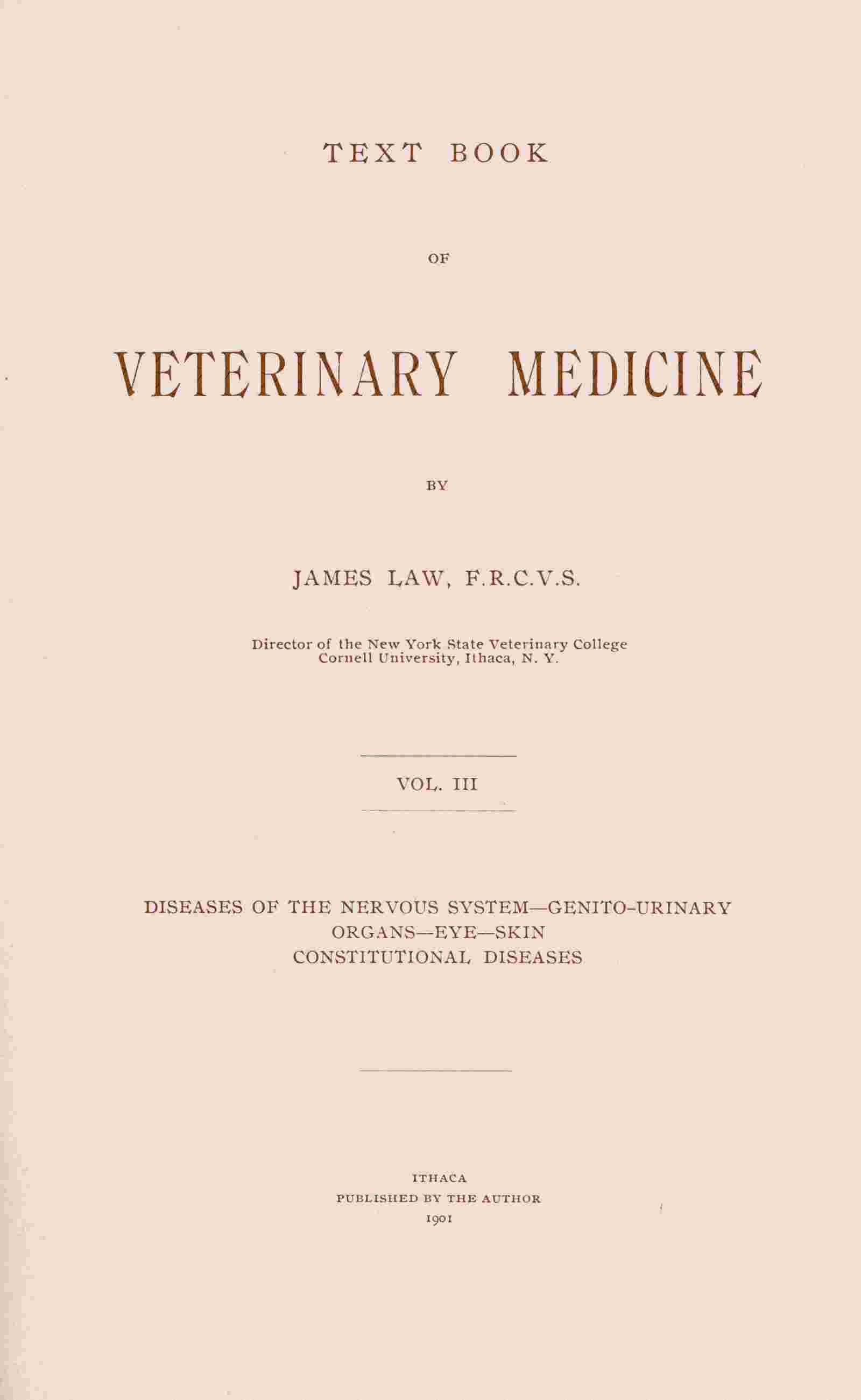
Text book of veterinary medicine, Volume 3 (of 5)

Chapter 213: FOREIGN BODIES IN THE IRIS.
Open in WeRead

About This Book

Comprehensive clinical manual detailing disorders of the nervous, genitourinary, ocular, and integumentary systems in domestic animals. It begins with principles of neural control and general symptomatology, classifying motor, sensory, and psychic disturbances and methods for localizing lesions. The text describes specific conditions such as seizures, paralysis, meningitis, intracranial hemorrhage, tumors, and toxicoses, and outlines diagnostic signs and pathological causes. Later sections address urine analysis and renal disease, urinary tract inflammation and calculi, and diseases of the eye, skin, and constitutional systems, combining pathological description with clinical signs, differential diagnosis, and practical guidance for examination and interpretation.

FOREIGN BODIES IN THE IRIS.

These are sometimes fine shot particularly in dogs, and splinters of iron and steel in other animals. Their presence can sometimes be made out by careful focal illumination. If septic they cause violent iritis and panophthalmia. If aseptic they may sometimes cause little trouble. If they can be exactly located, they should be removed at once before the aqueous humor and cornea become clouded. If the offending body is a piece of iron or steel and can be reached by a magnet introduced through the original wound or through one made with a lancet in the edge of the cornea it may be extracted by this means. If it is shot or other body that is not attracted by a magnet the portion of the iris in which it is entangled may be drawn out with forceps and snipped off with fine scissors. Due antiseptic precaution must be exercised.