
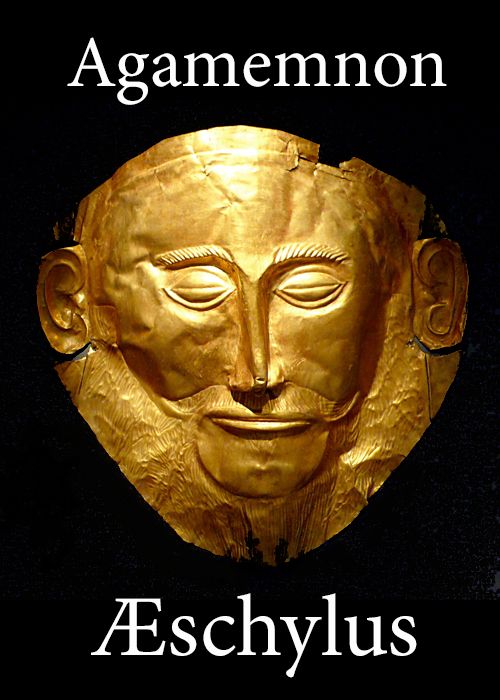
AGAMEMNON
CHARACTERS IN THE PLAY
AGAMEMNON, son of Atreus and King of Argos and Mycenae; Commander-in-Chief of the Greek armies in the War against Troy.
CLYTEMNESTRA, daughter of Tyndareus, sister of Helen; wife to Agamemnon.
AIGISTHOS, son of Thyestes, cousin and blood-enemy to Agamemnon, lover to Clytemnestra.
CASSANDRA, daughter of Priam, King of Troy, a prophetess; now slave to Agamemnon.
A WATCHMAN.
A HERALD.
CHORUS of Argive Elders, faithful to AGAMEMNON.
CHARACTERS MENTIONED IN THE PLAY
MENELÂÜS, brother to Agamemnon, husband of Helen, and King of Sparta.
The two sons of Atreus are called the Atreidae.
HELEN, most beautiful of women; daughter of Tyndareus, wife to MENELÂÜS; beloved and carried off by Paris.
PARIS, son of Priam, King of Troy, lover of Helen.
Also called ALEXANDER.
PRIAM, the aged King of Troy.
The Greeks are also referred to as Achaians, Argives, Danaans; Troy is also called Ilion.
The play was produced in the archonship of Philocles (458 B.C.). The first prize was won by Aeschylus with the “Agamemnon”, “Libation-Bearers”, “Eumenides”, and the Satyr Play “Proteus”.