
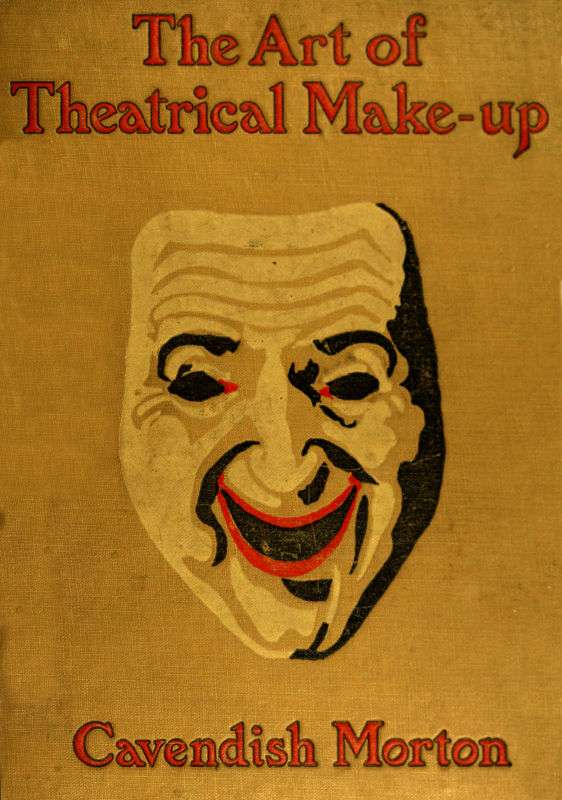
PIERROT
The symbol of all things theatrical. The utterly impersonal medium for dramatic expression.
The mask of white destroys the distinctions of colour, race, or station. He may be emotionally, all things to all men.
Most professional clowns cover their faces with a mixture of pure oxide of zinc and lard, and then powder thickly with dry oxide of zinc. This is the method that I adopt. Some may prefer to first paint the face with white grease paint and then powder with the zinc.
The lips are painted with carmine. The eyes are outlined with black, and the eyebrows are definitely drawn. A spot of carmine is placed at the inner corner of each eye.
ROMEO
The most romantic of the Shakespeare heroes, and physically the most attractive.
As he is a beautified edition of Hamlet, the instruction for making-up is similar. Only no effort should be made to arrive at the intellectual type of face that is striven for in the case of the more serious part.
The groundwork should be No. 2-1/2 with 3, a little 13, and yellow added to give it Italian warmth.
After powdering, the cheeks may be dusted with dry rouge, and this should be carried up to the temples; a little on the end of the chin is also helpful.
In juvenile make-ups it is always advisable to make the forehead lighter than the rest of the face, as it gives a feeling of animation to the countenance.