
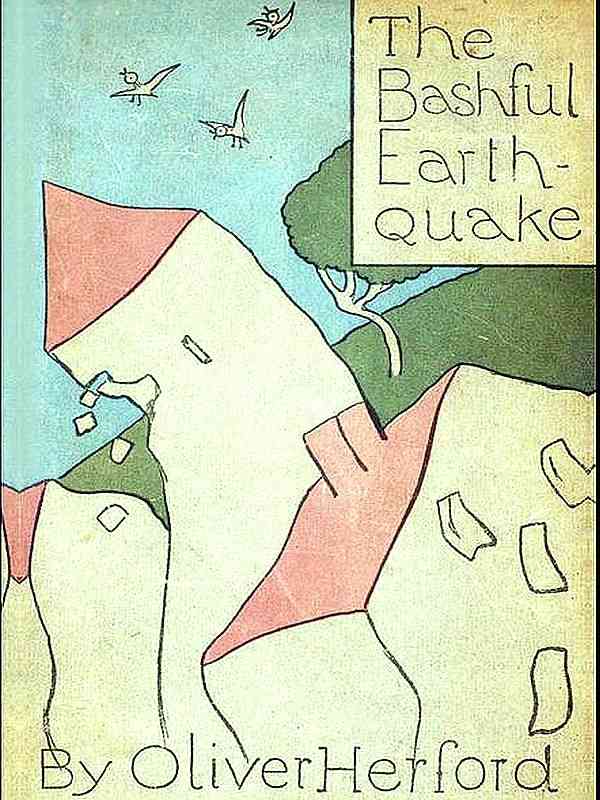
The Bold Bad Butterfly
ne day a Poppy, just in play,
Said to a butterfly, “Go ’way,
Go ’way, you naughty thing! Oh, my!
But you’re a bold bad butterfly!”
Of course ’t was only said in fun,
He was a perfect paragon—
In every way a spotless thing
(Save for two spots upon his wing).
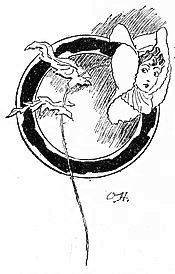
ne day a Poppy, just in play,
Said to a butterfly, “Go ’way,
Go ’way, you naughty thing! Oh, my!
But you’re a bold bad butterfly!”
Of course ’t was only said in fun,
He was a perfect paragon—
In every way a spotless thing
(Save for two spots upon his wing).
But tho’ his morals were the best,
He could not understand a jest;
And somehow what the Poppy said
Put ideas in his little head,
And soon he really came to wish
He were the least bit “devilish.”
He then affected manners rough
And strained his voice to make it gruff,
And scowled as who should say “Beware,
I am a dangerous character.
You’d best not fool with me, for I—
I am a bold, bad butterfly.”
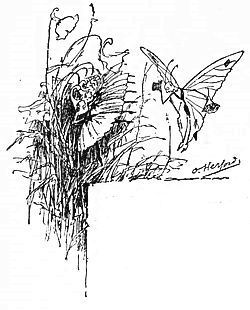
He then affected manners rough
And strained his voice to make it gruff,
And scowled as who should say “Beware,
I am a dangerous character.
You’d best not fool with me, for I—
I am a bold, bad butterfly.”
He hung around the wildest flowers,
And kept the most unseemly hours,
With dragonflies and drunken bees,
And learned to say “By Jove!” with ease
Until his pious friends, aghast,
Exclaimed, “He’s getting awf’lly fast!”
He shunned the nicer flowers, and threw
Out hints of shady things he knew
About the laurels, and one day
He even went so far to say
Something about the lilies sweet
I could not possibly repeat!
At length, it seems, from being told
How bad he was, he grew so bold,
This most obnoxious butterfly,
That one day, swaggering ’round the sky,
He swaggered in the net of Mist-
er Jones, the entomologist.
“It seems a sin,” said Mr. J.,
“This harmless little thing to slay,”
As, taking it from out his net,
He pinned it to a board, and set
Upon a card below the same,
In letters large, its Latin name,
Which is—
| |
| ?|
| |
—————————————
but I omit it, lest
Its family might be distressed,
And stop the little sum per year
They pay me not to print it here.
CRUMBS.
p to my frozen window-shelf
Each day a begging birdie comes,
And when I have a crust myself
The birdie always gets the crumbs.
They say who on the water throws
His bread, will get it back again;
If that is true, perhaps—who knows?—
I have not cast my crumbs in vain.
CRUMBS.
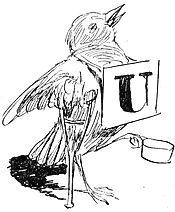
p to my frozen window-shelf
Each day a begging birdie comes,
And when I have a crust myself
The birdie always gets the crumbs.
They say who on the water throws
His bread, will get it back again;
If that is true, perhaps—who knows?—
I have not cast my crumbs in vain.
Indeed, I know it is not quite
The thing to boast of one’s good deed;
To what the left hand does, the right,
I am aware, should pay no heed.
Yet if in modest verse I tell
My tale, some editor, maybe,
May like it very much, and—well,
My bread will then return to me.
Japanesque
Oh, where the white quince blossom swings
I love to take my Japan ease!
I love the maid Anise who clings
So lightly on my Japan knees;
I love the little song she sings,
The little love-song Japanese.
I almost love the lute’s tink tunkle
Played by that charming Jap Anise—
For am I not her old Jap uncle?
And is she not my Japan niece?
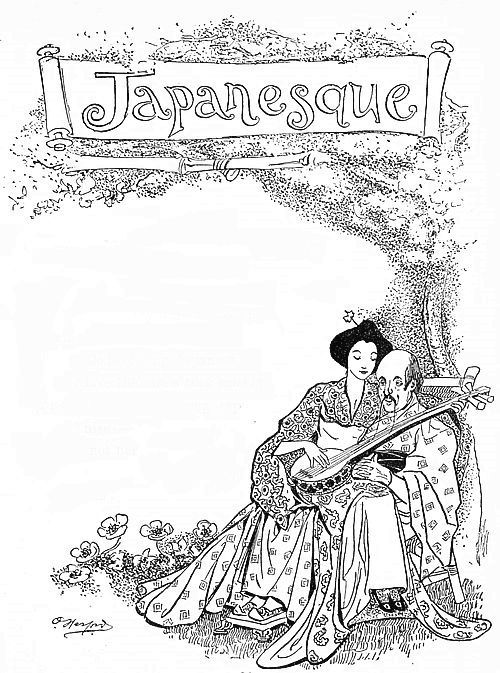
Oh, where the white quince blossom swings
I love to take my Japan ease!
I love the maid Anise who clings
So lightly on my Japan knees;
I love the little song she sings,
The little love-song Japanese.
I almost love the lute’s tink tunkle
Played by that charming Jap Anise—
For am I not her old Jap uncle?
And is she not my Japan niece?
THE DIFFERENCE.
n the spring the Leaves come out
And the little Poetlets sprout;
Everywhere they may be seen,
Each as Fresh as each is Green.
Each hangs on through scorch and scoff
Till the fall, when both “come off,”
With this difference, be it said,
That the leaves at least are Red.
n the spring the Leaves come out
And the little Poetlets sprout;
Everywhere they may be seen,
Each as Fresh as each is Green.
Each hangs on through scorch and scoff
Till the fall, when both “come off,”
With this difference, be it said,
That the leaves at least are Red.
WHY YE BLOSSOME COMETH BEFORE YE LEAFE.
Once hoary Winter chanced—alas!
Alas! hys waye mistaking,
A leafless apple tree to pass
Where Spring lay dreaming. “Fie ye lass!
Ye lass had best be waking,”
Quoth he, and shook hys robe, and lo!
Lo! forth didde flye a cloud of snowe.
Now in ye bough an elfe there dwelte,
An elfe of wondrous powere,
That when ye chillye snowe didde pelte,
With magic charm each flake didde melte,
Didde melte into a flowere;
And Spring didde wake and marvelle how,
How blossomed so ye leafless bough.
The first First of April.
The Infant Earth one April day
(The first of April—so they say),
When toddling on her usual round,
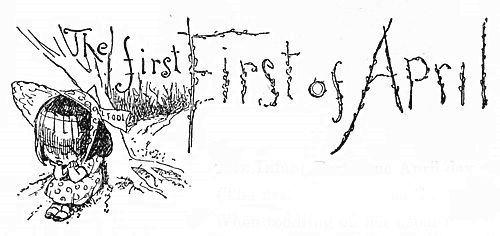
The Infant Earth one April day
(The first of April—so they say),
When toddling on her usual round,
Spied in her path upon the ground
A dainty little garland ring
Of violets—and that was Spring.
She caught the pretty wreath of Spring
And all the birds began to sing,
But when she thought to hold it tight
’T was rudely jerked from out her sight;
And while she looked for it in vain
The birds all flew away again.
Alas! The flowering wreath of Spring
Was fastened to a silken string,
And Time, the urchin, laughed for glee
(He held the other end you see).
And that was long ago, they say,
When Time was young and Earth was gay.
Now Earth is old and Time is lame,
Yet still they play the same old game:
Old Earth still reaches out for Spring,
And Time—well—Time still holds the string.