
The Biological Problem of To-day: Preformation Or Epigenesis? / The Basis of a Theory of Organic Development
Explore more books like this:
About This Book
The author examines competing explanations of organic development, contrasting preformation with epigenesis and analyzing germplasm theory that posits a distinct hereditary nuclear substance organized into nested units (ids, determinants, biophores) which undergo doubling and differentiating divisions to transmit and allocate hereditary material during embryogenesis. He compares germplasm with ordinary protoplasm, outlines how reproductive nuclei remain continuous while somatic nuclear material differentiates, and considers implications for inheritance of acquired characters, regeneration, and the origin of reproductive cells. Close attention is paid to cellular and embryological observations that support or challenge these mechanisms and to the conceptual vocabulary needed to discuss heredity.
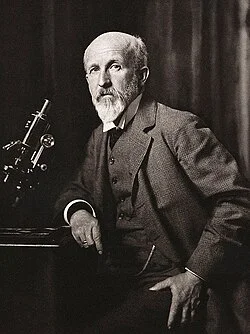
About the Author
More Books by This Author
You May Also Like
 A bacteriological study of ham souring
by Charles Neil McBryde
A bacteriological study of ham souring
by Charles Neil McBryde
 A Bilateral Division of the Parietal Bone in a Chimpanzee; with a Special Reference to the Oblique Sutures in the Parietal
by Aleš Hrdlička
A Bilateral Division of the Parietal Bone in a Chimpanzee; with a Special Reference to the Oblique Sutures in the Parietal
by Aleš Hrdlička
 A Check-List of the Birds of Idaho
by M. Dale Arvey
A Check-List of the Birds of Idaho
by M. Dale Arvey
 A Civic Biology, Presented in Problems
by George W. Hunter
A Civic Biology, Presented in Problems
by George W. Hunter
 A conchological manual
by G. B. Sowerby
A conchological manual
by G. B. Sowerby
 A Critical Examination of the Position of Mr. Darwin's Work, "On the Origin of Species," in Relation to the Complete Theory of the Causes of the Phenomena of Organic Nature / Lecture VI. (of VI.), "Lectures to Working Men", at the Museum of Practical Geology, 1863, on Darwin's Work: "Origin of Species"
by Thomas Henry Huxley
A Critical Examination of the Position of Mr. Darwin's Work, "On the Origin of Species," in Relation to the Complete Theory of the Causes of the Phenomena of Organic Nature / Lecture VI. (of VI.), "Lectures to Working Men", at the Museum of Practical Geology, 1863, on Darwin's Work: "Origin of Species"
by Thomas Henry Huxley