
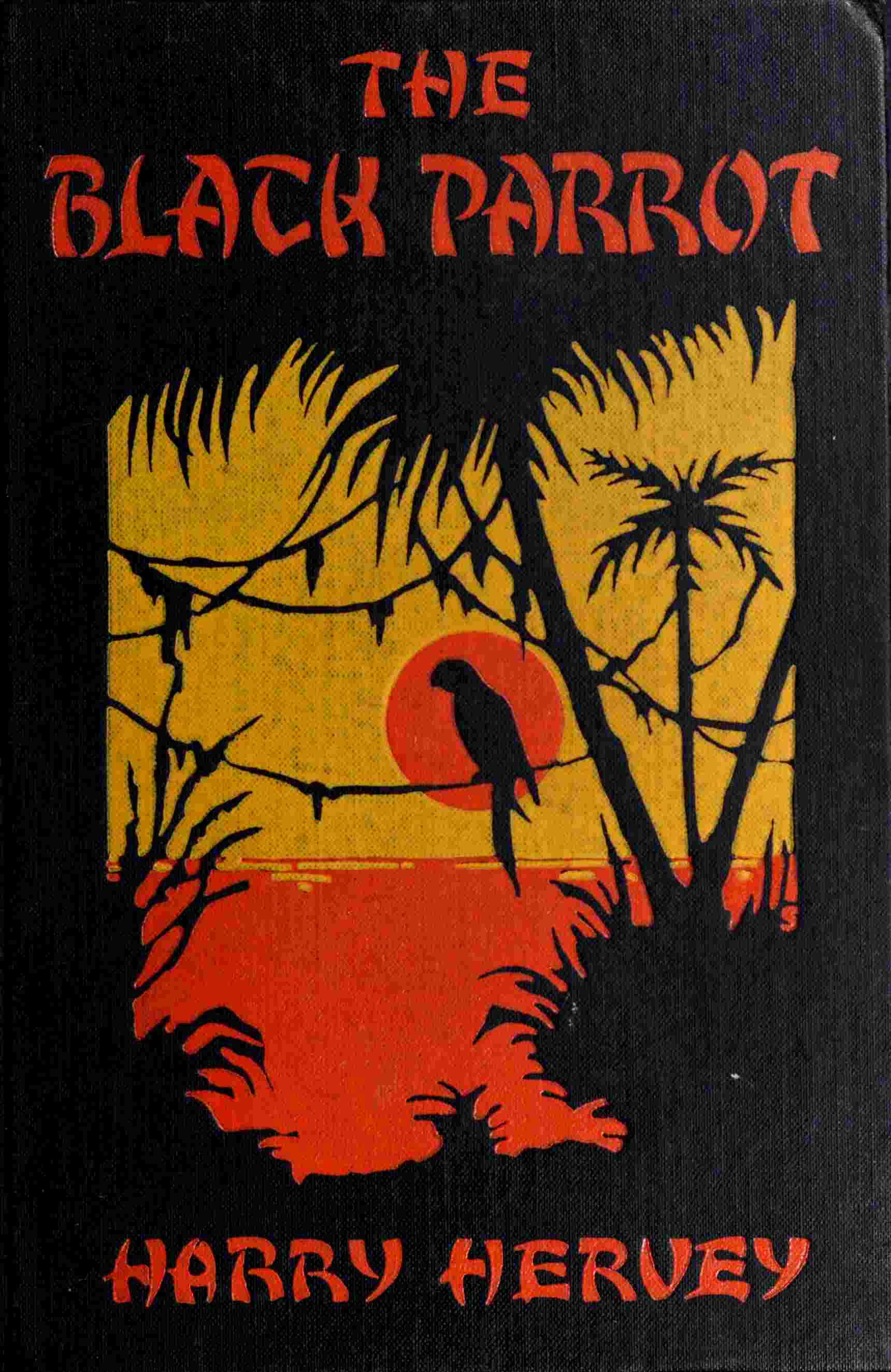
CHAPTER III
THE BLUE SLENDONG
Six days later, at dawn, a vessel of the Straits Steamship Company crossed the bar at the mouth of the Menam.
Lhassa Camber, having purposely risen early to see the temple at Paknam, stood by the rail and gazed up-stream. A belated moon, visible above the bow, was retiring into haze; and, near the bank, a sampan glided toward a dome that swelled out of the mist, its pinnacle burning against a cobalt sky. To her it was a scene immemorially old: the moon, the spired temple, and the brown man in the canoe. It charged her fancy with visions of the dead glory of Ayuthia and Angkor; of the gods who ruled them amid incense and silk and sandalwood, and who fell, leaving the husks of their empire to be buried in a living tomb of jungle. She had read histories and legends of the ancient kingdoms of the Golden Chersonese; of Payah Lak who brought the Emerald Buddha from Laos; of the Khmers and the Thai; of the conquest of Kiampa, and of Santhomea who bewitched the king of Angkor; and these events aroused a thrilling consciousness of her relationship to them through some bond of imagination. Now that she was nearing the actual locations she felt suppressed excitement and dread, dread of disillusion.
Soon she was joined by Captain Barthélemy, who had been her constant companion during the voyage from Singapore. But she was aware of his presence and conversation only in a hazy manner. She did not emerge from this detached sphere until, the river passage completed, a curve ahead brought Bangkok into view.
Here the Menam widened as though to accommodate the many craft that rocked gently on its yellow surface; the sampans, junks, and lighters, the attap-thatched canoes, the river-boats and few freighters from other ports. A swift tide ran beneath floating houses and wharves, past warehouses and mills, and skirted a wilderness of many-colored tiled roofs and golden obelisks. Ramshackle huts, built on poles, crowded down to the numerous klongs (canals viscid with stagnant water) that contributed substantially to the Oriental atmosphere.... That was Bangkok as it first appeared to her: a brilliant polychrome.
With a thunderous clamor anchor-chains rattled down. Below, in the steerage, sweaty beings moved back and forth in a confusion of yellow and brown faces, of glistening arms and legs. Shrill fragments in tongues as old as Asia floated up to the woman and the officer by the rail. Several launches were sputtering out from the nearest dock.
"When I look at all this," she told him, with a gesture, "I feel a flicker of recognition—just as though the eye of a camera had clicked shut and left a suggestion of familiarity." And she added, smiling, "Don't be obvious and say 'reincarnation.'"
He returned her smile. "It is easily explained: this is like a hundred other Asiatic ports—the same dirty river and the same palms and gold-leaf to cover its vices."
Immediately they were put ashore Barthélemy summoned a motor-car. Followed a ride through blazing sunlight and dust. The hotel was by the river, a two-storied structure in a grove of acacia and almond trees, facing rice-mills across the stream. The officer remained until Manuel, a small, immobile Filipino, arrived with the baggage.
"Of course I shall see you again," he said, preparing to leave. "To-morrow? I should like to show you the palace and the wats. May I call for you in the morning?"
"Suppose I let you know after I've seen Dr. Garth?"
"I will call at ten unless I hear from you before then. I am staying with my friend, Monsieur Achille Bergaigne, in Klong Pong Road. Au revoir, mademoiselle."
A few minutes later she followed a "boy" through a court and up a stairway to her apartment. The rooms—a bedroom, living-room, and copper-screened veranda—faced the Menam, and the languorous odor of almond-trees, tainted by a breath from the river, crept into the interior dusk.
After lunch, served by Mongolian "boys" in a hall cooled by electric fans, she inquired about Dr. Garth.
Oh, Dr. Garth! Thus the proprietor. The madame was a friend of the doctor? An old resident, Dr. Garth; and a remarkable man. Had she seen his collection of Buddhas? Oh, this was her first visit to Bangkok! A wonderful collection. The doctor had a villa, quite a pretentious place, on the outskirts of town....
She immediately despatched a note by Manuel and retired to her room to wait for a reply.
The reply came within a remarkably short time, and, sitting in a deep ratan chair, in her dragon kimono, she read it. A typewritten note.
He was delighted that the granddaughter of one of his dearest friends was in Bangkok, but regretted he had not known she was coming. Why had not she written? She must be his guest while in the city; he was sending his "boys" for her luggage. And would she pardon his seeming rudeness in not calling for her personally? He had not been very active of late and rarely left the grounds. But his carriage would be at the hotel at five-thirty. The signature was an almost illegible scrawl that trailed down to the very corner of the note-paper.
She reflected that it was strange he had used a typewriter; reflected also that it would be the obvious thing to pretend to refuse, knowing from the very start that she intended ultimately to accept. She would be ready at five-thirty—no, at six.
2
Dusk was hovering in the east when she descended and found Dr. Garth's victoria waiting in charge of a turbaned Kling. She was driven across the city, through a yellow and brown multitude that moved ankle-deep in dust, and toward the shining obelisk of a wat. The approaching night introduced a purple tone into the scene, an undernote that subdued the bright panungs and sarongs worn by the natives. The vista of shops, vehicles, and quaint figures stretching to the argent pinnacle of the temple gratified a passionate hunger for color in her. The poignant blues and purples, the dun shadows and contrasting flares of orange light, formed a vivid brocade that matched a pattern within herself, a blending of luxurious sensations brought into being by the visible hues.
She was of a nature so sensitive to color that primitive pigments, raw, throbbing vermilion, brilliant peacock blue, or imperial mauve, swept her into exalted regions. To her, places, even individuals, resolved into distinct colors, were parts of a great spectrum; and she, like a prism, caught their tone and either glowed or refused to refract. But so well disciplined were her emotions that she appeared eternally remote. Those who glanced at her now, so flawlessly white from suède shoes to leghorn hat, saw only a half-indifferent, half-tolerant expression: a woman as cold as she was palely beautiful.
Dr. Garth's house, or villa as the proprietor had called it, lay beyond the congested quarters, near a canal smothered with lotus and water-hyacinth. It was a rambling house, almost hidden by banians, tamarinds, and betel-palms; and the approach, a road where white dust arose under the horses' feet, ran between hedges of bamboo.
A ghostly form materialized on the veranda as the carriage came to a halt. It was a house-boy who took her hand-bag and slunk soundlessly into the hall ahead of her.
"The doctor is in his study," he announced suddenly, in liquid tones. He was young, barely twenty she judged, with ivory yellow skin and eyes that were slightly oblique. A Eurasian she decided. "Will you go to your room first—Miss Camber?"
He pronounced her name as though he considered his knowing it an accomplishment. His every movement was so noiseless, his manner so secretive, that she expected to see him vanish before her eyes, like a shade instead of a person of substance.
"I ... no, I think I'll speak to the doctor first."
She followed the "boy" into a large, dusky room. The shutters were closed, but a skylight arrangement diffused a twilight upon linen-covered furniture. This half-tone included in its somber glow an oil painting, the portrait of a woman who looked down wistfully from her frame, even sadly Lhassa thought, as if each shrouded chair was the ghost of a dream.
Ratan portières parted with a harsh rattle, and the Eurasian stepped aside for her to pass.
A tall, gaunt figure stood in the center of the adjoining room, near a shaded lamp and under a lazily flapping punka. A great cuirass of a beard, dazzlingly white, swept down from a face brown as teak-wood. The hands that hung at his sides were heavily veined, almost gnarled, and so still they might have been wrought of burnished metal. Blue eyes were deeply inset in the wrinkled face; a lusterless, faded blue that gave Lhassa the impression they were looking far beyond her, into limitless distance. She had a queer desire to know what they saw.
At her advent he stirred: his hands became animated, and the enlarged veins flexed, like the roots of some tree that had suddenly come to life.
"I am sorry I was unable to call for you"—his voice rumbling from a great girth of chest—"but, as I said in my note, I rarely leave the grounds—Lhassa. I will call you that, for I'm much older than your grandfather would have been."
"Of course you must," she assured him.
She held out her hand; his groped beyond it. With a start she understood the lusterless eyes, and quickly caught his hand. His grip was by no means feeble. Power seemed to burn in his dark frame, to flow out in waves of heat and electrify the room. And what a room! For the first time she absorbed its amazing detail.
The lamp cast a round mellow pool on the floor. Above it, dimming the walls and ceiling, was an inverted bowl of gloom; a curious effect produced by the shadow of the lamp-shade. Bordering this circle of light were several cabinets, behind whose glass doors were rows of miniature ships. In one case were models of schooners, frigates, and brigantines, of yawls, sloops, and smacks—all manner of sailing-vessels, large and small, perfectly made and fully rigged; in another, an incongruous mixture of modern and ancient craft, destroyers and battleships, caravels and galleons; in still another, queer foreign-looking boats, tiny sampans and junks, and canoes peaked of bow and stern. The room, sunk deep in shadow beyond the radius of the lamp, was, to Lhassa, an undersea cavern, the man a god, a sightless dweller in darkness, who sent forth toy fleets into the world of sunlight.
"You see my ships?" spoke the doctor, sensing her thoughts. "A hobby. I used to be at sea a great deal. I owned a line that carried freight up and down the coast. Now I have my little ships—and Domingo who reads me 'Casuals of the Sea' and other novels that smell of brine." He chuckled, softly for one with such a volume of voice. "Artificial stimulation, eh? Ah, well, my ships and books are better for the constitution than whisky and soda; and a man must have some form of dissipation....
"Domingo"—again reading her thoughts—"is one of my treasures. He is the boy who showed you in. I picked him up in Macao when he was a little chap. His father was a Portuguese, and his mother—Chinese or Malay. In either case, I'm sure he inherited his gentle nature from her. He reads to me, attends to the garden; does almost everything. You must see the garden. It's another of my many hobbies."
He moved with a steady step to one side of the room and opened a door. She joined him, looking across a screened veranda into a garden. Silence brooded within its white walls, heavy with a thousand fragrances rising from the shrubs and flowers that blended into an unsubstantial pattern in the gloom. A pool gleamed like a dark mirror.
"I had this made for my wife to dream in while I was away hunting curios," the doctor told her. "Oh, I've had a dozen or more hobbies! Bronzes, jewels, antiques. And Buddhas, yes, Buddhas; from India, from Ceylon, from Burma, from Cambodia and Annam—bronze Buddhas, silver Buddhas—Buddhas carved from ivory, from jade, and from other semi-precious stones. I'll show you my collection to-morrow. But it will seem insignificant after you've seen the Emerald Buddha—and you will see it—you must. It's in the Wat Pra Keo. It isn't really emerald, of course, but very clear fei tsui jade. Beautiful workmanship. Exquisite. It burns like green fire. At times my fingers ache to feel it, to touch the little curves and the cool jade."
His speech was a revelation to her. Curios. Instinctively she knew the fragile woman of the portrait was his wife. Perhaps there had been a reason for her wistfulness. Lhassa sensed the blindness, not of the eyes, that must have reared a wall between the doctor and his wife. She had known men with hobbies——Suddenly the stillness of the garden was possessed of a poignant quality; its beauty was the expression of an exalted despair. She felt a deep pity for this old man, so alone but for his memories and his toy fleets.
"It's so quiet, your garden," she said, breathing the perfumes that floated in as from an unseen censer. "Yet I feel undercurrents, unrest, the ghosts of old things stirring. Queer, isn't it? It's like the East, gripping me, pulling me.... I'm half afraid of it, the East, but its fascination is too strong to resist."
"Blood," murmured Dr. Garth. "It's in the blood. Your grandfather knew Siam well; and his father before him. They were adventurers."
She heard his words without at first grasping their significance, but when, after a moment, she awakened to their meaning, a hollow sensation, faintly cold, spread over her. It was a feeling of discovery, half of shock, half of doubt; and it flashed her back to a time in her childhood when she came upon a dusty, iron-bound chest hidden in the attic and put down the temptation to open it in fear of releasing an evil genie. The hollow coldness increased, touching her thoughts and giving them an ultra-clarity. She heard herself speaking in a tone colorless as ice.
"My grandfather—yes—yes, he was——"
Stupid, vague words, but she could find no others.
"Once we made a trip into the jungle together," he mused. "By elephant from Chieng-mai—or was it from ... I forget now. But it doesn't matter. He went alone many times. Once he got as far as Tali-fu. On that trip he found a Starvation Buddha for me.... But I mustn't keep you here with these dull reminiscences when you probably want to go to your room. We dine at seven."
He turned; gripped a bell-cord; jerked it. Instantly the ratan portières rattled, and the Eurasian appeared like a ghost that had been waiting to be summoned into actuality.
"Domingo," announced Dr. Garth, "this is Miss Camber. Show her to her room, please."
The boy smiled faintly, a smile that seemed as unreal as himself.
Lhassa placed her hand on the doctor's arm. The hollow coldness was thawing.
"It's good of you to have me here; and I love to hear you talk of your collections and of your adventures—with grandfather. You must tell me more later. You will, won't you?"
As she followed the ghostlike Domingo to her room she repeated, mentally, what Dr. Garth had said. Her grandfather.... And he had not told her. Why? Perhaps she was about to find the missing part of the puzzle of his strange obsession. Her grandfather....
She closed the door and leaned with her back against the panels, vaguely disturbed by the illusion that a cobweb was being shifted back and forth in front of her, and through its filament she glimpsed an amorphous shape. Outside, a lizard rasped. But she scarcely heard it. She was trying to give form to the shadow behind the cobweb; she was repeating that he had not told her....
3
With morning a blood-orange sun glared upon the city, upon the Menam and its scummy tributaries, and upon Dr. Garth's "number one boy," Domingo, as he moved away from the villa on the edge of town.
Domingo, being a Eurasian, scorned tramways for the reason that they were patronized almost wholly by natives; therefore, his errand forbidding the use of one of the doctor's carriages, he walked; walked and cursed the sun, the heat, and the dust—particularly the dust which rose in a suffocating cloud, obscuring the lower part of his body and giving him the semblance of a half-formed phantom.
When he reached Si Lom Road he commandeered a rickshaw. He always derived a certain abnormal pleasure from a rickshaw. He liked to settle himself luxuriously in the seat, and, with half-closed eyes, watch the play of muscles on the coolie's naked back, the streams of sweat, and realize that countless atoms of energy were being burned for him.
His errand, the thought of which sent a frosty shudder through him, carried him into a street where ideographed signs and great Chinese lanterns proclaimed the type of business generally transacted. He descended in the midst of an odorous swarm; stepped over a drain; entered a pawnshop.
He squinted in the semi-dark, very like the blue-eyed Siamese cat that awakened at his entrance and uncurled itself in a dim corner. A Chinaman, drowsing cross-legged on the counter, grunted. Domingo returned the greeting loftily and passed into an inner room. There a woman, her mouth scarlet with betel-stain, grinned and jerked her head toward a door opening into a court.
In this small space, seated in the protecting shade of the wall, was what appeared to be a polished effigy but what was in reality a nearly naked man with a shaven skull. Narrow eyes shifted from a palm-leaf book (a holy book in Pali script) to the Eurasian. The latter returned the look with visible disgust and fervently thanked God and the Holy Mother that at least a part of his blood was white. The other's hairless, greasy skin, his bare skull, seemed obscene.
The creature on the ground inclined his head forward slightly.
"May the Source of Light illuminate thy thoughts," he murmured.
"Keep your blessings," retorted the half-caste.
A smile flickered in the hairless one's eyes. When he spoke again it was in the modern vernacular.
"You have come to close the bargain?"
"I've come to pay half of the price agreed upon," answered Domingo, looking about uneasily.
"And the other half?"
"Afterward, when ... you know when."
"Tam chaï," shrugged he of the shaven skull.
Domingo drew from his pocket a bag whose contents clinked, and dropped it in the man's lap. He was eager to get away, for the bare, oily flesh made him vaguely sick.
"I'll be back to-night," he said, moving toward the doorway.
The shaven head nodded. "Tgion," he pronounced. "When you die may your soul be fit to enter Nirvana!"
Domingo, smiling contemptuously, hurried inside. The occupant of the court did not so much as glance after him, but, muttering, emptied the bag. Quickly he counted the money. This done, he rose and entered the house. From a corner he procured a saffron robe, the holy garment of a bonze or priest, and wrapped it about himself; then, with a betel-nut box, a begging-bowl and the palm-leaf book, he passed through the shop into the roadway.
Westward he walked, toward the Wat Pra Keo, pausing at many houses to collect alms, a performance which Buddhist monks consider a daily duty. It was, therefore, nearly noon when he reached the temple he had set out to visit. Spires and prachedees (cone-shaped topes overlaid with gold) shot up from behind a crenellated wall, tapering above a dazzling display of stone buildings, upcurling tiled roofs and octagonal towers. The priest, entering by one of the many gates, made his way to a wat with fanged gables and a yellow, indigo-bordered roof. Outside, in the court, he cleansed his hands and mouth, then passed into the cool interior.
A floor of bronze plates reflected the intruding sunlight and flashed quivering shadows upon pearl-inlaid pillars and a gold-fretted ceiling. The temple was deserted but for three monks near the shrine.
The bonze knelt in front of the chancel, facing a splendor as fabulous as Ophir's hoard. The altar, a pyramidal affair, was covered from base to apex with gods, jeweled boxes, chalices, lacquered scrolls, and miniature five-storied parapluies. At the top, in an arched shrine, and flanked by two helmeted deities, sat a small idol: the Emerald Buddha. On either side of the altar gaped a passageway, leading, the bonze knew, to the treasure-house of the royal pagoda.
He fixed his eyes upon the green image and placed his hands together in front of him.
"Namu-amie-dabunt!" he intoned, swaying back and forth; while a warm, heavy perfume rose from the jasmine and azalea in the chancel, and, outside, the tiny bells on the eaves tinkled an accompaniment.
As he prayed he stared, apparently transfixed, at the emerald god. How it drew the sunlight and glowed, green as a swamp pool! he thought; the diamonds about its neck glittered like cobras' eyes.
His supplications finished, he seated himself not far from the altar, and there he remained, manifestly lost in meditation, for the rest of the day. However, very little escaped his observation. He watched from beneath half-lowered lids the many who came and went; the saffron-swathed attendants, the worshipers, and the sprinkling of curious foreigners, among these an officer in a bright uniform and a woman whose hair smoldered beneath a green-lined topee; watched the sunlight disintegrate to blue powder; watched the Emerald Buddha absorb the dusk and gleam colorlessly in its shrine. He was alone but for one other monk....
When he finally departed, night had shut down, nailed to the earth with countless stars. In the courtyard he encountered a monk.
"Tgion!" he murmured, and, holding tight an object beneath his robe, hurried to the gate.
Behind, the little bells on the fanged gables shivered in the wind and tinkled a soft requiem.
4
A young moon rode over Bangkok's jungle of spires and roofs, seen from the floating bazaars and theaters on the river; from the street where Domingo slunk beneath scarlet Chinese lanterns; from the villa beyond the walls where Dr. Garth paced his study; and from the club where Lhassa Camber was dining.
Barthélemy, accompanied by his friends, Monsieur and Madame Bergaigne, had called for her that afternoon, and with them she had explored several wats and visited the palace and the Premane. She drank deeply of the gorgeousness, and, while it charged her with a certain exhilaration, the draft had a pungent sediment. She could not keep from her mind long the picture of the old doctor and his dream fleets. He had a hidden, and, she felt, tragic significance. She tried to explain it to herself by the fact that he belonged to the past, the obscure past, in which her grandfather had moved so mysteriously and out of which he loomed suddenly as a direct influence upon her own life.
One night at sea, surrounded by the black calm of the Pacific, she had watched a meteor arch across the firmament and felt a similitude between it and herself. Out of darkness it flashed, a smoldering cinder, bent on a course designed by the forces that created it.... Her earliest impressions of her parents were of two immutable beings of oil and canvas who watched her from the library wall. As she grew, they resolved into more definite personalities, one a fair, impatient-mouthed man, and the other a creature of tawny pallor and blue-black hair. The latter, wrapped in a peacock shawl, her ivory eyelids drooping over dark eyes, possessed a startling barbarity. She seemed always on the verge of disclosing some secret that lay behind her enigmatic smile.
Lhassa attributed her own nature, the exotic emotions that flamed beneath frigid restraint, to the woman of the picture. As a girl she was aware of mysterious potentialities that drew others, particularly men, without her conscious consent, indeed, with the effect of repelling her. She was content, then, to regard this with awe, not trying to analyze, but when she became a woman, her more mature mind sought to explain it. But she found herself facing a riddle, the answer to which seemed locked in the smile of the oil-painting. From it she turned, intuitively, to the East.
The previous night she had drawn fragments from Dr. Garth, only fragments. Pieced together they made an unfinished picture: Asia, the mystery of temple-ruin and jungle, and, imposed upon this background, a figure strangely fogged, her grandfather.... This new sphere of discoveries absorbed her so completely that she resented the intrusion of Barthélemy and his companions; throughout the day she had a preoccupied air. After dinner, when they took a sampan to see the canals, the officer made known the fact that he noticed her detachment.
"Remote, always remote," he said, half seriously. "I sometimes believe you are a symbol instead of a woman."
She smiled. Her face was close to his, pale as a silver petal in the darkness. Monsieur Bergaigne and his wife were seated forward.
"A symbol?" she echoed. "Of what?"
"Art, perhaps, for you have the power to inspire without yourself being stirred. And yet—yet you are too cold to be Art."
"Symbols," she repeated, her thoughts dominated by an image that had persisted since the visit to the royal wat. "Green fire, Dr. Garth called it...."
"The Emerald Buddha?"
"Yes. What does it symbolize? Obviously, the omniscience of the East. But that was not what it conveyed to me. No, something else, something more elusive. It meant ... Romance; yes, just that. Romance; the Emerald Buddha. Both came out of mist; both are gods. The Emerald Buddha. Glamour. The very uncertainty of its origin is romantic. I've read that it's supposed to have been unearthed in Kiang-si, in—I forget when. But where was it before that? A Laos legend says it appeared out of a convulsion of earth during one of Buddha's visits. There are other stories, too, all equally fantastic. Green fire. It fascinates me. I wonder that some one doesn't steal it."
Barthélemy was smoking, and the pulsing glow of his cigarette showed her a smile.
"Perhaps some one will—the Black Parrot, for instance."
"Black Parrot?"
He laughed. "Yes. The rogue who visits collections of jewels or old art treasures and causes them to disappear."
"I hadn't heard of him."
"No! Really? But I forgot that you only recently came out. Speaking of romance, hah! he is the quintessence of romance! There is a story going about that he is a notorious thief who steals these valuables and sells them to unscrupulous collectors. It is said he escaped from the Guyane and——"
"But why is he called the Black Parrot?"
"Achille," called Barthélemy. "Miss Camber wishes to know how the Black Parrot got his name. Tell her; you are a better raconteur than I."
Monsieur Bergaigne turned, his face glimmering in the darkness.
"Remy has the temperament of an artist; he likes to embellish, mademoiselle," he informed her jocularly. "So for facts I am more dependable. A murderer was sent to Guiana. He was half—how do you say it in your country, nigger, eh? Well, he was a beak-nosed mongrel, and...."
He recounted the story of Le Perroquet Noir.
"After all," he finished, his hands flashing in a Gallic gesture, "the affair is not so mysterious. The garroter who escaped, this Letourneau, has formed a band, and he and his rogues are moving from place to place, working systematically. For some one higher up, perhaps? I wonder. Now when there is a rather clever robbery the police say, 'Le Perroquet Noir!' Of course the secret service"—a shrug—"well, the Colonial Government—I speak of Indo-China now—does not offer salaries large enough to induce intelligent men into the service. So what can one expect? During the present administration there has been one——"
"Be discreet, Achille," interposed his wife.
"Discreet? Name of a blue pipe! What am I saying? Only that during the present administration there has been one competent intelligence officer, and his compensation was so small that to keep his social position he was forced to steal! With affairs in such a state, it is not strange that the Black Parrot and his flock of déportés fly up and down the coast unmolested. Why, in Pnom-penh...."
His voice was drowned as the sampan shot into the noise and confusion of the area occupied by Bangkok's floating population. Colored lanterns hung from gently rocking eaves like tremulous moons of some weird solar system, multiplying their number on the black water. In the mingled glare and gloom were shops, fruit and toddy boats, restaurants, gambling-houses and floating theaters. On platforms in front of the theaters were musicians and men who waved torches; within, seen in smoky light, were dancers, rice-powdered and red-mouthed. These quaint little creatures, dressed in gold-cloth and gaudy silks and wearing tapering gilded head-dresses, looked like figures transposed from old Cambodian prints.
"This is the real Siam," remarked Barthélemy, his voice raised above the clamor, "not the Siam of guidebooks. Those prachedee-shaped helmets that you see in there"—waving toward one of the theaters—"are patterned after the head-dresses of the Tevadas and Apsaras—the sacred dancers of the Khmers—carved on the temples at Angkor Thom."
"Angkor," she mused. "I have a mental picture of it, great causeways and towers spectral-blue in the moonlight; not in the rain, as Pierre Loti described it. I want to see it at night; in the daylight it must be appalling, simply dead stones. If I could arrive at dusk and leave before dawn——"
"That is not impossible," he interrupted. "I might ... yes, I could write Major Brouchard, the resident at Siem-Reap, and find out when his wife is to be in Saigon—she spends half of her time there—and it could be arranged for you to return with her."
"It sounds alluring—and who can tell but I may accept your offer? How long is the voyage to Saigon?"
"Saigon? My steamer leaves late to-night, or I should say, early in the morning, and we reach Saigon Friday. Saigon is a little Paris; you would like it. An interesting excursion from there is the trip up the Mekong to Pnom-penh where the king of Cambodia lives. In his palace is the ballet Groslier speaks of in his 'Danseuses Cambodgiennes'; you have read it?..."
He talked on while she leaned back in the stern and watched the trembling paths of light cast by the lanterns. The floating houses were not so numerous now; the Chinese theaters lay behind, blazing against an indigo screen. Ahead, a small boat had moored at a landing-stage, and she noticed a man in white climbing out, visible in the light from a near-by house-boat. He seemed curiously grotesque, almost a hunchback. She caught only a glimpse of him, of his bearded face and the sash at his waist, as he was absorbed by the darkness.
"Look!" she exclaimed, then added: "You're too late; he's gone. Do you remember the man we saw at the hotel in Singapore, the one who wore a—is slendong the word?... I just saw him, there on that dock. He looked misshapen—yet I don't recall having noticed that in Singapore, in fact I'm sure he——"
"No doubt it was an illusion," Barthélemy suggested.
"Perhaps"—unconvinced.
"He rather startled me at Singapore," he reflected. "Queer, his resemblance to a man who was sent to the penal colony. Achille"—to Monsieur Bergaigne—"you knew Lestron, did you not?"
"No. But I was in Hanoi when he was tried. Mon Dieu! He was a clever one!"
"Strangest hands, this Lestron," said Barthélemy to Lhassa. "Long and slender ... I spoke of them before, you remember?"
She remembered; remembered also that the man who strode out of the café in Singapore was straight. And the man she had glimpsed on the dock was a hunchback. They were the same, beard, slendong, and all. She could not believe there were two so alike, even in manner of dress. For a moment she was possessed of the illusion that the figure she had seen on the landing was not real, but a reflection upon a flawed mirror.
5
It was late when Lhassa returned to Dr. Garth's villa, and the young moon had dropped low in the sky; a pale finger-nail pressed into the darkness.
Barthélemy stood on the steps beside her, talking in his half-ironic manner. In the gloom his features had a vital quality that she had not felt before; he was—yes, rather likable. The night, with its massed shadows, exhaled a heavy languor, and she allowed him to hold her hand longer than was necessary. He was telling her that he would expect to see her in Saigon soon, that he would write to his friend at Siem-Reap.... Suddenly she realized that he had pressed his lips to hers, almost brutally; that a sharp pain had gone through her throat; and that she had neither responded nor drawn away. An icy calm settled upon her. She answered his questioning gaze with silence.
"Queen of the polar night!" he mocked, and quoted:
"I shall remember you as that," he added. And was gone; and she stood motionless, staring after him and listening to the dwindling crunch of carriage-wheels.
Her heart was pounding; pounding, she thought, against ice. Had he kissed her or did she imagine it? Undoubtedly he had. For several minutes she remained there, trying to grasp that incredible fact. Her mind seemed frozen. When she finally stirred it was not to enter the house—for she felt she could not endure its cool darkness—but to move to the garden where the atmosphere was supercharged with a heated fragrance.
Its hush was as poignant as on the previous night, but it had not the same power to inspire a lofty despair. Instead, it made her acutely sensitive. There was a light in the study and its rays wove a pale luminance in the copper screen....
She paused by the pool, looking down at the mirrored stars; her own reflection fell white across the water. As she gazed, a sudden breeze rippled the pool and her image shattered like a statue under a mallet. The significance of the illusion depressed her. Cold? At times she was consumed with sultry emotions. Her reserve was more mental than physical, her coldness in manner rather than nature. Yet why had Barthélemy's kiss brought only a chilly calm? She knew the answer instantly: she did not love him and she could not simulate feeling. Queen of the polar night. Perhaps it was true. Stars were at her feet, in the pool, stars were overhead, and she seemed lifted from earth, an exalted being charioting through aqueous blue. All that was cognitive within her melted into the sheer sensation.
When she was again aware of the garden it seemed foreign, its fragrance suffocating. As she started toward the gate, a vaporous breath, heavy with the scent of moist soil, brushed past her face. The sudden whir-r-r of an insect came as the throbbing of wings. She was startled by the feeling that a robed figure had passed her. The presence she sensed was not tangible, but seemed, rather, the personality of some individual closely related to the garden, a mental influence that had become incorporated in the atmosphere and now fused it with a troublous current. A responsive charge electrified her. Its force swung her about, and again a breath fanned her. She felt a sudden terrifying nearness to Death.
"Dr. Garth!" she exclaimed involuntarily.
As the words left her tongue she was ashamed of them. A limp reaction flowed through her. She hurried toward the front of the house. The sound of her steps aroused her to the fact that she was running, fleeing from a thing intangible. She halted. This was absurd. Dr. Garth, if he were awake and in his study, had no doubt heard her call him. She must go back and explain.
At the door of the study she paused. Many little ships floated on the shadows within; the ticking of a clock needled the stillness. She tapped. After waiting a moment she decided he was asleep, and tiptoed across the veranda. She opened the door; closed it. A vague but increasing uneasiness forced her to retrace her steps. This time she did not knock, but entered.
A lamp burned on the table, its shade flinging a domed shadow against the ceiling and sinking the cabinets in dusk.
The room was unoccupied.
She was at the point of turning away when her lowered gaze encountered an object below the table, an object at once disturbing.
It was a model of a schooner, its tiny masts splintered.... Without knowing why or pausing to analyze, she likened it to a broken dream....
"Dr. Garth!"
The pulse in her throat beat an accompaniment to the clock. Clock. The thought, though trivial, wedged into prominence. Where was the clock? Not in the study; perhaps beyond the ratan portières.
Again she called. The silence closed in, oppressive. Was he ill? Was he——
But the clock: where was it? It irritated her.
She moved to the portières, sweeping them aside. The living-room was deserted—except for the wistful lady of the portrait. But to Lhassa there was no wistfulness in her face now; instead, a reflection of her own alarm.
She turned and the portières swung together with a crackle of dry fibers. A third time she called. The invisible clock ticked on. That clock! Her eyes searched the study; searched and found a long tapestry hanging between two cabinets. With a quick, indrawn breath she approached it; lifted it.
The room beyond was dark, but a reflection from the study stole in and hinted at many gleaming shapes—and a white blot on the floor.
Tick-tick-tick-tick-tick: somewhere in the room.
She stood in the doorway, clinging to the tapestry and staring down at the shirt-front. It seemed to glare out and strike her.... Remy Barthélemy had kissed her. A kiss. How absurd....
When the numbness passed, she stepped over the threshold, and the tapestry dropped into place, banishing the light. Terror of the dark closed her throat. In a panic she whirled, gripped the coarse fabric, and jerked it from its fastenings. Another moment and she was on her knees.
"Dr. Garth! Doctor!"
Futile to call. Futile to shake him. Futile to lift one of his cold hands and try to warm it between her own.
Her vision now accustomed to the inadequate light, she perceived a dark thing about the doctor's neck; a thing that coiled out from beneath his beard and flattened, fantastically, into a viper's head. At sight of the rolled cloth horror smote her. Strangled. This helpless dweller in darkness! That meant——The horror dwindled to a fine point, pressed into her breast, and hurt her with a sharpness that was physical. She had a sudden, inexplicable desire to laugh. He had opened the door to secrets long hidden—and now the door was sealed! Irony! Why, that afternoon she had left him sitting in the study, alive, and now——The realization brought a moment of exquisite suffering. Was this, then, the end of his dreaming—the end of all dreaming? Or had he merely walked out of the dark house? She felt frightened; felt that life was transient and Death immortal.
She raised her eyes. Gleaming shapes: many idols on tables and in glass cabinets. The pale dial of a clock stared out of a corner. Its hands moved on oblivious of tragedy. Time. Time had ceased for the husk beside her. Time mocked it. Time was cruel——Control herself. But what was she to do? Call some one. One of the house-boys. Domingo.
She rose; entered the study. A bell-cord. How ridiculously antique! As she jerked it she imagined she heard a faint jangle in the rear. Dead, she repeated to herself.
She listened for the sound of footsteps; heard only the sighing of leaves in the garden. Suppose, came the sudden suspicion, the one who used that dark cloth still prowled about! Improbable. Nevertheless, she jerked the bell-cord again. Silence.
An exclamation broke from her. Why didn't some one come?
After a few seconds she approached the portières; parted them tentatively; dropped them. There was a suggestion of frenzy in her movements. As she reached for the bell-cord she heard a step in the living-room.
"Who is it?" she challenged.
One of the Chinese "boys" appeared between the curtains. She felt suddenly weak and groped for a chair.
Had the "mem" called? As he entered the compound—he was returning from the city—he thought he heard the bell.
Yes, she had rung twice. Where was Domingo?
He had not come in.
And the other "boys," were they out, too?
Yes; the doctor had given them the evening off.
She thought a moment, wondering vaguely what to do. A picture of the dark cloth rose before her. She felt suddenly choked and raised one hand to her throat.
"Call the police," she heard herself saying in a calm voice. "Something dreadful has happened, something terrible! The doctor——Don't stand there and stare! Call the police!"
Left alone, she experienced a return of fright. She felt stifled, and moved toward the veranda. In the doorway she halted, clutching the frame. She was determined not to faint. She would not; that would be weak. And she despised weakness. Her grip tightened.
Gradually the dizziness cleared. But the feeling that a cord was about her throat remained, became more acute. It may have been a minute or longer before the "boy" returned; to her it seemed a deathless interval. At the sound of his entrance she turned, her hands at throat. The cord was being tightened.
"Take that—that thing from his neck!" she whispered with a gesture toward the dark room. "I don't care what they say—only do it quickly!"
A moment later she was breathing regularly, and she sank into a chair, no longer afraid, only tired, desperately tired.
6
In one of the many house-boats on the river a shaven-skulled native sat under a lantern and watched the smoke uncoil from his pipe.
He was naked but for a panung, and his bare flesh had an oily gleam. On a folded yellow robe at his side was a palm-leaf book and begging-bowl.
Across the room, lying on rushes, were two forms: a Chinaman and a woman whose mouth was scarlet with betel-stain. Both were asleep; their breathing mingled with the sucking sounds beneath the floor.
Distant flares were visible through the doorway: torches that wavered between river-gloom and stars. Reek from the swamps drifted in and blended with the stale odors of food and human beings.
He of the shaven head (the same who had that morning journeyed to the Wat Pra Keo) was experiencing the rich afterglow of too much arrack, and his thoughts dwelt, not upon M[=u]-s[=o]-kwa, the Asamguika heaven, but upon his luck at chaï-mooie earlier in the evening. Diacoco, the god of money, indeed had smiled upon him: he had almost doubled the ticals that foolish half-caste had paid him.
At that juncture a recollection not so pleasant slipped into the midst of his retrospection and made him shudder. He felt as though a cold thing, a spider or a lizard, had crawled down his spine. In fancy he saw an image green as a swamp pool; saw diamonds that glittered like cobras' eyes. If only——Ah, well, there were always dregs in the cup, seeds in the mango. One could not drink the wine and eat the fruit without some unpleasantness. And he was paid his price. After all——
"Mypenary?" he muttered; that is to say, in Siamese slang, "What does it matter?" In an hour or so mooring-ropes would be cast and they would slip up-stream to Ayuthia and out of danger.... So he sat there and smoked and listened to the nocturne of the great river.
Presently another cold tremor slid down his spine. This time it was generated, not by a thought, but by a sound—a scraping against the front deck of the house-boat. One hand crept under his panung. That was his only movement.
A white form materialized in the doorway and entered noiselessly. He recognized the Eurasian, Domingo—but his hand did not emerge from under his waist-cloth.
"I am going with you," announced the half-caste, slinking into the corner where the hairless one sat.
His skin, moist with sweat, was colorless and resembled soft tallow. There was a sickly glisten in his eyes. However, he affected a careless, superior manner.
"I am going with you," he repeated "You've got to take me. Do you understand?"
The Chinaman and the scarlet-mouthed woman had awakened. The former, lifting himself on one arm, made a sibilant sound, receiving in return a snarl from the shaven native.
"Listen," enjoined Domingo, dropping beside him with visible repugnance, "are you sure you weren't followed to-night?"
The hairless Siamese nodded.
Domingo shuddered. He glanced over his shoulder, then crawled to the door and looked out. Returning, he continued:
"He's dead and...." His throat contracted; he was trembling violently. "I had gone to my room," he whispered; "I heard a fall.... He was lying in the study.... I knew what the police would say...." He sobbed; wiped his eyes. "God damn them!" he burst out. Then the bravado died. "They're driving me away from a home! They'd trap us with their questions! So you've got to take me with you; you've got to!"
He drew out a wallet, removing several coins. The bald one's slitty eyes became even narrower; the Chinaman raised himself again.
"I'll pay"; thus the Eurasian. He tossed the money upon the floor, and it was snatched up by brown hands. "Can't we leave now? Or soon?"
He of the shaven head spoke for the first time.
"The tide is changing."
Domingo was still trembling. Suddenly he rose and extinguished the lantern. The Siamese heard him sink down beside him and the glow of his pipe stained white linens.
"You stink," the Eurasian complained. Then a sob, a crackle of dry rushes as he crept away. "Holy Virgin!" he whimpered. "It was wrapped around his neck...."
The shaven-skulled native continued to draw on his pipe, his gaze upon the pale blot of the half-caste's body. He could not shake from his thoughts the memory of Domingo's wallet....
Suddenly it came to him that his hand was still beneath his panung, closed about the hilt of a knife. Instead of withdrawing it, he tightened his grip; smoked on, speculatively.
7
"Isn't it time they were here?" asked Lhassa. "With whom did you talk?"
The sound of her voice reclaimed her from the stupor into which she had drifted.
The Chinese "boy," back to the portières, grinned in a frightened manner.
"I spik to commissh'ner of p'lice. He fliend docta. You savee? He ver' excite' and busy. But he come allasame soon."
Her glance strayed to a dark-blue coiled mass on one of the cabinets, a loop of cloth whose fringed ends hung motionless against the glass door. She looked away quickly. The "boy's" words returned, as though on a back-wash.
"Yes, he must be a busy man." How inane! But she wanted to talk—talk.
"Haï-ya!" the Chino breathed, with his frightened grin. "He wanchee catch thief."
Again her eyes swerved to the silken coil; again his words returned on a back-wash. She echoed——
"Thief?"—scarcely knowing what she said, caring less. Anything to fight the silence!
"Yes-ss. Thief steal gleen god. King ver' excite'. I hear soldja tell my fatha to-night. He say gods angly. But I b'long Clistian boy. Gods no get angly; only Jesa Clist get angly."
Lhassa heard him without understanding—until a sentence whipped back and lashed away her stupefaction.
"You don't mean—the Emerald Buddha?"
The "boy" nodded. "Yes-ss, mem. Gleen god in king's temple."
"Where did you hear that?"
"My fatha live there"—a gesture cityward—"and to-night I hear soldja tell him. He say somebody steal gleen god and kill pliest."
"To-night?"—incredulously. She stole another glance at the dark cloth; it exerted a terrible fascination.
"Yes-ss, mem."
The Emerald Buddha—stolen. Green fire. She felt that she should be shocked by this news. But she wasn't. A piece of jade! And the king and the commissioner of police were excited; excited about a god—when in the next room lay a dead man!
She suppressed a shudder; said:
"Go and see if the other boys have come."
As he went out her gaze was drawn back to the cloth on the cabinet. She stared, unresisting, conscious of a prickly coldness in her body; and suddenly the blue loop seemed to take life and slither to the floor. She almost screamed, then stifled a hysterical laugh. It had merely slipped to the carpet.
When the "boy" returned she indicated the cloth, commanding:
"Pick it up."
He obeyed, folding it with a deliberation that sent little shivers over her. She observed that it measured twice the length of his body, was evidently some sort of drapery. A question forced itself past her lips.
"What is it?" she asked.
The "boy" held the cloth under the lamp, and its silken texture seemed to crawl.
"Java woman wear, like this," he said, illustrating with a gesture, "to carry baby. Some time Malay woman wear, too."
Simultaneous with the explanation there flickered across her brain an image of a man in white.... Slendong!... A nausea born of excitement rose in her. It seemed to touch her brain and bathe it in crystal clarity. Her thoughts settled, like bits of colored glass, into a brilliant pattern; a pattern that spread beyond her mind, that carried her with it, the center of shifting lights and shadows. As one passing through a strange palingenesis, she became a permanent part of the design. She did not move—not even when she heard a ring at the front of the house and the "boy" disappeared to answer it—but sat there, still as a bronze valkyr, her hair gleaming like a copper helmet.