
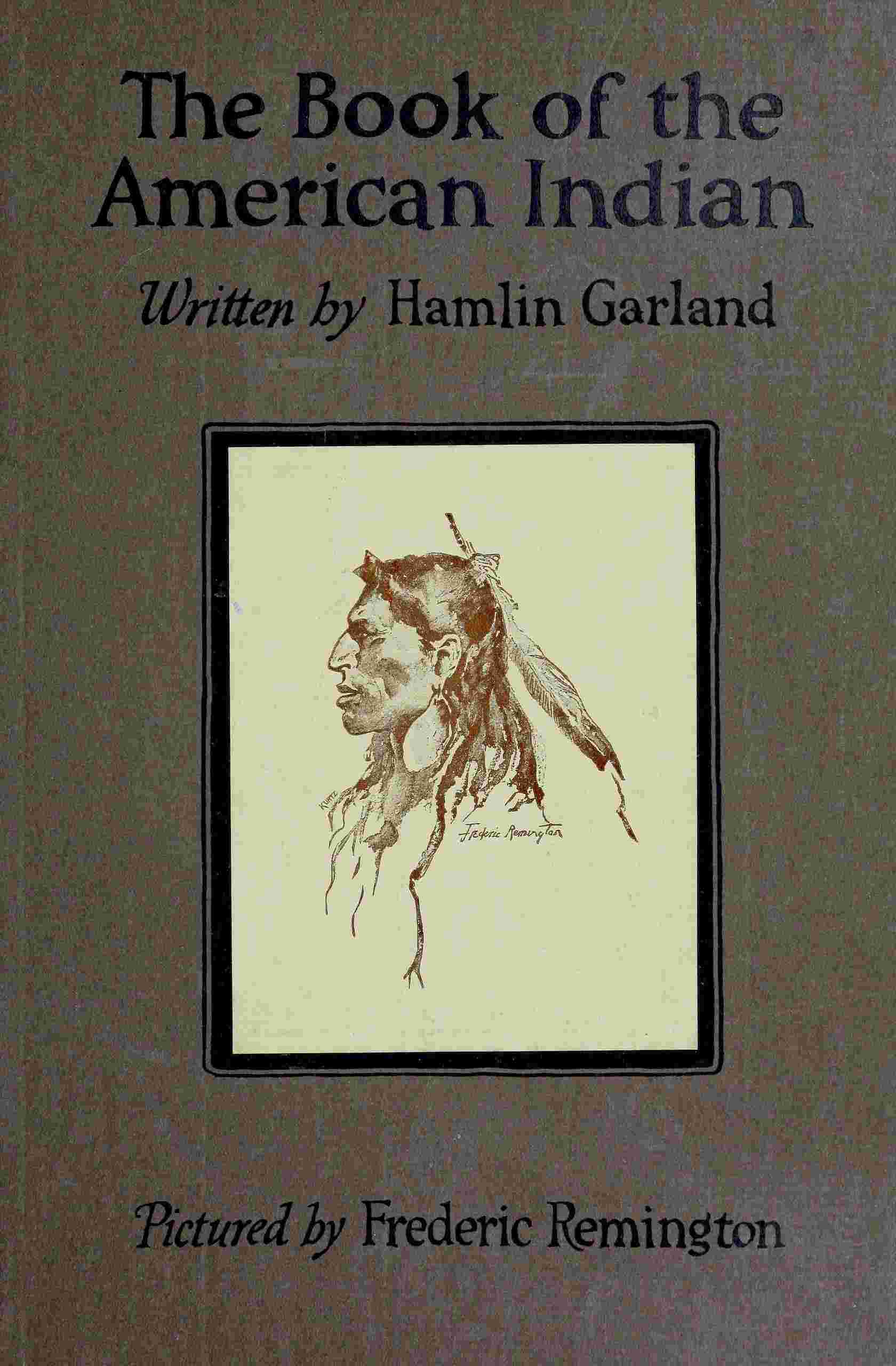
The Cheyenne, or—to use the name the Cheyennes apply to themselves—the Chis-Chis-Chash, scouts belonged to the corps from Pine Ridge organized on that reservation, and, with other Cheyennes from Tongue River, rendered valuable service to Uncle Sam during the Sioux outbreak of 1890 in South Dakota. In December of that year these brave Indians had many a skirmish with the savage Sioux, who, clothed in the ghost shirt, went on the warpath, taking refuge in the Bad Lands—a region that seemed made for stratagem and murder, with nothing to witness its mysteries but the cold blue winter sky.
Illustration fromLIEUTENANT CASEY’S LAST SCOUT
by Frederic Remington
Originally published in
Pony Tracks, Harper & Brothers, 1895
Shortly after our entry the chief lit his pipe, and after offering it to the Earth Spirits and to the Spirits Above, handed it to his visitor. The Bear made the same offering, and after smoking passed it on. So it went round the circle. When the chief had it in his hands once more, The Kicking Bear and his five companions rose and, stretching their hands to the west, stood still while The Bear prayed:
Then he began singing a song—a song of promise—and these were the words:
This song moved me, though I was a doubter. It was sung with great vigor and earnestness. It was the opening song of the dance, The Bear explained to us, and then all sat down, and one by one the visitors took up and sang the songs they had learned. There were many of them and they were based upon the same idea—that of a resurrection of the dead, the renewal of the worn-out old earth and the return of the buffalo.
As they sang my head was filled with many great but confused thoughts. In that light, with those surroundings, any magic seemed possible. It was thus that the disciples of Christ of Galilee came together and talked of his message. I had listened often to the white man’s religion, and yet the hymns of the martyrs could not move me as did these songs. The past and the present fused together strangely in my mind as the ancient shining winds blew and the old rejoicing days came back.
These were the promises of the songs, and as the visitors sang my despairing people became like little children; their hearts melted, they laughed and wept and shouted in time to the music. Some strange power seemed to go with the motions of The Bear’s hands. We all seemed to be looking upon the very scenes of which he sang, and my throat closed with an emotion I could not control.
An old man, called Looking Eagle, suddenly rose and, stretching forth his hands, cried out in a thrilling voice:
“I see it—the new land! I can see the buffalo feeding in myriads. It is Spring and the grass is new. My father stands at the door of his lodge. He calls with his hand. My mother is there. Ho! I come, my father.”
Then he fell on the ground and The Kicking Bear and his friends joined hands and, breaking into a song which made my own heart leap, they began to dance in a circle about the fire:
One by one those sitting gave way and rose and joined the dance, till only the chief, Slohan, and I remained seated. My father joined them at the last, and outside the tepee the voices of women could be heard catching and trying the song. It was agonizing to hear. It strained every heart to bursting with longing and sadness.
Suddenly The Bear’s head began to rock violently from side to side; it seemed as if it would wrench itself from its place. His eyes set in a dreadful stare, his mouth fixed in a horrible gape. Then shaking himself free, he fell close to the fire, face downward.
The others danced for a little while longer, then took seats and waited for the return of the spirit of their priest. Looking Eagle still slept.
The Sitting Bull sat in silence, smoking gravely, slowly, but his hand trembled. It was plain that he, too, longed to believe in the dance, but he could not. My own nerves were quivering with the excitement and I waited with almost breathless eagerness for the waking of the sleepers.
It was a long time—it seemed that it was nearly morning—when The Bear began to stir again and to rub his eyes as if wakened from sleep. He was very quiet and his voice was gentle as he said: “I have been with the Father. He gave me another message to The Sitting Bull. This it is: ‘All the people to the South are dancing my dance. Will the chief of all the Sioux walk behind his nation?’”
Then the chief said, “When my son there,”—he touched my arm—“or one of my trusted warriors can go to the spirit world and return to tell me it is true, then I may believe. If this religion is true all other deeds are worthless. Bring me proof. My ears are open, my eyes are not yet dim. If these songs are true, then I shall weep no more. If they are not true, then I wish to die. Let us hold a dance to-morrow.” And with a sign he dismissed us, but he himself remained alone with Looking Eagle, who still lay motionless where he had fallen.
XI
THE BREAKING OF THE PEACE PIPE
A knowledge of the dance spread like flame throughout all the Grand River district, and young and old began to flock to The Sitting Bull’s camp, eager to hear more, eager to experiment. “We also wish to see our friends who have gone before us,” they said. “We wish to hear what they say. Teach us the way of the trance.”
I felt the influence of their thought very strongly what time I sat among them, but afterward, when I had returned to the agency, it appeared but the rankest folly, and when others asked me about it I always said: “It is but a foolish thing; do not value it.” But my words did not check the wave of belief in it.
While no special pains were taken to conceal the fact from the white people, it was several days before the agent had any knowledge of Kicking Bear or his mission. This agent, let me say, was a good man, but jealous of his authority, and when he learned that the chief had himself invited The Kicking Bear into the reservation he was angry and said, “I won’t have any of this nonsense here,” and calling Crow, lieutenant of the police, he said: “Crow, go down to The Sitting Bull’s house and tell him this Kicking Bear and Messiah business must stop. Put Kicking Bear off the reservation at once!”
I was very much alarmed by the order, and waited anxiously to learn what the chief would say. I feared his revolt.
The next day the Crow returned from Rock Creek like a man walking in his sleep. He could give the agent no intelligible account of himself or of what he had seen. “He is a wonder worker,” he repeated, “I couldn’t put him away. When he took my hand I was weak as a child. I saw the dance, and when he waved a feather I became dizzy, I fell to the ground, and my eyes were turned inward.”
The agent stared at him as if he were crazy; then he turned to me and said: “Iapi, I wish you’d go down and see what all this hocus-pocus means. Take a couple of policemen with you and make sure that they start this mischief maker on his way home. And tell The Sitting Bull that I want to see him. Say to him the agent expects him to fire Kicking Bear off the reservation.”
I did not tell him that I already knew what was being done. I felt that if some one must carry such a message to the chief it was well for me to do it, for he was in no mood to be reproved like a boy. I took no policemen, but rode away alone with many misgivings.
No sooner had I passed the fort than I regretted my acceptance of the mission. After all, I was Uncapappa and I honored my chief. Whenever I entered the shadow of a tepee I was no longer alien; I fused with my tribe. The gravity and order of my chieftain’s lodge were pleasant to me, and the sound of the women’s songs melted my bones. I was not white; I was red. Acquiring the language of the conquering race had not changed my heart.
For all these reasons I saw that I was set forth on a dishonorable mission. To speak the words of the agent were impossible to me. When I met Circling Thunder, an old playmate of mine, and learned that many were dancing, my face stiffened. I had hoped to be able to have a word with the chief in private.
“Do you believe in it?” I asked.
My friend shook his head. “I don’t know. Many claim to have visited the spirit world—and Looking Eagle brought back a handful of pemmican, so they say. The buffalo were thick over there and the people were very happy.”
“How do you know it was pemmican?”
“I tasted it.”
“Perhaps it was only beef.”
“It may be so,” he said, but his eyes were still dim with dream.
Many of those whom I met were in this state of doubt. They wished to be convinced. It was so sweet to dream of the old-time world, and yet they could not quite believe it. They stood too near the stern reality of hunger and cold, and yet my people are a race of seers. To them the dream has not yet lost its marvelous portent. In time of trouble they go upon the hills and wait for the vision which shall instruct and comfort them.
In my youth I had shared in these beliefs. I had had my days of fasting and prayer; yes, I too had entered the sleep which reveals. I had met and talked with birds and animals, and once I felt the hand of my dead mother move in my hair. I had fasted until I could walk among the painted tepees of the spirit world and I had gazed on the black herds of buffalo.
My training among scholars had given me a new understanding of these conditions, but I could not impart my knowledge to my people. My wisdom was accounted alien and therefore to be distrusted. Of what avail to argue with them when the frenzy was upon them?
It was brilliant October, very warm and hazy, and our cruel, treacherous land was indolently beautiful. The sky was without cloud—a whitish blue—and the plain, covered with tawny short grass on the uplands, and with purple and golden garments of blue-joint in the hollows, seemed to lift on every side like a gigantic bowl. My horse’s hoofs drummed on the dry sod as I hurried forward.
This is an inexorable land—a land in which man should be free to migrate like the larks or the buffalo. In the old days we never thought of living on these high, wind-swept spaces. They were merely our hunting grounds. Our winter camps were always beside the river, behind the deep banks, in the shelter of the oaks and cottonwoods. In those days the plain seemed less ferocious than now, when we are forced to cross it in all kinds of weather, poorly clothed. In the days of the buffalo we chose our time and place to migrate; now we were fastened to one spot like chained coyotes.
As I came to the hill which overlooked the wooded flat I saw a great many tepees set about the chief’s cabin, and I perceived also that the dance was going on. Occasionally a cry reached me, pulsing faintly through the hazy air. In some such way, perhaps, the white fisher folk of Galilee drew together to greet the coming of their Messiah. Was this Saviour of the west any more incredible than Christ?
So I mused as I rode slowly down the hill. What if it were all true? The white man who claims to know all things believes in his Bible and his Bible is full of miracles.
Soon I could hear the song. It was the sad song I had heard them sing in the chief’s tepee. It was in most violent opposition to the sunlit earth and the soft caressing wind, and reached my heart like the wail of a mourning woman. Soon I was near enough to hear the wistful words. It was all of entreaty:
They were dancing in a great circle, some sixty men and women, their hands interlacing, their eyes on the ground. Each dancer wore a plain buckskin shirt without ornament. No one carried a weapon of any kind. They had deliberately gone far back of the white man, discarding all things on which his desolating hand had been laid. On each head (even of the women) waved an eagle plume, the sacred feather, and all were painted with a red paint, which the Mato had brought with him—a sacred paint he called it. Around them were many others, watching, and here and there on the ground lay those who were entranced.
Just as I came up the song ended and Mato, who stood in the circle, lifted a peculiar wand in his hand and cried out like a priest: “Think hard only of that which you wish to see in your sleep, and it will be given to you. The old shall be young and the sick shall be made well. Put away all anger and hatred and turn your thoughts to the Messiah in the west who listens to all his children.”
Then some one started another song and they began again to dance. I looked for the chief, and saw him sitting in the shadow of a small tree close to the circle of dancers. My father, Slohan, Circling Hawk, and another whom I do not recall, sat with him. They were all very grave and very intent. They hardly saw me and my task grew heavy and hard.
I motioned to my father and he came out, and I said: “I am from the agency. I am hungry and so is my horse.”
He sent a boy with my pony and took me to his tepee near by, and there I ate some bread and meat in silence. When I had finished I began: “Father, I have come to stop the dance and to put the priest away.”
My father looked troubled. “Do you come from the agent?”
“Yes, he has heard of the dance and his orders are to stop it.”
“My son, all that is bad. It makes my heart sore. Do not speak to the chief now. Wait till evening, when he is weary. The agent is wrong. There is no harm in this dance. Has not the Messiah said, ‘Do not strike anyone; leave all punishment to the Great Spirit?’ Go back and tell the agent there is no harm in it.”
I did not listen well, for the song outside was wilder and sadder each moment. They were dancing very fast now, and the ground, bare and very dry, had been tramped into dust, fine as flour, and this rose from under their feet like smoke, half concealing those on the leeward side. All were singing a piteous song of entreaty. The women’s voices especially pierced me with their note of agonized appeal. It was a song to make me shudder—the voice of a dying people crying out for life and pleading for the return of the happy past. I could not understand how the white men could listen to it and not be made gentle.
The chief gazed intently at the circle. He seemed waiting in rigid expectancy, his face deeply lined and very sad. He looked like one threescore and ten sitting so. It was plain that he did not yet permit himself to believe in the message. He, too, felt the pain and weariness of the world, but still he could not join in the song. His mind was too clear and strong to be easily confused.
The interest was now very great. Waves of excitement seemed to run over the circle and those who watched. Shouts mingled with the singing. The principal song, which they repeated endlessly, was the Messiah’s promise of eternal life:
Many did not sing; they only cried out for help, entreating to be shown those who had died. “Oh, hear me! Great Spirit, let me see my little one—my boy; let me hear his voice,” pleaded one woman, and her voice shook me till my hair moved as if a spirit passed.
Some of the women’s faces were distorted with grief, and a kind of nervous action which they could not control seized upon them. One by one as they began to show this tension, Mato and his helpers confronted them, waving before their eyes a feather on a wand and uttering a hoarse chant, monotonous and rapid, “Ha—ha—ha—ha—ha—hah!” until the frenzied one, convulsed and dreaming, fell into the ring and lay stiff and stark in the dirt.
But the ring did not halt. The fall of each new convert seemed to add new vigor to the song, for each hoped to be the next one smitten. Suddenly Shato, dropping the hands of those dancing near him, flung his hands to the sky with a gesture as if he would tear the sun from its place. The hooked intensity of his fingers was terrible to see. He remained fixed in that way, rigid as iron, yet standing on his feet firm as an oak. No one touched him; on the contrary, all were careful not to disturb those who were in trance. Another man stood at bay, buffeting the dancers to keep them from trampling upon his wife, who, being sick of some wasting disease, had joined the circle, seeking health of the Great Spirit.
As I looked my heart contracted. It seemed that I was looking upon the actual dissolution—the death pangs—of my race. My learning was for the moment of no avail. I shook like a reed in the gust of this primeval passion. Was it insanity or was it some inexplicable divine force capable in very truth of uniting the quick and the dead in one convulsive, rapturous coalition?
A thrill of momentary belief swept over me. Was it not better to end it all, to die and go with all my people to the happy hunting grounds! The white man’s world, what was it but a world of care and grief?
The songs continued, but they grew quieter. Several of those who called loudest now lay silent in the dust. Those who circled and sang were keener of eye and calmer of feature. These were they who reasoned, and to them the trance could not come. I began to see that those who had taken on the dream were not the most intelligent but the most emotional men and women of my tribe, those who were weakened by the loss of dear ones.
The song was no longer a cry—it had beautiful words. It grew more joyous:
At the end of this song, four times repeated, the dancers unclasped hands and sat down on the earth. As they did this the chief arose and, stepping into the circle, took a seat near Mato, who arose and, lifting his hands to the west, again prayed silently for a moment, then said:
“My friends, you see the words of the Messiah are true words. Many are asleep. They will return soon and tell us of their good journey to the spirit world. Ever since the Messiah talked to me I have thought upon what he said and I see only good in it. It is a sweet religion. The white man’s religion is not for us. Its words are all strange. It deals with unknown animals and tells of far-off countries. The names of the chiefs we do not understand, but this new religion all can understand. It is filled with familiar words. It is for us. Our Messiah has told us that all our dead are to come back to the earth, and as the earth is too small for such a throng he must remove the white man. He will also bring heaven down to make the world wider, and then all the red men will be able to dwell together in friendship. There will be no more war, only hunting and feasting and games. This good world will come to us if we do as he commands.”
At this moment Chasing Hawk, who acted as usher, brought to the circle a woman who had just wakened out of a trance. Her face was shining with happiness, but her tongue was thick, she could barely make herself heard. As she spoke the chief listened intently.
“What did you see?” asked Mato.
“I saw my little one,” she replied.
“Where was he? What was he doing?”
“He was playing in the grass, in a beautiful country. My grandmother was near, cooking for him.”
Mato called her answers aloud to all who listened, and everyone crowded near to hear the glories of the land from which her spirit had returned. Cries of joy arose in swift echo of the priest’s shouting, but the chief’s face remained gravely meditative.
When this woman was led away Eagle Holder, another dreamer, came into the circle, one who needed no crier. He was a proud orator. Reaching out his hand in a gesture of exultation, he cried:
“In my sleep I saw a vast eagle coming toward me. He came rushing; the noise of his wings was like a storm, his eyes were red like the moon at dusk. As he came near I caught him by the neck, and with a rush he carried me away.” Cries of astonishment broke forth. “He swept away with me high up and toward the east; the wind cried about my ears and for a time I could see nothing; all was mist. At last he began to circle and I looked away and I saw the new land of the Messiah.” (“Hah! Hah!” called the people.) “It was a prairie country” (the women began to sing) “with countless buffalo feeding” (“Ah! Ah!”) “and lakes with great white birds sailing about. On the bank of the lake was a circle of tepees and they were made of skins whitened by clay, and they were very large and clean and new. A hunting party was just riding forth; they were very happy and sang as they went.”
He paused abruptly, while the women wailed in rapture. At last he continued: “Then the eagle entered a cloud and I saw no more. I woke and found myself here on the ground.”
This story, magnificently told though it was, affected the hearers less than the shining, ecstatic face of the mother who had seen her spirit child. Her slow, dreamy utterance was more eloquent than the vivid gestures and musical voice of Eagle Holder.
One by one others awoke and told of meeting friends and revisiting old scenes. Some told of people they had never met in life, and minutely described lodges they had never entered. These stories awoke wild cries of amazement and joy. It was plain that many believed. I had not seen my people so happy since I was a child, before the battle of the Big Horn.
At last when all had spoken they arose and joined hands and began singing once more; then the chief rose and left the circle, and I, intercepting him, said: “Chief, I bring a message to you.” He made a motion which means follow, and I accompanied him to his tepee, which he loved because of its associations with old days, and to which he went for meditation and council.
It would be wrong if I did not confess that I knew the chief distrusted me, for he did. After I had taken my position under the agent he was less free to speak his mind to me, and this was a grief to me. My father saw us go and joined us, and I was glad of his presence. His kind old face made it easier for me to begin.
The chief took his seat at the back of the lodge and said: “Speak. I listen.”
“Sire,” I said, “the agent has heard bad things of this dance on other reservations, and some days ago he sent policemen down here to forbid it. He now hears it is still going on and he has sent me to say that Mato, the messenger, must go away and the dance must stop.”
I could see the veins of his neck fill with hot blood as he listened, and when I had finished he said: “Are we dogs to be silenced by kicking! You say to the agent that the white men have beaten us and left us naked of every good thing, but they shall not take away our religion. I will not obey this command! I have said it!”
Here my father broke in, saying to me: “You yourself have told me that you saw among the white people dreams like this. Why do they seek to prevent us? You have read us the white man’s sacred Big Book, and you say it is full of medicine dreams. Why should we not dream also?”
I then replied: “I do not come commanding these things. It is the agent who says them. Do not blame me.”
The chief, who had regained his composure, interposed quietly: “My son, you are right. We should not blame you, but the one who sent you. Therefore I say take these words to the agent: ‘I will not give up the dance.’”
In the hope of persuading him, I asked: “Do you believe in the dance?”
“I do not know,” he replied. “I am watching, I am listening. It is like the white man’s religion—very wonderful and very difficult to believe. I wish to try it and see. The white men are very wise, yet their preachers say that the sun stood still for Joshua, and Christ, their great Medicine Man, healed the lame and raised the dead.”
“But that was long ago,” I hastened to say.
“If such wonders happened then they can happen now,” he answered. Then he passionately broke forth: “I desire this new earth. My people are in despair, their hearts are utterly gone. We need help. My warriors will soon be like the Chinaman at the fort, fit only to wash windowpanes. Our rations are being cut off. What is there to look forward to? Nothing. I saw in the east many poor people. They worked very hard and wore ragged clothes. All were not rich and happy. Among the white men my people would be only other poor people, ragged and hungry, creeping about, eating scraps of food like hungry curs. I fear for them, therefore my ears are open to the words of this new religion which assures me that the old world—the world of my fathers—is to return. You say the agent is displeased. Is there anything I can do which does not displease him? The white men have their religion—they pray and sing. Why should not we sing if we have heart to do so? Go ask him if he is afraid that the Messiah has come of a truth, and that the white man is to be swept away.”
“He thinks it is a war dance,” I said. “He is afraid it will stir up strife.”
“Go tell him what you have seen. Say to him that it is a peaceful dance. There are no weapons here; there is no talk of fighting. It is a magical prayer. Mato says those who lie out there are with the spirits. You heard them tell what they saw. If these tales are true and if we could all be as they, then would the white man’s world indeed vanish like smoke and the pasture of the buffalo come again. It is strange—that I know—but the white man’s religion is also very hard to believe. The priest will tell you stories just as wonderful, and the preacher, too. Their Messiah was born in a stable among cattle; ours appears among the mountains. Their Christ rose from the dead. So does ours. Their Christ came to the poor people, so they say. Are we so despised of God that we cannot have our Messiah, too? I do not say all this is true, I only wish to test it and see.”
I could see that his clear mind could not accept the new religion, yet his heart desired it deeply. Once he had said: “I do not understand your Christ and his teaching. I must have time to think; I will not be pushed into it,” and as he had often reproved his people for saying yes to everything the white man said, so now he was equally cautious, only he was older, with a deeper longing to be comforted.
My task was only half completed and I said: “Chief, the agent told me to say to you, ‘Put Mato away.’ I beg you to come with me and meet the agent and explain to him the meaning of the dance, and then maybe he will not insist on this inhospitable thing.”
The chief’s face grew very stern. “The agent is a dog! He insults me. I will not see him! If he wishes to talk with me let him come here. I am waiting.”
My father made me a sign to go, and I went away. I could hear them conversing in low voices, but I could not understand what they said. At last my father called, and I went in again.
The chief looked less grim of lip and said to me, “Very well, Mato will go to-night.”
“Good,” I said. “At ten o’clock to-night Bull Head and I will come to take them across the river.”
My father and I went out and left him sitting alone.
When I returned at ten o’clock with Bull Head the chief’s lodge was filled with people. The women were weeping and the men were sullen. As I entered the tepee Mato was speaking. The chief sat smoking, with his eyes fixed on the floor. The priest was saying:
“You see how it is! The red man can keep nothing from the white man, who is jealous even of our religion. Washington would deprive us of our dreams. The agent is a wolf. Nevertheless, I will go, for my mission here is fulfilled. I have spoken the words of the Father; I have taught you the ceremonials. Henceforth you can test for yourself the truth of the word.” Then standing erect and in line the six messengers of the Messiah lifted the palms of their hands toward the west and prayed silently. A little later they began to sing this song:
As they sang the people began to cry out, “Stay and tell us more,” but Mato led the way out of the lodge.
As I stood at the door, ready to follow him, the chief stood upon his feet, with a look on his face which silenced every one who saw it; it was fierce, yet it was exalted. Holding his pipe in his outstretched hands, his beloved pipe which he had carried since his first chieftainship, he said: “Here break I my peace pipe. If this religion is true then there is no more war. If it is not true, then I wish to die as a warrior dies, fighting!” With a gesture he snapped the stem in pieces. All the people cried out, and with a heart cold with fear I went forth into the night.
My chief’s last war with the white invader had begun.
XII
THE CHIEF PROPOSES A TEST
Meanwhile the dance was going on not only among all the Sioux, but among the Cheyenne, Arapahoe, and Shoshone peoples, and the settlers of many states were greatly alarmed. They pretended to believe the ceremonial was warlike. They knew nothing of the songs or prayers. Cowboys, drunk and desiring a little amusement, raced into the border towns shouting, “The Sioux are on the warpath!” and whole settlements, frenzied with fear, fled to the east, crying loudly for the government to send troops. “Stop this outbreak,” became the demand.
All this pressure and excitement made our situation worse. Those who believed said, “You see how it is, the white people are afraid of our religion; they are seeking to prevent the coming of the new world”; and those reckless ones who were willing to fight cried out: “Make ready. Let us war!”
Letters and telegrams poured in upon the agent at the Standing Rock, asking for a true statement of affairs. To all these he replied, “There is no danger, these Indians are peaceful”; but he took occasion in his answers to defame my chief.
In this he overshot his mark, for in calling The Sitting Bull a man of no force, a liar, and a coward, he became unreasonable. To fear a man so small and mean was childish. He also misstated the religion of the dance. He sneered at my father and others as “Indians lately developed into medicine men,” and ended by saying, “The Sitting Bull is making rebellion among his people.” Forgetting all the favorable reports he had many times made of my chief, he falsely said, “The Sitting Bull has been a disturbing element ever since his return in 1883.”
What could such a man know of the despair into which my people had fallen? He was hard, unimaginative, and jealous of his authority. He was also a bigot and it is hard for anyone not a poet or philosopher to be just to a people holding a different view of the world. Race hatred and religious prejudices stand like walls between the red man and the white. The Sioux cannot comprehend the priest and the priest will not tolerate the Sioux. Our agent became angry, arrogant, and unreasonable. He felt that his government was in question. His pride was hurt.
For a few days after I reported the departure of Mato all was quiet and the agent believed that the frenzy was over so far as his wards were concerned. He was only anxious that The Sitting Bull and his followers should not know how deeply their dances had stirred the settlements. Nevertheless, the chief knew, and it helped him to retain some faith in the magic he was testing. He did not refer to the breaking of his peace pipe, but he declined to give up the dance.
To his friend, John Carignan, the teacher, he said: “The agent complains that I feed my cattle to those who come to dance. What does it matter? If the buffalo come back I will not need them. If the new religion is a lie then I do not care to raise cattle. The Great Spirit has sent me a message. He has said, ‘If you wish to live join the dance I have given.’ Whether this message is true or not I cannot yet tell. I am seeking proof.”
Against the bitter words of the agent I will put the words of John Carignan, who kept the school near The Sitting Bull’s home. This man speaks our language. “I knew the chief well,” he said, “and I saw no evil in him. He was an Indian, but I can’t blame him for that.”
During this troublesome period my chief went often to see the teacher of his children. Jack was the one white man with whom he could talk freely, and together they argued upon the new religion. Jack liked my chief and told me so one day as we were discussing the agent’s attitude toward the dance. “Often the chief came to eat with my family and he has always borne himself with dignity and honor. I have always found him considerate and unassuming.”
“Our religion seems foolish to you, but so does yours to me,” my chief said. “The Baptists and Methodists and Presbyterians and Catholics all have a different God. Why cannot we have one of our own? Why does the agent seek to take away our religion? My race is dying. Our God will soon die with us. If this new religion is not true, then what does it matter? I do not know what to believe. If I could dream like others and visit the spirit land myself, then it would be easy for me to believe, but the trance does not come to me. It passes me by. I help others to see their dead, but I am not aided.”
“That is it precisely,” replied the teacher. “See the kind of men who go into the trance. Your strong, clear-headed men do not believe.”
“That is true,” the chief admitted, “but I am hoping some of my head men may yet enter the trance. Perhaps we do not know how to prepare the way.”
By this he meant that they had not learned how to hypnotize, for that is what the dance became. It was like a meeting of spiritualists who sit for visions. It was like the revival meetings of the Free Methodists or the old-time Shakers or Quakers. My friend Davies wrote me a long letter wherein he said: “It is foolish, as you say, but no more absurd to my mind than scores of other forms of religious ecstasy. My advice is let it run; it will wear itself out. Movements of this kind grow by opposition.”
All that he said was true, but, like the chief, I could not help hoping something would happen, for when they sang their songs warmed my heart and made my learning of little weight. The painted arrows, the fluttering feathers, the symbolic figures—every little thing had its appeal to me. When they raised their quivering palms in the air and cried to the Messiah in the west, I could scarcely restrain myself from joining in their supplication. This may seem strange, but it is true and you will never comprehend this last despairing cry of my race if I do not tell you the truth.
We believed in what we were. We had the pride of race. We were fulfilling our destiny as hunters and freemen. Do you think that in ten years you can make my proud people bow the neck to the scourge of a white man’s daily hatred? Is the Great Spirit a bungler? Does he draw a figure on the earth, only to wipe it away as a child writes upon a slate?
“Why are we so thrust upon and degraded? It must be that we have angered the Great Spirit. We must go back to the point wherein our old trail is found,” so my father argued.
The line that divides the mysterious and the commonplace is very slender, in the minds of my people. You do not realize that. They take up a cartridge. How wonderful it is! How is it made? A knife—what gives the point its gleam and its spring? The grass blade, what causes it to thrust from the earth? The clouds, where do they go—what are they? To the west of us is the Crow country; beyond that, who knows? You must put yourself in the place of those who think in this way before you judge them harshly. Many of these things I now understand, but I do not know why men are born and why they die. I do not know why the sun brings forth the grass.
My chief comprehended more than most men of his tribe, but to him the world was just as mysterious as to me. It did him no good to study the white man’s religions. They were so many and so contradictory that he was confused. He had always been a prayerful man—and had kept the Sun Dance, and all the ceremonials of the Uncapappas carefully. He was a grave soul, doing nothing thoughtlessly. He always asked the Great Spirit for guidance, yet he was never a medicine man, as the white men say. He did not become so during this dance. He helped to hypnotize the dancers, but so did others; that did not mean that they were priests or medicine men—it only meant they had the power to induce these trances.
It was a time of great bewilderment, of question and of doubt. No one thought of the present; all were dreaming of the past, hoping to bring the past. The future was black chaos unless the Great Spirit should restore their world of the buffalo.
The dance went on with steadily growing excitement. The autumn remained very mild and favorable to the ceremony, and yet there were fewer people in it than the agent supposed. Those most active continued to be the mourners. Those who had lost children crowded to the dance, as white people go to spiritualistic seances, in the hope of touching the hands of their babes and hearing the voices of their daughters. They sincerely believed that they met their dead and they deeply resented the brutal order of the agent who would keep them from this sweet reunion.
It was deeply moving to look upon their happy faces as they stood and called in piercing voices: “I saw my child—my little son. He was playing with his small bow and arrows. I called him and he ran to me. He was very happy with his grandfather. The sun was shining on the flowers and no one was hungry. My boy clung to my hand. I did not wish to come back. Oh, teach me the way to go again!”
I think the number of those who believed that the new world of the buffalo was coming, that the white man would be swept away, were few, but hundreds considered it possible to go to the spirit land and see those who were dead, and they resented, as my chief, the interference of the government. There was nothing worth while left in the world but this, and they used bitter words when they were commanded to lay this comforting faith aside. “Why should our spirit meetings be taken from us?” they asked of me.
In spite of the wind, the dust, and the blazing October sun, a veil of mysterious passion lay over the camp. The children were withdrawn from school to participate in the worship. Nothing else was talked of. During the day, as the old chiefs counciled, the women gathered together and told their experiences. There were deceivers among those who took part in this, and many who were self-deceived, but for the most part they were in deadly earnestness; the exultation on their faces could not be simulated. They moved in a cloud of joyous memories, with no care, no thought of the Great Father’s commands. They were borne above all other considerations but this—“How may we bring back the vanished world of the fathers?”
Up at the agent’s office was an absolutely different world. There hate and cynical coarseness ruled. To go from the dance to the agent was a bitter experience for me. I was forced into deception. No one dared to speak of the dance, except in terms of laughter or disbelief. All the renegades in the pay of the government joined in the jests and told ribald stories of the chief and of the ceremonies. They could not understand what it meant. As for me, I said little, but I foresaw trouble for my people and sorrow for myself.
The chief clerk hated me and all Indians. He was a most capable man, but sour and sullen to everyone who did not appeal to him. He had no children, no wife, and no faith. His voice was a snarl, his face a chill wind. He never spoke to an Indian that he did not curse. The agent was not so, but he was a zealot impatient of the old, eager to make a record for himself and the post. Loyal to the white man’s ideal, he was unsympathetic and harsh and materialistic in dealing with the traditional prejudices of my race.
He sent for Jack, the teacher, and asked him to come up and talk with him. “Tell me all about it,” he said, “What is the meaning of it?”
In reply Jack said, soberly: “They are very much in earnest about this new religion of theirs, but they are peaceable. The Sitting Bull talked with me a long time yesterday, and I found it a hard matter to meet his arguments, which he bases on the miracles of the Bible. The dancers are told to lay aside all that the white man has made and fix their minds on what they wish to see most of all. They go into a trance and lie for hours. When they wake they are very happy. They come and tell me their dreams and some of them are very beautiful. My advice is to let them alone. It is a craze like the old-fashioned Methodist revival. It will die out as winter comes on.”
This testimony by a man who understood our language and was in daily contact with The Sitting Bull band led the agent to pursue a calmer course. He decided to wait the ebbing of the excitement.
Unfortunately, a long letter he had written to Washington about “the Messiah craze” was given to the reporters, and the daily papers were instantly filled with black headlines introducing foolish and false accounts of what was taking place. Writers hurried to the Standing Rock and wired alarming reports of what they heard, and all this reacted unfavorably upon the dancers.
The agent then laid the burden of the blame upon my chief. “He is a reactionary,” he said; “he is a disturber and has been from the first. He has opposed every treaty and has insisted at all times on being treated as a chief,” and in all his letters and talks he continued to speak ill of him.
He sent word by me and by Jack, saying to The Sitting Bull: “Come to the agency. I want to talk with you. Stop this foolish dance and come here and camp for a while where I can talk with you. The white people are alarmed and you must stop this dance.”
The chief, embittered by the agent’s attack upon him, refused to go to the Standing Rock. “I am not a dog to be whistled at. I will not go to the agent to be insulted and beaten,” and he called his old guard of “Silent Eaters” around him. “The agent threatens to imprison me and break up the dance. If he comes to fight he will find us ready.”
Day by day the feeling between the agency and its police on the one side, and the chief and the dancers on the other, got more alarming, and the agent was obliged to send many telegrams to Washington and the outside world to quiet the fears of the settlers, and at last he decided to go down to Rock Creek and see for himself what was going on. He should have done so before.
He asked me to go as interpreter, and this I did, but very reluctantly, for it put me too much on his side.
He planned to come upon the scene of the dance suddenly, and many were dancing as we rode up to the outer circle of lodges. The word went about that the agent was come, but no one stopped dancing on that account. They were too much in earnest to give heed to any authority. Some of those to whom he called replied with words of contempt, defying his command, and I, who knew the terrible power of the President’s army, trembled as I saw the face of the agent blacken.
“What foolery!” he said to me. “This has got to stop! Go tell The Sitting Bull to come to me.”
I made my way to where the chief sat, and told him what the agent had demanded.
I could see that he associated me with the renegades who fawned upon the agent, and he listened to what I said with cold, stern face. I pleaded with him to do as he was commanded. I informed him of the fury of fear which had fallen upon the settlers and I warned him that the soldiers would come to put a stop to the dance.
To all this he made no reply other than to say: “Since the agent has come to see me, tell him I will talk with him in the morning. I am busy now. I cannot leave the dance.”
The agent was furious when I told him this, and as we drove off down to the school muttered a threat, “I’ll make him suffer for this, the insolent old dog.” We found Carignan, the teacher, almost alone at the school. The Sitting Bull had said: “If this religion is true, then it is more important than your books,” and had told his people to withdraw their children from their studies. “If the white man’s world is coming to an end, of what use is it to learn his ways?” he argued.
To Carignan the agent talked freely of the chief. “He must be brought low,” he declared, wrathfully. “His power must be broken. I will see him in the morning and give him one more chance to quit peaceably. If he does not I will arrest him. He will find he can’t run this reservation.”
To this Carignan replied: “I don’t think he means to make trouble, but he is profoundly interested in this new religion. I think he will yield to reason.”