
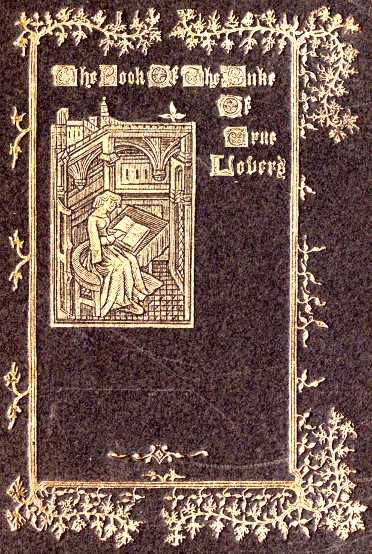
THE BOOK OF THE DUKE OF TRUE LOVERS
Here begins the Book of The Duke of True Lovers
Although I might have no desire or intent at the present time to discourse of love, since all my mind is occupied with other matter the which is more pleasing to me, I am willing, for the sake of others, now to commence a wondrous story, for to this I am besought by one who, instead of making request, has the right to give command to one even more worthy than I. And this is a lord whom it behoves one duly to obey, and who of his grace has desired me to make known the trouble which, whether he has been wise, or whether he has been foolish, he has, during many winters and summers, long been in by reason of love to the which his heart is still in bondage. But [pg 2] he would not that I should make known his name. It contents him who tells this story for their sake, to be called the Duke of True Lovers. And it is his pleasure that I recount, even as he has told them unto me, the grievous distresses, the joys, and the strange adventures, through the which, during many bygone years, he has passed. And he would that to this rehearsal I should at the same time add other matter, the which I grant him, for I know him to be of such disposition, and of such good sense, that his humility will take in good part the imperfection of my little poem, and, with his consent, I will relate on his behalf the facts even as he has set them forth.
[pg 3]