
WeRead Powered by ReaderPub
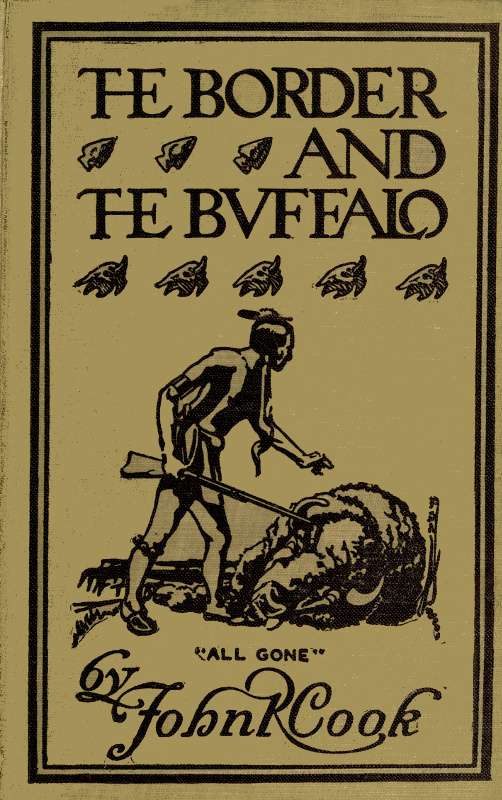
The Border and the Buffalo: An Untold Story of the Southwest Plains / The Bloody Border of Missouri and Kansas. The Story of the Slaughter of the Buffalo. Westward among the Big Game and Wild Tribes. A Story of Mountain and Plain cover

The Border and the Buffalo: An Untold Story of the Southwest Plains / The Bloody Border of Missouri and Kansas. The Story of the Slaughter of the Buffalo. Westward among the Big Game and Wild Tribes. A Story of Mountain and Plain

Chapter 17: CHAPTER XIV.
Open in WeRead

About This Book

The author offers first-person reminiscences of life on the southwestern plains, tracing childhood on a turbulent border, experiences hunting vast herds of buffalo, the techniques and commerce of hide gathering, and violent clashes with Indigenous warriors and guerrillas. The narrative mixes hunting lore and survival episodes—long treks, encounters with predators, camp life, and makeshift justice—with accounts of scouts and fellow hunters who guided or rescued parties. Interspersed are reflections on the ecological devastation caused by mass slaughter of buffalo and the hardships of frontier travel, together framing a portrait of rough-and-ready frontier communities, their routines, hazards, and codes of honor.

M. V. DAILY,

Soldier, Indian Fighter, Buffalo-Hunter, and Homesteader.

His picture shows the loss of his trigger finger; done by Missouri bushwhackers. Yet he trained the middle finger to pull trigger, and told the author, in 1907, that he could shoot just as well as ever.

When the wild plains Indians, armed with lances, bows and arrows, attacked a stage-coach, in 1865, on the Arkansas river, this man Daily was driving the six mules drawing the coach, which had sixty arrows imbedded in it; and a lance that was thrust at him by a big Kiowa, went between his right arm and body, passing through into the coach. He got his coach into Larned, and himself unhurt.

He homesteaded in Thomas county, Kansas; hunted buffalo; built sod houses; broke prairie; went through the drought era; saw the country nearly depopulated on account of successive failures of crops; witnessed the change in climatic conditions; the hot winds abate; the coming of rainfall; and the return of starved-out settlers, bringing with them people and capital. And to-day the country is well settled with a happy, prosperous people.