
THORNTON W. BURGESS was born in Sandwich, Massachusetts, January 14, 1874. He graduated from the Sandwich High School in 1891, afterward taking a course in Comer’s Commercial College, Boston. After a few years in business life he entered the editorial field as one of the editors of the Phelps Publishing and Orange Judd Companies and was for several years one of the editors of Good Housekeeping Magazine, for which he wrote extensively.
For some years he has been a contributor to many of the leading magazines. Over the name of W. B. Thornton he won recognition as a writer on out-door life and nature topics. He is an ardent lover of nature and since boyhood has spent his spare time in the woods and fields. His vacations have been spent with rod, gun and camera, camping and canoe cruising.
Among his books are:
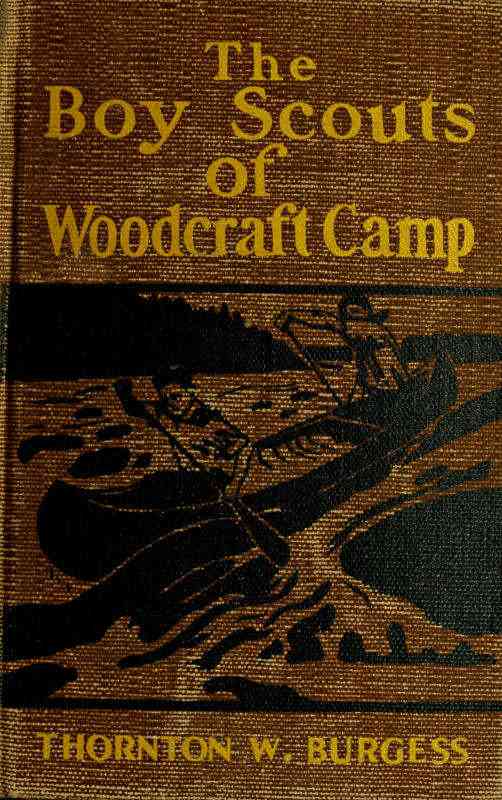
The Boy Scouts of Woodcraft Camp
The Boy Scouts on Swift River
The Boy Scouts on Lost Trail
The Boy Scouts in a Trapper’s Camp
Transcriber’s Note
Minor punctuation errors have been repaired.
Hyphenation has been made consistent.
Page 39 has a reference to Mt. Sewell. Based on the rest of the book, this should probably read Mt. Seward, but it is preserved as printed.
The following amendments have been made:
Page 150—wonered amended to wondered— He wondered if it could be possible ...
Caption to the illustration facing page 306—WIGWAG SIGNALLING amended to WIG-WAG SIGNALING for consistency with the rest of the book.
The frontispiece illustration has been moved to follow the title page. Other illustrations have been moved where necessary so that they are not in the middle of a paragraph.