
"Indeed I shan't," Enoch said emphatically. "When the time comes that I can speak with General Washington, I shall ask permission to enlist in the same company with you, and have no doubt but that it will be granted. Now, boys, I have come to mess with you. The order I brought General Dickinson was that the troops were to sleep on their arms, and I suppose we are at liberty to remain anywhere within these lines."
"There doesn't seem to be much choice. Suppose we stay where we are," Seth suggested. "Greene left us here, and most likely will come back, when—"
"He is back now, lad," a voice cried, and a moment later the spy appeared from out the darkness. "I have got rations such as are being dealt out—Hello, here's our friend, the aid, and now he'll want grain for his horse. I'll look for some."
"Let me do that," Enoch cried as Greene, dropping on the ground the food he was carrying, was on the point of turning away again. "I am told that you are wounded, and you should have attention before playing waiter for us three who are in good bodily condition."
"The wound wasn't much more than a scratch, and the surgeon has already tied it up. You may look for provender for the horse if you have a mind to. The best place would be nearabout where General Dickinson is."
Enoch's horse did not receive a particularly hearty meal on this evening, owing to the lack of grain; but he was well groomed, and not until that work had been done to his own satisfaction did Enoch rejoin his comrades.
Then, lying at full length on the ground, they discussed the stirring events of the day, and it was during this conversation that Greene asked:
"Did you see that Irish woman when her husband was killed during the artillery duel—at the time the Royal Light-horse charged so furiously?"
"I didn't know there was a woman on the field!" Enoch exclaimed.
"There was, and her husband was one of our gunners. She assisted him during the hot cannonade by bringing water from the spring near by, and when he was killed at his post, there being no one to take his place, the piece was ordered to be removed; but she insisted on working it, and twice within an hour I saw her using the rammer as energetically as any man among them. The soldiers were cheering for 'Mary'—that is her name, I suppose—and she deserves more than thanks for this day's work."
Then each in turn related some incident which he had seen or participated in, until, despite the groans of the wounded, who were being tended by the surgeons at a temporary hospital near by, the three Philadelphia boys fell asleep, and when morning came were aroused by the tidings that Clinton had put his weary troops in motion at midnight, and stolen away.
The British soldiers whom General Lee declared the Americans could not stand against had been fairly beaten by men decidedly their inferiors in discipline and soldierly training.
It was simply the purpose of this story to relate the adventures of the three Philadelphia boys during the events which led up to the battle of Monmouth, and with the triumphant ending of that engagement the purpose of this imperfectly told tale has been accomplished.
Every reader knows that the Americans lost in this battle two hundred and twenty-eight; the British two hundred and fifty, sixty of these having been stricken dead by the heat.
It is believed that there were about fourteen thousand men in the American forces, and not more than ten thousand under Clinton.
The order which General Washington issued, congratulating his army upon the victory they had won, is also well known; but because those in whom we are particularly interested served in the New Jersey militia, the following extract may well be repeated:
"General Dickinson and the militia of his State are also thanked for their noble spirit in opposing the enemy on the march from Philadelphia, and for the aid given by harassing and impeding their march so as to allow the Continental troops to come up with them."
On the following morning, after making of the widow Mary a sergeant in the Continental army, Washington marched toward New Brunswick, thence to the Hudson River, which he crossed at King's Ferry, and encamped at White Plains in Westchester County.
It may, perhaps, not be necessary to add that some time after the battle Lee wrote an insulting letter to General Washington, demanding an apology for words spoken on the field. He also demanded a court of inquiry, and was gratified. Washington caused his arrest on charges of disobedience, misbehavior, and disrespect. He was found guilty and sentenced to suspension of command for one year. He never resumed his station, and died October 22, 1782. "Had Lee been obedient and faithful in the morning, the whole British army might have been prisoners of war before the close of that memorable Sabbath day in June."
That Enoch succeeded in enlisting with his comrades is positive, for the names of the three boys are to be found on the muster rolls prepared in July, 1778, side by side, and that they afterward served their country gallantly may some time be told in detail, for their active service was not ended with the battle of Monmouth.
FOOTNOTES
[A] Now Market Street.
[B] Winthrop Sargent's "Life of John Andre."
[C] This was a portion of the Tory force which had been recruited in New Jersey.
[D] A horse used for carrying the cooking utensils and similar camp equipage.
[E] This escape of Lord Cosmo Gordon occurred actually as described, and the gift of the chain was made to the boy who assisted him.
[F] Now Lambertville.
[G] Now Freehold.
[H] General Greene was commanding the right wing of the army at the time.
THE END.
The Boy Spies Series
These stories are based on important historical events, scenes wherein boys are prominent characters being selected. They are the romance of history, vigorously told, with careful fidelity to picturing the home life and accurate in every particular wherein mention is made of movement of troops, or the doings of noted persons.
| THE BOY SPIES WITH LAFAYETTE. The story of how two boys joined the Continental Army. | ||
| By James Otis. | Cloth. | Price 60 cents. |
| THE BOY SPIES ON CHESAPEAKE BAY. The story of two young spies under Commodore Barney. | ||
| By James Otis. | Cloth. | Price 60 cents. |
| THE BOY SPIES WITH THE REGULATORS. The story of how the boys assisted the Carolina Patriots to drive the British from that State. | ||
| By James Otis. | Cloth. | Price 60 cents. |
| THE BOY SPIES WITH THE SWAMP FOX. The story of General Marion and his young spies. | ||
| By James Otis. | Cloth. | Price 60 cents. |
| THE BOY SPIES AT YORKTOWN. The story of how the spies helped General Lafayette in the Siege of Yorktown. | ||
| By James Otis. | Cloth. | Price 60 cents. |
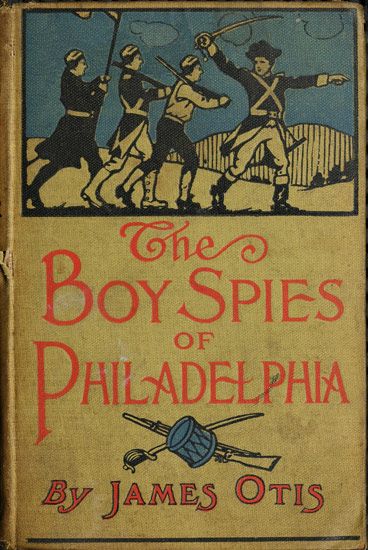
| THE BOY SPIES OF PHILADELPHIA. The story of how the young spies helped the Continental Army at Valley Forge. | ||
| By James Otis. | Cloth. | Price 60 cents. |
| THE BOY SPIES AT FORT GRISWOLD. The story of the part they took in its brave defense. | ||
| By James Otis. | Cloth. | Price 60 cents. |
| THE BOY SPIES OF OLD NEW YORK. The story of how the young spies prevented the capture of General Washington. | ||
| By James Otis. | Cloth. | Price 60 cents. |
For sale by all booksellers, or sent postpaid on receipt of price by the publishers,
A. L. BURT COMPANY, 52-58 Duane St., New York.
The Navy Boys Series
These stories are based on important historical naval events, scenes wherein boys are prominent characters being selected. They are the romance of history, vigorously told, with careful fidelity to picturing the life on ship-board, and accurate in every particular wherein mention is made of movement of vessels or the doings of noted persons.
| THE NAVY BOYS' CRUISE WITH PAUL JONES. A boys' story of a cruise with the Great Commodore in 1776. | ||
| By James Otis. | Cloth. | Price 60 cents. |
| THE NAVY BOYS ON LAKE ONTARIO. The story of two boys and their adventures in the war of 1812. | ||
| By James Otis. | Cloth. | Price 60 cents. |
| THE NAVY BOYS' CRUISE ON THE PICKERING. A boy's story of privateering in 1780. | ||
| By James Otis. | Cloth. | Price 60 cents. |
| THE NAVY BOYS IN NEW YORK BAY. A story of three boys who took command of the schooner "The Laughing Mary," the first vessel of the American Navy. | ||
| By James Otis. | Cloth. | Price 60 cents. |
| THE NAVY BOYS IN THE TRACK OF THE ENEMY. The story of a remarkable cruise with the Sloop of War "Providence" and the Frigate "Alfred." | ||
| By William P. Chipman. | Cloth. | Price 60 cents. |
| THE NAVY BOYS' DARING CAPTURE. The story of how the navy boys helped to capture the British Cutter "Margaretta," in 1775. | ||
| By William P. Chipman. | Cloth. | Price 60 cents. |
| THE NAVY BOYS' CRUISE TO THE BAHAMAS. The adventures of two Yankee Middies with the first cruise of an American Squadron in 1775. | ||
| By William P. Chipman. | Cloth. | Price 60 cents. |
| THE NAVY BOYS' CRUISE WITH COLUMBUS. The adventures of two boys who sailed with the great Admiral in his discovery of America. | ||
| by Frederick A. Ober. | Cloth. | Price 60 cents. |
For sale by all booksellers, or sent postpaid on receipt of price by the publishers,
A. L. BURT COMPANY, 52-58 Duane St., New York.
The Boy Chums Series
By WILMER M. ELY
Handsome Cloth Binding. Price, 60 Cents Per Volume.
In this series of remarkable stories by Wilmer M. Ely are described the adventures of two boy chums—Charley West and Walter Hazard—in the great swamps of interior Florida and among the cays off the Florida Coast, and through the Bahama Islands. These are real, live boys, and their experiences are well worth following. If you read one book you will surely be anxious for those that are to follow.
THE BOY CHUMS ON INDIAN RIVER, or The Boy Partners of the Schooner "Orphan."
In this story Charley West and Walter Hazard meet deadly rattlesnakes; have a battle with a wild panther; are attacked by outlaws; their boat is towed by a swordfish; they are shipwrecked by a monster manatee fish, and pass safely through many exciting scenes of danger.
THE BOY CHUMS ON HAUNTED ISLAND, or Hunting for Pearls in the Bahama Islands.
This book tells the story of the boy chums, Charley West and Walter Hazard, whose adventures on the schooner "Eager Quest," hunting for pearls among the Bahama Islands, are fully recorded. Their hairbreadth escapes from the treacherous quicksands and dangerous water spouts; how they lost their vessel and were cast away on a lonely island, and their escape therefrom are fully told.
THE BOY CHUMS IN THE FOREST, or Hunting for Plume Birds in the Florida Everglades.
The story of the boy chums hunting the blue herons and the pink and white egrets for their plumes in the forests of Florida is full of danger and excitement. How the chums encountered the Indians; their battles with the escaped convicts; their fight with the wild boars and alligators are fully told.
THE BOY CHUMS' PERILOUS CRUISE, or Searching for Wreckage on the Florida Coast.
This story of the boy chums' adventures on and off the Florida Coast describes many scenes of daring and adventure, in hunting for ships stranded and cargoes washed ashore. The boy chums passed through many exciting scenes, on shore and island; and the loss of their vessel, the "Eager Quest," they will long remember.
THE BOY CHUMS IN THE GULF OF MEXICO, or a Dangerous Cruise with the Greek Spongers.
This story of the boy chums, Charley West and Walter Hazard, hunting for sponges, is filled with many adventures. The dangers of gathering sponges are fully described; the chums meet with sharks and alligators; and they are cast away on a desert island. Their rescue and arrival home make a most interesting story.
For sale by all booksellers, or sent postpaid on receipt of price by the publishers,
A. L. BURT COMPANY, 52-58 Duane St., New York.
The Boy Scout Series
By HERBERT CARTER
New stories of Camp Life, telling the wonderful and thrilling adventures of the Boys of the Silver Fox Patrol. Handsome Cloth Bindings.
PRICE, 60 CENTS PER VOLUME
THE BOY SCOUTS FIRST CAMP FIRE; or, Scouting with the Silver Fox Patrol.
This book, every up-to-date Boy Scout will want to read. It is brimming over with thrilling adventure, woods lore and the story of the wonderful experiences that befell the Cranford troop of Boy Scouts when spending a part of their vacation in the wilderness. The story is clean and wholesome in tone, yet with not a dull line from cover to cover.
THE BOY SCOUTS IN THE BLUE RIDGE; or, Marooned Among the Moonshiners.
Those lads who have read The Boy Scouts First Camp Fire and followed the fortunes of Thad Brewster, the Young Patrol leader, will be delighted to read this story. It tells of the strange and mysterious adventures that happened to the Patrol in their trip through the "mountains of the sky" in the Moonshiners' Paradise of the old Tar Heel State, North Carolina. When you start to read you will not lay the book down until the last word has been reached.
THE BOY SCOUTS ON THE TRAIL; or, Scouting through the Big Game Country.
In this story the Boy Scouts once more find themselves in camp and following the trail. The story recites the many adventures that befell the members of the Silver Fox Patrol with wild animals of the forest trails, as well as the desperate men who had sought a refuge in this lonely country, making most delightful reading for every lad who has red blood in his veins. This is a story which every boy will be glad to read and recommend to his chums.
THE BOY SCOUTS IN THE MAINE WOODS; or, The New Test for the Silver Fox Patrol.
In the rough field of experience the tenderfoots and greenhorns of the Silver Fox Patrol are fast learning to take care of themselves when abroad. Many of the secrets of the woods, usually known only to old hunters and trappers, are laid bare to the eyes of the reader. Thad and his chums have a wonderful experience when they are employed by the State of Maine to act as Fire Wardens, since every year terrible conflagrations sweep through the pine forests, doing great damage.
THE BOY SCOUTS THROUGH THE BIG TIMBER; or, The Search for the Lost Tenderfoot.
A serious calamity threatens the Silver Fox Patrol when on one of their vacation trips to the wonderland of the great Northwest. How apparent disaster is bravely met and overcome by Thad and his friends, forms the main theme of the story, which abounds in plenty of humor, rollicking situations, hairbreadth escapes and thrilling adventures, such as all boys like to read about. If you ever dream of camping out in the woods, here you may learn how to do it.
THE BOY SCOUTS IN THE ROCKIES; or, The Secret of The Hidden Silver Mine.
By this time the boys of the Silver Fox Patrol have learned through experience how to rough it upon a long hike. Their last tour takes them into the wildest region of the great Rocky Mountains, and here they meet with many strange adventures that severely test their grit, as well as their ability to grapple with emergencies. This is one of the most interesting of the stories in the Boy Scout Series,—the experiences of Thad Brewster and his Cranford troop abounds in plenty of humor, and hairbreadth escapes.
For sale by all booksellers, or sent post-paid on receipt of price by the publishers, A. L. BURT COMPANY, 52-58 Duane Street, New York.
The Flying Machine Boys Series
By FRANK WALTON
New Flying Machine Boy Stories
HANDSOME CLOTH BINDINGS
Price, 60 Cents Per Volume
THE FLYING MACHINE BOYS IN MEXICO; or, the Secret of the Crater.
This is a story of juvenile adventure which will be sure to please the boys, and adults, too, for that matter. It is a clean, vivid description of a flying machine trip to Mexico, four lads of about sixteen being the principal characters. The boys meet with many adventures, under the mountains as well as in the air above them. The Secret of the Crater, the Burning Mountain, the strange habits of the Devil's Pool, hold the reader to the end, while the humorous sayings and doings of "Jimmie" supply a pleasing variety.
THE FLYING MACHINE BOYS IN THE WILDS; or, the Mystery of the Andes.
The story deals principally with old Peru. Pressed in the Secret Service after their return from Mexico, Jimmy, Carl, Ben and Glenn visit "the roof of the world" in quest of a man who wrecked, as far as he was able to do so, a great New York Trust Company. The tale carries the flavor of the mountains, the mystery of strange temples thousands of years old, and treats the reader, as well, to some delightful juvenile adventures. "Jimmie" comes out strong in this book.
THE FLYING MACHINE BOYS ON DUTY; or, the Clue Above the Clouds.
If you have ever read in the daily newspapers sensational accounts of the pursuit and capture of men who smuggle Chinamen and opium into the country, you don't have to wonder whether the events recorded in this story are true to life. The Flying Machine Boys find false beacons on headlands washed by the Pacific, and they also find the man who murdered a watchman and robbed a bank, living above the clouds. "Jimmie" is particularly funny in this story.
THE FLYING MACHINE BOYS ON SECRET SERVICE; or, the Capture in the Air.
This is a tale of adventure in the wilds of British Columbia. It is not exactly a detective story, although it deals with the work of the boys in capturing a man who abducted a postoffice inspector from his private room in the postoffice building at Washington. "Jimmie" reads from his "dreambook" in this tale. For variety of interesting adventures this story equals any other in this series.
For sale by all booksellers, or sent post-paid on receipt of price by the publishers,
A. L. BURT COMPANY, 52-58 Duane Street, New York.
THE SIX-RIVER
MOTOR BOYS SERIES
By HARRY GORDON
Handsome Cloth Binding
PRICE, 60 CENTS PER VOLUME.
SIX-RIVER MOTOR BOYS ON THE AMAZON; or, the Secret of Cloud Island.
This is a thoroughly interesting story of adventure on the longest river in the world. It is superior to most adventure stories in that it has a well-defined plot which holds the attention to the end. There are encounters with savage animals and savage tribes at the headwaters of the mighty river. Woven in with the plot is a bit of mystery which cannot fail to interest.
SIX-RIVER MOTOR BOYS ON THE COLUMBIA; or, the Confession of a Photograph.
This volume, the second of the famous Six-River series, is a record of adventure in the wilds of British Columbia. The motor-boat is taken beyond the great divide on a platform car of large size, and is placed in the Columbia River almost at its very source. It is a healthy story, dealing with the out-of-doors life of the motor-boat boys. Alex's pet bear will be certain to please.
SIX-RIVER MOTOR BOYS ON THE MISSISSIPPI; or, the Trail to the Gulf.
A thoroughly entertaining and instructive story of a wonderful river. As in all the volumes of this popular series, the boys meet with startling adventures, getting mixed up with river thieves and coming upon a mystery which trails along to the Gulf of Mexico with them. "Captain Joe," the white bulldog pet of the crew of the motor-boat, will be sure to make a hit.
SIX-RIVER MOTOR BOYS ON THE ST. LAWRENCE; or, the Lost Channel.
This is a thoroughly interesting and instructive story of a romantic voyage from the Gulf of St. Lawrence to Chicago, by way of the quaint old City of Quebec, the Thousand Islands, and the Great Lakes. It deals with historical characters to some extent, all of whom are woven into a strong plot which reaches from old Indian days to the present time. It is safe to say that the book will become the most popular of the series.
SIX-RIVER MOTOR BOYS ON THE OHIO; or, the Three Blue Lights.
This book deals with the strange and vagrant life on the Ohio River—the life lived by those who dwell in houseboats, storeboats, and shantyboats. The motor-boat boys become involved with Night Riders and Moonshiners, and the mystery of the Three Blue Lights supplies plenty of holding power. In this volume "Teddy," the pet bear, comes out strong at critical times.
SIX-RIVER MOTOR BOYS ON THE COLORADO; or, the Clue in the Rocks.
The story deals with a little-known stretch of river, from the Gulf of California to the Grand Canyon. The plot is a strong one, and the incidents grow naturally out of it. The clue sought is at last discovered by two venturesome lads who start out to have a "little fun of their own on the side." As in all other volumes of this series, the author—perhaps the best-known writer of boys' books in the country—tells something of the history of the country the boys pass through.
For sale by all booksellers, or sent postpaid on receipt of price by the publishers,
A. L. BURT COMPANY, 52-58 Duane Street, New York.
Transcriber's Note:
Obvious typographical errors have been corrected.
Inconsistent spelling and hyphenation in the original document have been preserved.
On page 294, "Where can I see you and Seth" should probably be "Where can I see you and Jacob."