
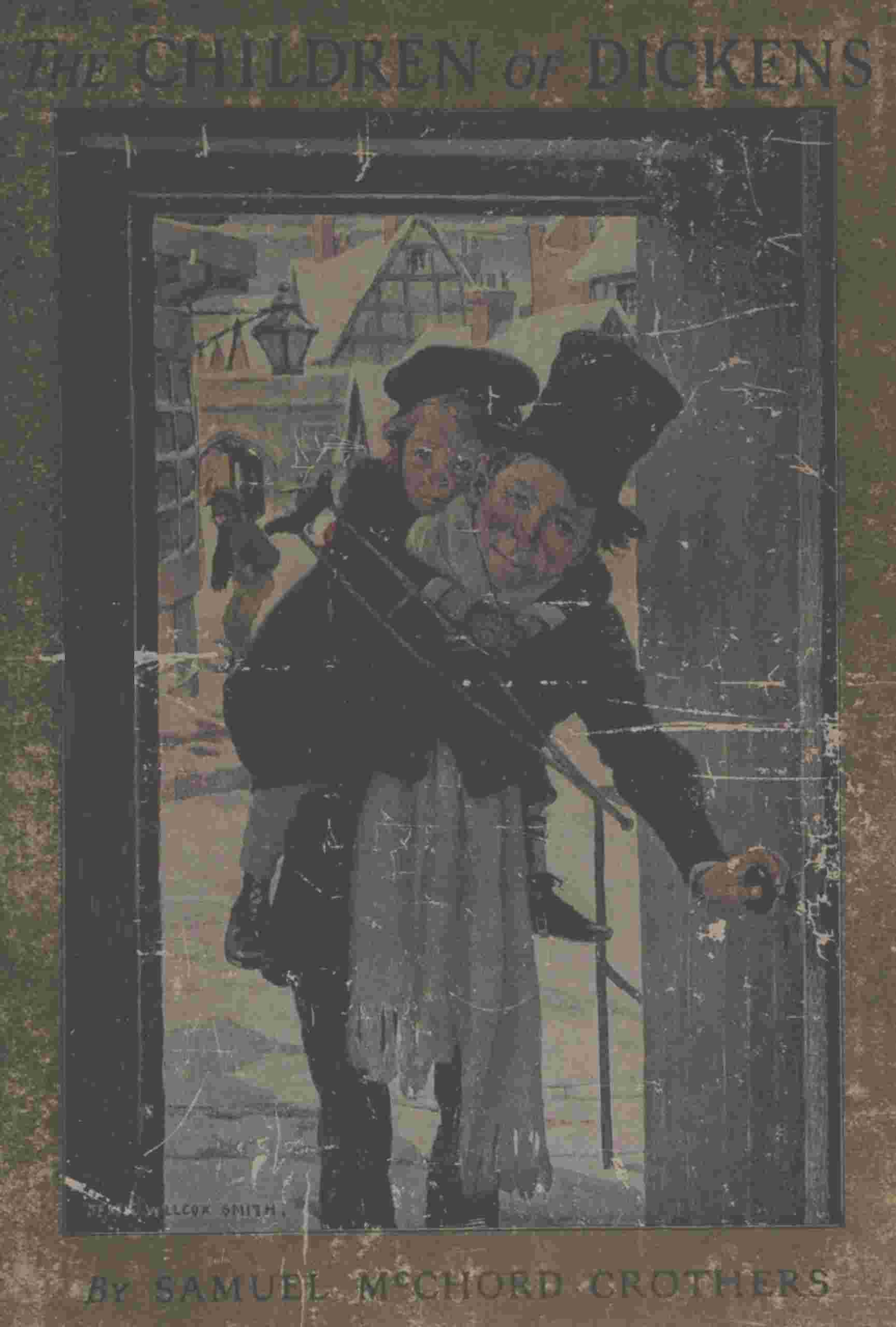
LONDON ONCE UPON A TIME
I
LONDON ONCE UPON A TIME
ONCE there was a city called Bagdad. I know just how it looked, and so do you. It was very mysterious. It was on a mysterious river called the Tigris. There were a great many little canals running in every direction through the city. The drinking water was brought to the houses in goatskins carried on the backs of men. These water-carriers often turned out to be very interesting persons. On the banks of the river were palm-trees, and under every palm-tree was a dervish or two. The streets of the city were narrow and winding, and dark people in flowing robes flitted about on secret errands that aroused suspicion. One could never tell what they were up to. There was Haroun Al Raschid prowling around with his grand vizier and his executioner. He was full of curiosity, and had a keen sense of justice. In Bagdad everything turned out in a most remarkable way. If you were looking for one mystery, you would find half a dozen.
I have recently read an article by a gentleman who has lived a number of years in Bagdad, and it appears that he has not seen any of the wonderful things that I am interested in. He says that the climate is very uncomfortable and that the thermometer often stands at 112 degrees at breakfast-time. That is very hot indeed. He says that many of the people now go about in Ford cars instead of riding on camels. When they want excitement they go to the movies. In short, according to his account, Bagdad must be getting to be very much like other places.
All this is disappointing, but as I am never likely to go to the modern Bagdad, anyway, it doesn’t matter so much to me. My Bagdad is in the Arabian Nights, and I can still go to it whenever I feel so inclined. When I open the book I find everything just as it was “once upon a time.”
It is the same with London. When I first crossed the Atlantic and visited the great city, I was a bit troubled because many parts of it looked so much like other places. I wanted it to be like the London I had read about. Of course this wasn’t fair to the people who live there, who can’t be expected to keep it just for travellers to look at.
When I think of London as it was once upon a time, that is the time when Charles Dickens lived in it. This London was as wonderful as Bagdad, though in different ways. If you want to know what it was like, you must go to the Dickens books. Dickens was the only one who ever saw London in that way. When you ask whether it was the real London, you have to take his word for it. It was real to him and he had the power to make it real to us. That is what we call genius.
The London the Dickens people lived in was a big city, so big that one easily got lost in it. The railroads were just coming in, but they didn’t get into the stories. There were no telephones or electric lights or automobiles or radios. People came in from the green country on gay stage-coaches with prodigious tooting of horns and cracking of whips. They stopped at inns, where a great deal of eating and drinking was going on. But when they left the inns to explore the town, they plunged into a maze of the queerest streets imaginable. The streets ran in every direction except in the direction one wanted to go. Many of them were mere alleys, but they were always crowded. One soon got down to the river, where there were old warehouses that leaned over the water but never actually fell in. There were old and shabby houses, and the people were made to match them. That is what made them so interesting and exciting. Yet, though there were so many people on the streets that you didn’t know, it was curious to be all the time running across people you did know, or who knew you. If you were trying to hide, you were sure to be found out. On the other hand, you could get lost with no difficulty at all.
One of the most interesting parts of the city to prowl around in was down by the water-front. The River Thames flowed through London just as mysteriously as the River Tigris flowed by Bagdad; and it was the scene of many adventures. To be sure, there were no palm-trees and no dervishes. But there were great ships coming from countries as far away as Arabia and the Spice Islands. On the banks of the river were great warehouses, with musty, mouldy cellars and strange garrets, and with all kinds of foreign smells. Back from the river were streets where people lived who could afford to live nowhere else. Some of them were dwarfed, with gnarled faces, as if they had not had sunlight enough when they were growing up. Some of these people were as bad as they looked, but many of them were much better. When you had time to become acquainted with them, you couldn’t help but like them. Each person had some little trick of manner which made it easy to recognize him. They had a way of doing the same thing over again, just as people have in real life. This made them amusing even when we could not approve of them.
Most of the people we meet live in lodgings—which is a very interesting way to live in England. You hire a room and the landlady will go out and buy the food for you and serve it in your room. This gives opportunity for a good deal of conversation. It’s all very snug and cosy if you have money to pay for what you order. If you haven’t, this leads to more conversation. Many of the Dickens people didn’t have a very regular income and were not sure where the next meal was coming from. Having a good dinner was quite an event to them, and they made the most of it. It is wonderful the enjoyment they got out of eating and drinking. And how they liked to talk on such happy occasions! They were living in a hand-to-mouth way, but they didn’t seem to mind it as much as people in the world outside of the Dickens books do. They took it all as an adventure.
Down in the city were the offices of the bankers and rich merchants, where clerks sat on high stools and did their accounts under the eyes of elderly gentlemen whom they didn’t like. In the suburbs there were trim little houses where people lived who were beginning to be more prosperous.
One doesn’t see much of the great places. Though there were palaces in London, the people whom Dickens was interested in didn’t live in them, though they admired them very much and were proud of them in a way. For they were every-day Englishmen who lived in the days of good Queen Victoria.
The great thing about London as Dickens saw it, and as we see it through his eyes, was that it was queer. The houses were queer, and the streets were queer, and the people were queer. Each one went about his business without caring a rap for what other people thought about him. If they acted in a particular way, it was because they were made that way. And yet they were friendly—most of them. And those that weren’t were such villains and hypocrites that we dislike them heartily. We always know just what to think about them, and so we don’t waste any sympathy on them. When the characters appear, we know at once which ones are to be looked upon with suspicion and which are to be trusted. You get to know the people in Dickens’s London because he is so anxious to make you see them as plainly as he does. If you don’t see them at first, he keeps on telling about them till you can’t help yourself.
Now if I were to tell you that I saw a child with a face like a rosy apple, you would probably forget all about it in a minute or so. But Dickens goes at the business of description more thoroughly. He says:
“Miss Tox escorted a plump rosy-cheeked, apple-faced young woman, with an infant in her arms, and a younger woman not so plump but apple-faced also, who led a plump and apple-faced child in each hand, another plump and apple-faced boy who walked by himself, and finally a plump and apple-faced man who carried another plump and apple-faced boy, whom he stood down on the floor and admonished in a husky whisper to ketch hold of his brother Johnny.”
When I see the happy apple-faced family together, it makes an impression on me. It’s the same with the descriptions of the scenery or the weather. I might say that the London fog is very disagreeable, and you would answer that you had always heard so. But Dickens takes you out into the fog and you see it and feel it and taste it:
“Fog everywhere. Fog up the river where it flows among the green meadows. Fog down the river where it rolls defiled among the tiers of shipping and the waterside pollutions of a great and dirty city. Fog in the Essex marshes, fog on the Kentish heights. Fog creeping into the cabooses of collier brigs, fog lying out on the yards and hovering in the rigging of great ships; fog in the eyes and throats of ancient Greenwich pensioners wheezing by the firesides in their wards; fog in the stem and bowl of the afternoon pipe of the wrathful skipper down in the close cabin.”
By this time you get the London fog into your own throat and feel what it was like in November, when “the raw afternoon is rawest and the dense fog is densest and the muddiest streets are muddiest.” When you feel all this, Dickens is ready to go on with his story.