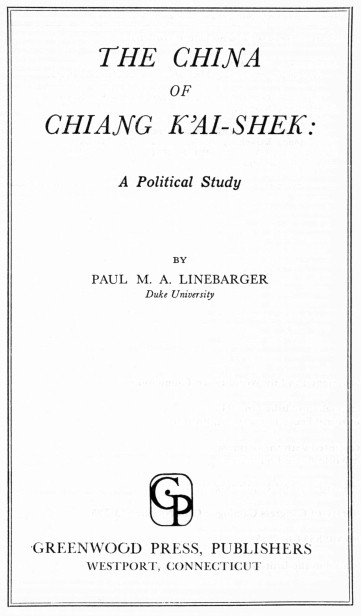
The study examines the political organization, leadership style, and policies of the Nationalist regime under Chiang Kai-shek, analyzing its administrative structure, the party's role, and the military's influence on governance and national mobilization during wartime. It considers relations between central authorities and regional powers, economic and financial strategies, foreign diplomacy and propaganda, and the effects of personal authority on institutions. Drawing on interviews and documentary material, the author evaluates strengths and weaknesses in administration, including bureaucratic inertia, party–military interactions, corruption and reform efforts, and the broader social and geopolitical pressures shaping policy choices.