
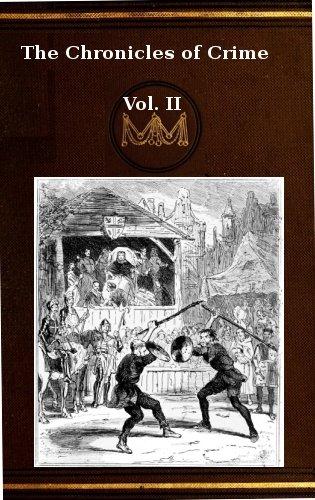
CHARLES KINNAISTER, AND OTHERS.
EXECUTED FOR THE MURDER OF AUSTRALIAN ABORIGINES.
THE atrocious cold-blooded massacre of which these persons were guilty is scarcely equalled by any event of a similar character. The scene of the murder was the colony of New South Wales,—the victims were the unoffending aboriginal natives of the country,—the miscreants by whom the savage scene was enacted were Englishmen, who, however, from their sanguinary disposition, do not deserve that they should receive such an appellation. Fortunately for the vindication of humanity, the unparalleled barbarities of which they were guilty were discovered, and their perpetrators brought to justice.
The names of these monsters in human shape were Charles Kinnaister, William Hawkins, James Perry, Edward Foley, James Cates, John Russell, and John Johnson. It would seem that all of these were convicts, and had been transported from this country. They had been assigned as stock-men or shepherds to some of the settlers in the interior of the colony. In the month of June 1838, these ruffians, influenced or induced by what motive has not been discovered, beyond a determination to extirpate the unhappy natives, set out on horseback in pursuit of their helpless victims. They were traced in their progress inquiring after blacks, and at last arrived at a hut near the big river, beyond Liverpool plains, occupied by the first-named prisoner, Kinnaister. Here they discovered that a little tribe of about thirty natives, men, women, and children, including babes at their mothers’ breasts, were congregated in the bush, unsuspicious of danger and unconscious of offence. This was on Sunday the 10th of June. They immediately approached their victims, who, terrified at their manner, ran into Kinnaister’s hut for protection, crying for mercy; but they appealed to hearts of stone, who having thus caught them, as it were, in a trap, dismounted, followed them into the hut, and, despite of their entreaties, tied them together with a rope, with the exception of one woman. This was done without a word being uttered, and with a cool and bloody determination.
Australian Aborigines slaughtered by Convicts.
P. 479
When all were thus secured, one end of the rope was tied round the body of the foremost of the murderers, who, having mounted his horse, led the way, dragging the terrified group after him, while his infamous companions guarded them on all sides. Groans and tears burst from the wretched beings, whose worst fears were excited. In vain, however, did the aged and youthful of both sexes appeal for compassion. Their doom was cast. Onward they were dragged till a fitting place in the bush was reached, and then the work of slaughter commenced, and, unresisting, were these hapless wretches, one after the other, brutally butchered. Fathers, mothers, and children, fell before the previously sharpened swords of these self-appointed executioners, till all lay a lifeless mass, in death clinging to each other with the throes of natural affection. But one shot was fired, so that it was presumed one only perished by fire-arms. The precise number thus immolated has not been accurately ascertained, but it is computed that not less than thirty lay stretched on the ensanguined earth. The demon butchers then placed the bodies in a heap, kindled an immense fire over them, and thus endeavoured to destroy the evidence of their unheard-of brutality. Fragments of the unconsumed bones, however, still remained; but even these were collected, and attempted to be hidden from human eye. But the vengeance of Providence was not to be thus thwarted; and although for a time these miscreants imagined they had effectually disguised their horrible work, circumstances led to their detection and apprehension. Birds of prey were seen hovering about the spot where the unconsumed remains yet existed, and stock-men in search of their strayed cattle were thus attracted to the locality, supposing they should find their carcasses. In this way it was that the ribs, jaw-bones, half-burnt skulls, and other portions of human skeletons were found—while symptoms of the conflagration in the vicinity were likewise detected. This led to inquiry, and ultimately to discovery of the horrible truth. The place was fifty miles from the nearest police-station, but the whole of the villains were apprehended, and their own admissions and conduct previous and subsequent to the bloody work, added to a chain of circumstantial evidence, left no doubt of their guilt. It chanced, too, that on the night previous to the murders, a heavy rain had fallen—and traces were thus discovered of horses’ hoofs, as well as of the naked feet of the wretched natives, on the way to the field of death.
On the 15th of November, the prisoners were put upon their trial before the Chief Justice, Sir James Dowling, charged with the murder of a black, named Daddy, the remains of whose gigantic frame had been observed and distinguished among the discovered ashes. Every possible means had been adopted to secure the acquittal of these atrocious malefactors by an association, which had been formed with the ostensible object of preserving the property of the settlers from the incursions of the blacks. The pretence for the diabolical murders which were committed was the supposed aggressions of the natives in killing and spearing cattle; and every instance of violence of this description was carefully brought forward to secure the liberation of the prisoners, by a verdict of acquittal. The strong prejudice which was excited against the aborigines was not without its effect, and in spite of the evidence which was adduced, the jury found the prisoners “Not Guilty.”
There were still other indictments against them, however, which remained to be tried, and in the month of December they were again arraigned. Upon this occasion they were not quite so fortunate, and the men above-named were declared to be “Guilty,” and sentence of death was instantly passed upon them. Renewed efforts were now made in their favour; but their horrid guilt being proved beyond a doubt, Sir George Gipps, the governor, determined that the law should take its course, and on the 15th of December, 1838, the convicts underwent the execution of their sentence.
ARCHIBALD BOLAM.
TRANSPORTED FOR MANSLAUGHTER.
FEW occurrences of the nature of that which is now before us, have attracted more marked attention than that of the dreadful and most mysterious death of Mr. Joseph Millie, assistant-clerk in the Savings’ Bank at Newcastle-upon-Tyne. The discovery of this event took place at two o’clock in the morning of Friday the 7th of December, 1839, when flames and smoke were observed to be issuing from the offices of the Savings’ Bank. The aid of the engines having been procured, the fire was in a short time extinguished, and the police then entered the house, for the purpose of ascertaining the cause of the conflagration, and that all danger was passed. Upon their going into the clerk’s office, they were astonished at perceiving Mr. Millie lying extended on the hearth-rug, with such wounds upon his person as left no doubt that he had been murdered. His skull had been literally smashed in, and his brains were scattered about the room; and what was more singular, his pockets were found to be filled with coals, as if the object of his murderer had been to prevent the discovery of his dreadful crime, by securing the destruction of the body of his victim by fire.
In the adjoining room, they were more alarmed to find that Mr. Archibald Bolam, the actuary, was also lying on the floor, apparently insensible. He was lifted up, and some slight wounds were discovered in his throat, which passed through his stock; but before many minutes had elapsed he was sufficiently recovered to give an account of the mysterious affair. He said “I have lately had two or three anonymous letters, threatening to do me harm; and one was put under the door of the Savings Bank, last evening, after dark, saying that something would happen to me at home. In consequence of this, though I generally get my tea at the bank, I went home, the other clerk, Millie, having previously gone to his tea. I returned about half-past seven o’clock in the evening, and finding the door locked as I had left it, I opened it, and put the key into my pocket. When I got into the bank I saw Millie lying on the rug, and I thought he had fallen asleep. He also has a key, and sometimes locked himself in. I then went towards my desk, intending immediately to go and speak to Millie; but while I was about to open my desk, I thought I heard some one coming behind, and was in the act of turning round, when I received a blow on my right temple from a man in disguise, with his face blackened. I immediately started up, and ran shouting towards the window, intending to give an alarm, on which the fellow followed me, and said if I stirred, or made the least noise, he would serve me as he had served the other man. He struck me again when I was near the window; and when I was down, I felt a knife at my throat. Shortly after this I became insensible for a while; but afterwards my recollection seemed to return, and I heard somebody in the other office, as I supposed, going about and making a noise. I dared not make the least outcry. I burnt the threatening letters which I had previously received. The one which I found last night under the waiting-room door I left upon my desk. I cannot well describe the man, excepting that I think he was under the middle size, and spoke roughly, but apparently in a feigned voice. I had a few shillings in my pocket, and I think 4l. 10s. in my desk, which was left by Mr. Airey to deposit on Saturday. In the inner safe I had a further sum of 80l. of my own, which I kept to meet current expenses.” Further than this, Mr. Bolam said he had no recollection of what took place.
A story so extraordinary at once excited suspicion, more especially when it was discovered that the apparent object of the supposed murderer, namely plunder, had been left unfulfilled. The greater part of the papers and books of the bank were discovered to be undisturbed, and uninjured by the fire; and although the outer door of the strong-box was standing open, the inner lock was still fast. The key of this lock was stated (by Bolam) to have been left by him in his desk, but it was now nowhere to be found.
At a coroner’s inquest held upon the body of the deceased, Bolam was examined at great length; but the confusion which he exhibited, and the inconsistency of his declarations still further increased the belief which was generally entertained, that he had himself committed the murder, and had fired the house to conceal the act, while he hoped to divert suspicion from himself by a simulated attempt at violence on his own person. The inquiries and statements of the police confirmed this suggestion; and at the conclusion of the inquest, a verdict of “Wilful Murder” was returned against him, and he was taken into custody. The investigation, however, was still carried on by Stevens, the superintendant of the constables of the town, with the most praiseworthy diligence. At a search of the house of the prisoner new evidence was procured. This consisted of the discovery of the key which was missing from the Savings’ Bank, and also of a considerable sum of money in gold, which was concealed behind some books. It was also ascertained that Bolam had been seen at his own house at a period later than that at which he stated he had quitted it; and many other minute facts were learned at variance with his declarations. A new and more extensive search at the Savings’ Bank brought fresh cause of suspicion to light. The absence of blood on the spot where the prisoner had been found lying, and the evident fact of the blood having flowed down his clothes, as if the wound had been inflicted while he was in a sitting posture, clearly showed the falsity of his story in this particular; and the further circumstance that three of the most recent account-books were missing, tended in some degree to supply a motive for the commission of such a crime by him, although it could hardly be supposed, that where means so much more easy to procure their destruction, had such been his object, could have been resorted to, he would have been guilty of an offence so atrocious in order to attain so simple an end. The excitement which prevailed upon the subject throughout the kingdom was very great, and motives and reasons for the commission of the crime by the prisoner of all descriptions were assigned, but the most reasonable, and that which was eventually adopted by the jury upon the trial was, that some misunderstanding having arisen between Bolam and Millie, the former, in the heat of passion and anger, had assaulted the latter with the poker, and destroyed him; and had then arranged the tale which he subsequently narrated, and the appearances which were exhibited in order to conceal his guilt.
The sympathy which was created for the family of the unfortunate Millie was extraordinary. He had been left a widower with four children, and he had striven hard amidst adversities and vicissitudes of the most painful nature to maintain his children in a respectable station. Through the instrumentality of Bolam he was appointed to the situation which he held, the salary of which was 60l. a year, and he had performed the duties attached to it with great credit. The managers of the bank took care that his family should not be left entirely destitute in consequence of his death, and they liberally provided them with the means of immediate support; but an equally generous feeling was displayed by the public, and in less than one month 1000l. were collected by subscription to be appropriated to their use.
At the Spring Assizes of the year 1839, a bill of indictment was preferred against Bolam, for the wilful murder of the deceased; but in consequence of the very strong feeling which then prevailed against him, and the uncertainty which might be said to exist as to his obtaining a fair and impartial trial, the conclusion of the proceedings against him was postponed to the ensuing Assizes.
On Monday, the 29th of July, 1839, he was tried at Newcastle before Mr. Baron Maule. The case for the prosecution occupied the greater part of two days. At its conclusion, a great number of witnesses were called to the prisoner’s character. The learned baron, in summing up, after having remarked upon the evidence produced to substantiate the crime of murder, said, “The prisoner may be guilty of the death of Millie under other circumstances. Some difference or altercation may have taken place between them. The evidence goes to show that there was no ill-will or malice; but among a thousand causes some spark of anger may have been kindled and blown up; a scuffle may have ensued, and the man at the bar may, in a state of excitement, have been the death of the deceased; and if he were so, and blows passed between them in conflict, he would have been guilty of manslaughter, and that would furnish motives enough for a statement which would, in his opinion, screen him from banishment from his native country and his friends. This view furnishes motives quite sufficient for the fire as well as for the other facts. I do not say that this is the inference you ought to draw, nor has it been suggested on either side; it is for you to consider it.” The jury seem to have adopted this suggestion; and after having been absent considering their verdict for three hours, found the prisoner guilty of “Manslaughter.”
He was subsequently sentenced to be transported for life, and quitted the country in pursuance of this judgment.
FRANCIS HASTINGS MEDHURST.
CONVICTED OF MANSLAUGHTER.
MR. MEDHURST was a young man of highly respectable connexions, and the offence of which he was found guilty was that of the manslaughter of a schoolfellow, Mr. Joseph Alsop, at the Rectory House Academy, at Hayes, in Middlesex. It would appear that this establishment was kept by the Rev. Mr. Sturmer, a clergyman of the Established Church, and minister of the parish of Hayes. Mr. Alsop and Medhurst were his pupils, the latter being about twenty-two, and the former twenty-one years of age. Mr. Dalison, another pupil, had quitted Mr. Sturmer’s establishment on the morning of the day on which the unfortunate occurrence, which was subsequently the subject of judicial investigation, took place. On Saturday the 9th of March, 1839, Mr. Sturmer was in his study with Mr. Alsop and a pupil named Bunney, when Medhurst entered the apartment, and complained to Mr. Sturmer, that Dalison, whom he designated as “a blackguard,” had broken the glass of his watch. Mr. Alsop, who had been a constant companion of Mr. Dalison’s, indignant at the language applied to his friend, and perhaps irritated at former bickerings with Medhurst, exclaimed, “You are a liar and a blackguard for saying so!” and thereupon Medhurst, who carried a stick in his hand, immediately struck him several severe blows over the head and arms. A scuffle ensued, in the course of which Alsop wrested the stick from his opponent, and they had separated to the distance of five or six feet, when just as Alsop was again advancing towards Medhurst with the stick upraised as if to strike him, the latter suddenly drew a clasp-knife from his pocket, and opening it, stabbed his unfortunate antagonist in the belly. Mr. Sturmer had quitted the room at the commencement of the affray; and Bunney, horror-struck at the dreadful act of his fellow-pupil, rushed from the apartment to procure assistance. Mr. Sturmer now hastened back to the scene of the affray, and he found that Alsop was on the floor, supported by Medhurst, while the latter appeared to be bitterly lamenting the act of which he had been guilty. They both of them declared that they had been in the wrong, and Mr. Alsop freely forgave his scarcely less unfortunate fellow-pupil. Surgical assistance was obtained; but it proved to be without avail, and after lingering a few days the unhappy young man died.
It was not, however, until Friday the 15th of March, that Medhurst was taken into custody; and on the next day, and the following Monday, an inquest was held on the body of the deceased. From the evidence which was then produced, it appeared that the deceased and the prisoner had quarrelled upon more than one occasion before the 9th of March, and that in all these misunderstandings the part of the deceased had been taken by his fellow-pupils. Expressions of a violent description had been made use of by Medhurst, as to using a knife in case of his being attacked; and he was shown to be in the possession of an instrument of a most dangerous character. It was his habit, it appeared, to carry a stick almost constantly in his hand; and Mr. Sturmer admitted that he had known him go about the house, armed with loaded pistols. In the course of the inquiry, facts were elicited which showed a great want of energy in the conduct of Mr. Sturmer, who by his interference on the morning of the 9th of March, might have prevented the melancholy result of the quarrel, the commencement of which he witnessed. A verdict of “Wilful Murder” was returned against Mr. Medhurst by the coroner’s jury, and he was conveyed to Newgate to await his trial upon that charge.
At the Central Criminal Court on Saturday the 13th of April, the prisoner was put to the bar to be tried upon the indictment which had been preferred against him, and he was found guilty of the minor offence of “Manslaughter.”
Upon this conviction he was sentenced to three years’ imprisonment in the House of Correction.
Mr. Medhurst, as we have already stated, was a young man of respectable connexions, and of considerable expectancies. It is not a little remarkable, that his grandfather was also tried for murder, though he escaped the consequences of his act, by proof being given of his insanity. His wife, it appears, was the victim of his attack; and her death was caused by a stab which she received from the hand of her husband in a moment of passion. For this alleged murder he was tried at the York Assizes in the year 1804, but acquitted as we have stated, on the ground of his being insane. At that time the unfortunate man was a stock-broker of eminence, possessed of great property in Yorkshire, where he kept a large establishment and a pack of hounds. At the time of the conviction of his grandson he was still alive, and an inmate of a lunatic asylum at Hillingdon, Middlesex, but bowed down by age and infirmity almost to the grave, and unconscious of the guilt of his descendant. The father of young Medhurst died about two years before his son’s conviction. He had married an Italian lady, and the unfortunate culprit whose case we have detailed was the offspring of the union. There were other sons, however; one of whom was an esteemed member of the Church of England at the period of his unhappy brother’s trial.
WILLIAM JOHN MARCHANT.
EXECUTED FOR MURDER.
THE criminal in this case held the situation of footman to Mr. Henry Edgell, a magistrate, resident at No. 21 Cadogan-place, Chelsea, and the victim of his crime was a young woman, named Elizabeth Paynton, who lived as under-housemaid in the same family.
The circumstances of the case are few and simple, and may be narrated in a short compass. On Friday, the 17th of May 1839, Mr. Edgell and his family quitted the house in Cadogan-place in their carriage, for the purpose of proceeding to Foot’s-cray, in Kent, leaving Marchant, the deceased, the cook, and the upper house-maid, at home. The two latter individually also went out, and thus Marchant and the girl Paynton were left alone in the house. On their return they were unable to obtain admittance; and the coachman and upper-footman having now got back from Foot’s-cray, they went to the stables and procured their aid. Middleton, the coachman, scaled the garden-wall, and with some difficulty burst open the back-kitchen door, and having let in the other servants they all proceeded to examine the house. On their reaching the drawing-room, they saw the deceased lying on the floor, and it was at first supposed that she and Marchant were lying there together. This idea, however, was immediately dispelled by the discovery of a pool of blood near the head of the unfortunate young woman, whose throat was observed to be dreadfully cut. A razor lay by her side, which was evidently the weapon with which she had been killed; and it being ascertained that Marchant had absconded, suspicion at once attached to him. Surgical assistance was at once called in, but in vain. The carotid artery and jugular vein had been severed by a most determined cut; and the wretched young woman must have been dead some hours. Upon an examination of the body it became evident that the deceased had struggled hard before the murderer was able to effect his object, as her hands were found to be much cut; but there were no appearances to justify the supposition which was entertained, that there had been any criminal assault committed upon her person.
On the Sunday after the murder, Marchant surrendered himself into the custody of a police-officer at Hounslow, to whom he at once confessed the murder, without, however, assigning any reason for its commission. He appeared to be terrified at what he had done; and as he walked into town frequently looked behind him, declaring that he fancied he heard the murdered woman at his back.
On Friday, the 21st of June, the prisoner pleaded “guilty” to the indictment for the murder which had been found against him at the Central Criminal Court, and sentence of death was immediately passed upon him. He appeared to be in a lamentable state of weakness and misery, and to be deeply penitent for his crime. He subsequently entered freely into conversation upon the subject of the murder, and confessed the circumstances attending its commission. He stated that he had found the deceased in the drawing-room of his master’s house, and had made overtures to her of an improper character, which she had indignantly repulsed. He strove to force the unhappy girl to a compliance with his wishes, but she resisted with her utmost strength; and then drawing the razor from his pocket, which he had taken from the upper-footman’s pantry on his way from the kitchen, in a moment of ungovernable passion he cut her throat in three places, with the greatest determination, amidst her cries for mercy and of “murder.”
On Monday the 8th of July the wretched culprit was executed. He met his death with much firmness, and was apparently sincerely penitent. He was attended to the scaffold by the Rev. Mr. Carver, the ordinary of the jail, newly appointed in the room of Dr. Cotton, who had so long held that post, but had recently resigned.
The unhappy youth Marchant, at the time of his execution had only reached the age of eighteen years. He was the son of decent parents, and had been remarkable during the early part of his life, the greater portion of which he had spent in service, for his extreme humanity and gentleness of disposition. The victim of his crime was twenty years old at the time of her death. She was a young woman of prepossessing appearance and of sprightly disposition, and she had often laughed at her fellow-servant and eventual murderer, for a supposed affection which he professed for her. Up to the moment of their being last seen together, however, they were upon the best terms. The dreadful crime of Marchant could only be attributed to the cause which was assigned for it by its perpetrator.
LEWIN CASPAR, ELLIS CASPAR, EMANUEL MOSES, AND ALICE ABRAHAMS.
CONVICTED OF FELONY.
THE extraordinary robbery to which these persons were parties, involved circumstances probably more singular than any other which ever came before a court of justice. The affair has generally been known by the name of the “Gold-dust Robbery;” the produce of the plunder being gold-dust of the value of upwards of 4000l.; and the facts which attended the investigation of the circumstances most forcibly illustrated the adage, that “When rogues fall out honest men get their own.” As will be observed from the names of the culprits, the persons who were convicted were of the Jewish persuasion; and truly, the proverbial cunning and habits of cheating of these people were most singularly exemplified throughout the whole course of the inquiry.
On Monday afternoon the 25th of March 1839, the robbery was effected. It appears that two boxes of gold-dust, from the mines of the Brazilian Mining Company in South America, had reached England on the 18th of the month, and had been landed at Falmouth from H.M.S. Sea-gull, from whence they were to be forwarded to London, consigned to Messrs. Marsh and Co., the agents of the Company. At Falmouth they were put on board the City of Limerick steam-ship, and on Monday morning, the 25th of March, they were landed at the wharf of the Dublin Steam-packet Company at St. Katherine’s. On the same morning a letter was received by Messrs. Hartley and Co., the agents of the Dublin Steam Navigation Company, in John-street, Crutchedfriars, to whom the City of Limerick steamer belonged, purporting to be from Messrs. Carne and Co., of Falmouth, apprising them of the transmission of the gold-dust, and instructing them to hand it over to a person who should call at their office, and produce certain documents. This letter was opened by Lewin Caspar, a clerk in the establishment; and on the same afternoon a person drove up to the counting-house, and presenting certain papers desired that the boxes of precious metal should be delivered to him. From his manner no suspicion was raised, and the credentials which he produced, giving a description of the boxes and the marks upon them, tended to remove all doubt as to the authenticity of the character which he had assumed. His right to the boxes, therefore, being apparently established, he paid the wharfage dues, and the trunks with their golden contents were placed in the cab in which he had arrived. He gave the foreman of the wharf a shilling for his civility, and then drove away without the smallest suspicion being excited that he was not fully entitled to the goods which he had claimed.
In a few hours, however, an authorised agent of Messrs. Marsh, the consignees, arrived at the counting-house, and making known his character, and demanding the gold-dust upon the authority of vouchers which he produced, the fraud was discovered. The contents of the boxes were valued at 4600l., and as this loss would fall upon the Dublin Steam-packet Co., the consternation which was created among their servants at this event may be well imagined. Instant steps were taken to secure the individual by whom the robbery had been so ingeniously effected, and Lea, and Roe, police-officers, were engaged to pursue the necessary investigation. In the course of the same day the cab which had conveyed the thief to Messrs. Hartley’s wharf was discovered, and the driver questioned, but the only information which he could afford was, that the individual who had employed him had hired him in Cheapside, and he had driven him back to Wood-street, where he had quitted his vehicle and had entered another cab, which proceeded in a direction towards Holborn. A clue so vague was not easily to be followed; but the officers pursued their investigation with unabated vigour and determination, and at length after infinite difficulty they traced the thief to No. 12 New-street, London Hospital; from whence, however, they found he had now removed to a house in Mansell-street, Goodman’s-fields, with all his furniture, but from which again he had absconded no one knew whither. From the inquiries made by the officers they ascertained that the name of this person was Moss; and that he was foreman to Mr. Hyams, a watchmaker in Goodman’s-fields; that before the robbery, as well as on the day of its commission, he had been observed to be in frequent and earnest conversation with Ellis Caspar, whose son, Lewin Caspar, as we have already stated, held the situation of confidential clerk to Messrs. Hartley and Co. No time was lost in taking these persons into custody, and then it was elicited from the servant of Moss, that both those individuals had occasionally visited her master;—that on the day of the robbery, Moss, contrary to custom, went out in his best clothes, and that in the evening he came home in a cab with two boxes corresponding in appearance with those which had contained the gold-dust, and the half-burned fragments of which she subsequently saw under the grate of the sitting-room. Some mysterious whisperings after this took place between Moss, and his wife, and her sister; and on the next morning they quitted New-street for Mansell-street. The description which was given of Moss exactly corresponded with that of the thief; and the exertions of the officers were now applied to secure his apprehension.
In the course of the inquiries which were now made, the circumstance of the purchase of a large quantity of bar gold by Messrs. Bull and Co., bullion-dealers in Cheapside, from Mr. Henry Solomons, a gold refiner at No. 58, Strand, was elicited, and Messrs. Bull and Co. instantly afforded every assistance to the police. On Saturday, the 6th of April, Mr. Solomons was examined at Lambeth-street police-office, when he admitted having sold 1200l. worth of bar-gold to Messrs. Bull; but he stated, that that gold was the produce of a large quantity of snuff-boxes and other articles which he had melted, the precise nature of which he could not describe; that he had received the 1200l. and had paid a great portion of it away; but finally, he protested against being further questioned, and refused to give any more information upon the subject.
At a subsequent examination Mr. Solomons was placed at the bar with the two Caspars as a principal in the robbery; and then Moss, who upon an understanding that he should be admitted in evidence against the prisoners, had surrendered himself into custody, appeared as a witness. The effect produced upon the prisoners, by his presenting himself in this capacity, was remarkable; and it was observed that Solomons, no longer confident, appeared to be applying himself to devise means to be placed in the position of his late coadjutor. The evidence of Moss explained the whole transaction, and showed the extraordinary workings of the system of villany which was carried on. For the present his statement was not published, as there were yet other persons to be secured; but it was understood that it amounted to a complete revelation of the whole of the circumstances attending the robbery.
On Tuesday May the 7th, two new prisoners were placed at the bar, named Emanuel Moses, or “Money Moses,” as he was familiarly called, and Alice Abrahams, his daughter, who was a widow; but as there were still other parties not in custody, who had been participators in the transaction, it was deemed advisable that secrecy should still be observed upon the subject of the evidence which had been obtained. From other witnesses, however, the fact of the sale of a large quantity of gold-dust by Moses and his daughter to Solomons directly after the robbery was elicited; and it was also shown that the latter in melting it down, had thrown copper and silver into it, in order to change its exact character, and thereby prevent its identification.
On Saturday, May the 25th, another examination took place of the prisoners, when Solomons was also admitted in evidence; and at length, on Friday the 21st of June, the prisoners, Lewin and Ellis Caspar, Money Moses, and Alice Abrahams, were committed for trial.
On Monday, June the 24th, the trial commenced at the Central Criminal Court, before Mr. Justice Littledale, but it occupied a period of no less than eight days, only terminating on Tuesday the 2nd of July.
The prisoners were indicted together with one Isaac Isaacs, alias Davis, not in custody. The indictment alleged the robbery to have been committed by some evil-disposed person, and then stated that before the said felony was committed, the prisoners, Lewin and Ellis Caspar, did feloniously incite and encourage the said evil-disposed person to commit the felony; it then alleged that Ellis Caspar, Emanuel Moses, and Alice Abrahams, had received the stolen property, well knowing it to have been stolen.
Mr. Clarkson stated the facts of the case to the jury, and then proceeded to the examination of the witnesses.
The arrival of the gold-dust at Falmouth by the Seagull was proved, as well as its subsequent transmission to London by the City of Limerick, and its arrival at St. Katherine’s on the morning of the 25th of March. It was then shown that on the 23rd of March, Messrs. Carne and Co. of Falmouth, despatched a letter to Messrs. Hartley, informing them of the valuable commodities which would be delivered to their keeping; and it was also proved, that on the arrival of the City of Limerick in London, the boxes were delivered into the custody of the younger Caspar, the clerk at the wharf, who promised to take care of them. It was shown that young Caspar exhibited great anxiety about the boxes, and that on the messenger coming for them, he at once delivered them over to him, although he had previously expressed some fears lest the papers which he brought should not be genuine documents. Caspar on that morning had gone unusually early to his office; and upon the letter arriving from Messrs. Carne, he opened it, and subsequently went out. He came back, however, before any application was made for the gold-dust, and remained until it was handed over to the messenger who went to fetch it. When the robbery was discovered, he affected great consternation and alacrity, and proceeded at once to give a description of the person by whom the boxes had been obtained; but he so falsified the account which he delivered, that but for the fact of his having been seen and observed by other servants in the warehouse, who correctly described his person, all clue to his identity must have been lost.
Henry Moss, the approver, was then called, and his evidence showed that a design, such as that which was at length completed, had long been in contemplation by the two Caspars, but that a favourable opportunity for putting it into execution did not occur until the month of March 1839. He stated that he had been acquainted with the elder Caspar, who was a watchmaker living on Finsbury Pavement, for about sixteen years, having for some time acted as his foreman. Young Caspar learned the business of a watchmaker from him; but subsequently he ascertained that he had procured employment as a clerk in the service of the Irish Steam Packet Company. He had been frequently in the habit of seeing the two prisoners during the last sixteen or eighteen months before the robbery; and in October 1838, at the invitation of Ellis Caspar, he called upon them at their house. He was subsequently frequently requested to visit them, but he did not avail himself of the invitations; and at length the cause of their apparent friendly disposition was exhibited by old Caspar saying that he wanted him “to do him a favour.” He said that he was willing to do what he could for him; and then he desired him to meet him at Williams’ Coffee-house, St. Martin’s-le-grand, where a person would join them, who would explain the business to him. He went there and met old Caspar, but he took him away from the house; and having entered a cab with him, they drove to Charing-cross, where he said they should meet the person he had spoken of. They went into a coffee-house, and there they saw Lewin Caspar; but as the room was crowded the subject was not then broached, and they all walked out into the park. Here old Caspar desired his son to explain what he wanted done, and after some preliminary observations he began. He said that he wanted the witness to carry a letter for him to Crutched-friars, and to take away some boxes, which he was to deliver to his father. Old Caspar would give him the letter on the day when he was to carry it; and he (young Caspar) would give him the boxes. He added that if he would do them this service, they would amply recompense him, and that they employed him in preference to a ticket-porter, who could do the business as well as he, because the matter required secrecy, as his father must not be seen in it. The letter which he referred to was to be carried on the next morning; and he was to meet old Caspar at a coffee-house near Monument-yard. He went to the specified spot, and presently saw old Caspar; but he said that he had not yet seen his son, from whom he was to obtain the letter. He went out, but returned in about a quarter of an hour, accompanied by his son, who had in his hand what appeared to be a letter. Lewin Caspar then said that the box which he was to fetch was to come by a ship which had not yet arrived, and that they must all meet again in the afternoon; but on their second assemblage at the same place, he declared that an accident had occurred in two ships having run foul of each other, in consequence of which the delivery of the box, which was at the bottom of the cargo, would be delayed until the next day. On that day they met again; but then Lewin Caspar said that the box would be too heavy for him to carry, and having given him ten shillings, they dismissed him with an intimation that they should require his aid on some other occasion, and that they would write to him. He subsequently received several notes from them, and met them according to appointment, and he was then employed in copying various letters, which from his description of them, appeared to have had the same object of plunder, as that on which, in the present instance, the gold-dust had been delivered. At length, on the 24th of March, he met the two Caspars in Turner-street, Commercial-road. They went with him to his house in New-street, and then they told him that they should want him on the next morning, and they desired him to meet them at the corner of Mark-lane. He went there at half-past ten o’clock, and saw them together; but Lewin quitted his father, and the latter then came up to him, and said that he had something to give to him, but did not like to do so in the street. They, in consequence, went to a Coffee-house in Mark-lane, and there old Caspar handed a letter and a blue bag to him. He was desired to take a cab and go to Lewin Caspar, at his office, and he was told that he would there receive something which he was to carry to Wood-street, Cheapside. He accordingly proceeded to the office of Messrs. Hartley, in John-street, Crutched-friars, and having sent in the letter Lewin Caspar came to him. He compared the letter which he (Moss) had delivered, with another which he held in his hand, and then he said that he must go into the office. In a few minutes he gave him an order on the back of the letter, with instructions that he should present it at the Dublin Steam-wharf, Iron-gate Stairs, adding that he should be there as soon as he. The witness, before he proceeded to the wharf, delivered some articles for his master, and he also took a fresh cab in Cheapside, having left that in which he had before ridden in King William-street. On his reaching the wharf he presented the order, and two boxes were delivered to him by Mr. Bristoll, the foreman, which he put into the cab. He gave a receipt for them, signed in the name of Dunn; and he ordered the cabman to drive him to the Cross Keys, Wood-street. Ellis Caspar was not there, and the boxes were carried into the office, but in a few minutes he got another cab, and drove to the London Hospital. He took one of the boxes and carried it to his own house, where he deposited it in a cupboard, in his bed-room, and he was returning for the other, when he met Ellis Caspar. He told him that he had acted imprudently, in going so near home with the cab, and desired him to drive about for an hour before he took away the other box, and then to take it out at a distance from New-street, and carry it home. He accordingly did so, and having at length quitted the cab at the Iron Bridge, Commercial-road, he entered an omnibus with the box, from which he took it to his own house. There he found Caspar waiting for him, apparently in a great state of trepidation. He told him to send his servant out of the way, and that he must get rid of the boxes as soon as possible; but he (Moss) declared, that having received an assurance that he should suffer no harm from what he had done, he was not afraid. Caspar said that the officers were already on the look out, and that he must quit his house immediately; but he answered that he could not do so, as he had not given notice to his landlord. To this Caspar replied that he must sacrifice every thing, and directed him to meet him on the next evening, when he would pay him whatever he required. At eleven o’clock the boxes were taken into the back parlour, Ellis Caspar, Mrs. Moss, and the witness then only being present. The boxes were opened, as Caspar said, in order that their contents might be divided, to be carried away; but inside there appeared to be tin cases; and as these were small, it was decided that they should not be broken, but that they should be divided among them, and carried off. Caspar then went away; and after he had retired, the witness and his wife set about burning the boxes. It was daylight before they went to bed. On the next morning the witness opened one of the tin cases, and found it to contain gold ore. He wrapped all the boxes in paper, and put each into a separate trunk, and they were on that afternoon carried to Mansell-street, in a truck. On the same evening the witness met Ellis Caspar at the Horse Guards, and he told him that the boxes must be again removed. The witness wished him to remove them, but he refused, saying, that his son was already suspected, and he expected that his house would be searched. He advised him then to get his sister, Mrs. Levy, to take a lodging, and to carry away the gold in trunks to her. They were then to be sent down to Bath, to a direction which he gave, and the two Caspars were afterwards to go and fetch them. This plan, however, was subsequently abandoned, and by the desire of Caspar the witness went out of the way, because it was said that the officers were in search of him. He went to the house of his father-in-law Davis, in Coventry-court, and the gold was brought there to him. He kept it for some time in a cupboard, but then Davis would not let it remain there any longer, saying, that his (witness) house had been searched, and Davis and Mrs. Abrahams carried it away in small portions. Mrs. Abrahams subsequently told him that it had been sold to Solomons, for 2000l.; but he complained that this was short of the actual value, and she declared that she had taken all she could get. She then handed over to him an I O U for 1807l., signed “H. S.”, and money and bank-notes, which raised the sum to 2000l. The witness subsequently went out of the way to Peckham, and other places; but at length disclosed his knowledge of the transaction, and surrendered himself into custody.
It may be mentioned here as a singular circumstance in the case, that the witness was induced to give information of what had occurred in consequence of an apparent disposition on the part of Solomons to deprive him of the fair price of the gold. So far, too, did all the parties carry their schemes of mutual plunder, that Mrs. Abrahams “welled” 13l. which she procured for the shakings of her pockets in which she had carried the gold-dust, of which she gave no account to her father or any of the other parties to the transaction.
The evidence of Solomons distinctly implicated both Moses and his daughter. He stated that on Easter Tuesday the former entered his shop and intimated a desire to speak to him privately. They went to his sitting-room, and then Moses informed him that he had a quantity of gold-dust for sale. He agreed to purchase as much as fifty ounces, at 3l. per ounce, and Moses went away, saying he would send his daughter with some of the gold, and adding, “Mind, you don’t know me, nor I don’t know you.” In a short time Mrs. Abrahams entered the shop and said, that she had brought what her father had spoken about, and she directly went with witness to his melting-room, which was on the ground-floor, at the back of his house. He put a crucible on the furnace, and she produced from her bosom and other parts of her dress a large quantity of gold. He melted it and then placed it in skillets, in which he took it into the shop and weighed it. There were one hundred and two ounces. He was alarmed and agitated; and Mrs. Abrahams perceiving his terror, took his hand and swore a Hebrew oath that she would never disclose what she knew. Before she went away, he gave her a memorandum of the weight of the gold, and paid her 350l. in notes and sovereigns for it. In about three-quarters of an hour she brought more, and she subsequently went and came six times, producing gold upon every occasion. The witness had to send to the city for money, and at the end of the transaction he was still in her debt to the amount of about 2500l. He gave an I O U for the amount, but that was returned to him, and then he gave her another for 1807l. He also paid her 13l. for some gold which she produced, and which she said were the shakings of the bag. The witness went into the minutiæ of the transaction between him and Mrs. Abrahams, and admitted that he for some time refused to pay his I O U, on the ground that there had been a great stir made about the gold, and that after his examination at Lambeth-street he had exerted himself to procure the notes which he had paid to her cashed. He had sold a part of the gold to Messrs. Bull and Co., and a part to Messrs. Cock and Johnson, and he had made “good profit” of the transaction. The total amount which he was to pay Mrs. Abrahams was 3700l.
Both Moss and Solomons underwent long and searching cross-examinations by the counsel for the prisoners. Each admitted his knowledge of the felonious nature of the proceedings in which he was engaged, and neither attempted to deny the feelings which had actuated them throughout the transaction. A disposition had been shown to put off Moss with the paltry amount which he had received beyond the I O U for his share in the transaction. He sought to appropriate to himself the whole of the proceeds of the robbery in preference to handing it over to the Caspars: Mrs. Abrahams and her father, Money Moses, cheated Moss, by declaring that they were to receive much less for the gold than had been actually agreed to be paid: Mrs. Abrahams, again, cheated her father, by appropriating to herself the 13l. for the shakings; and Solomons sought to “Jew” the whole party, by retaining in his possession 1800l. worth of gold, for which he gave only his I O U, and for which he refused to pay, in consequence of the stir which was made about the robbery.
On Monday, the first of July, a variety of legal objections were taken by Mr. Serjeant Bompas and Mr. C. Phillips on the part of the prisoners to the indictment, the most prominent of which was, that until, by the conviction of the thief, the robbery had been proved, the receivers could not be found guilty. On the part of Lewin Caspar, however, it was also urged, that the indictment was bad, as alleging him to be an accessory before the robbery, which was stated to have been committed by an evil-disposed person, whose name was not mentioned.
These objections were overruled by the learned judge as being unfounded; but, upon the application of counsel, they were reserved for discussion in the Court of Error, and on Tuesday, 2nd July, the case was left to the jury. His lordship’s charge occupied a period of eight hours, and at its conclusion the jury retired.
In about an hour, however, they again came into court, and delivered a verdict, declaring Lewin Caspar “Guilty of inciting Moss to commit the felony, and the whole of the other prisoners guilty of the offence of receiving the gold-dust, knowing it to have been stolen.” Ellis Caspar was declared to have been an accessory both before and after the robbery, and Alice Abrahams was recommended to mercy, on the ground that she had acted under the advice and influence of her father.
On the 10th of November in the same year, the objections which had been raised on the trial were argued before the judges in the Exchequer Chamber. Their decision was not immediately made known, but on the 6th February 1840, the prisoners were ordered to be placed at the bar.
Mr. Justice Williams then addressed them, and said that, after a full inquiry into the objections raised in their behalf, the judges had come to the conclusion that the judgment upon Lewin Caspar must be arrested, and that with regard to the other prisoners, they had been properly convicted. The learned judge then sentenced Ellis Caspar, and Emanuel Moses to be transported for fourteen years, and Alice Abrahams to four months’ imprisonment.
Upon the application of Mr. Clarkson, Lewin Caspar was ordered to be detained.
On the 6th of March 1840, Lewin Caspar was again placed at the bar, to plead to another indictment which had been preferred against him, in which the error which had been discovered in that on which he had been already tried was corrected by the “evil-disposed person” by whom the robbery was committed being stated to be Henry Moss. The indictment alleged that he had incited and moved Moss to commit the felony, and Moss was also charged as the principal. Caspar pleaded “Not guilty,” but Moss, on being brought up, confessed himself “Guilty.”
Mr. Clarkson intimated, that the prosecutors were not desirous of proceeding against Moss, in consequence of his having assisted the due administration of justice, by disclosing all he knew in reference to the transaction, and he was sentenced to twenty-four hours’ imprisonment in Newgate.
On the following day Caspar was arraigned upon the indictment against him, which still remained to be tried.
The same evidence which had been before detailed was now again produced, Moss being the principal witness in the case, and the prisoner was found “Guilty.”
The learned Judge, in sentencing him to be transported for seven years, expressed his sincere regret that he had not the power to inflict upon him a more severe punishment. The prisoner was then removed from the bar, and was sent abroad, in obedience to the judgment pronounced upon him.
The positions and rank of all the persons connected with this extraordinary transaction have been referred to in the course of the details which we have laid before our readers, with the exception of Emanuel Moses. There were few persons well acquainted with the vicinity of Covent-garden to whom the person of this man was not familiar, although his particular character and practices may not have been so well known. He was, as we have already intimated, of the Jewish persuasion, and he resided in the midst of a neighbourhood in which the fullest opportunities were afforded for his carrying on a system, the nature of which may be pretty well guessed from the circumstances disclosed in the case which we have just related. The landlord of “The Black Lion” public-house, in Vinegar-yard, Drury-lane—it was pretty generally known that he was one of the most daring and successful “fences,” or receivers of stolen goods in the metropolis. The ramifications of his business were well ascertained to extend to every species of roguery which existed in London, and it cannot but be matter of surprise, that a person whose reputation was so universally known should have so long continued, in the very teeth of the authorities, to pursue his trade of plunder. Such an event as the conviction of “Money Moses,” almost the father of his particular line of trade, produced an amazing consternation among his fellows; but the metropolis is to be congratulated, that a person whose character was so notoriously mischievous, should have been thus removed from the scene of his operations. During the period of Moses’s imprisonment in Newgate, a striking change took place in his appearance. Originally exhibiting upon his person all the signs of indulgent living, his confinement reduced him to the shadow only of his former self; and there were to be heard amongst his friends, at the time of his receiving sentence, regrets at his faded aspect, and apprehensions that the voyage to Australia would complete the work which the air of a prison had commenced.
It will have been observed, that the manner in which the whole of the lost property was discovered has been disclosed in the course of our recital of the extraordinary circumstances of this inquiry. Messrs. Hartley and Co., upon whom the loss would have fallen in case of the non-recovery of the gold, suffered comparatively small damage. A very considerable portion of the gold itself was produced; and, for that which was not actually forthcoming, we believe there is good reason to suppose that an equivalent was eventually paid.
JACOB FREDERICK EHLERT.
EXECUTED FOR MURDER.
THIS diabolical murder was committed by Ehlert, the mate of the Norwegian brigantine Phœnix, upon John Frederick Berkhalt, captain of the vessel, while she lay in the river at Sunderland. The atrocious transaction was first brought to light by the discovery of the murdered remains of Berkhalt in the river at Sunderland, on Friday the 14th of June 1839, with such appearances upon his body as left no doubt that his life had been taken away by violent means; and suspicion at once attached to the crew of his vessel. They were all secured, protesting their ignorance of the murder, and alleging that the captain had gone ashore on the night of the previous Tuesday, since which they had seen nothing of him; but the discovery of marks of blood in his cabin left little doubt of his having been murdered on board the Phœnix, and then thrown into the river, in order that his death might be concealed. This belief was speedily confirmed by the confession of a boy named Daniel Frederick Muller, aged nineteen, who was employed in the ship, and who now voluntarily disclosed the whole of the circumstances of the horrible crime, implicating Ehlert the mate.
His statement was to the following effect:—On the night of Tuesday the 11th of June, he had the twelve-o’clock watch, and at about half-past one Ehlert came on deck and called him below. He asked what he was wanted for, but he was desired to ask no questions, but to follow whither he was led. The mate had a hammer and a lantern in his hand, and he went into the captain’s cabin. When there he gave the lantern to Muller and desired him to hold it, and then he directly raised his hammer and dealt three tremendous blows on the head of Berkhalt as he lay asleep. The unfortunate man scarcely moved; but Muller, terrified beyond measure, exclaimed, “Mate, what are you doing?” and tried to run away. In this, however, the mate prevented his succeeding, and seizing him by his arm, he said that he must remain. The mate then took the body from the bed and slung a rope round the neck, and he partially clothed it in a pair of stockings and trousers, and then drew a canvas bag over it. The boy now again attempted to escape, but the mate threatened to murder him if he went away, and drew a clasp-knife from his pocket, as if to put his threat into execution; but he told him that if he remained he would give him 300l., for that there was plenty of money in the captain’s cabin. The boy soon after went on deck and wept bitterly, and while he was there the mate came to him and took the skylight off the captain’s cabin. He then cut a long cord off the gear, and going below again he tied it round the body, so that he could raise it by that means through the skylight. On his again reaching the deck, he ordered Muller to bring the boat round to the side, and while he was doing so, the boy saw him throw the body over the stern. Both then entered the boat, the mate holding the rope which was attached to the body of the deceased, and they rowed away to the opposite side of the river. The mate there picked up a large stone, and they pulled some distance up against the tide. As they went along the trousers and bag slipped from the body. At length they stopped, and then the mate fixing the stone upon the body let it go, and it sank to the bottom. They now returned to the ship, and Ehlert having called the next watch retired to rest, telling the boy that at four o’clock, the conclusion of the present watch, he would call him up as if to take the captain ashore, so that the crew might suppose that he did so. This was done, and he rowed away the boat as if he had the captain in her. The night of the murder was dark and rainy. The boy added, that he had done nothing himself in the way of assisting in the murder, but that he had tried very much to get away. The mate had, however, threatened him a great deal so as to prevent his escape, and having compelled him to aid him in the transaction, had given him instructions what to say in the event of his being questioned.
Upon this statement, Ehlert was committed to take his trial; and the boy was also detained in jail to ensure his attendance as a witness.
On Saturday the 27th of July, the prisoner Ehlert was put upon his trial at the assizes. The evidence of the boy was corroborated by that of other witnesses in many material particulars, and a verdict of “Guilty” was returned by the jury.
Sentence of death was instantly passed, amidst the unavailing protestations of the wretched convict of his innocence. Between this period and the day of his execution, Ehlert continued firm in his denial of his participation in the murder, and imputed the whole guilt of the transaction to Muller, who he said had destroyed the captain under the very circumstances which he had detailed, as having been those under which he had committed the foul crime. He said he had discovered the completion of the deed, and out of compassion for the boy had omitted to give him up to justice. Muller, however, persisted in the truth of his tale, and on the 16th of August the miserable convict was executed.
GEORGE CANT.
CONVICTED OF RAPE.
THE case of this individual presents circumstances of so remarkable a character to our notice, that we should be guilty of a neglect of our duty if we omitted their recital.
At the Central Criminal Court on Thursday the 31st of October 1839, George Cant, a publican, aged forty years, was indicted for a rape upon Jane Bolland; and in order that the course which the case took may be understood, we shall repeat the evidence which was given by the witnesses at the trial, in preference to a general narrative of the proceedings.
Jane Bolland deposed that she resided with her brother in Solomon-terrace, St. George’s-in-the-East. On the 30th of September she went to live as bar-maid at the Windsor-castle, public-house, Holborn, kept by the prisoner. She slept in one of the attics, and the prisoner and his wife slept in the room underneath. The prisoner called her on the morning of Thursday, the 3d of October; when she came down to the bar the prisoner patted her on the cheek with something; he laid his hand upon her breast, and insisted upon kissing her. She threatened to inform Mrs. Cant of his conduct, and he said, “What the eye did not see the heart would not believe.” He then wished her to leave the door of her room open that he might come in when he came to call her in the morning; but she told him that she was not the sort of person he imagined her to be, and left the parlour. In the course of the day her brother and a person named Balfour called upon her, and she communicated to them what the prisoner had said and done to her. Mr. Balfour said, that after what had passed he did not think the prisoner would again attempt to use indecent liberties with her, and her brother, at the suggestion of Mr. Balfour, advised her not to leave her situation. Subsequently on that day she became unwell, and about eight o’clock in the evening she was conveyed up stairs to bed, but she was then so ill that she could not recollect who went up to her room with her. She was insensible when she reached her bed, but during the night she partially recovered, and then she found the prisoner at the bedside. He placed one of his hands upon her mouth to prevent her calling out, and a struggle took place and she fainted. There was a candle on the table in the room. About six o’clock in the morning she recovered her senses, and found her clothes, which had not been taken off, in disorder, and the bone of her stays broken. The offence charged in the indictment had been committed when she was in a state of insensibility. The prisoner was then standing at the door of her room, and she cried out to him, “You villain, you shall not come in.” He answered, that she was a drunkard and should not again enter his bar. She went down stairs to inform Mrs. Cant of what the prisoner had done; but when she told that person that her husband had used indecent liberties with her, Mrs. Cant said, “I will not hear you, you drunken hussy.” She immediately left the house, and went to her brother’s, where she told what had happened to her. On the Saturday following she was examined by a medical gentleman.
On her cross-examination by Mr. C. Phillips, who appeared for the prisoner, she stated that a young man named Joseph Edwards had slept at her master’s house on the night of the 3d of October, and that he accompanied her home on the next day. He was a friend of Mr. Cant’s, and she had observed him in attendance at the Court. She was subject to a swimming in the head, and was suffering from this complaint when she went to bed on the evening in question. She was not intoxicated, and had taken nothing during the whole day, with the exception of one glass of half-and-half.
The brother of the prosecutrix and Mr. Balfour, a wine-merchant’s clerk, corroborated that part of the evidence of the witness, which referred to her conversation with them; and Bolland further deposed, that his sister had some years previously suffered from a severe attack of erisypelas in her head, from the effects of which she had been for some time insane. She was still occasionally subject to determination of blood to the head.
The wife of Bolland, and the medical man referred to, both gave evidence which left no doubt that the offence which was complained of by the prosecutrix had been committed upon her person; and Mrs. Bolland declared that her sister-in-law, when she saw her on the Friday, exhibited all the agitation which might be supposed to be incident to such an occurrence.
The prisoner was proved to have been taken into custody by a constable named Wells, when he said that he had “only kissed the girl;” and this closed the case for the prosecution.
Mr. Phillips then addressed the jury for the prisoner, and disclosed a most extraordinary defence on his behalf. He disclaimed all intention of impeaching the young woman’s character, and was happy that he had no reason for making even an insinuation against her in regard to her conduct previous to this occasion. That she was deeply to be commiserated he owned; and that she had come here to tell what she believed to be the truth, he had not the least doubt. He was sure, however, that both reason and a sense of justice would compel the jury (if the witnesses he intended to call for the prisoner should speak the truth) to say that they could not see their way through the case, and that such doubt was created in their minds, as would warrant them in acquitting the man at the bar. He approached the defence of the prisoner with the greatest anxiety of mind, because, if the evidence he intended to adduce should be discredited, the consequences to the prisoner would be truly awful. The giddiness in the head had induced those who had only been acquainted with the girl for four or five days to believe that she was intoxicated; and it was most natural, for the swimming in the head would produce all the appearances of intoxication. She was taken up stairs by a servant of the prisoner, who would describe her appearance at the time, and she would also state, that the young man Edwards came to the door with her. That she had been violated there was not the least doubt, but that the prisoner had committed the offence was by no means clear; and it would be his duty to call the young man, Edwards, who, if he (Mr. Phillips) was rightly informed, would state that he was the guilty party. The young woman had given her evidence very fairly, however, and had doubtless stated only what she considered to be truth. After Mr. Cant had been committed, Edwards had called at the office of Mr. Williams, the solicitor for the prisoner, and made a disclosure which left no doubt of the innocence of the man at the bar. He did not mean for an instant to justify the conduct of Edwards, and it was a pity that he did not make all the amends in his power to the young woman. He was a young unmarried man, and might have done so. It was unlikely the prisoner committed the offence, for, if he had been guilty, it was not probable that he would have conducted himself towards the young woman as she had stated he had done in the morning after she had recovered from her illness. He (Mr. Phillips) believed he had been a foolish man in using even the liberty he himself confessed he had done with the girl; and it would be a warning to others to beware of the consequences of the smallest deviation from a virtuous line of conduct. The liberty he had used in the morning had induced the girl to suppose that he had committed the capital offence upon her during the night. Unfortunately there were many cases in which the innocent suffered for the guilty, but there was no instance in which the innocent had actually come forward to place himself in the situation of the guilty. It was very unlikely that an individual, entirely innocent of a capital charge like the present, would come forward and put a rope about his neck, in order to free the man who had actually committed the crime. He could not, therefore, see any reason to throw doubt on the testimony of Edwards.
Jane Hollier was then called, and on being sworn stated, that she was at the Windsor Castle public-house, when this transaction was stated to have occurred; and at about eight o’clock she assisted the prosecutrix to bed. Witness thought she was in a state of intoxication at the time. About twelve o’clock witness again went up to the bed-room of the prosecutrix, accompanied by Joseph Edwards. Edwards remained at the door while she went in. She asked him to come up with her, as there was only one candle. The poor girl was lying on the bed, with her clothes on, asleep; witness covered her with blankets. Witness was in the room about five minutes, and the door was closed during that time. When she came out she found Edwards at the door, and she gave him the light, and he went towards his bed-room. She neither saw the prosecutrix nor Edwards again that night.
Cross-examined by Mr. Adolphus: The prosecutrix was not able to speak on her way up stairs. She heard the prosecutrix say to the prisoner, “You took liberties with me, you villain.”
Mr. George Williams, the attorney for the prisoner, stated that he knew Joseph Edwards; that person came to his office after Cant was committed, and made a communication to him. The communication was made after the prisoner had been admitted to bail.
Thomas Shipton, pot-boy at the Windsor Castle, stated that the prosecutrix appeared to be intoxicated on the day in question. He saw her before she went up stairs, and she then presented the appearance of a person who had taken liquor.
Mrs. Sarah Goodchild, a washerwoman, stated that she was employed by Mr. Cant. She went up to the bed-room of the prosecutrix about nine o’clock on the night in question, accompanied by the prisoner and his wife. The girl was then lying across the bed, and witness, assisted by Mr. Cant, placed her straight upon the bed. They all left the room together. No light was left in the room.
Joseph Edwards was called and examined by Mr. Phillips: He was a boot-maker, and formerly slept at the house of the prisoner. He now resided at No. 2, Fenton’s-buildings. He was in the habit of visiting the prisoner’s family occasionally, and he slept there on the 3rd of October, when the girl Bolland was there. She went up stairs, he believed, between nine and ten o’clock. She appeared then to be intoxicated. He saw her the next morning about half-past six o’clock, and went to her brother’s house with her. They went down Chancery-lane, along Fleet-street, and over Blackfriars Bridge. He told her that was the way to the Commercial-road, believing that she lived near the Commercial-road Lambeth; but it appeared that it was Commercial-road East, she wished to go to. After the prisoner was committed, he called at the office of Mr. Williams, and made a communication to that gentleman, which was true. He made a similar communication to a friend of the name of Murphy. He went into prosecutor’s room about eleven o’clock on the night of the 23rd of October. He had no light with him. She was in bed. Edwards proceeded to state that he had criminal intercourse with the girl, and he felt it his duty, when the prisoner was committed, to inform Mr. Williams of what he had done.
Cross-examined by Mr. Adolphus: Witness was out of employment at the time of this transaction. He knew Mr. Cant, and the first time he slept at the Windsor Castle was on the 3rd of October. He had known Cant for four or five years. He had lodgings at Bartholomew-close on the 3rd of October. When he staid at the Windsor Castle late, he was asked to sleep there. The girl did not appear at all unwilling to submit to the intercourse; but on the contrary, appeared quite willing. He had not gone to bed before. She was not covered with blankets. He heard all that had been stated that day, when the prisoner was examined before the justices, but he did not then mention a word of what he had now said. On the way home on Friday, the prosecutrix said that Mr. Cant had called her a drunkard, and she would fix him for it. She then seemed happy enough.
Murphy corroborated this statement by declaring that the witness had told him of what he had done, after the time at which the communication had been made to Mr. Williams.
A number of witnesses were then called, who gave the prisoner an excellent character, and
Mr. Adolphus proceeded to reply. He rejoiced that Mr. Phillips had not attempted to cast any aspersion upon the character of the prosecutrix, and declared his belief that no attempt could be successfully made to show that she was unworthy of belief. The case depended entirely now upon the testimony of Edwards, and the simple question was, whether the jury would credit his statement in preference to that of the girl Bolland. No attempt was made to deny the advances which Cant had made to the girl on the morning of the 23rd of October; and he asked the jury first, whether having made those advances, it was improbable that he should have followed them up; and secondly, whether they could believe a person who came forward and told such an improbable tale as Edwards. The testimony of the prosecutrix was materially sustained in many particulars—that of Edwards received no important confirmation. True, he had gone to two persons to relate his story before he told it here, but at that time the prisoner was at large on bail; and it was to be observed that he might have done so for the express purpose of propping up an improbable story. He had said nothing about it at the police-office, although he had heard the prosecutrix examined there; and the whole relation bore so much of the impress of fiction, that the jury, he was sure, would attach no credit to his declaration.
The learned judge (Mr. Baron Gurney) in summing up contrasted the statements of the prosecutrix and Edwards with great force, and having instructed the jury upon the law affecting the case, informing them that the offence of rape might have been committed upon the prosecutrix while she was in a state of insensibility, although no resistance had been made by her, left the whole case to them for decision.