
WeRead Powered by ReaderPub
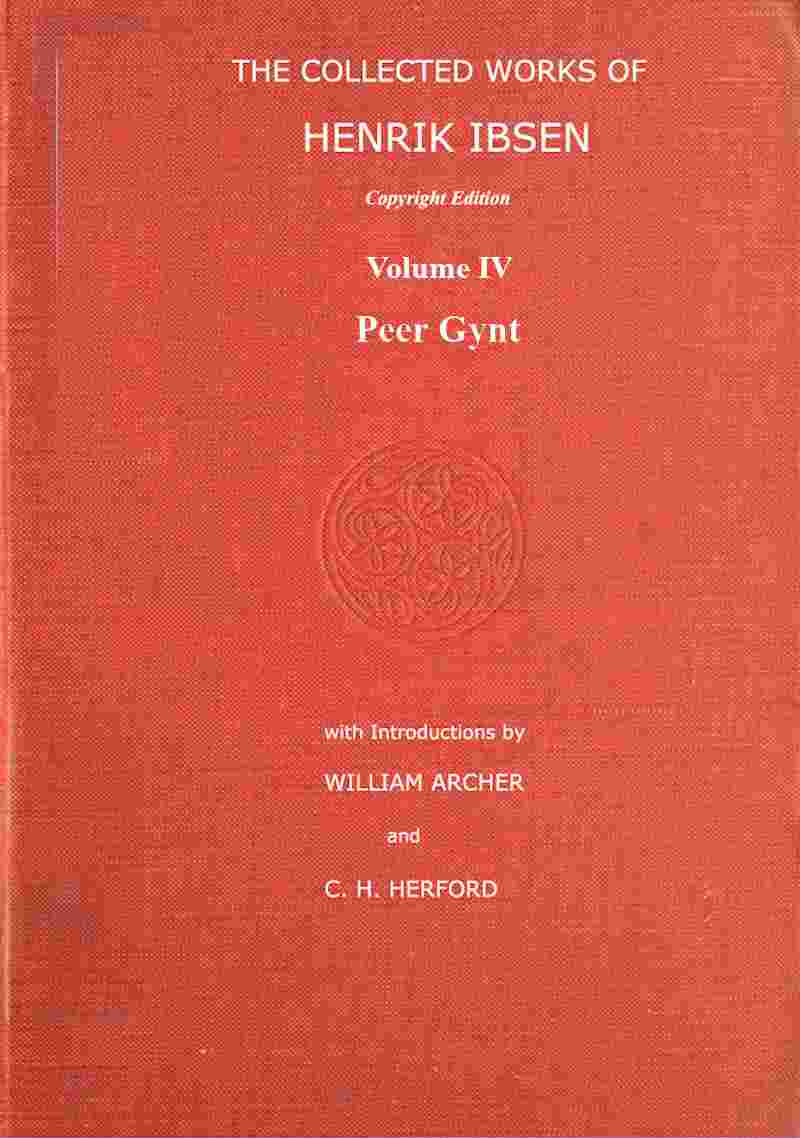
The collected works of Henrik Ibsen, Vol. 04 (of 11) cover

The collected works of Henrik Ibsen, Vol. 04 (of 11)

Chapter 24: SCENE SECOND.
Open in WeRead

Explore more books like this:

About This Book

A braggart, imaginative young man deserts duty and drifts through episodic adventures that mix folktale fantasy, social satire, and personal reckoning. He pursues illusory successes, consorts with folkloric beings, travels abroad, and repeatedly chooses self-interest over fidelity to family and a devoted woman who remains his moral counterpoint. Encounters range from comic to grotesque and culminate in a metaphysical trial before a mysterious arbiter who threatens to annihilate inessential lives. The drama probes identity, responsibility, and the cost of self-deception while alternating lyric, folkloric scenes with biting commentary on ambition, nationalism, and the possibility of redemption.

Too strong that; only for a fool——
Trumpeterstråle.
[Trying to kiss him.]
I, Uncle, for a specimen
Of Yankee riff-raff’s meanest spawn——!
Forgive me——!
Von Eberkopf.
We’ve been in the dark——
Peer.
What stuff is this?
Von Eberkopf.
We now see gathered
In glory all the Gyntish host
Of wishes, appetites, and desires——!
Monsieur Ballon.
[Admiringly.]
So this is being Monsieur[79] Gynt!
Von Eberkopf.
[In the same tone.]
This I call being Gynt with honour!
Peer.
But tell me——?
Monsieur Ballon.
Don’t you understand?
Peer.
May I be hanged if I begin to!
Monsieur Ballon.
What? Are you not upon your way
To join the Greeks, with ship and money——?
Peer.
[Contemptuously.]
No, many thanks! I side with strength,
And lend my money to the Turks.
Monsieur Ballon.
Impossible!
Von Eberkopf.
Witty, but a jest!
Peer.
[After a short silence, leaning on a chair and
assuming a dignified mien.]
Come, gentlemen, I think it best
We part before the last remains
Of friendship melt away like smoke.
Who nothing owns will lightly risk it.
When in the world one scarce commands
The strip of earth one’s shadow covers,
One’s born to serve as food for powder.
But when a man stands safely landed,
As I do, then his stake is greater.
Go you to Hellas. I will put you
Ashore, and arm you gratis too.
The more you eke the flames of strife,
The better will it serve my purpose.
Strike home for freedom and for right!
Fight! storm! make hell hot for the Turks;—
And gloriously end your days
Upon the Janissaries lances.—
But I—excuse me——
[Slaps his pocket.
I have cash,
And am myself, Sir Peter Gynt.[80]

[Puts up his sunshade, and goes into the grove, where the hammocks are partly visible.]

Trumpeterstråle.
The swinish cur!
Monsieur Ballon.
No taste for glory——!
Mr. Cotton.
Oh, glory’s neither here nor there;
But think of the enormous profits
We’d reap if Greece should free herself.
Monsieur Ballon.
I saw myself a conqueror,
By lovely Grecian maids encircled.
Trumpeterstråle.
Grasped in my Swedish hands, I saw
The great, heroic spur-strap-buckles!
Von Eberkopf.
I my gigantic Fatherland’s
Culture saw spread o’er earth and sea——!
Mr. Cotton.
The worst’s the loss in solid cash.
God dam![81] I scarce can keep from weeping!
I saw me owner of Olympus.
If to its fame the mountain answers,
There must be veins of copper in it,
That could be opened up again.
And furthermore, that stream Castalia,[82]
Which people talk so much about,
With fall on fall, at lowest reckoning,
Must mean a thousand horse-power good——
Trumpeterstråle.
Still I will go! My Swedish sword
Is worth far more than Yankee gold!
Mr. Cotton.
Perhaps; but, jammed into the ranks,
Amid the press we’d all be drowned;
And then where would the profit be?
Monsieur Ballon.
Accurst! So near to fortune’s summit,
And now stopped short beside its grave!
Mr. Cotton.
[Shakes his fist towards the yacht.]
That long black chest holds coffered up
The nabob’s golden nigger-sweat——!
Von Eberkopf.
A royal notion! Quick! Away!
It’s all up with his empire now!
Hurrah!
Monsieur Ballon.
What would you?
Von Eberkopf.
Seize the power!
The crew can easily be bought.
On board then. I annex the yacht!
Mr. Cotton.
You—what——?
Von Eberkopf.
I grab the whole concern!
[Goes down to the jolly-boat.
Mr. Cotton.
Why then self-interest commands me
To grab my share.
[Goes after him.
Trumpeterstråle.
What scoundrelism!
Monsieur Ballon.
A scurvy business—but—enfin![83]
[Follows the others.
Trumpeterstråle.
I’ll have to follow, I suppose,—
But I protest to all the world——![84]
[Follows.

SCENE SECOND.

Another part of the coast. Moonlight with drifting clouds. The yacht is seen far out, under full steam.

Peer Gynt comes running along the beach; now pinching his arms, now gazing out to sea.

Peer.
A nightmare!—Delusion!—I’ll soon be awake!
She’s standing to sea! And at furious speed!—
Mere delusion! I’m sleeping! I’m dizzy and drunk!
[Clenches his hands.
It’s not possible I should be going to die!
[Tearing his hair.
A dream! I’m determined it shall be a dream!
Oh, horror! It’s only too real, worse luck!
My brute-beasts of friends——! Do but hear me, oh Lord!
Since thoughthough art so wise and so righteous——! Oh judge——!
[With upstretched arms.
It is I, Peter[85] Gynt! Oh, our Lord, give but heed!
Hold thy hand o’er me, Father; or else I must perish!
Make them back the machine! Make them lower the gig!
Stop the robbers! Make something go wrong with the rigging!
Hear me! Let other folks’ business lie over!
The world can take care of itself for the time!—
I’m blessed if he hears me! He’s deaf as his wont is!
Here’s a nice thing! A God that is bankrupt of help!
[Beckons upwards.
Hist; I’ve abandoned the nigger-plantation!
And missionaries I’ve exported to Asia!
Surely one good turn should be worth another!
Oh, help me on board——!

[A jet of fire shoots into the air from the yacht, followed by thick clouds of smoke; a hollow report is heard. Peer Gynt utters a shriek, and sinks down on the sands. Gradually the smoke clears away; the ship has disappeared.

Peer.
[Softly, with a pale face.]
That’s the sword of wrath!
In a crack to the bottom, every soul, man and mouse!
Oh, for ever blest be the lucky chance——
[With emotion.
A chance? No, no, it was more than a chance.
I was to be rescued and they to perish.
Oh, thanks and praise for that thou hast kept me,
Hast cared for me, spite of all my sins!—
[Draws a deep breath.
What a marvellous feeling of safety and peace
It gives one to know oneself specially shielded!
But the desert! What about food and drink?
Oh, something I’m sure to find. He’ll see to that.
There’s no cause for alarm;—
[Loud and insinuatingly.
He would never allow
A poor little sparrow like me to perish!
Be but lowly of spirit. And give him time.
Leave it all in the Lord’s hands; and don’t be cast down.—
[With a start of terror.
Can that be a lion that growled in the reeds——?
[His teeth chattering.
No, it wasn’t a lion.
[Mustering up courage.
A lion, forsooth!
Those beasts, they’ll take care to keep out of the way.
They know it’s no joke to fall foul of their betters.
They have instinct to guide them;—they feel, what’s a fact,
That it’s dangerous playing with elephants.—
But all the same——. I must find a tree.
There’s a grove of acacias and palms over there;
If I once can climb up, I’ll be sheltered and safe,—
Most of all if I knew but a psalm or two.
[Clambers up.
Morning and evening are not alike;
That text has been oft enough weighed and pondered.
[Seats himself comfortably.
How blissful to feel so uplifted in spirit!
To think nobly is more than to know oneself rich.
Only trust in him. He knows well what share
Of the chalice of need I can bear to drain.
He takes fatherly thought for my personal weal;—
[Casts a glance over the sea, and whispers with a sigh:
But economical—no, that he isn’t!

SCENE THIRD.

Night. An encampment of Moroccan troops on the edge of the desert. Watch-fires, with Soldiers resting by them.

A Slave.
[Enters, tearing his hair.]
Gone is the Emperor’s milk-white charger!
Another Slave.
[Enters, rending his garments.]
The Emperor’s sacred robes are stolen!
An Officer.
[Enters.]
A hundred stripes upon the foot-soles
For all who fail to catch the robber!

[The troopers mount their horses, and gallop away in every direction.

SCENE FOURTH.

Daybreak. The grove of acacias and palms.

Peer Gynt in his tree with a broken branch in his hand, trying to beat off a swarm of monkeys.

Peer.
Confound it! A most disagreeable night.
[Laying about him.
Are you there again? This is most accursëd!
Now they’re throwing fruit. No, it’s something else.
A loathsome beast is your Barbary ape!
The Scripture says: Thou shalt watch and fight.
But I’m blest if I can; I am heavy and tired,
[Is again attacked; impatiently:
I must put a stopper upon this nuisance!
I must see and get hold of one of these scamps,
Get him hung and skinned, and then dress myself up,
As best I may, in his shaggy hide,
That the others may take me for one of themselves.—
What are we mortals? Motes, no more;
And it’s wisest to follow the fashion a bit.—
Again a rabble! They throng and swarm.
Off with you! Shoo! They go on as though crazy.
If only I had a false tail to put on now,—
Only something to make me a bit like a beast.—
What now? There’s a pattering over my head——!
[Looks up.
It’s the grandfather ape,—with his fists full of filth——!

[Huddles together apprehensively, and keeps still for a while. The ape makes a motion; Peer Gynt begins coaxing and wheedling him, as he might a dog.

Ay,—are you there, my good old Bus!
He’s a good beast, he is! He will listen to reason!
He wouldn’t throw;—I should think not, indeed!
It is me! Pip-pip! We are first-rate friends!
Ai-ai! Don’t you hear, I can talk your language?
Bus and I, we are kinsfolk, you see;—
Bus shall have sugar to-morrow——! The beast!
The whole cargo on top of me! Ugh, how disgusting!—
Or perhaps it was food! ’Twas in taste—indefinable;
And taste’s for the most part a matter of habit.
What thinker is it who somewhere says:
You must spit and trust to the force of habit?—
Now here come the small-fry!
[Hits and slashes around him.
It’s really too bad
That man, who by rights is the lord of creation,
Should find himself forced to——! O murder! murder!
The old one was bad, but the youngsters are worse!

SCENE FIFTH.

Early morning. A stony region, with a view out over the desert. On one side a cleft in the hill, and a cave.

A Thief and a Receiver hidden in the cleft, with the Emperor’s horse and robes. The horse, richly caparisoned, is tied to a stone. Horsemen are seen afar off.

The Thief.
The tongues of the lances
All flickering and flashing,—
See, see!
The Receiver.
Already my head seems
To roll on the sand-plain!
Woe, woe!
The Thief.
[Folds his arms over his breast.]
My father he thieved;
So his son must be thieving.
The Receiver.
My father received;
Still his son is receiving.[86]
The Thief.
Thy lot shalt thou bear still;
Thyself shalt thou be still.
The Receiver.
[Listening.]
Steps in the brushwood!
Flee, flee! But where?
The Thief.
The cavern is deep,
And the Prophet great!

[They make off, leaving the booty behind them. The horsemen gradually disappear in the distance.

Peer Gynt.
[Enters, cutting a reed whistle.]
What a delectable morning-tide!—
The dung-beetle’s rolling his ball in the dust;
The snail creeps out of his dwelling-house.
The morning; ay, it has gold in its mouth.—
It’s a wonderful power, when you think of it,
That Nature has given to the light of day.
One feels so secure, and so much more courageous,—
One would gladly, at need, take a bull by the horns.—
What a stillness all round! Ah, the joys of Nature,—
Strange enough I should never have prized them before.
Why go and imprison oneself in a city,
For no end but just to be bored by the mob.—
Just look how the lizards are whisking about,
Snapping, and thinking of nothing at all.
What innocence ev’n in the life of the beasts!
Each fulfils the Creator’s behest unimpeachably,
Preserving its own special stamp undefaced;
Is itself, is itself, both in sport and in strife,
Itself, as it was at his primal: Be!
[Puts on his eye-glasses.
A toad. In the middle of a sandstone block.
Petrifaction all around him. His head alone peering.
There he’s sitting and gazing as though through a window
At the world, and is—to himself enough.—
[Reflectively.
Enough? To himself——? Where is it that’s written?
I’ve read it, in youth, in some so-called classic.
In the family prayer-book? Or Solomon’s Proverbs?
Alas, I notice that, year by year,
My memory for dates and for places is fading.
[Seats himself in the shade.
Here’s a cool spot to rest and to stretch out one’s feet.
Why, look, here are ferns growing—edible roots.roots.
[Eats a little.
’Twould be fitter food for an animal;—
But the text says: Bridle the natural man!
Furthermore it is written: The proud shall be humbled,
And whoso abaseth himself, exalted.
[Uneasily.
Exalted? Yes, that’s what will happen with me;—
No other result can so much as be thought of.
Fate will assist me away from this place,
And arrange matters so that I get a fresh start.
This is only a trial; deliverance will follow,—
If only the Lord letslets me keep my health.

[Dismisses his misgivings, lights a cigar, stretches himself, and gazes out over the desert.

What an enormous, limitless waste!—
Far in the distance an ostrich is striding.—
What can one fancy was really God’s
Meaning in all of this voidness and deadness?
This desert, bereft of all sources of life;
This burnt-up cinder, that profits no one;
This patch of the world, that for ever lies fallow;
This corpse, that never, since earth’s creation,
Has brought its Maker so much as thanks,—
Why was it created?—How spendthrift is Nature!—
Is that sea in the east there, that dazzling expanse
All gleaming? It can’t be; ’tis but a mirage.
The sea’s to the west; it lies piled up behind me,
Dammed out from the desert by a sloping ridge.
[A thought flashes through his mind.
Dammed out? Then I could——? The ridge is narrow.
Dammed out? It wants but a gap, a canal,—
Like a flood of life would the waters rush
In through the channel, and fill the desert![87]
Soon would the whole of yon red-hot grave
Spread forth, a breezy and rippling sea.
The oases would rise in the midst, like islands;
Atlas would tower in green cliffs on the north;
Sailing-ships would, like stray birds on the wing,
Skim to the south, on the caravans’ track.
Life-giving breezes would scatter the choking
Vapours, and dew would distil from the clouds.
People would build themselves town on town,
And grass would grow green round the swaying palm-trees.
The southland, behind the Sahara’s wall,
Would make a new seaboard for civilisation.
Steam would set Timbuctoo’s factories spinning;
Bornu would be colonised apace;
The naturalist would pass safely through Habes
In his railway-car to the Upper Nile.
In the midst of my sea, on a fat oasis,
I will replant the Norwegian race;
The Dalesman’s blood is next door to royal;
Arabic crossing will do the rest.
Skirting a bay, on a shelving strand,
I’ll build the chief city, Peeropolis.
The world is decrepit! Now comes the turn
Of Gyntiana, my virgin land!
[Springs up.
Had I but capital, soon ’twould be done.—
A gold key to open the gate of the sea!
A crusade against Death! The close-fisted old churl
Shall open the sack he lies brooding upon.
Men rave about freedom in every land;—
Like the ass in the ark, I will send forth a cry
O’er the world, and will baptize to liberty
The beautiful, thrall-bounden coasts that shall be.
I must on! To find capital, eastward or west!
My kingdom—well, half of it, say—for a horse!
[The horse in the cleft neighs.
A horse! Ay, and robes!—Jewels too,—and a sword!
[Goes closer.
It can’t be! It is though——! But how? I have read,
I don’t quite know where, that the will can move mountains;—
But how about moving a horse as well——?
Pooh! Here stands the horse, that’s a matter of fact;—
For the rest, why, ab esse ad posse, et cetera.
[Puts on the dress and looks down at it.
Sir Peter—a Turk, too, from top to toe!
Well, one never knows what may happen to one.—
Gee-up, now, Granë, my trusty steed!
[Mounts the horse.
Gold-slipper stirrups beneath my feet!—
You may know the great by their riding-gear!
[Gallops off into the desert.

SCENE SIXTH.

The tent of an Arab chief, standing alone on an oasis.

Peer Gynt, in his eastern dress, resting on cushions. He is drinking coffee, and smoking a long pipe. Anitra, and a bevy of Girls, dancing and singing before him.

Chorus of Girls.
The Prophet is come!
The Prophet, the Lord, the All-Knowing One,
To us, to us is he come,
O’er the sand-ocean riding!
The Prophet, the Lord, the Unerring One,
To us, to us is he come,
O’er the sand-ocean sailing!
Wake the flute and the drum!
The Prophet, the Prophet is come!
Anitra.
His courser is white as the milk is
That streams in the rivers of Paradise.
Bend every knee! Bow every head!
His eyes are as bright-gleaming, mild-beaming stars.
Yet none earth-born endureth
The rays of those stars in their blinding splendour!
Through the desert he came.
Gold and pearl-drops sprang forth on his breast.
Where he rode there was light.
Behind him was darkness;
Behind him raged drought and the simoom.
He, the glorious one, came!
Through the desert he came,
Like a mortal apparelled.
Kaaba, Kaaba stands void;—
He himself hath proclaimed it!
The Chorus of Girls.
Wake the flute and the drum!
The Prophet, the Prophet is come!
[They continue the dance, to soft music.
Peer.
I have read it in print—and the saying is true—
That no one’s a prophet in his native land.—
This position is very much more to my mind
Than, my life over there ’mong the Charleston merchants.
There was something hollow in the whole affair,
Something foreign at the bottom, something dubious behind it;—
I was never at home in their company,
Nor felt myself really one of the guild.
What tempted me into that galley at all?
To grub and grub in the bins of trade—
As I think it all over, I can’t understand it;—
It happened so; that’s the whole affair.—
To be oneself on a basis of gold
Is no better than founding one’s house on the sand.
For your watch, and your ring, and the rest of your trappings,
The good people fawn on you, grovelling to earth;
They lift their hats to your jewelled breast-pin;
But your ring and your breast-pin are not your Person.—[88]
A prophet; ay, that is a clearer position.
At least one knows on what footing one stands.
If you make a success, it’s yourself that receives
The ovation, and not your pounds-sterling and shillings.[89]
One is what one is, and no nonsense about it;
One owes nothing to chance or to accident,
And needs neither licence nor patent to lean on.—
A prophet; ay, that is the thing for me.
And I slipped so utterly unawares into it,—
Just by coming galloping over the desert,
And meeting these children of nature en route.
The Prophet had come to them; so much was clear.
It was really not my intent to deceive——;
There’s a difference ’twixt lies and oracular answers;
And then I can always withdraw again.
I’m in no way bound; it’s a simple matter—;
The whole thing is private, so to speak;
I can go as I came; there’s my horse ready saddled;
I am master, in short, of the situation.
Anitra.
[Approaching the tent-door.]
Prophet and Master!
Peer.
What would my slave?
Anitra.
The sons of the desert await at thy tent-door;
They pray for the light of thy countenance——
Peer.
Stop!
Say in the distance I’d have them assemble;
Say from the distance I hear all their prayers.
Add that I suffer no menfolk in here!
Men, my child, are a worthless crew,—
Inveterate rascals you well may call them!
Anitra, you can’t think how shamelessly
They have swind——I mean they have sinned, my child!—[90]
Well, enough now of that; you may dance for me, damsels!
The Prophet would banish the memories that gall him.