
WeRead Powered by ReaderPub
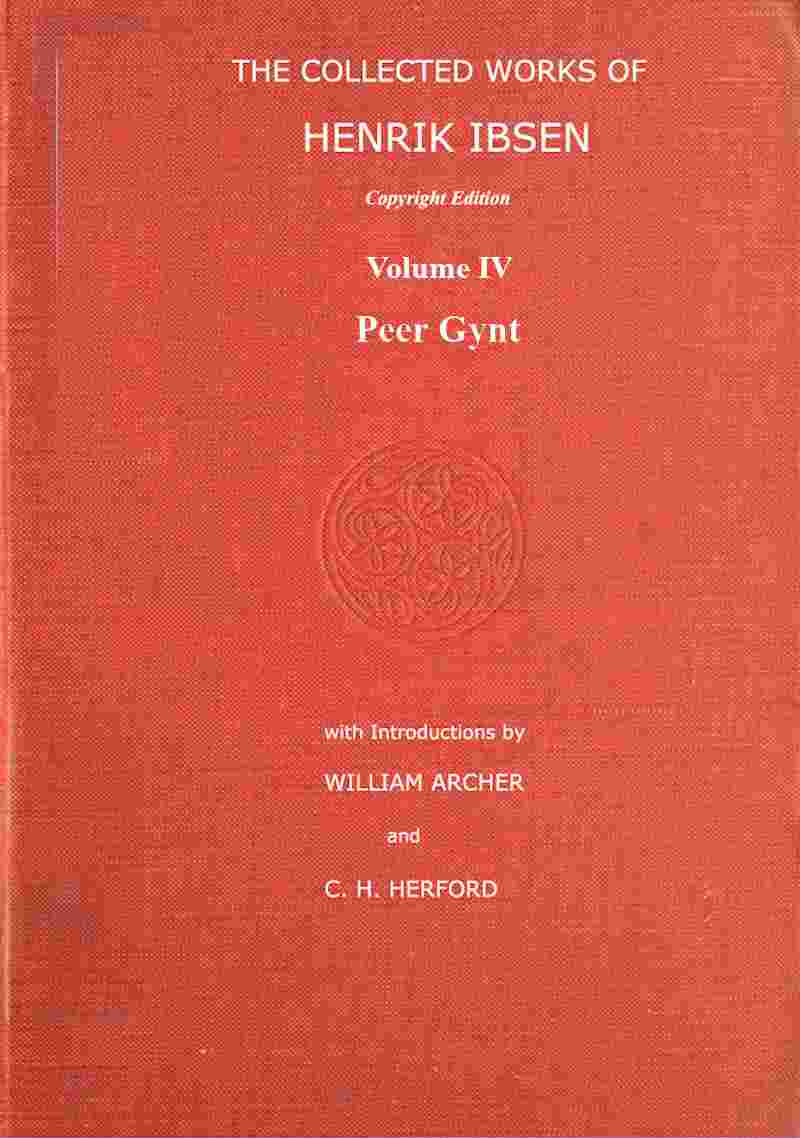
The collected works of Henrik Ibsen, Vol. 04 (of 11) cover

The collected works of Henrik Ibsen, Vol. 04 (of 11)

Chapter 43: SCENE SEVENTH.
Open in WeRead

Explore more books like this:

About This Book

A braggart, imaginative young man deserts duty and drifts through episodic adventures that mix folktale fantasy, social satire, and personal reckoning. He pursues illusory successes, consorts with folkloric beings, travels abroad, and repeatedly chooses self-interest over fidelity to family and a devoted woman who remains his moral counterpoint. Encounters range from comic to grotesque and culminate in a metaphysical trial before a mysterious arbiter who threatens to annihilate inessential lives. The drama probes identity, responsibility, and the cost of self-deception while alternating lyric, folkloric scenes with biting commentary on ambition, nationalism, and the possibility of redemption.

A palace I have;—
It lies in the Rondë; it’s solidly built.
The Lad.
A button is bid!
Peer.
You must run to a dram.
’Twere a sin and a shame to bid anything less.
Another.
He’s a jolly old boy this!
[The bystanders crowd around him.
Peer.
[Shouts.]
Granë,[120] my steed;
Who bids?
One of the Crowd.
Where’s he running?
Peer.
Why, far in the west!
Near the sunset, my lads! Ah, that courser can fly
As fast, ay, as fast as Peer Gynt could lie.
Voices.
What more have you got?
Peer.
I’ve both rubbish and gold!
I bought it with ruin; I’ll sell it at a loss.
A Lad.
Put it up!
Peer.
A dream of a silver-clasped book!
That you can have for an old hook and eye.
The Lad.
To the devil with dreams!
Peer.
Here’s my Kaiserdom!
I throw it in the midst of you; scramble for it!
The Lad.
Is the crown given in?
Peer.
Of the loveliest straw.
It will fit whoever first puts it on.
Hei, there is more yet! An addled egg!
A madman’s grey hair! And the Prophet’s beard!
All these shall be his that will show on the hillside
A post that has writ on it; Here lies your path!
The Bailiff.[121]
[Who has come up.]
You’re carrying on, my good man, so that almost
I think that your path will lead straight to the lock-up.
Peer.
[Hat in hand.]
Quite likely. But, tell me, who was Peer Gynt?
The Bailiff.
Oh, nonsense——
Peer.
Your pardon! Most humbly I beg——!
The Bailiff.
Oh, he’s said to have been an abominable liar——[122]
Peer.
A liar——?
The Bailiff.
Yes—all that was strong and great
He made believe always that he had done it.
But, excuse me, friend—I have other duties——
[Goes.
Peer.
And where is he now, this remarkable man?
An Elderly Man.
He fared over seas to a foreign land;
It went ill with him there, as one well might foresee;—
It’s many a year now since he was hanged.
Peer.
Hanged! Ay, ay! Why, I thought as much;
Our lamented Peer Gynt was himself to the last.
[Bows.
Good-bye,—and best thanks for to-day’s merry meeting.
[Goes a few steps, but stops again.
You joyous youngsters, you comely lasses,—
Shall I pay my shot with a traveller’s tale?
Several Voices.
Yes; do you know any?
Peer.
Nothing more easy.—

[He comes nearer; a look of strangeness comes over him.

I was gold-digging once in San Francisco.
There were mountebanks swarming all over the town.
One with his toes could perform on the fiddle;
Another could dance a Spanish halling[123] on his knees;
A third, I was told, kept on making verses
While his brain-pan was having a hole bored right through it.
To the mountebank-meeting came also the devil;—
Thought he’d try his luck with the rest of them.
His talent was this: in a manner convincing,
He was able to grunt like a flesh-and-blood pig.
He was not recognised, yet his manners[124] attracted.
The house was well filled; expectation ran high.
He stepped forth in a cloak with an ample cape to it;
Man mussmuss sich drappiren, as the Germans say.
But under the mantle—what none suspected—
He’d managed to smuggle a real live pig.
And now he opened the representation;
The devil he pinched, and the pig gave voice.
The whole thing purported to be a fantasia
On the porcine existence, both free and in bonds;
And all ended up with a slaughter-house squeal—
Whereupon the performer bowed low and retired.—
The critics discussed and appraised the affair;
The tone of the whole was attacked and defended.
Some fancied the vocal expression too thin,
While some thought the death-shriek too carefully studied;
But all were agreed as to one thing: qua grunt,
The performance was grossly exaggerated.—
Now that, you see, came of the devil’s stupidity
In not taking the measure of his public first.

[He bows and goes off. A puzzled silence comes over the crowd.

SCENE FIFTH.

Whitsun Eve.—In the depths of the forest. To the back, in a clearing, is a hut with a pair of reindeer horns over the porch-gable.

Peer Gynt is creeping among the undergrowth, gathering wild onions.

Peer.
Well, this is one standpoint. Where is the next?
One should try all things and choose the best.
Well, I have done so,—beginning from Cæsar,
And downwards as far as to Nebuchadnezzar.
So I’ve had, after all, to go through Bible history;—
The old boy has come back to his mother again.
After all it is written: Of the earth art thou come.—
The main thing in life is to fill one’s belly.
Fill it with onions? That’s not much good;—
I must take to cunning, and set out snares.
There’s water in the beck here; I shan’t suffer thirst;
And I count as the first ’mong the beasts after all.
When my time comes to die—as most likely it will,—
I shall crawl in under a wind-fallen tree;
Like the bear, I will heap up a leaf-mound above me,
And I’ll scratch in big print on the bark of the tree:
Here rests Peer Gynt, that decent soul
Kaiser o’er all of the other beasts.—
Kaiser?
[Laughs inwardly.
Why, you old soothsayer’s-dupe!
No Kaiser are you; you are nought but an onion.
I’m going to peel you now, my good Peer!
You won’t escape either by begging or howling.

[Takes an onion and strips off one coat after another.

There lies the outermost layer, all torn;
That’s the shipwrecked man on the jolly-boat’s keel.
Here’s the passenger layer, scanty and thin;—
And yet in its taste there’s a tang of Peer Gynt.
Next underneath is the gold-digger ego;
The juice is all gone—if it ever had any.
This coarse-grained layer with the hardened skin
Is the peltry hunter by Hudson’s Bay.
The next one looks like a crown;—oh, thanks!
We’ll throw it away without more ado.
Here’s the archæologist, short but sturdy,
And here is the Prophet, juicy and fresh.
He stinks, as the Scripture has it, of lies,
Enough to bring the water to an honest man’s eyes.
This layer that rolls itself softly together
Is the gentleman, living in ease and good cheer.
The next one seems sick. There are black streaks upon it;—
Black symbolises both parsons and niggers.
[Pulls off several layers at once.
What an enormous number of swathings!
Is not the kernel soon coming to light?
[Pulls the whole onion to pieces.
I’m blest if it is! To the innermost centre,
It’s nothing but swathings—each smaller and smaller.—
Nature is witty!
[Throws the fragments away.
The devil take brooding!
If one goes about thinking, one’s apt to stumble.
Well, I can at any rate laugh at that danger;—
For here on all fours I am firmly planted.
[Scratches his head.
A queer enough business, the whole concern!
Life, as they say, plays with cards up its sleeve;[125]
But when one snatches at them, they’ve disappeared,
And one grips something else,—or else nothing at all.

[He has come near to the hut; he catches sight of it and starts.

This hut? On the heath——! Ha!
[Rubs his eyes.
It seems exactly
As though I had known this same building before.—
The reindeer-horns jutting above the gable!—
A mermaid, shaped like a fish from the navel!—
Lies! there’s no mermaid! But nails—and planks,—
Bars too, to shut out hobgoblin thoughts!—
Solveig.
[Singing in the hut.]
Now all is ready for Whitsun Eve.
Dearest boy of mine, far away,
Comest thou soon?
Is thy burden heavy,
Take time, take time;—
I will await thee;
I promised of old.[126]
Peer.
[Rises, quiet and deadly pale.]
One that’s remembered,—and one that’s forgot.
One that has squandered,—and one that has saved.—
Oh, earnest!—and never can the game be played o’er!
Oh, dread![127]—here was my Kaiserdom!
[Hurries off-along the wood path.

SCENE SIXTH.

Night. A heath, with fir-trees. A forest fire has been raging; charred tree-trunks are seen stretching for miles. White mists here and there clinging to the earth.

Peer Gynt comes running over the heath.

Peer.
Ashes, fog-scuds, dust wind-driven,—
Here’s enough for building with!
Stench and rottenness within it;
All a whited sepulchre.
Figments, dreams, and still-born knowledge
Lay the pyramid’s foundation;
O’er them shall the work mount upwards,
With its step on step of falsehood.
Earnest shunned, repentance dreaded,
Flaunt at the apex like a scutcheon,
Fill the trump of judgment with their
“Petrus Gyntus Cæsar fecit!”
[Listens.
What is this, like children’s weeping?
Weeping, but half-way to song.—
Thread-balls[128] at my feet are rolling!—
[Kicking at them.
Off with you! You block my path!
The Thread-balls.
[On the ground.]
We are thoughts;
Thou shouldst have thought us;—
Feet to run on
Thou shouldst have given us!
Peer.
[Going round about.]
I have given life to one;—
’Twas a bungled, crook-legged thing!
The Thread-balls.
We should have soared up
Like clangorous voices,——
And here we must trundle
As grey-yarn thread-balls.
Peer.
[Stumbling.]
Thread-clue! you accursed scamp!
Would you trip your father’s heels?
[Flees.
Withered Leaves.
[Flying before the wind.]
We are a watchword;
Thou shouldst have proclaimed us!
See how thy dozing
Has wofully riddled us.
The worm has gnawed us.us.
In every crevice;
We have never twined us
Like wreaths round fruitage.
Peer.
Not in vain your birth, however;—
but still and serve as manure.
A Sighing in the Air.
We are songs;
Thou shouldst have sung us!—
A thousand times over
Hast thou cowed us and smothered us.
Down in thy heart’s pit
We have lain and waited;—
We were never called forth.
Thy gorge we poison!
Peer.
Poison thee, thou foolish stave!
Had I time for verse and stuff?
[Attempts a short cut.
Dewdrops.
[Dripping from the branches.]
We are tears
Unshed for ever.
Ice-spears, sharp-wounding,
We could have melted.
Now the barb rankles
In the shaggy bosom;—
The wound is closed over;
Our power is ended.
Peer.
Thanks;—I wept in Rondë-cloisters,—
None the less my tail-part smarted!
Broken Straws.
We are deeds;
Thou shouldst have achieved us!
Doubt, the throttler,
Has crippled and riven us.
On the Day of Judgment
We’ll come a-flock,
And tell the story,—
Then woe to you!
Peer.
Rascal-tricks! How dare you debit
What is negative against me?
[Hastens away.
Åse’s Voice.
[Far away.]
Fie, what a post-boy!
Hu, you’ve upset me
Here in the slush, boy!
Sadly it’s smirched me.—
You’ve driven me the wrong way.
Peer, where’s the castle?
The Fiend has misled you
With the switch from the cupboard.cupboard.
Peer.
Better haste away, poor fellow!
With the devil’s sins upon you,
Soon you’ll faint upon the hillside;—
Hard enough to bear one’s own sins.
[Runs off.

SCENE SEVENTH.

Another part of the heath.

Peer Gynt.
[Sings.]
A sexton! A sexton! where are you, hounds?
A song from braying precentor-mouths:
Around your hat-brim a mourning band;—
My dead are many; I must follow their biers!

The Button-moulder, with a box of tools and a large casting-ladle, comes from a side path.

The Button-moulder.
Well met, old gaffer!
Peer.
Good evening, friend!
The Button-moulder.
The man’s in a hurry. Why, where is he going?
Peer.
To a grave-feast.
The Button-moulder.
Indeed? My sight’s not very good;—
Excuse me,—your name doesn’t chance to be Peer?
Peer.
Peer Gynt, as the saying is.
The Button-moulder.
That I call luck!
It’s precisely Peer Gynt I am sent for to-night.
Peer.
You’re sent for? What do you want?
The Button-moulder.
Why, see here;
I mould buttons; and you must go into my ladle.
Peer.
What to do there?
The Button-moulder.
To be melted up.
Peer.
To be melted?
The Button-moulder.
Here it is, empty and scoured.
Your grave is dug ready, your coffin bespoke.
The worms in your body will live at their ease;—
But I have orders, without delay,
On Master’s behalf to fetch in your soul.
Peer.
It can’t be! Like this, without any warning——!
The Button-moulder.
It’s an old tradition at burials and births
To appoint in secret the day of the feast,
With no warning at all to the guest of honour.
Peer.
Ay, ay, that’s true. All my brain’s awhirl.
You are——?
The Button-moulder.
Why, I told you—a button-moulder.
Peer.
I see! A pet child has many nicknames.
So that’s it, Peer; it is there you’re to harbour
But these, my good man, are most unfair proceedings!
I’m sure I deserve better treatment than this;—
I’m not nearly so bad as perhaps you think,—
Indeed I’ve done more or less good in the world;—
At worst you may call me a sort of a bungler,—
But certainly not an exceptional sinner.
The Button-moulder.
Why that is precisely the rub, my man;
You’re no sinner at all in the higher sense;
That’s why you’re excused all the torture-pangs,
And, like others, land in the casting-ladle.
Peer.
Give it what name you please—call it ladle or pool;[129]
Spruce ale and swipes, they are both of them beer.
Avaunt from me, Satan!
The Button-moulder.
You can’t be so rude
As to take my foot for a horse’s hoof?
Peer.
On horse’s hoof or on fox’s claws[130]
Be off; and be careful what you’re about!
The Button-moulder.
My friend, you’re making a great mistake.
We’re both in a hurry, and so, to save time,
I’ll explain the reason of the whole affair.
You are, with your own lips you told me so,
No sinner on the so-called heroic scale,—
Scarce middling even——
Peer.
Ah, now you’re beginning
To talk common sense——
The Button-moulder.
Just have patience a bit—
But to call you a good man were going too far.—
Peer.
Well, you know I have never laid claim to that.
The Button-moulder.
You’re nor one thing nor t’other then, only so-so.
A sinner of really grandiose style
Is nowadays not to be met on the highways.
It wants much more than merely to wallow in mire;
For both vigour and earnestness go to a sin.
Peer.
Ay, it’s very true that remark of yours;
One has to lay on, like the old Berserkers.
The Button-moulder.
You, friend, on the other hand, took your sin lightly.
Peer.
Only outwardly, friend, like a splash of mud.
The Button-moulder.
Ah, we’ll soon be at one now. The sulphur pool
Is no place for you, who but plashed in the mire.
Peer.
And in consequence, friend, I may go as I came?
The Button-moulder.
No, in consequence, friend, I must melt you up.
Peer.
What tricks are these that you’ve hit upon
At home here, while I’ve been in foreign parts?
The Button-moulder.
The custom’s as old as the Snake’s creation;
It’s designed to prevent loss of good material.
You’ve worked at the craft—you must know that often
A casting turns out, to speak plainly, mere dross;
The buttons, for instance, have sometimes no loop to them.
What did you do then?
Peer.
Flung the rubbish away.
The Button-moulder.
Ah, yes; Jon Gynt was well known for a waster,
So long as he’d aught left in wallet or purse.
But Master, you see, he is thrifty, he is;
And that is why he’s so well-to-do.
He flings nothing away as entirely worthless
That can be made use of as raw material.
Now, you were designed for a shining button
On the vest of the world; but your loop gave way;
So into the waste-box you needs must go,
And then, as they phrase it, be merged in the mass.