
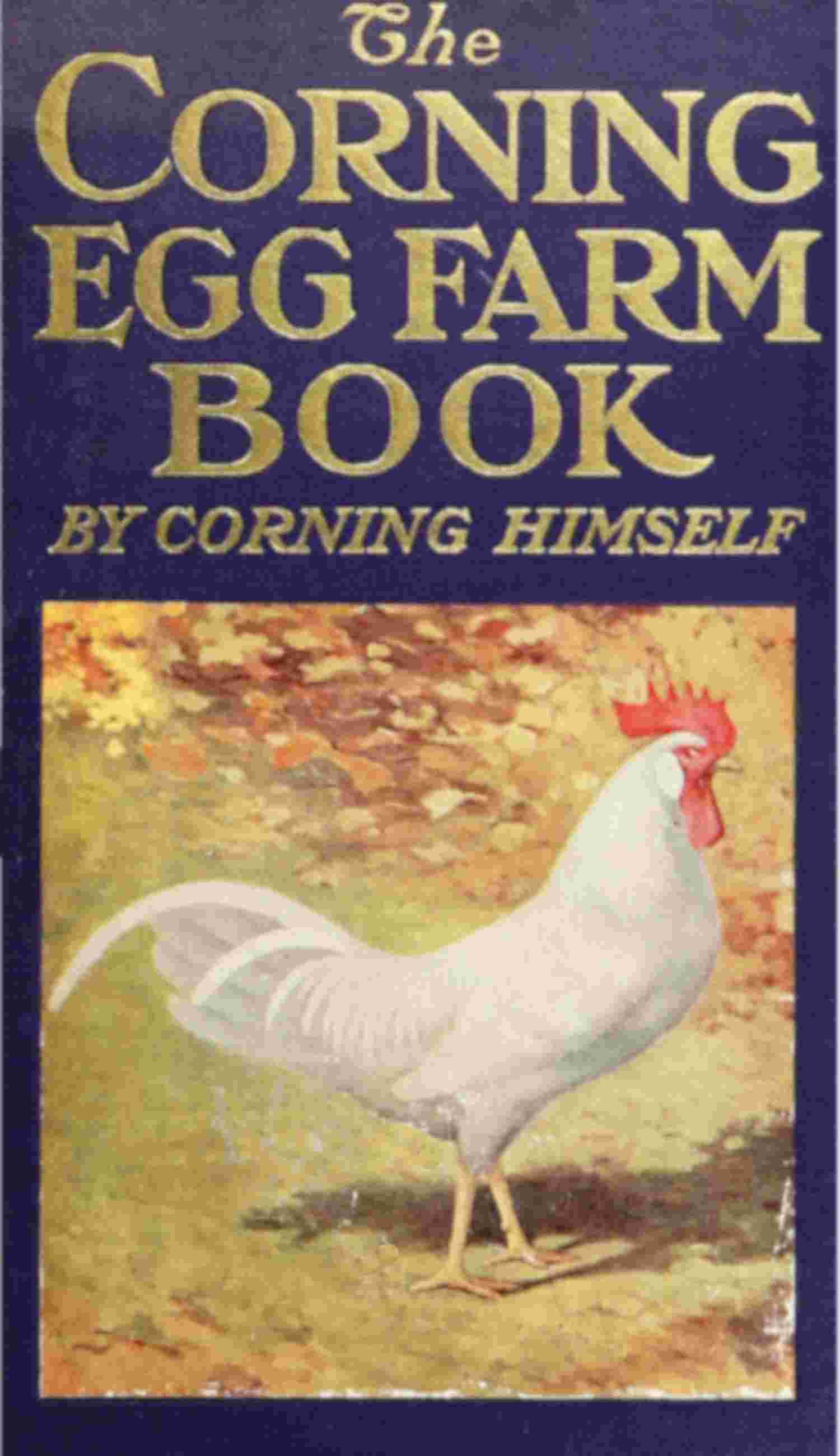
| Corning Strain Utility Cockerel | Frontispiece | |
| FACING PAGE | ||
| 1. | Lay-Out of Farm | 16 |
| 2. | Interior Sterile Laying House No. 3, in 1910 | 22 |
| 3. | Entrance to Farm in 1909 | 24 |
| 4. | As You Approach the Farm, 1911 | 28 |
| 5. | Office Building | 30 |
| 6. | Breeding Cockerels, Fall of 1909 | 34 |
| 7. | Interior Laying House No. 2, in 1910 | 38 |
| 8. | Panoramic View of the Farm | 46 |
| 9. | Thirty Dozen Corning Sanitary Fresh Eggs Ready to Ship | 54 |
| 10. | The Strain that Makes the Corning Egg Farm Famous | 58 |
| 11. | Three Sterile Laying Houses Containing 4,500 Pullets | 64 |
| 12. | Interior Laying House No. 1, in 1910 | 68 |
| 13. | One of the Breeding Houses just after Mating, 1910 | 72 |
| 14. | Sprouted Oats Cellar | 78 |
| 15. | Two-Weeks-Old Chicks in Brooder House Runs | 84 |
| 16. | Yearling Hens in Breeder House before Mating | 90 |
| 17. | “Socrates,” the Great Bloodhound Which Heads the Corning Kennels | 92 |
| 18. | “Socrates II” and “Diogenes” | 94 |
| 19. | Buster, America’s Greatest Ratter | 94 |
| 20. | Corning Automatic Drinking Fountain | 96 |
| 21. | Part of the Old Incubator Cellar | 104 |
| 22. | Brooder House, Showing Chick Runs | 120 |
| 23. | Old Arrangement of Brooder House | 124 |
| 24. | Chicks Six Weeks Old | 128 |
| 25. | Colony Range Feed and Water Wagon with “Billy” | 136 |
| 26. | Feeding on the Colony Range | 140 |
| 27. | Baskets of Eggs | 150 |
| 28. | Breeding Cockerels, Fall of 1911 | 156 |
| 29. | No. 3 Laying House Filled with 1,500 Pullets | 158 |
| 30. | The Workshop on the Corning Egg Farm | 162 |
| 31. | The Celebrated Corning Large-Flock Laying House No. 3 | 170 |
| 32. | Laying House Prepared to Receive 1,500 Pullets from Range | 172 |
| 33. | One of the Breeding Houses in 1911 | 174 |
| 34. | The Corning Colony House | 178 |
| 35. | Breeding House in 1907—The Original Corning House | 182 |
| 36. | Pullets in Laying House No. 2, Fall of 1911 | 184 |
| 37. | Diagrams and Detailed Plans of Buildings, etc. | 199 |
About This Book
A practical history and manual recounts the farm's founding and lays out a systematic approach to large-scale egg production. It explains housing layouts, the large-flock system to reduce costs and labor, and sanitary methods for preparing eggs for market. Breeding advice emphasizes selection of prolific white Leghorn stock, line-breeding to preserve type without close inbreeding, and producing unrelated cockerels for mating. Incubation and brooding guidance stresses uniform temperature, ventilation, and producing livable chicks, while feeding chapters prioritize succulent green foods (notably sprouted oats), mineral supplements, and animal-food substitutes. The work also covers watering systems, coal ash use, fixed routines for feeding and egg collection, and farm security and pest control.