
CHAPTER XIII
HONORABLY DISCHARGED
Of the old crew, the crew which had sailed with Pershing’s First Expeditionary Force, only two officers and eighteen men watched the frowning headlands of Brittany sink into the sea as the Corsair turned her bow to follow the long trail that led to the twin lights of Navesink and the skyline of New York. A day at the Azores for coal and she laid a course for Bermuda and another brief call before straightening out for the last stretch of the journey. On May 28th she steamed into her home port after an absence just a little short of two years. There was no uproarious welcome when the gray Corsair slipped through the Narrows and sought a berth at the Brooklyn Navy Yard. The war had ended more than half a year earlier. It was already an old story, but the ship had done her duty and was content with this.
A few days later she ceased to be enrolled in the United States Navy. There was no ceremonious formality and the documents in the case were exceedingly brief, but they signified the end of a story which had added a worthy page to the annals of American manhood. “Ships are all right. It is the men in them,” said one of Joseph Conrad’s wise old mariners. This was true of the Corsair and the other yachts of the Breton Patrol. And so the Navy Department spoke the last word in this concise order:
Headquarters of the Third Naval
District, Brooklyn, New York
June 6, 1919
From: Officer in Charge, Material Department.
To: Commanding Officer U.S.S. Corsair, S.P. 159.
Subject: Orders.
Proceed to W. & A. Fletcher Shipyard, Hoboken, N.J., June 9, 1919. Place the vessel out of commission in accordance with orders enclosed herewith, and deliver the vessel to representative of the owner, Mr. J. P. Morgan. Have enclosed receipts in duplicate signed and return to this office.
(Signed) C. L. Arnold,
Captain, U.S.N.
(Enclosure.) The U.S.S. Corsair is hereby placed out of commission, June 9th, 1919.
Her owner surmised that the Corsair had been run to death and worn out in the Bay of Biscay, that she was to be regarded rather as a relic than a yacht; but in this Mr. Morgan was happily disappointed. The staunch ship was still fit to be overhauled and made ready for the peaceful and leisurely service of other days. In her old berth at Fletcher’s Yard she swarmed with artisans instead of bluejackets, and they found many things to be done besides restoring the furniture, fittings, partitions, and so on.
Copyright, 1899, by C. E. Bolles, Brooklyn
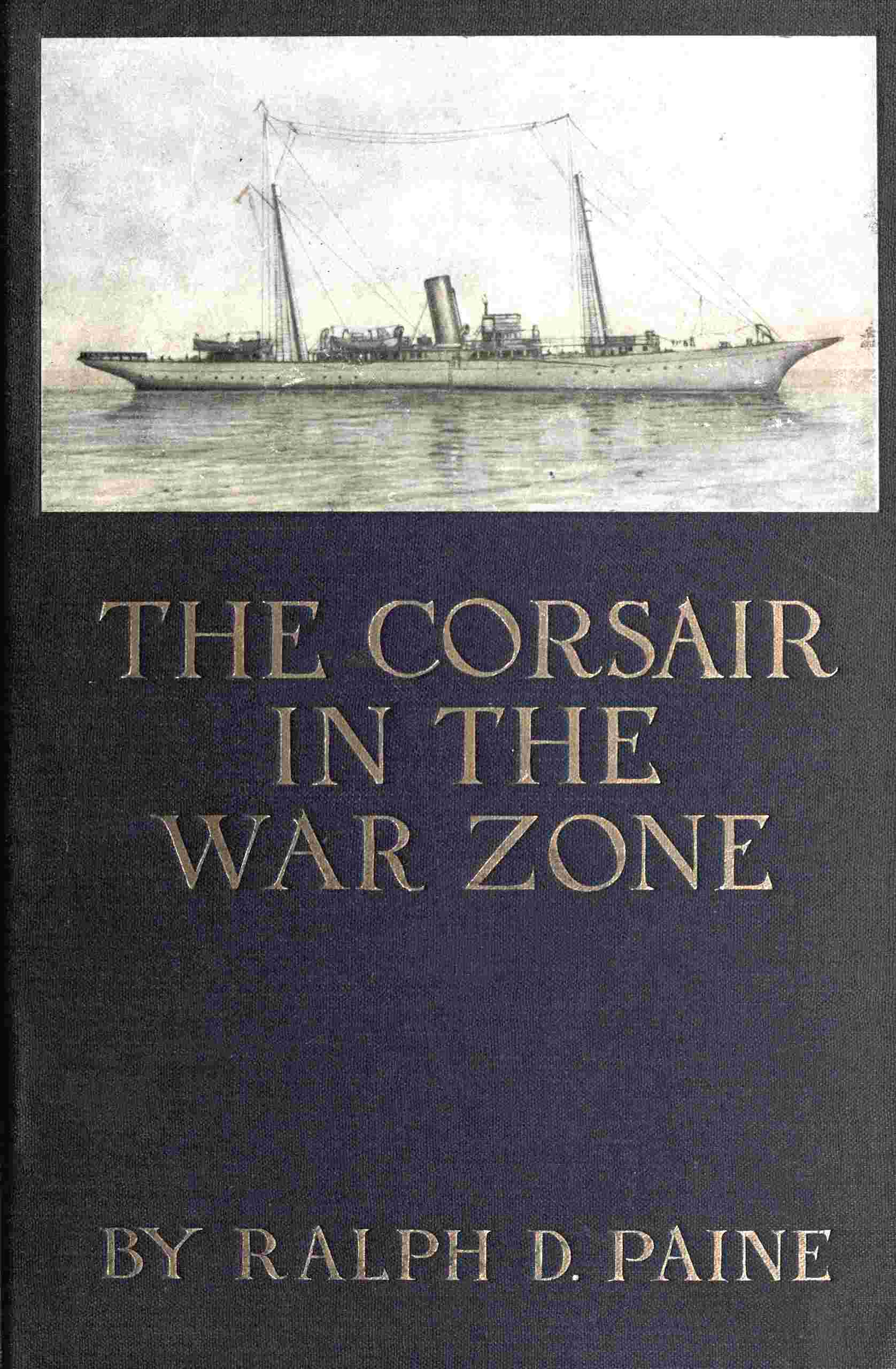
THE CORSAIR WHEN IN COMMISSION AS A YACHT BEFORE THE WAR
A stalwart man may tumble down three flights of stairs and escape without a broken neck, but he is bound to be considerably shaken up. This was painfully the case with a yacht which had been kept going month in and month out, the fires drawn from under her boilers only when she positively declined to make steam enough and was in a mood to protest against such unfair treatment. That December hurricane had been a bruising, almost fatal experience, and the repairs made at Lisbon could not be called final.
As a ship, however, the Corsair had strongly survived the ordeal, and soon she began to resume the semblance of a shapely, sea-going yacht. The graceful bowsprit was restored to the clipper stem, the deck cleared of gun mountings, and the overhang was no longer cluttered with the gear of the depth bombs. Chief Engineer Hutchison returned to his own engine-room, and there was clangor and clatter as gangs of mechanics repaired, replaced, and tuned up machinery which had been driven to the limit of endurance.
The Corsair’s steaming record in foreign service had amounted to 49,983.6 miles from June, 1917, to December, 1918, when she ceased cruising to spend her time in English ports and at Queenstown. The distance, by months, was as follows:
| 1917: | |
| June | 3244.4 miles |
| July | 3358.7 |
| August | 3441.5 |
| September | 3343.7 |
| October | 2994.4 |
| November | 3045.6 |
| December | 557.1 (Engine counter disabled in hurricane) |
| 1918: | |
| January | 880.9 miles (at Lisbon) |
| February | 2635.8 |
| March | 2519 |
| April | 1279.3 |
| May | 3554.5 |
| June | 3823.8[7] |
| July | 3609.8[7] |
| August | 4300[7] |
| September | 4027[7] |
| October | 1155.7 (Repairs) |
| November | 1030.4 |
| December | 1182 |
On July 31st, less than two months after being placed out of commission as a naval vessel, the Corsair hoisted the Commodore’s flag of the New York Yacht Club. Trim and immaculate, she proceeded to her anchorage at Glen Cove, to await cruising orders. There were differences, however, and the Corsair was not the same as of old. Freshly painted, the hue of her funnel and hull was the gray of the Navy. For a season, at least, the glistening black of her hull was not to be restored. It seemed more fitting, somehow, that in this way she should recall her long service in helping guard the road to France.
Upon her funnel were two service chevrons. The regulations awarded a stripe for the first three months overseas and another for a full year thereafter, until the date of the armistice. The decks were scraped and holystoned and spotless, but where the guns had been there were wooden plugs to mark the half-circles of the mounts, and the pine planking was scarred where cases of shells had been dragged to be ready for the swift team-work of the agile gun crews. These, too, were marks of honor which it seemed a pity to obliterate. They signified that the Corsair was something more than a yacht.
Another memento and reminder, to be highly regarded by the ship’s company of those stirring days, is a letter from the Commander-in-Chief of the United States Naval Forces in European Waters, who desired that his “well done” should be included in this record. It is placed here by way of “good-bye and fare-ye-well,” as the old chantey sang it. Admiral Sims writes as follows:
Naval War College
Newport, Rhode Island
1 December, 1919
My dear Mr. Paine:
To undertake to write the complete story of any one ship of the American Navy and its experiences in the war zone seems to me a task very well worth while. Needless to say, the work of the yachts and their personnel on the coast of France was splendid, and I am only too glad to have an opportunity to express my appreciation of them.
Because of the shortage of vessels suitable for convoy and escort duty, and the gravely urgent circumstances, the yachts were sent across with little time for preparation or training and with few officers and men of the Regular Navy in their complements. They were an emergency flotilla, but I felt confident that they would quickly adapt themselves to the arduous conditions of their service in European waters.
What did surprise me was that they were able to weather a winter in the Bay of Biscay and to stay at sea with the convoys when yachts were presumed to be tucked in harbor. This was greatly to the credit of the courage, seamanship, and hardihood of the men who served in them. It was conspicuously true of the Corsair’s encounter with the December hurricane in which she almost foundered, but succeeded in making port at Lisbon. A similar spirit was shown when this vessel stood by the disabled steamer Dagfin and towed her three hundred miles through an area in which enemy submarines were operating.
With a steaming record of 50,000 miles on foreign service, with the unusual number of fourteen enlisted men appointed as commissioned officers, and with repeated commendations from the Force Commander in France, such a yacht served with honor to the flag and the Navy and deserves the verdict of “Well Done, Corsair.”
Very sincerely yours
Wm. S. Sims
Rear Admiral, U.S. Navy
Copyright by Keystone View Co., N. Y.
ADMIRAL WILLIAM S. SIMS, COMMANDING THE U.S. NAVAL FORCES IN EUROPEAN WATERS
The yacht will always be tenanted with brave memories. And I am sure that to her owner and to Captain Porter, as long as she shall float, the Corsair will seem to have caught and held in the fabric of her somewhat of the spirit of those high-hearted young Americans who manned and sailed and fought her in the war zone. For a ship which has faithfully withstood the manifold ordeals of the sea becomes something more than a mere artifice of wood and steel. She seems almost sentient, like a living thing to those who have shared her fortunes, and therein is the immemorial romance of blue water.
FOOTNOTES:
[7] Mileage for this month greater than any of the yachts or smaller destroyers.