
Her eyes fastened, dilating, upon his. The scene faltered perceptibly
In the hush Max cried impatiently: "What the devil!" The words broke the spell of amazement upon the actress. In a twinkling the pitiful counterfeit of the shop-girl was rent and torn away; it hung only in shreds and tatters upon an individuality wholly strange to Whitaker: a larger, stronger woman seemed to have started out of the mask.
She turned, calling imperatively into the wings: "Ring down!"
Followed a pause of dumb amazement. In all the house, during the space of thirty pulse-beats, no one moved. Then Max rapped out an oath and slipped like quicksilver from the box.
Simultaneously the woman's foot stamped an echo from the boards.
"Ring down!" she cried. "Do you hear? Ring down!"
With a rush the curtain descended as pandemonium broke out on both sides of it.
VII
THE LATE EXTRA
Impulsively Whitaker got up to follow Max, then hesitated and sank back in doubt, his head awhirl. He was for the time being shocked out of all capacity for clear reasoning or right thinking. Uppermost in his consciousness he had a half-formed notion that it wouldn't help matters if he were to force himself in upon the crisis behind the scenes.
Beyond all question his wife had recognized in him the man whom she had been given every reason to believe dead: a discovery so unnerving as to render her temporarily unable to continue. But if theatrical precedent were a reliable guide, she would presently pull herself together and go on; people of the stage seldom forget that their first duty is to the audience. If he sat tight and waited, all might yet be well—as well as any such hideous coil could be hoped ever to be....
As has been indicated, he arrived at his conclusion through no such detailed argument; his mind leaped to it, and he rested upon it while still beset by a half-score of tormenting considerations.
This, then, explained Drummond's reluctance to have him bidden to the supper party; whatever ultimate course of action he planned to pursue, Drummond had been unwilling, perhaps pardonably so, to have his romance overthrown and altogether shattered in a single day.
And Drummond, too, must have known who Sara Law was, even while denying knowledge of the existence of Mary Ladislas Whitaker. He had lied, lied desperately, doubtless meaning to encompass a marriage before Whitaker could find his wife, and so furnish him with every reason that could influence an honourable man to disappear a second time.
Herein, moreover, lay the reason for the lawyer's failure to occupy his stall on that farewell night. It was just possible that Whitaker would not recognize his wife; and vice versa; but it was a chance that Drummond hadn't the courage to face. Even so, he might have hidden himself somewhere in the house, waiting and watching to see what would happen.
On the other hand, Max to a certainty was ignorant of the relationship between his star and his old-time friend, just as he must have been ignorant of her identity with the one-time Mary Ladislas. For that matter, Whitaker had to admit that, damning as was the evidence to controvert the theory, Drummond might be just as much in the dark as Max was. There was always the chance that the girl had kept her secret to herself, inviolate, informing neither her manager nor the man she had covenanted to wed. Drummond's absence from the house might be due to any one of a hundred reasons other than that to which Whitaker inclined to assign it. It was only fair to suspend judgment. In the meantime....
The audience was getting beyond control. The clamour of comment and questioning which had broken loose when the curtain fell was waxing and gaining a high querulous note of impatience. In the gallery the gods were beginning to testify to their normal intolerance with shrill whistles, cat-calls, sporadic bursts of hand-clapping and a steady, sinister rumble of stamping feet. In the orchestra and dress-circle people were moving about restlessly and talking at the top of their voices in order to make themselves heard above the growing din. Had there been music to fill the interval, they might have been more calm; but Max had fallen in with the theatrical dernier cri and had eliminated orchestras from his houses, employing only a peal of gongs to insure silence and attention before each curtain.
Abruptly Max himself appeared at one side of the proscenium arch. It was plain to those nearest the stage that he was seriously disturbed. There was a noticeable hesitancy in his manner, a pathetic frenzy in his habitually mild and lustrous eyes. Advancing halfway to the middle of the apron, he paused, begging attention with a pudgy hand. It was a full minute before the gallery would let him be heard.
"Ladies and gentlemen," he announced plaintively, "I much regret to inform you that Miss Law has suffered a severe nervous shock"—his gaze wandered in perplexed inquiry toward the right-hand stage-box, then was hastily averted—"and will not be able to continue for a few moments. If you will kindly grant us your patience for a very few minutes...." He backed precipitately from view, hounded by mocking applause.
A lull fell, but only temporarily. As the minutes lengthened, the gallery grew more and more obstreperous and turbulent. Wave upon wave of sound swept through the auditorium to break, roaring, against the obdurate curtain. When eventually a second figure appeared before the footlights, the audience seemed to understand that Max dared not show himself again, and why. It was with difficulty that the man—evidently the stage-manager—contrived to make himself disconnectedly audible.
"Ladies and ..." he shouted, sweat beading his perturbed forehead ... "regret ... impossible to continue ... money ... box-office...."
An angry howl drowned him out. He retreated at accelerated discretion.
Whitaker, slipping through the stage-door behind the boxes, ran into the last speaker standing beside the first entrance, heatedly explaining to any one who would listen the utter futility of offering box-office prices in return for seat checks which in the majority of instances had cost their holders top-notch speculator prices.
"They'll wreck the theatre," he shouted excitedly, mopping his brow with his coat sleeve, "and damned if I blame 'em! What t'ell'd she wana pull a raw one like this for?"
Whitaker caught his arm in a grasp compelling attention.
"Where's Miss Law?" he asked.
"You tell me and I'll make you a handsome present," retorted the man.
"What's happened to her? Can't you find her?"
"I dunno—go ask Max."
"Where is he?"
"You can search me; last I saw of him he was tearing the star dressin'-room up by the roots."
Whitaker hurried on just in time to see Max disappearing in the direction of the stage-door, at which point he caught up with him, and from the manager's disjointed catechism of the doorkeeper garnered the information that the star had hurried out of the building while Max was making his announcement before the curtain.
Max swung angrily upon Whitaker.
"Oh, it's you, is it? Perhaps you can explain what this means? She was looking straight at you when she dried up! I saw her—"
"Perhaps you'd better find Miss Law and ask her," Whitaker interrupted. "Have you any idea where she's gone?"
"Home, probably," Max snapped in return.
"Where's that?"
"Fifty-seventh Street—house of her own—just bought it."
"Come on, then." Passing his arm through the manager's, Whitaker drew him out into the alley. "We'll get a taxi before this mob—"
"But, look here—what business've you got mixing in?"
"Ask Miss Law," said Whitaker, shortly. It had been on the tip of his tongue to tell the man flatly: "I'm her husband." But he retained wit enough to deny himself the satisfaction of this shattering rejoinder. "I know her," he added; "that's enough for the present."
"If you knew her all the time, why didn't you say so?" Max expostulated with passion.
"I didn't know I knew her—by that name," said Whitaker lamely.
At the entrance to the alley Max paused to listen to the uproar within his well-beloved theatre.
"I'd give five thousand gold dollars if I hadn't met you this afternoon!" he groaned.
"It's too late, now," Whitaker mentioned the obvious. "But if I'd understood, I promise you I wouldn't have come—at least to sit where she could see me."
He began gently to urge Max toward Broadway, but the manager hung back like a sulky child.
"Hell!" he grumbled. "I always knew that woman was a Jonah!"
"You were calling her your mascot two hours ago."
"She'll be the death of me, yet," the little man insisted gloomily. He stopped short, jerking his arm free. "Look here, I'm not going. What's the use? We'd only row. And I've got my work cut out for me back there"—with a jerk of his head toward the theatre.
Whitaker hesitated, then without regret decided to lose him. It would be as well to get over the impending interview without a third factor.
"Very well," he said, beckoning a taxicab in to the curb. "What's the address?"
Max gave it sullenly.
"So long," he added morosely as Whitaker opened the cab door; "sorry I ever laid eyes on you."
Whitaker hesitated. "How about that supper?" he inquired. "Is it still on?"
"How in blazes do I know? Come round to the Beaux Arts and find out for yourself—same's I'll have to."
"All right," said Whitaker doubtfully. He nodded to the chauffeur, and jumped into the cab. As they swung away he received a parting impression of Max, his pose modelled on the popular conception of Napoleon at Waterloo: hands clasped behind his back, hair in disorder, chin on his chest, a puzzled frown shadowing his face as he stared sombrely after his departing guest.
Whitaker settled back and, oblivious to the lights of Broadway streaming past, tried to think—tried with indifferent success to prepare himself against the unhappy conference he had to anticipate. It suddenly presented itself to his reason, with shocking force, that his attitude must be humbly and wholly apologetic. It was a singular case: he had come home to find his wife on the point of marrying another man—and she was the one entitled to feel aggrieved! Strange twist of the eternal triangle!...
He tried desperately, and with equal futility, to frame some excuse for his fault.
Far too soon the machine swerved into Fifty-seventh Street, slipped halfway down the block, described a wide arc to the northern curb and pulled up, trembling, before a modest modern residence between Sixth and Seventh avenues.
Reluctantly Whitaker got out and, on suspicion, told the chauffeur to wait. Then, with all the alacrity of a condemned man ascending the scaffold, he ran up the steps to the front door.
A man-servant answered his ring without undue delay.
Was Miss Law at home? He would see.
This indicated that she was at home. Whitaker tendered a card with his surname pencilled after that of Mr. Hugh Morten in engraved script. He was suffered to enter and wait in the hallway.
He stared round him with pardonable wonder. If this were truly the home of Mary Ladislas Whitaker—her property—he had builded far better than he could possibly have foreseen with that investment of five hundred dollars six years since. But who, remembering the tortured, half-starved child of the Commercial House, could have prefigured the Sara Law of to-day—the woman who, before his eyes, within that hour, had burst through the counterfeit of herself of yesterday like some splendid creature emerging from its chrysalis?
Soft, shaded lights, rare furnishings, the rich yet delicate atmosphere of exquisite taste, the hush and orderly perfection of a home made and maintained with consummate art: these furnished him with dim, provoking intimations of an individuality to which he was a stranger—less than a stranger—nothing....
The man-servant brought his dignity down-stairs again.
Would Mr. Whitaker be pleased to wait in the drawing-room?
Mr. Whitaker surrendered top-coat and hat and was shown into the designated apartment. Almost immediately he became aware of feminine footsteps on the staircase—tapping heels, the faint murmuring of skirts. He faced the doorway, indefinably thrilled, the blood quickening in throat and temples.
To his intense disappointment there entered to him a woman impossible to confuse with her whom he sought: a lady well past middle-age, with the dignity and poise consistent with her years, her manifest breeding and her iron-gray hair.
"Mr. Whitaker?"
He bowed, conscious that he was being narrowly scrutinized, nicely weighed in the scales of a judgment prejudiced, if at all, not in his favor.
"I am Mrs. Secretan, a friend of Miss Law's. She has asked me to say that she begs to be excused, at least for to-night. She has suffered a severe shock and is able to see nobody."
"I understand—and I'm sorry," said Whitaker, swallowing his chagrin.
"And I am further instructed to ask if you will be good enough to leave your address."
"Certainly: I'm stopping at the Ritz-Carlton; but"—he demurred—"I should like to leave a note, if I may—?"
Mrs. Secretan nodded an assent. "You will find materials in the desk there," she added, indicating an escritoire.
Thanking her, Whitaker sat down, and, after some hesitation, wrote a few lines:
"Please don't think I mean to cause you the slightest inconvenience or distress. I shall be glad to further your wishes in any way you may care to designate. Please believe in my sincere regret...."
Signing and folding this, he rose and delivered it to Mrs. Secretan.
"Thank you," he said with a ceremonious bow.
The customary civilities were scrupulously observed.
He found himself in the street, with his trouble for all reward for his pains. He wondered what to do, where to go, next. There was in his mind a nagging thought that he ought to do something or other, somehow or other, to find Drummond and make him understand that he, Whitaker, had no desire or inclination to stand in his light; only, let the thing be consummated decently, as privately as possible, with due deference to the law....
The driver of the taxicab was holding the door for him, head bent to catch the address of the next stop. But his fare lingered still in doubt.
Dimly he became aware of the violent bawlings of a brace of news-vendors who were ramping through the street, one on either sidewalk. Beyond two words which seemed to be intended for "extra" and "tragedy" their cries were as inarticulate as they were deafening.
At the spur of a vague impulse, bred of an incredulous wonder if the papers were already noising abroad the news of the fiasco at the Theatre Max, Whitaker stopped one of the men and purchased a paper. It was delivered into his hands roughly folded so that a section of the front page which blazed with crimson ink was uppermost—and indicated, moreover, by a ridiculously dirty thumb.
"Ther'y'are, sir. 'Orrible moider.... Thanky...."
The man galloped on, howling. But Whitaker stood with his gaze riveted in horror. The news item so pointedly offered to his attention was clearly legible in the light of the cab lamps.
LATEST EXTRA
TRAGIC SUICIDE IN HARLEM RIVER
Stopping his automobile in the middle of Washington Bridge at 7.30 P.M., Carter S. Drummond, the lawyer and fiancé of Sara Law the actress, threw himself to his death in the Harlem River. The body has not as yet been recovered.
VIII
A HISTORY
Whitaker returned at once to the Theatre Max, but only to find the front of the house dark, Forty-sixth Street gradually reassuming its normal nocturnal aspect.
At the stage-door he discovered that no one knew what had become of the manager. He might possibly be at home.... It appeared that Max occupied exclusive quarters especially designed for him in the theatre building itself: an amiable idiosyncrasy not wholly lacking in advertising value, if one chose to consider it in that light.
His body-servant, a prematurely sour Japanese, suggested grudgingly that his employer might not improbably be found at Rector's or Louis Martin's. But he wasn't; not by Whitaker, at least.
Eventually the latter realized that it wasn't absolutely essential to his peace of mind or material welfare to find Max that night. He had been, as a matter of fact, seeking him in thoughtless humour—moved solely by the gregarious instinct in man, which made him want to discuss the amazing events of the evening with the one who, next to himself and Sara Law, was most vitally concerned with them.
He consulted a telephone book without finding that Drummond had any private residence connection, and then tried at random one of the clubs of which they had been members in common in the days when Hugh Whitaker was a human entity in the knowledge of the town. Here he had better luck—luck, that is, in as far as it put an end to his wanderings for the night; he found a clerk who remembered his face without remembering his name, and who, consequently, was not unwilling to talk. Drummond, it seemed, had lived at the club; he had dined alone, that evening, in his room; had ordered his motor car from the adjacent garage for seven o'clock; and had left at about that hour with a small hand-bag and no companion. Nothing further was known of his actions save the police report. The car had been found stationary on Washington Bridge, and deserted, Drummond's motor coat and cap on the driver's seat. Bystanders averred that a man had been seen to leave the car and precipitate himself from the bridge to the stream below. The body was still unrecovered. The club had notified by telegraph a brother in San Francisco, the only member of Drummond's family of whom it had any record. Friends, fellow-members of the club, were looking after things—doing all that could and properly ought to be done under the circumstances.
Whitaker walked back to his hotel. There was no other place to go: no place, that is, that wooed his humour in that hour. He could call to mind, of course, names of friends and acquaintances of the old days to whom there was no reason why he shouldn't turn, now that he had elected to rediscover himself to the world; but there was none of them all that he really wanted to see before he had regained complete control of his emotions.
He was, indeed, profoundly shocked. He held himself measurably responsible for Drummond's act of desperation. If he had not wilfully sought to evade the burden of his duty to Mary Ladislas, when he found that he was to live rather than die—if he had been honest and generous instead of allowing himself to drift into cowardly defalcation to her trust—Drummond, doubtless, would still be alive. Or even if, having chosen the recreant way, he had had the strength to stick to it, to stay buried....
Next to poor Peter Stark, whom his heart mourned without ceasing, he had cared most for Drummond of all the men he had known and liked in the old life. Now ... he felt alone and very lonely, sick of heart and forlorn. There was, of course, Lynch, his partner in the Antipodes; Whitaker was fond of Lynch, but not with the affection that a generous-spirited youth had accorded Peter Stark and Drummond—a blind and unreasoning affection that asked no questions and made nothing of faults. The capacity for such sentiment was dead in him, as dead as Peter Stark, as dead as Drummond....
It was nearly midnight, but the hour found Whitaker in no humour for bed or the emptiness of his room. He strolled into the lounge, sat down at a detached table in a corner, and ordered something to drink. There were not many others in the room, but still enough to mitigate to some extent his temporary horror of utter loneliness.
He felt painfully the heaviness of his debt to the woman he had married. He who had promised her new life and the rich fulfilment thereof had accomplished only its waste and desolation. He had thrust upon her the chance to find happiness, and as rudely had snatched it away from her. Nor could he imagine any way in which he might be able to expiate his breach of trust—his sins of omission and commission, alike deadly and unpardonable!
Unless ... He caught eagerly at the thought: he might "die" again—go away once more, and forever; bury himself deep beyond the groping tentacles of civilization; disappear finally, notifying her of his intention, so that she might seek legal freedom from his name. It only needed Max's silence, which could unquestionably be secured, to insure her against the least breath of scandal, the faintest whisper of gossip.... Not that Max really knew anything; but the name of Whitaker, as identified with Hugh Morten, might better be permitted to pass unechoed into oblivion....
And with this very thought in mind he became aware of the echo of that name in his hearing.
A page, bearing something on a salver, ambled through the lounge, now and again opening his mouth to bleat, dispassionately: "Mista Whitaker, Mista Whitaker!"
The owner of that name experienced a flush of exasperation. What right had the management to cause him to be advertised in every public room of the establishment?... But the next instant his resentment evaporated, when he remembered that he remained Mr. Hugh Morten in the managerial comprehension.
He lifted a finger; the boy swerved toward him, tendered a blue envelope, accepted a gratuity and departed.
It was a cable message: very probably an answer to his to Grace Pettit. Whitaker tore the envelope and unfolded the enclosure, glancing first at the signature to verify his surmise. As he did so, he heard his name a second time.
"Pardon me; this is Mr. Whitaker?"
A man stood beside the little table—one whom Whitaker had indifferently noticed on entering as an equally lonely lounger at another table.
Though he frowned involuntarily with annoyance, he couldn't well deny his identity.
"Yes," he said shortly, looking the man up and down with a captious eye.
Yet it was hard to find much fault with this invader of his preoccupation. He had the poise and the dress of a gentleman: dignity without aggressiveness, completeness without ostentation. He had a spare, not ungraceful body, a plain, dark face, a humorous mouth, steady eyes: a man easily forgotten or overlooked unless he willed it otherwise.
"My name is Ember," he said quietly. "If you'll permit me—my card." He offered a slip of pasteboard engraved with the name of Martin Ember. "And I'll sit down, because I want to talk to you for a few minutes."
Accordingly he sat down. Whitaker glanced at the card, and questioningly back at Mr. Ember's face.
"I don't know you, but ... What are we to talk about, please?"
The man smiled, not unpleasingly.
"Mrs. Whitaker," he said.
Whitaker stared, frowned, and jumped at a conclusion.
"You represent Mrs. Whitaker?"
Mr. Ember shook his head. "I'm no lawyer, thank God! But I happen to know a good deal it would be to your advantage to know; so I've taken this liberty."
"Mrs. Whitaker didn't send you to me? Then how—? What the deuce—!"
"I happened to have a seat near your box at the theatre to-night," Mr. Ember explained coolly. "From—what I saw there, I inferred that you must be—yourself. Afterwards I got hold of Max, confirmed my suspicion, and extracted your address from him."
"I see," said Whitaker, slowly—not comprehending the main issue at all. "But I'm not known here by the name of Whitaker."
"So I discovered," said Ember, with his quiet, engaging smile. "If I hadn't remembered that you sometimes registered as Hugh Morten—as, for instance, at the Commercial House six years ago—"
"You were there!"
"A considerable time after the event—yes." The man nodded, his eyes glimmering.
Whitaker shot a quick glance round the room, and was relieved to find they were not within earshot of any of the other occupied tables.
"Who the devil are you?" he demanded bluntly.
"I was," said the other slowly, "once, a private detective. Now—I'm a person of no particular employment, of independent means, with a penchant—you're at liberty to assume—for poking my nose into other people's business."
"Oh...."
A word, "blackmail," leapt into Whitaker's consciousness, and served to harden the hostility in his attitude.
"Mrs. George Pettit once employed me to find her sister, Miss Mary Ladislas, who had run away with a chauffeur named Morton," pursued the man, evenly. "That was about the time—shortly after—the death of Thurlow Ladislas; say, two months after the so-called elopement."
"Just a minute," said Whitaker suddenly—"by your leave—"
Ember bowed gravely. For a thought longer Whitaker's gaze bored into his eyes in vain effort to fathom what was going on behind them, the animus undiscovered by his words; then, remembering, he looked down at the cable message in his hand.
"Martin Ember (it ran) private agency 1435 Broadway Grace Pettit."
Whitaker folded the paper and put it away in a pocket.
"Go on, please," he said quietly.
"In those days," Mr. Ember resumed, "I did such things indifferently well. I had little trouble in following the runaways from Southampton to Greenport. There they parted. The girl crossed to the Connecticut shore, while the man went back to New York with the automobile. He turned the machine in at the Ladislas garage, by the way, and promptly fell into the hands of the police. He was wanted for theft in a former position, was arrested, convicted and sent to Sing Sing; where he presently died, I'm glad to say.... I thought this information might interest you."
Whitaker nodded grimly.
"Can I order you something to drink?"
"No, thank you—and I'm already smoking." Mr. Ember dropped the ash from a cigar. "On the Connecticut side (because it was my business to find out things) I discovered that Miss Ladislas had registered at the Commercial House as Mrs. Morton. She was there, alone, under that name, for nearly a week before you registered as Hugh Morten, and in the space of a few hours married her, under your true name, and shipped her off to New York."
"Right," Whitaker agreed steadily. "And then—?"
"I traced her to the Hotel Belmont, where she stopped overnight, then lost her completely; and so reported to Mrs. Pettit. I must mention here, in confidence, in order that you may understand my subsequent action, that my bill for the investigation was never paid. Mr. Pettit was not in very comfortable circumstances at the time.... No matter. I didn't press him, and later was glad of it, for it left me a free agent—under no obligation to make further report."
"I don't understand you."
"In a moment.... I came into a little money about that time, and gave up my business: gave it up, that is, as far as placing myself at the service of the public was concerned. I retained my devouring curiosity about things that didn't concern me personally, although they were often matters of extreme interest to the general public. In other words, I continued to employ my time professionally, but only for my private amusement or in the interests of my friends.... After some time Mr. Drummond sought me out and begged me to renew my search for Mrs. Whitaker; you were dead, he told me; she was due to come into your estate—a comfortable living for an independent woman."
"And you found her and told Drummond—?"
Whitaker leaned over the table, studying the man's face with intense interest.
"No—and yes. I found Mrs. Whitaker. I didn't report to Drummond."
"But why—in Heaven's name?"
Ember smiled sombrely at the drooping ash of his cigar. "There were several reasons. In the first place I didn't have to: I had asked no retainer from Drummond, and I rendered no bill: what I had found out was mine, to keep or to sell, as I chose. I chose not to sell because—well, because Mrs. Whitaker begged me not to."
"Ah!" Whitaker breathed, sitting back. "Why?"
"This was all of a year, I think, after your marriage. Mrs. Whitaker had tasted the sweets of independence and—got the habit. She had adopted a profession looked upon with abhorrence by her family; she was succeeding in it; I may say her work was foreshadowing that extraordinary power which made her the Sara Law whom you saw to-night. If she came forward as the widow of Hugh Whitaker, it meant renunciation of the stage; it meant painful scenes with her family if she refused to abandon her profession; it meant the loss of liberty, of freedom of action and development, which was hers in her decent obscurity. She was already successful in a small way, had little need of the money she would get as claimant of your estate. She enlisted my sympathy, and—I held my tongue."
"That was decent of you."
The man bowed a quiet acknowledgment. "I thought you'd think so.... There was a third reason."
He paused, until Whitaker encouraged him with a "Yes—?"
"Mr. Whitaker"—the query came point-blank—"do you love your wife?"
Whitaker caught his breath. "What right—!" he began, and checked abruptly. The blood darkened his lean cheeks.
"Mrs. Whitaker gave me to understand that you didn't. It wasn't hard to perceive, everything considered, that your motive was pure chivalry—Quixotism. I should like to go to my grave with anything half as honourable and unselfish to my credit."
"I beg your pardon," Whitaker muttered thickly.
"You don't, then?"
"Love her? No."
There was a slight pause. Then, "I do," said this extraordinary man, meeting Whitaker's gaze openly. "I do," he repeated, flushing in his turn, "but ... hopelessly.... However, that was the third reason," he pursued in a more level voice—"I thought you ought to know about it—that induced me to keep Sara Law's secret.... I loved her from the day I found her. She has never looked twice at me.... But that's why I never lost interest."
"You mean," Whitaker took him up diffidently—"you continued to—ah—?"
"Court her—as we say? No." Ember's shoulders, lifting, emphasized the disclaimer. "I'm no fool: I mean I'm able to recognize a hopeless case when it's as intimate to me as mine was—and is. Doubtless Mrs. Whitaker understands—if she hasn't forgotten me by this time—but, if so, wholly through intuition. I have had the sense not to invite the thunderbolt. I've sat quietly in the background, watching her work out her destiny—feeling a good deal like a god in the machine. She doesn't know it, unless Max told her against my wish; but it was I who induced him to take her from the ranks of a provincial stock company and bring her before the public, four years ago, as Joan Thursday. Since then her destiny has been rather too big a thing for me to tamper with; but I've watched and wondered, sensing forces at work about her of which even she was unsuspicious."
"What in blazes do you mean?" Whitaker demanded, mystified.
"Did it strike you to wonder at the extraordinary mob her farewell performance attracted to-night—the rabble that packed the street, though quite hopeless of even seeing the inside of the theatre?"
"Why—yes. It struck me as rather unusual. But then, Max had done nothing but tell me of her tremendous popularity."
"That alone, great as it is, wouldn't have brought so many people together to stare at the outside of a theatre. The magnet was something stronger—the morbid curiosity of New York. Those people were waiting, thrilled with expectancy, on tiptoe for—what do you think?"
"I shall think you mad in another moment, if you don't explain yourself," Whitaker told him candidly.
Ember's smile flashed and vanished. "They were waiting for the sensation that presently came to them: the report of Drummond's death."
"What the devil—!"
"Patience!... It had been discounted: if something of the sort hadn't happened, New York would have gone to bed disappointed. The reason? This is the third time it has happened—the same thing, practically: Sara Law on the verge of leaving the stage to marry, a fatal accident intervening. Did Max by any chance mention the nickname New York has bestowed on Sara Law?"
"Nickname? No!"
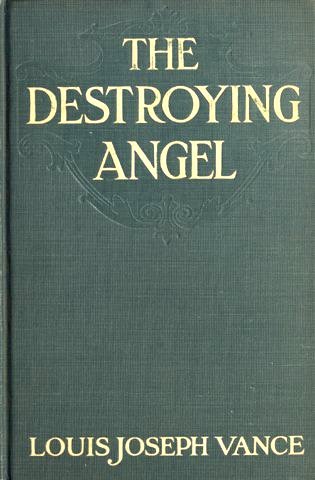
"They call her 'The Destroying Angel.'"
"What damnable rot!"
"Yes; but what damnable coincidence. Three men loved her—and one by one they died. And now the fourth. Do you wonder...?"
"Oh, but—'The Destroying Angel'—!" Whitaker cried indignantly. "How can they blame her?"
"It isn't blame—it's superstition. Listen...."
Ember bent forward, holding Whitaker's gaze with intent, grave eyes. "The first time," he said in a rapid undertone, "was a year or so after her triumph as Joan Thursday. There were then two men openly infatuated with her, a boy named Custer, and a man I believe you knew—William Hamilton."
"I knew them both."
"Custer was making the pace; the announcement of his engagement to Sara Law was confidently anticipated. He died suddenly; the coroner's jury decided that he had misjudged the intentions of a loaded revolver. People whispered of suicide, but it didn't look quite like that to me. However ... Hamilton stepped into his place. Presently we heard that Sara Law was to marry him and leave the stage. Hamilton had to go abroad on business; on the return trip—the wedding was set for the day after he landed here—he disappeared, no one knew how. Presumably he fell overboard by accident one night; sane men with everything in the world to live for do such things, you know—according to the newspapers."
"I understand you. Please go on."
"Approximately eighteen months later a man named Thurston—Mitchell Thurston—was considered a dangerous aspirant for the hand of Sara Law. He was exceedingly well fixed in a money way—a sort of dilettantish architect, with offices in the Metropolitan Tower. One day at high noon he left his desk to go to lunch at Martin's; crossing Madison Square, he suddenly fell dead, with a bullet in his brain. It was a rifle bullet, but though the square was crowded, no one had heard the report of the shot, and no one was seen carrying a rifle. The conclusion was that he had been shot down by somebody using a gun with a Maxim silencer, from a window on the south side of the square. There were no clues."
"And now Drummond!" Whitaker exclaimed in horror. "Poor fellow! Poor woman!"
A slightly sardonic expression modified the lines of Ember's mouth. "So far as Mrs. Whitaker is concerned," he said with the somewhat pedantic mode of speech which Whitaker was to learn to associate with his moments of most serious concentration—"I echo the sentiment. But let us suspend judgment on Drummond's case until we know more. It is not as yet an established fact that he is dead."
"You mean there's hope—?"
"There's doubt," Ember corrected acidly—"doubt, at least, in my mind. You see, I saw Drummond in the flesh, alive and vigorous, a good half hour after he is reported to have leaped to his death."
"Where?"
"Coming up the stairs from the down-town Subway station in front of the Park Avenue Hotel. He wore a hat pulled down over his eyes and an old overcoat buttoned tight up to his chin. He was carrying a satchel bearing the initials C. S. D., but was otherwise pretty thoroughly disguised, and, I fancied, anxious enough to escape recognition."
"You're positive about this?"
"My dear man," said Ember with an air, "I saw his ear distinctly."
"His ear!"
"I never forget an ear; I've made a special study of them. They're the last parts of the human anatomy that criminals ever think to disguise; and, to the trained eye, as infallible a means of identification—nearly—as thumb-prints. The man I saw coming up from the Subway kept as much as possible away from the light; he had successfully hidden most of his face; but he wore the inches, the hand-bag, and the ear of Carter S. Drummond. I don't think I can be mistaken."
"Did you stop him—speak to him?"
Ember shook his head. "No. I doubt if he would have remembered me. Our acquaintance has been of the slightest, limited to a couple of meetings. Besides, I was in a hurry to get to the theatre, and at that time had heard nothing of this reputed suicide."
"Which way did he go?"
"Toward the Pennsylvania station, I fancy; that is, he turned west through Thirty-third Street. I didn't follow—I was getting into a taxi when I caught sight of him."
"But what did you think to see him disguised? Didn't it strike you as curious?"
"Very," said Ember dryly. "At the same time, it was none of my affair—then. Nor did it present itself to me as a matter worth meddling with until, later, my suspicions were aroused by the scene in the theatre—obviously the result of your appearance there—and still later, when I heard the suicide report."
"But—good Lord!" Whitaker passed a hand across his dazed eyes. "What can it mean? Why should he do this thing?"
"There are several possible explanations.... How long has Drummond known that you were alive?"
"Since noon to-day."
"Not before?"
"Not to my knowledge."
"Still, it's possible. If he has a sensitive nature—I think he hasn't—the shame of being found out, caught trying to marry your wife when he had positive knowledge you still lived, may have driven him to drop out of sight. Again.... May I ask, what was the extent of your property in his trust?"
"A couple of hundred-thousands."
"And he believed you dead and was unable to find your widow ..."
"Oh, I don't think that!" Whitaker expostulated.
"Nor do I. We're merely considering possible explanations. There's a third ..."
"Well?"
"He may have received a strong hint that he was nominated for the fate that overtook young Custer, Hamilton and Thurston; and so planned to give his disappearance the colour of a similar end."
"You don't mean to say you think there was any method in that train of tragedies?"
"I'm not in the least superstitious, my dear man. I don't for an instant believe, as some people claim to, that Sara Law is a destroying angel, hounded by a tragic fate: that her love is equivalent to the death warrant of the man who wins it."
"But what do you think, then?"
"I think," said Ember, slowly, his gaze on the table, "that some one with a very strong interest in keeping the young woman single—and on the stage—"
"Max! Impossible!"
Ember shrugged. "In human nature, no madness is impossible. There's not a shred of evidence against Jules Max. And yet—he's a gambler. All theatrical managers are, of course; but Max is a card-fiend. The tale of his plunging runs like wild-fire up and down Broadway, day by day. A dozen times he's been on the verge of ruin, yet always he has had Sara Law to rely upon; always he's been able to fall back upon that asset, sure that her popularity would stave off bankruptcy. And he's superstitious: he believes she is his mascot. I don't accuse him—I suspect him, knowing him to be capable of many weird extravagances.... Furthermore, it's a fact that Max was a fellow-passenger with Billy Hamilton when the latter disappeared in mid-ocean."
Ember paused and sat up, preparatory to rising. "All of which," he concluded, "explains why I have trespassed upon your patience and your privacy. It seemed only right that you should get the straight, undistorted story from an unprejudiced onlooker. May I venture to add a word of advice?"
"By all means."
"Have you told Max of your relations with Sara Law?"
"No."
"Or anybody else?"
"No."
"Then keep the truth to yourself—at least until this coil is straightened out."
Ember got up. "Good night," he said pleasantly.
Whitaker took his hand, staring. "Good night," he echoed blankly. "But—I say—why keep it quiet?"
Ember, turning to go, paused, his glance quietly quizzical. "You don't mean to claim your wife?"
"On the contrary, I expect to offer no defence to her action for divorce."
"Grounds of desertion?"
"I presume so."
"Just the same, keep it as quiet as possible until the divorce is granted. If you live till then ... you may possibly continue to live thereafter."
IX
ENTR'ACTE
Dawn of Sunday found Whitaker still awake. Alone in his uncheerful hotel bedchamber, his chair tilted back against the wall, he sat smoking and thinking, reviewing again and again every consideration growing out of his matrimonial entanglement.
He turned in at length to the dreamless slumbers of mental exhaustion.
The morning introduced him to a world of newspapers gone mad and garrulous with accounts of the sensation of the preceding night. What they told him only confirmed the history of his wife's career as detailed by the gratuitous Mr. Ember. There was, however, no suggestion in any report that Drummond had not in fact committed suicide—this, despite the total disappearance of the hypothetical corpse. No doubts seemed to have arisen from the circumstance that there had been, apparently, but a single witness of the felo de se. A man, breathless with excitement, had run up to the nearest policeman with word of what he claimed to have seen. In the subsequent confusion he had vanished. And so thoroughly, it seemed, had the mind of New York been prepared for some fatal accident to this latest lover of Sara Law that no one dreamed of questioning the authenticity of the report.
Several sensational sheets ran exhaustive résumés, elaborately illustrated, of the public life of "The Destroying Angel."
Some remarked the fact that little or nothing was known of the history of Sara Law prior to her appearance, under the management of Jules Max, as Joan Thursday.
Whitaker learned that she had refused herself to the reporters who besieged her residence.
It seemed to be an unanimous assumption that the news of Drummond's suicide had in some manner been conveyed to the woman while on the stage.
No paper mentioned the name of Whitaker....
In the course of the forenoon a note for Whitaker was delivered at the hotel.
The heavy sheet of white paper, stamped with the address in Fifty-seventh Street, bore this message in a strong but nervous hand: