
Soc. Nor can I agree with myself, Hippias; and yet that seems to be the conclusion which, as far as we can see at present, must follow from our argument. As I was saying before, I am all abroad, and being in perplexity am always changing my opinion. Now, that I or any ordinary man should wander in perplexity is not surprising; but if you wise men also wander, and we cannot come to you and rest from our wandering, the matter begins to be serious both to us and to you.
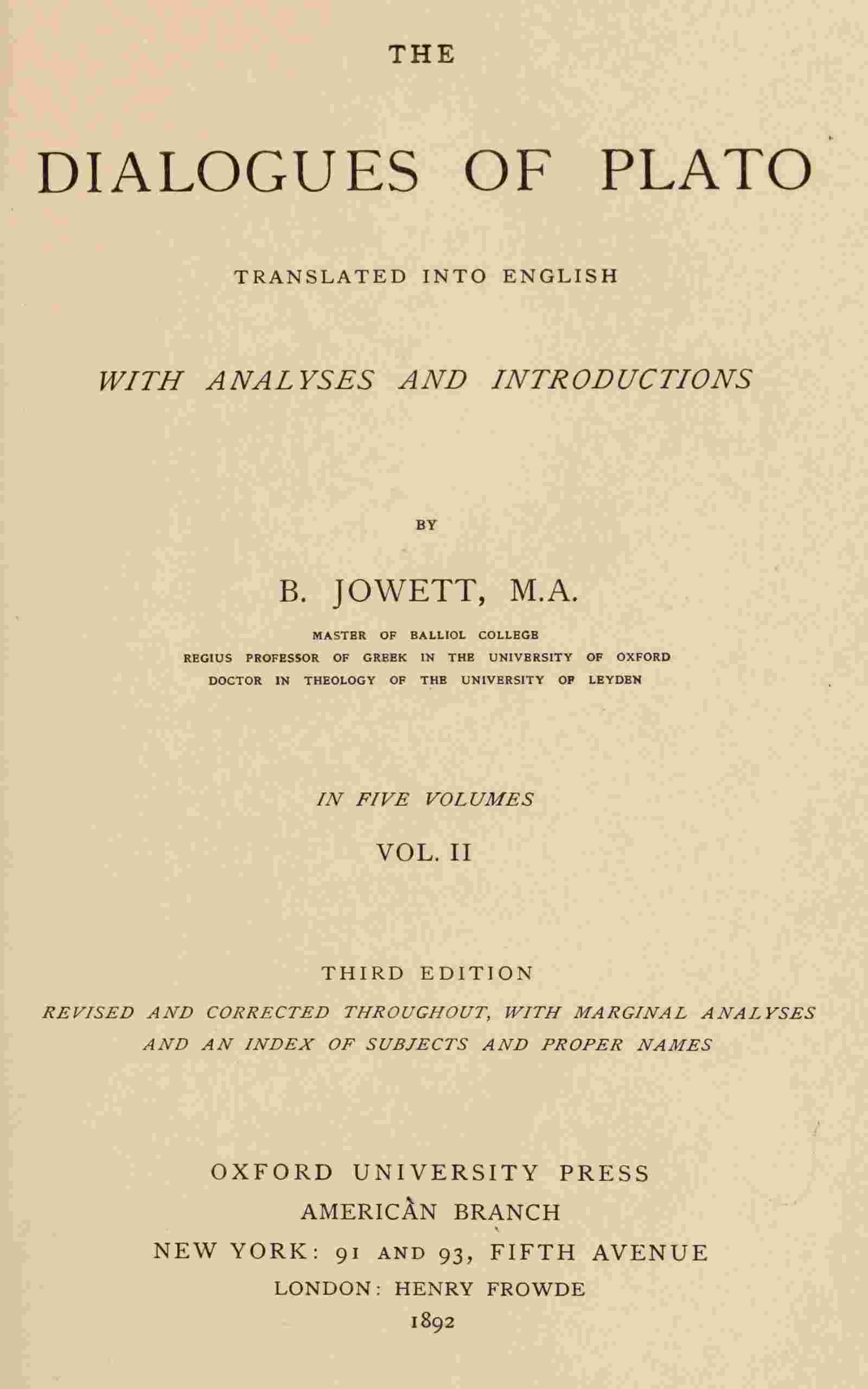
About This Book
A collection of Socratic dialogues that investigates virtue, knowledge, piety, justice, the soul, rhetoric, and political education through conversational enquiry. Several pieces question whether virtue can be taught and whether moral truth is recollected or learned, while others present a legal defense, a discussion of obedience to law after conviction, and an extended debate contrasting persuasive speech with genuine justice. Shorter works test definitions and the value of wealth, and two dialogues examine erotic desire and civic self-knowledge. The dialogical method repeatedly exposes assumptions, elicits precise definitions, and follows ethical and metaphysical implications across varied social settings.
Socrates thinks the matter serious.