
TO THE READER.
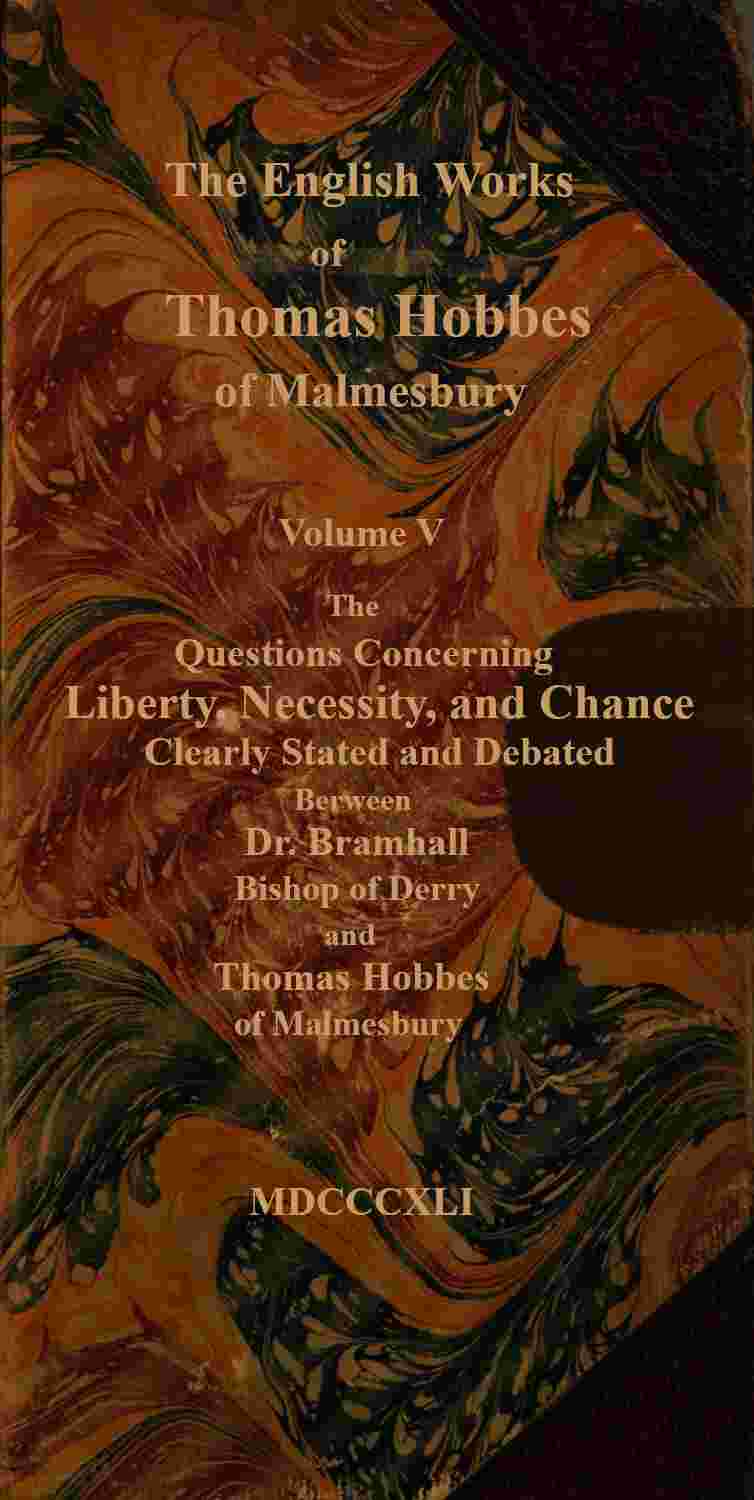
You shall find in this little volume the questions concerning necessity, freedom, and chance, which in all ages have perplexed the minds of curious men, largely and clearly discussed, and the arguments on all sides, drawn from the authority of Scripture, from the doctrine of the Schools, from natural reason, and from the consequences pertaining to common life, truly alleged and severally weighed between two persons, who both maintain that men are free to do as they will and to forbear as they will. The things they dissent in are, that the one holdeth, that it is not in a man’s power now to choose the will he shall have anon; that chance produceth nothing; that all events and actions have their necessary causes; that the will of God makes the necessity of all things. The other on the contrary maintaineth, that not only the man is free to choose what he will do, but the will also to choose what it shall will; that when a man willeth a good action, God’s will concurreth with his, else not; that the will may choose whether it will will, or not; that many things come to pass without necessity, by chance; that though God foreknow a thing shall be, yet it is not necessary that that thing shall be, inasmuch as God seeth not the future as in its causes, but as present. In sum, they adhere both of them to the Scripture; but one of them is a learned School-divine, the other a man that doth not much admire that kind of learning.
This is enough to acquaint you withal in the beginning; which also shall be more particularly explained by and by in the stating of the question, and dividing of the arguments into their several heads. The rest you shall understand from the persons themselves, when they enter. Fare ye well.