
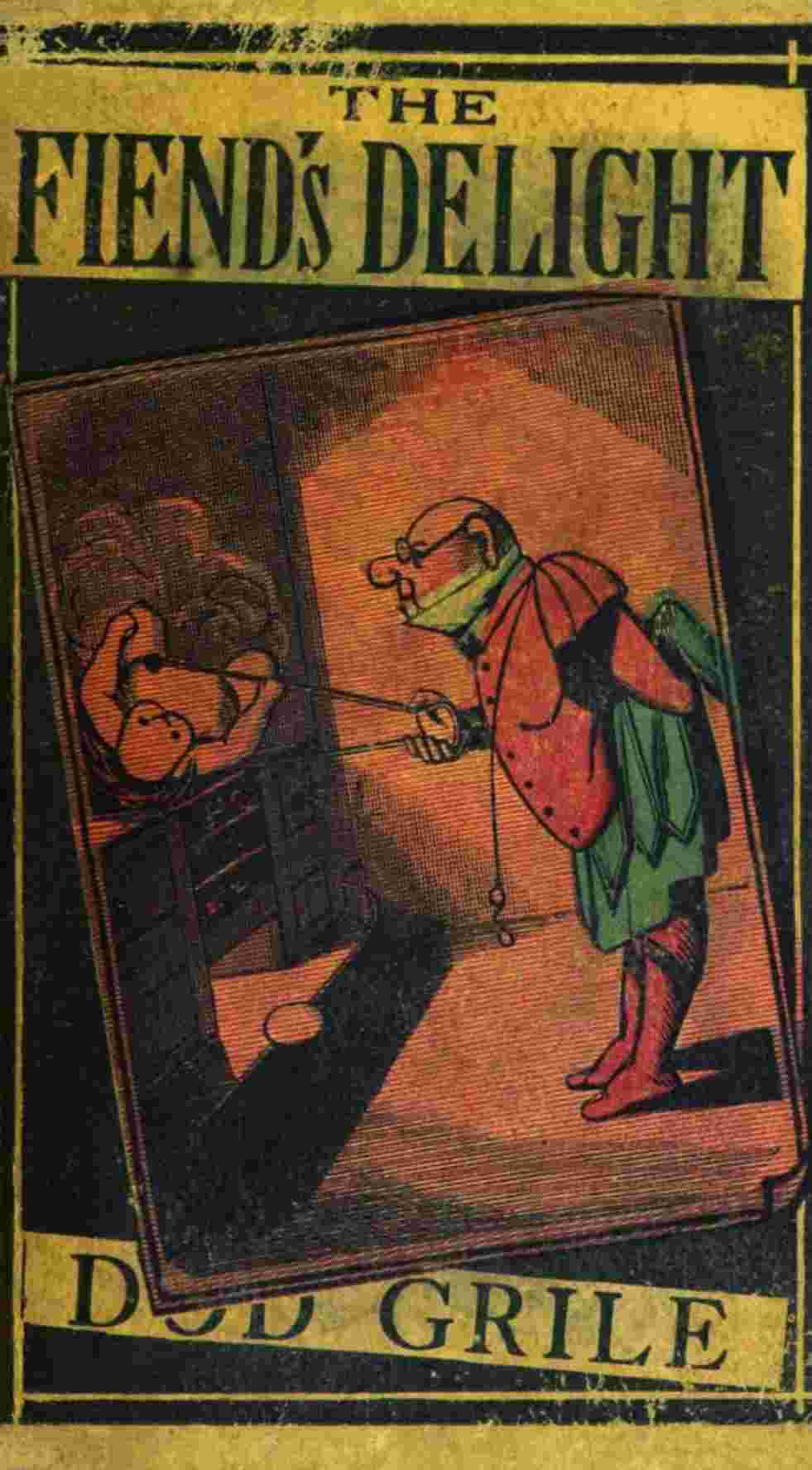
The Scolliver Pig
One of Thomas Jefferson’s maxims is as follows: “When angry, count ten before you speak; if very angry, count a hundred.” I once knew a man to square his conduct by this rule, with a most gratifying result. Jacob Scolliver, a man prone to bad temper, one day started across the fields to visit his father, whom he generously permitted to till a small corner of the old homestead. He found the old gentleman behind the barn, bending over a barrel that was canted over at an angle of seventy degrees, and from which issued a cloud of steam. Scolliver père was evidently scalding one end of a dead pig—an operation essential to the loosening of the hair, that the corpse may be plucked and shaven.
“Good morning, father,” said Mr. Scolliver, approaching, and displaying a long, cheerful smile. “Got a nice roaster there?” The elder gentleman’s head turned slowly and steadily, as upon a swivel, until his eyes pointed backward; then he drew his arms out of the barrel, and finally, revolving his body till it matched his head, he deliberately mounted upon the supporting block and sat down upon the sharp edge of the barrel in the hot steam. Then he replied, “Good mornin’ Jacob. Fine mornin’.”
“A little warm in spots, I should imagine,” returned the son. “Do you find that a comfortable seat?” “Why-yes-it’s good enough for an old man,” he answered, in a slightly husky voice, and with an uneasy gesture of the legs; “don’t make much difference in this life where we set, if we’re good—does it? This world ain’t heaven, anyhow, I s’spose.”
“There I do not entirely agree with you,” rejoined the young man, composing his body upon a stump for a philosophical argument. “I don’t neither,” added the old one, absently, screwing about on the edge of the barrel and constructing a painful grimace. There was no argument, but a silence instead. Suddenly the aged party sprang off that barrel with exceeding great haste, as of one who has made up his mind to do a thing and is impatient of delay. The seat of his trousers was steaming grandly, the barrel upset, and there was a great wash of hot water, leaving a deposit of spotted pig. In life that pig had belonged to Mr. Scolliver the younger! Mr. Scolliver the younger was angry, but remembering Jefferson’s maxim, he rattled off the number ten, finishing up with “You—thief!” Then perceiving himself very angry, he began all over again and ran up to one hundred, as a monkey scampers up a ladder. As the last syllable shot from his lips he planted a dreadful blow between the old man’s eyes, with a shriek that sounded like—“You son of a sea-cook!”
Mr. Scolliver the elder went down like a stricken beef, and his son often afterward explained that if he had not counted a hundred, and so given himself time to get thoroughly mad, he did not believe he could ever have licked the old man.