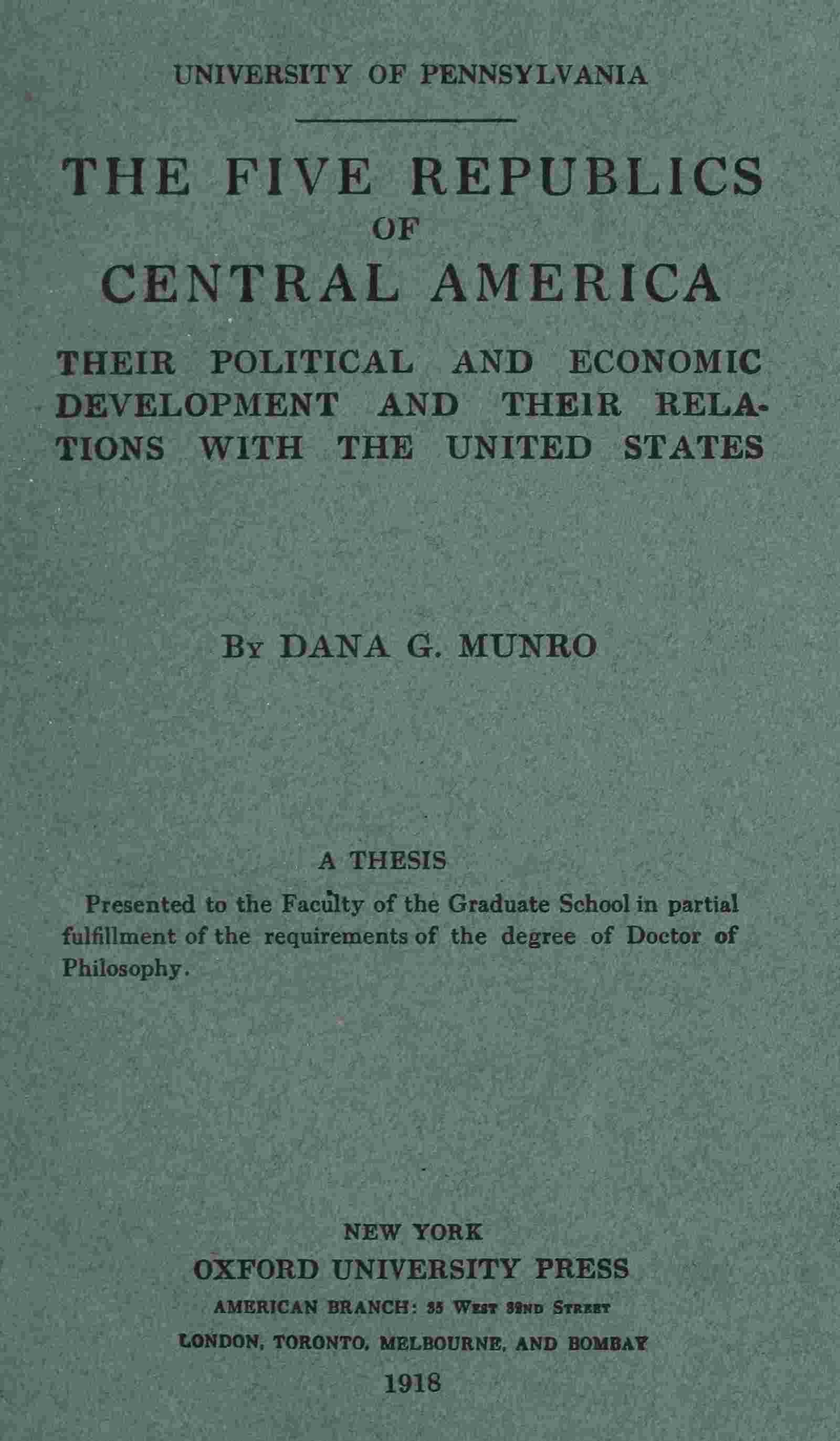
The author surveys the historical, political, and economic development of five Central American republics from colonial times to the early twentieth century, emphasizing how colonial legacies, social composition, and weak institutions produced chronic instability and recurrent revolutions. It analyzes constitutional structures, party politics, presidential power, and patronage across each republic, and assesses economic conditions and social divisions, including the marginalization of indigenous populations. The study also examines external influence, especially from the United States, and argues that informed foreign policy and domestic reform are crucial to promoting stable governance and economic progress; methodological limits of sources and the author's on-the-ground observations are noted.