
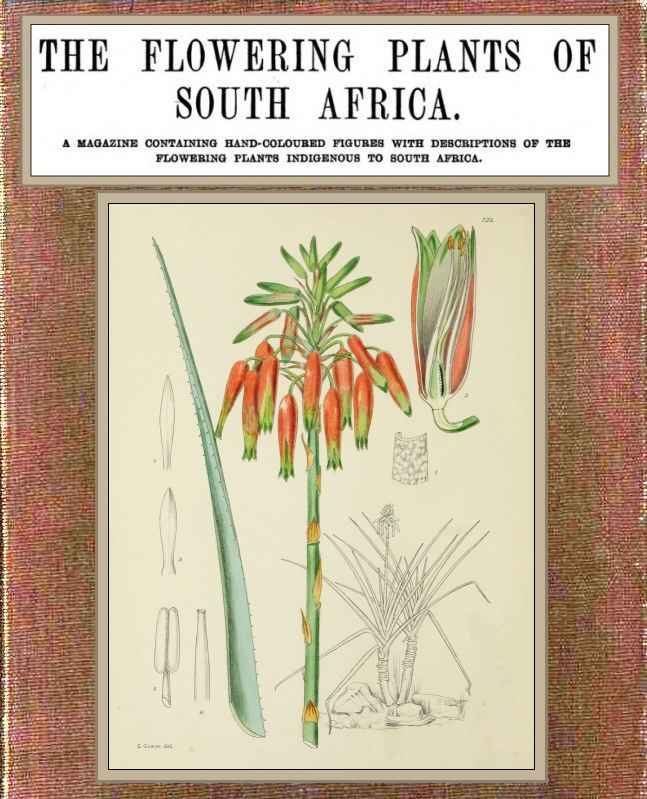
Plate 132.—Fig. 1, median longitudinal section of flower; Fig. 2, cross section of leaf; Fig. 3, a single perianth-segment; Fig. 4, a stamen, showing position of appendage at the base; Fig. 5, anther; Fig. 6, fruit, showing cup formed of staminal appendages; Fig. 7, tip of style; Fig. 8, fruit.
F.P.S.A., 1924.
Plate 133.
PROTEA Rouppelliae.
Orange Free State, Transvaal, Swaziland, Cape Province,
Natal.
Proteaceae. Tribe Proteae.
Protea, Linn.; Benth. et Hook. f. Gen. Plant. vol. iii. p. 169.
Protea Rouppelliae, Meisn. in DC. Prodr. vol. xiv. p. 237; Fl. Cap.
vol. v. sect. i. p. 573.
This common and characteristic Protea of the Drakensbergen we figure here for the first time. It appears to have been originally collected by Burke and Zeyher on the Magaliesberg, and was described by Meisner and named after Mrs. Rouppell, who published an illustrated book of Cape flowers.
P. Rouppelliae forms extensive thickets on the slopes of the Drakensbergen, and in this respect resembles P. mellifera, P. lepidocarpodendron and P. neriifolia of the Cape Province. The species belongs to the same section of the genus as P. compacta, figured on Plate 84.
The specimens from which the accompanying Plate was painted were collected by Dr. I. B. Pole Evans, C.M.G., at the Devil’s Kantoor in the Barberton District of the Transvaal.
Description:—A small tree 8 to 15 ft. high; branches villous or tomentose above, at length glabrescent. Leaves 10 to 15 cm. long, 2 to 4 cm. broad at the widest part, 4 mm. broad at the base, oblong-lanceolate or obovate-spathulate, acute, the younger densely villous or tomentose, at length glabrous, narrowed at the base, reticulately veined. Head shortly peduncled, 7 to 9 mm. long, 5 to 10 cm. in diameter. Involucral bracts 10-seriate, silky-tomentose, deep pink to pinky-white; outer ovate, obtuse, recurved to revolute, ciliate; inner with an obovate to obovate-oblong limb, gradually passing into the claw, shortly ciliate above, exceeding the flowers; perianth-sheath 4·5 cm. long, dilated and{56} 3-keeled and 7-nerved below, loosely villous above the dilated portion; lip 3 cm. long, 3-awned, spreadingly villous; lateral awns 1·2 cm. long, linear, acuminate, purple, tomentose to villous; median awn 8 mm. long; fertile stamens 3; filaments 1 mm. long, flattened; anthers linear, 3 mm. long; apical glands 0·5 mm. long, oblong, acute; barren stamen acute, eglandular; ovary 4 mm. long, obovate in outline, densely covered with numerous long golden hairs; style 5 cm. long, curved, somewhat flattened, keeled below on the convex side, usually more or less shortly villous; stigma 4 mm. long, curved and kneed at the junction with the style. (Flora Capensis; National Herb. Pretoria, No. 2836.)
Plate 133.—Fig. 1, receptacle; Fig. 2, inner bract; Fig. 3, single flower; Fig. 4, pistil.
F.P.S.A., 1924.
Plate 134.
NERINE LUCIDA.
Cape Province, Orange Free State, Transvaal.
Amaryllidaceae. Tribe Amarylleae.
Nerine, Herb.; Benth. et Hook. f. Gen. Plant. vol. iii. p. 728.
Nerine lucida, Herb. Amaryllid. 283, t. 36, fig. 3; Fl. Cap. vol. vi. p. 214.
This species is, so far as we know, confined to the dry western portions of the Cape Province, S.W. Protectorate, Transvaal, and Orange Free State. Burchell found the plant both in Griqualand West and in Bechuanaland, and Burke on his journey up to the Transvaal found it near the Sand River in the Orange Free State. In habit the species very much resembles a dwarf Brunsvigia, but is distinguished from this genus by the obtusely angled ovary. The short stout peduncle is also found in two other species of Nerine.
A coloured plant of N. lucida was published in 1820 (Botanical Register, Plate 497), drawn from a plant which flowered in the garden of Prince Leopold of Saxe-Cobourg.
The specimens from which the accompanying Plate was prepared were collected at Vryburg by Mr. A. O. D. Mogg, and flowered at the Division of Botany, Pretoria, in 1924.
Description:—Bulb globose, 4 cm. in diameter, produced into a neck about 4 cm. long. Leaves 6, contemporary with the flowers, about 18 cm. long, about 12 mm. broad, strap-shaped, obtuse, bright green. Peduncle lateral, about 12 cm. long, compressed. Inflorescence an umbel of 20 flowers. Pedicels up to 7 cm. long, shortly hairy. Spathe-valves ovate-lanceolate, membranous, shorter than the pedicels. Perianth-segments 15 mm. long, 5 mm. broad, lanceolate-linear, obtuse. Stamens declinate, almost as long as the perianth segments. Ovary obtusely trigonous; style declinate, as long as the stamens. (National Herb., Pretoria, No. 2835.){60}
Plate 134.—Fig. 1, median longitudinal section of a flower; Fig. 2, upper portion of perianth lobe, showing apex; Fig. 3, cross-section through the peduncle.
F.P.S.A., 1924.
Plate 135.
EULOPHIA LEONTOGLOSSA.
Orange Free State, Transvaal, Cape Province, Natal.
Orchidaceae. Tribe Vandeae.
Eulophia, R.Br.; Benth. et Hook. f. Gen. Plant. vol. iii. p. 535.
Eulophia leontoglossa, Reichb. f. in Flora, 1881, 329; Fl. Cap. vol. v.
sect. iii. p. 45.
This charming little Eulophia is found in the summer months round Pretoria growing in the grass veld, and is fairly abundant. Like many other plants found in the neighbourhood of the Magaliesberg, it was collected by the travellers Burke and Zeyher. It ranges from the Maclear Division, through the Orange Free State, to Natal and the Transvaal.
E. leontoglossa belongs to the same small group (four species) in the genus as E. Zeyheri (figured on Plate 119), which is characterised by the flowers being arranged in congested racemes or short heads. Like E. Zeyheri also, the tubers are arranged in a linear series and resemble large oval beads.
Our figure was made from specimens collected by Dr. I. B. Pole Evans, C.M.G., at Irene, near Pretoria.
Description:—Tubers subglobose, about 2 cm. broad; leaves 2 or 3 in a fascicle, linear or lanceolate-linear, acute or acuminate, 10 to 36 cm. long, 1·25 to 8 mm. broad. Scapes erect, 10 to 35 cm. long, with a few lanceolate acuminate sheaths below. Flower-heads congested or rarely oblong, 2·5 to 5 cm. long; bracts linear or linear-lanceolate, acuminate, 1·3 to 2 cm. long; pedicels 6 to 8 mm. long; lip 3-lobed, elliptic-oblong, narrowed at the base, about as long as the petals; side-lobes somewhat divergent, oblong, obtuse or truncate, short; front lobe elliptic-oblong, obtuse; disc with 5 obscure keels below, papillose above, and with the surface{64} of the front lobe strongly papillose all over; spur oblong or subclavate, obtuse, 4 mm. long; column clavate, 4 mm. long. (Fl. Cap.)
Plate 135.—Fig. 1, median longitudinal section of flower; Fig. 2, lip; Fig. 3, sepal; Fig. 4, petal; Fig. 5, column; Fig. 6, pollinia.
F.P.S.A., 1924.
Plate 136.
HAEMANTHUS Katharinae.
Natal, Transvaal.
Amaryllidaceae. Tribe Amarylleae.
Haemanthus, Linn.; Benth. et Hook. f. Gen. Plant. vol. iii. p. 730.
Haemanthus Katharinae, Baker in Gard. Chron. 1877, vol. vii. p. 656;
Fl. Cap. vol. vi. p. 231.
On Plate 32 of this work we figured a species of Haemanthus (H. natalensis) which differs from the present species in having the involucral-bracts erect instead of spreading. Haemanthus Katharinae, with its spreading involucral-bracts and perianth-segments, is unique in this respect amongst the South African species of the genus. On the inflorescence figured was an odd flower with 8 perianth-lobes and 8 stamens.
The species was introduced into England in 1877 by Mr. Keith, who was then Superintendent of the Durban Botanic Gardens. In 1884 an excellent figure (Plate 6778) appeared in the Botanical Magazine, made from plants which flowered at Kew from bulbs sent by Mr. W. B. Lyle of Kirkly Vale Estate, Natal.
We are indebted to Mr. P. S. Follwell, Isezela, Natal, for our specimen, which was cultivated at the Division and flowered in January 1923.
Description:—Stem up to 18 cm. long. Leaves 5 to 6 to a plant, contemporary with the flowers, 20 to 30 cm. long, 10 to 13 cm. broad, oblong, shortly mucronate; petiole 3 to 4 cm. long, channelled above. Peduncle lateral, terete, up to 40 cm. long. Inflorescence a many-flowered umbel. Bracts 6, membranous, spreading or reflexed. Pedicels slender, 2·5 to 4 cm. long. Perianth-tube 2 cm. long; lobes 2·5 cm. long, linear-lanceolate, spreading or reflexed. Stamens inserted at the throat of the perianth-tube; filaments 4·5 cm. long, erect; anthers 3 mm. long. Ovary ellipsoid; style up to{68} 6 cm. long; stigma simple. (National Herb. Pretoria, No. 2837.)
Plate 136.—Fig. 1, plant much reduced; Fig. 2, median longitudinal section of the flower; Fig. 3, perianth segment showing attachment of stamen.
F.P.S.A., 1924.
Plate 137.
DIPLOCYATHA CILIATA.
Cape Province.
Asclepiadaceae. Tribe Stapelieae.
Diplocyatha, N. E. Br. in Journ. Linn. Soc. vol. xvii. p. 168, t. 12,
figs. 1 to 3.
Diplocyatha ciliata, N. E. Br. l.c.; Fl. Cap. vol. iv. sect. i. p. 923.
When Mr. Brown first described this remarkable genus in 1880, he only knew of Masson’s and Thunberg’s specimens, and up to the time of the account in the Flora Capensis (1909) Dr. Marloth was the only recent collector who had found the plant. Mrs. D. van der Bijl, of Abraham’s Kraal, in the Beaufort West District, who has contributed several interesting plants we have figured, sent us specimens in 1919, which flowered at the Division of Botany, Pretoria, this year.
It was figured in a coloured plate by Masson in 1796, and our present Plate is the first to be produced since then. A pencil drawing of a portion of the flower, the corona and the pollinia, accompanied Brown’s original description, and while our specimen differs in some minor points from the drawings, we have no hesitation in referring it to the same species. The flower is rather handsome, and devoid of the objectionable smell usually associated with the members of the tribe Stapelieae.
Description:—Stems decumbent and ascending, 4 to 6·5 cm. long, 1·5 to 2 cm. thick excluding the teeth, obtusely 4-angled, with stout conical acute teeth 4 to 6 mm. long, glabrous, green, mottled with purple. Flowers subsolitary from near the base or middle of the stems; pedicels 1 to 2 cm. long, erect, glabrous. Sepals about 6 mm. long, ovate or ovate-lanceolate, acute, glabrous. Corolla about 7·5 cm. in diameter, smooth and glabrous outside, densely papillate-rugose on the inner face, according to Thunberg and Masson, greyish, with the tips of the papillae reddish, but according{72} to Masson’s figure, pale yellowish with a greyish ring around the mouth of the tube, minutely dotted with red; tube campanulate, apparently slightly raised at its mouth around the very thick recurved papillate-rugose rim of the inner tube, which is densely covered with stiff purple hairs at the base around and under the corona; lobes about 2·5 cm. long, 1·5 to 2 cm. broad, spreading, ovate, acute, ciliate from base to apex with clavate vibratile white hairs; outer corona-lobes arising above the base of the staminal column, connate at the base, somewhat spreading, with the free 2/3 to 1·5 mm. long, 2 mm. broad, transverse or subquadrate, very obtusely or subacutely bifid, glabrous, apparently yellowish dotted with purple-brown; inner corona-lobes incumbent on the backs of the anthers, about 1·5 mm. long, thick, ovate, acute, or acuminate with the tips produced into a very short erect point, apparently yellowish, dotted and marked with purple-brown. (Flora Capensis; National Herb. Pretoria, No. 2841.)
Plate 137.—Fig. 1, median longitudinal section of the flower with corona removed; Fig. 2, sepals; Fig. 3, corona; Fig. 4, pollinia; Fig. 5, inner corona lobe showing pollen-sac; Fig. 6, cross-section of stem.
F.P.S.A., 1924.
Plate 138.
URGINEA Burkei.
Transvaal, Cape Province.
Liliaceae. Tribe Scilleae.
Urginea, Steinh.; Benth. et Hook. f. Gen. Plant, vol. iii. p. 810.
Urginea Burkei, Baker; Fl. Cap. vol. vi. p. 469.
This species of Urginea is well known to the farmers of the Transvaal under the common name of “Transvaal Slangkop,” owing to the somewhat striking resemblance of the young inflorescence to a snake’s head. The plant is extremely poisonous to stock, and in early spring many fatalities are reported. For a fuller account of this plant see Bulletin No. 7, 1922, of the Union Department of Agriculture. Burke first collected the species on the Magaliesberg about 1830, but it remained undescribed until Baker published his description in the Flora Capensis in 1896.
The specimen figured on the accompanying Plate was grown and flowered in the garden of the Division of Botany, Pretoria.
Description:—Bulb globose, tunicated, about 7 cm. in diameter. Leaves about 26 cm. long, about 1 cm. broad, linear. Peduncle 17 cm. long, terete. Inflorescence a cylindric raceme, 17 cm. long. Pedicels ascending; the lower 1 cm. long. Bracts small, oblong, subacuminate, membranous, spurred at the base, deciduous. Perianth 1 cm. long; segments oblong-lanceolate, white with a brown keel. Stamens shorter than the perianth-segments. Ovary 4 mm. long, obtusely trigonous; style 3·5 mm. long. (National Herb. Pretoria, No. 2647.){76}
Plate 138.—Fig. 1, surface view of flower; Fig. 2, perianth-segment with stamen; Fig. 3, pistil; Fig. 4, bract.
F.P.S.A., 1924.
Plate 139.
NERINE FLEXUOSA
var. Sandersoni.
Transvaal.
Amaryllidaceae. Tribe Amarylleae.
Nerine, Herb.; Benth. et Hook. f. Gen. Plant. vol. iii. p. 728.
Nerine flexuosa, Herb. App. 19; Fl. Cap. vol. vi. p. 211.
Our Plate represents a variety of Nerine flexuosa found in the Transvaal, which is distinguished from the type in having a more robust inflorescence. It very much resembles N. lucida, figured on Plate 134, but the peduncle is much longer and not so stout. Very little is known about this variety. It is recorded in the Flora Capensis as collected by Sanderson in the Transvaal, and does not appear to have been found again by any recent collector. When planted in a mass it makes a very effective display as soon as the flowers appear.
The plants from which this Plate was prepared were grown at the Division of Botany, Pretoria, but no information is available as to where the bulbs originally came from.
Description:—Bulb globose, 7 cm. in diameter. Leaves about 7, 30 cm. long, 2·7 cm. broad, strap-shaped, usually twisted. Umbel about 25-flowered. Peduncle up to 40 cm. long, elliptic in cross-section. Pedicels up to 7 cm. long, slender. Spathe-valves 4 cm. long, ovate, acuminate. Perianth-segments about 4 cm. long, crisped in the upper half. Stamens declinate; filaments almost as long as the perianth-segments. Ovary globose, obtusely 3-angled; style declinate, as long as the filaments; stigma simple.{80}
Plate 139.—Fig. 1, bulb; Fig. 2, leaf; Fig. 3, cross-section of peduncle; Fig. 4, median longitudinal section of a flower; Fig. 5, upper portion of perianth-segment, showing tuft of papillose hairs.
F.P.S.A., 1924.
Plate 140.
CEROPEGIA AMPLIATA.
Cape Province, Natal.
Asclepiadaceae. Tribe Ceropegieae.
Ceropegia, Linn.; Benth. et Hook. f. Gen. Plant. vol. ii. p. 779.
Ceropegia ampliata, E. Mey. Comm. 194; Fl. Cap. vol. iv. sect. i. p. 817.
The species of Ceropegia, figured here for the first time, belongs to the same group in the genus as C. Meyeri (Plate 30), which is characterised by the tips of the petals being connate and forming a cage-like top to the flower. Ceropegia ampliata is one of the five South African species collected by Drège, all of which were described by E. Meyer.
The plant is a twiner or scrambler, devoid of leaves at the flowering period. The flowers are pale green with a purple band within the corolla-tube, which is visible through the wall of the tube. It is not such a striking plant as some of the species we have previously figured, but the purple band on a background of green gives the individual flower a very pleasing effect.
Our Plate was prepared from a living plant lent by Mr. W. Haygarth to the late Dr. J. Medley Wood.
Description:—Stem succulent, twining or scrambling, leafless at the time of flowering, glabrous. Leaves only seen at the young tips of the stems, soon deciduous, minute, 2 to 2·5 mm. long, lanceolate, acute, glabrous. Flowers 2 to 4 together at the nodes, successively developed; pedicels 0·6 to 1·3 cm. long, glabrous. Sepals 2 to 3 mm. long, lanceolate, acuminate, glabrous. Corolla-tube in dried specimens 2·5 to 5 cm. long, 0·8 to 1·2 cm. in diameter, cylindric and slightly or not at all inflated at the base, but on the living plant, according to a drawing, 5 cm. long, globosely and somewhat lobulate-inflated and about 2·5 cm. in diameter at the base, cylindric and 1·3 cm. in diameter above, not dilated at the apex, pale green, with a narrow purple transverse band at{84} the top of the inflation inside, glabrous outside, covered inside with long simple hairs, longer and more matted at the purple band and above than in the lower part; lobes 0·8 to 1·2 cm. long, 5 to 6 mm. broad at the base, lanceolate from a deltoid base, acute, erectly connivent and connate at the tips, replicate or with reflexed margins, glabrous on both sides and not ciliate, green, spotted with darker green, becoming olive-brown when dried, probably with a velvety sheen on the inner surface; outer corona cup-shaped, equally 10-toothed; teeth about 1 mm. long, narrowly deltoid, acute, hairy on the inner surface; inner corona-lobes 4 to 5 mm. long, very slenderly filiform, connivent-erect, dorsally-connected by vertical plates to the outer corona at the base. (Flora Capensis.)
Plate 140.—Fig. 1, corolla laid open; Fig. 2, outer and inner corona, showing the pollinia; Fig. 3, pollinia.
F.P.S.A., 1924.
Plate 141.
RICHARDIA MELANOLEUCA.
Natal.
Aroideae. Tribe Philodendreae.
Richardia, Kunth; Benth. et Hook. f. Gen. Plant. vol. iii. p. 982.
Richardia melanoleuca, Hook. f. in Bot. Mag. t. 5765; Fl. Cap. vol. vi.
p. 38.
On Plate 10 we figured a species of Richardia (R. angustifolia) found in the Transvaal and Basutoland, and on comparing that plate with the present one, illustrating a Natal species, the most striking difference noticed is the different colour of the spathes. In both species the spathes are blotched at the base, but the leaves of R. melanoleuca are usually covered with translucent spots due to the loss of chlorophyll (for further details see Saxton in Trans. Roy. Soc. S. Afr. vol. iii. p. 136).
The species is fairly common in parts of Natal, and is often found cultivated in local gardens. It was introduced into England and flowered there in 1868.
Our plate was prepared from specimens collected at Krantz Kloof, near Durban.
Description:—Root tuberous. Petiole of leaf 15 to 35 cm. long, furrowed on the inner surface, with soft bristles on the lower parts; blade 10 to 25 cm. long, 12 to 20 cm. broad across the basal lobes, cordate, deltoid or ovate-deltoid, acute, with a subulate point, hastate or sagittate at the base, green, shining, glabrous, covered with numerous translucent spots. Spathe 5 to 8 cm. long, obliquely subtruncate at the mouth; spadix shortly stipitate, cylindric. Ovary sessile; stigma sessile or subsessile. Anthers numerous. Staminodes none.{88}
Plate 141.—Fig. 1, ovary; Fig. 2, cross-section through fruit; Fig. 3, spadix with spathe removed.
F.P.S.A., 1924.
Plate 142.
URGINEA MACROCENTRA.
Cape Province, Natal.
Liliaceae. Tribe Scilleae.
Urginea, Steinh.; Benth. et Hook. f. Gen. Plant. vol. iii. p. 810.
Urginea macrocentra, Baker in Gard. Chron. 1887, vol. i. p. 702; Fl. Cap.
vol. vi. p. 466.
This plant, commonly known as the “Natal Slangkop,” owing to the resemblance of the young inflorescence to a snake’s head, has been recorded from the Umvoti District along the coast of Natal, and also from the Transkei. The inflorescence makes its appearance in early spring, and is then eaten by stock, when other herbage is scarce, with fatal results (for an account of symptoms due to “slangkop” poisoning see Bulletin No. 7 of 1922, Dept. Agric. Union S. Africa). During the spring months, especially if the rains are later than usual, losses of stock in parts where this “slangkop” occurs are of almost annual occurrence.
The late Dr. Wood stated that he did not think U. macrocentra was specifically distinct from U. lilacina. He carefully compared his specimens of the latter-named plant with the former, and could detect no difference, and suggested that the specimens described by Baker as U. lilacina were merely U. macrocentra which had lost the conspicuous spurs, these being very early deciduous.
Our plate was prepared from specimens collected near Merebank outside Durban, and cultivated at the Natal Herbarium.
Description:—Bulb large, globose, 4 to 6 cm. in diameter. Leaf single, 30 to 60 cm. long, 1 mm. in diameter, terete, purple-red at the base. Peduncle 70 to 90 cm. long, 7 mm. in diameter, terete. Inflorescence a dense cylindric raceme 8 to 15 cm. long and 2 to 3 cm. in diameter. Bracts with a long reflexed spur; spur 2 to 3 cm. long, 4 mm. broad{92} at the base, convolute, bifid. Perianth-segments 6 mm. long, oblong-lanceolate. Stamens shorter than the perianth-segments. Ovary sessile; style short.
Plate 142.—Fig. 1, single flower; Fig. 2, part of inflorescence axis showing pedicel and bract with the spur removed; Fig. 3, spur; Fig. 4, stamen; Fig. 5, cross-section of ovary.
F.P.S.A., 1924.
Plate 143.
CEROPEGIA SANDERSONI.
Natal, Zululand.
Asclepiadaceae. Tribe Ceropegieae.
Ceropegia, Linn.; Benth. et Hook. f. Gen. Plant. vol. ii. p. 779.
Ceropegia Sandersoni, Decne ex Hook. f. in Bot. Mag. t. 5792; Fl. Cap.
vol. iv. sect. i. p. 815.
On Plate 39 we figured a species of Ceropegia (C. Rendalii), which is one of a group of four species characterised by the corolla-lobes being united into an umbrella-like canopy supported by 5 short stalks. The species on the accompanying plate is another of this group, and should be compared with C. Rendalii and C. tristis (Plate 44).
The original description and plate appeared in the Botanical Magazine in 1869, and were based on specimens sent to Kew by Mr. Sanderson in 1868, and which subsequently flowered there. The plant lends itself very well to cultivation in the green-house, and is an object of beauty and curiosity when in flower. It does not appear to have been extensively collected, and may not be very common. In its native habitat it flowers during the month of February.
As far as we are aware, there is no local name for the plant, and we would therefore suggest “Sanderson’s Canopy Flower” as an appropriate name. According to Gerrard the stems and leaves are eaten by the Kaffirs and have an agreeable, sauce-like flavour.
Our plate was prepared from living specimens collected by Mr. W. J. Haygarth at Entumeni, Zululand.
Description:—“Roots tuberous similar to those of a Dahlia” (Gerrard); stem twining, 3 to 4 mm. thick, fleshy, glabrous, slightly rough to the touch; leaves fleshy, glabrous; petiole 2 to 6 mm. long, stout; blade 1·5 to 4·5 cm. long, 1·5 to 2·5 cm. broad, ovate-lanceolate to broadly cordate-ovate, acute or shortly cuspidate-acute, light green; cymes{96} with 2 to 4 flowers, developed singly, glabrous; peduncles 4 to 10 mm. long, 3 to 4 mm. thick; pedicels 6 to 10 mm. long, nearly or quite 3 mm. thick, becoming stouter in fruit; sepals 6 to 7 mm. long, 2 mm. broad, narrowly oblong, acute, longitudinally folded, glabrous; corolla-tube curved, 3 to 4 mm. long, with an oblong inflation 6 mm. in diameter at the base, narrowed above and enlarged to 1·5 cm. or 2 cm. in diameter at the funnel-shaped mouth, glabrous with the exception of a few hairs at the very base inside; striped with green and white on the upper part outside and within, light green on the inflation outside, dull greyish-or purplish-green within, with numerous ribs, which abruptly terminate at the base of the purple contracted part; lobes united into a flattish 5-keeled umbrella-like canopy 3 to 4 cm. in diameter, supported on 5 short claws, with 5 broad obtuse slightly bifid marginal much-arched lobes, ciliate with vibratile white hairs, its centre distinctly depressed, with a 6-pointed tubercle above and a 5-ribbed projection beneath, yellowish-green, spotted with light green above and with brighter green underneath, with the ribbed projection beneath and some spots around it blackish-purple; outer corona 1 mm. long, cup-shaped, not pentagonal, truncate, entire, whitish, with the margin and at its junction with the inner corona-lobes purple-brown, ciliate with white hairs; inner corona-lobes 3 mm. long, incumbent on the backs of the anthers, with erect filiform tips, recurved at the apex, dorsally connected to the outer corona at the base, glabrous, white; follicles horizontally diverging, 7 to 14 cm. long, 6·5 to 7 mm. thick, terete, tapering from about the middle to a slightly dilated umbonate apex about 4 mm. in diameter, irregularly rugose and tuberculate, glabrous, green, stained with dull purplish. (Flora Capensis.)
Plate 143.—Fig. 1, outer corona lobe; Fig. 2, inner corona lobes; Fig. 3, pollinia.
F.P.S.A., 1924.
Plate 144.
ANOIGANTHUS BREVIFLORUS.
Cape Province, Natal, Swaziland.
Amaryllidaceae. Tribe Amarylleae.
Anoiganthus, Baker; Benth. et Hook. f. Gen. Plant. vol. iii. p. 722.
Anoiganthus breviflorus, Baker in Journ. Bot. 1878, p. 76; Fl. Cap.
vol. vi. p. 193.
In 1889 a good coloured plate of this plant was reproduced in the Botanical Magazine. The plate was prepared from plants sent to Kew by the late Dr. Medley Wood, and which flowered freely there in the open. Anoiganthus breviflorus is readily distinguished from species of Cyrtanthus (species of which we figured in earlier plates) by having basifixed, not versatile anthers. It is a fairly widely distributed species, being found as far south as Somerset East, and spreading northward through the eastern parts of the Cape Province into Natal, Zululand, Basutoland, Swaziland and to Broken Hill, N.W. Rhodesia. The same yellow colour of the flowers is found in species of Cyrtanthus, but specimens with white flowers have been recorded.
The species does quite well in cultivation, and in its native habitat thrives in swampy and marshy ground.
Our plate was prepared from plants collected near Springfield (Durban), Natal.
[There appears to be a second and quite distinct species (A. luteus Baker) of this interesting little genus, though Baker in the Flora Capensis treated it as a variety. That it is distinct enough to be regarded as a species was very strongly supported by the late Dr. J. Medley Wood. According to him A. breviflorus grows in swampy ground, commencing at about 1500 ft. above sea level, and is found upwards to 4000 ft. He observed it occasionally to 4 ft. in height, but the average was 2 to 3 ft. On the other hand, A. luteus appears on grassy hills and plains from just above{100} sea level to 2000 ft., but never in swamps. During the flowering stage it is rarely more than about 1 ft. high, but afterwards, in fruit, the scape lengthens considerably and often attains 2 ft. in length. These observations by Dr. Wood are confirmed by a critical examination of the specimens at Kew. The flowers and leaves appear to be always contemporaneous in A. breviflorus, but in A. luteus the flowers appear first and the leaves are very small. Further notes by Natal botanists would be welcome.—J. H.]
Description:—Bulb ovoid, white, 2 to 3 cm. in diameter, with a short neck and brown membranous tunics. Leaves 3 to 4, contemporary with the flowers, 4 to 30 cm. long, 7 to 14 mm. broad, strap-shaped, obtuse, strongly-nerved, glabrous. Peduncle 8 to 20 cm. long, about 4 mm. in diameter, slender, erect. Spathe-valves 4 to 5 cm. long, 4 mm. broad at the base lanceolate. Pedicels 2 to 4 cm. long, erect. Inflorescence a 2-to 10-flowered umbel. Perianth-tube 5 mm. long; lobes 15 mm. long, lanceolate, acute. Stamens included, in 2 series; anthers basifixed. Ovary glabrous; style slender; stigmas 3, overtopping the stamens.
Plate 144.—Fig. 1, perianth laid open; Fig. 2, stamens; Fig. 3, cross-section of ovary; Fig. 4, style-branches.
F.P.S.A., 1924.
Plate 145.
BURCHELLIA BUBALINA.
Cape Province, Natal, Transvaal.
Rubiaceae. Tribe Gardenieae.
Burchellia, R. Br.; Benth. et Hook. f. Gen. Plant. vol. ii. p. 85.
Burchellia bubalina, Sims Bot. Mag. t. 2339 (1822).
Lonicera bubalina, Linn. f. Suppl. 146 (1781). Burchellia capensis, R. Br.
in Ker. Bot. Reg. t. 466 (1820); Fl. Cap. vol. iii. p. 2.
Burchellia bubalina is known locally as “Buffels-hoorn” (not “Buffelsdoorn”), on account of the horn-like calyx lobes, which persist on the fruit. The bright-red flowers give rise to the name “Wild pomegranate,” or “Wilde granaat.” There are also various native names for the plant.
The single species of this genus is endemic to South Africa, and has a wide distribution. In the south-west it is known as far as Swellendam, whence it ranges through the forests to Natal and the Transvaal. Mr. Galpin has recorded the plant from the summit of Saddleback Mountain, at 4500 to 5000 ft., where it occurs as a shrub 8 ft. high. It is somewhat variable, the corolla differing much in size, and the length and hairiness of the style fluctuates, perhaps due to sexual differences. The calyx lobes are either 5 or 6 on the same plant.
No less than six different names have been applied to this species. Of these we have, with some reluctance, adopted the oldest, B. bubalina, Sims, using the specific name first applied by the younger Linnaeus in 1781 under the genus Lonicera for specimens collected by Sparmann. A better known name is B. capensis.
Description:—A small tree reaching 3·6 to 4·2 m. high. Leaves opposite, petiolate; petioles up to 1·2 cm. long, thick, pubescent; lamina up to 10·5 cm. long and 5·5 cm. broad, broadly ovate, entire, rounded or subcordate at the base, with revolute margins and the veins conspicuous above and very{104} prominent beneath, dark green and glabrous above, pubescent on all the veins beneath. Stipules semicircular from a broad base, ending in a linear cusp which almost equals the basal portion in length and is minutely pilose. Inflorescence terminal, many-flowered. Calyx-tube 6 mm. long, campanulate; lobes 5 to 6, 1 to 2 cm. long, linear, pubescent. Corolla-tube 2 cm. long, inflated, puberulous without, glabrous within, with a ring of white hairs near the base; lobes 5 mm. long, triangular. Stamens 5, inserted on the upper half of the corolla-tube; filaments very short; anthers with the connective slightly produced. Ovary inferior, 2-celled, many-ovuled; style filiform, exserted; stigma clavate. Fruit a subglobose berry, crowned with the persistent calyx-lobes.