
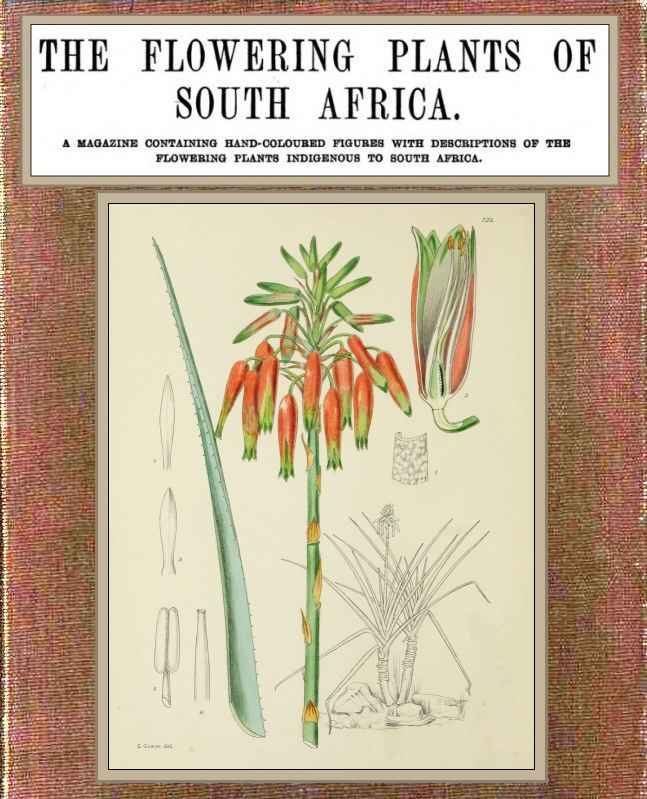
Plate 145.—Fig. 1, calyx; Fig. 2, corolla laid open; Fig. 3, showing pistil in calyx; Fig. 4, anther; Fig. 5, cross-section of ovary; Fig. 6, stipule.
F.P.S.A., 1924.
Plate 146.
PELARGONIUM PULVERULENTUM.
Cape Province, Natal.
Geraniaceae. Tribe Pelargonieae.
Pelargonium, L’Herit.; Benth. et Hook. f. Gen. Plant. vol. i. p. 273.
Pelargonium pulverulentum, Colv. in Sw. Ger. t. 218; Fl. Cap. vol. i.
p. 272.
This species of Pelargonium, according to the late Dr. J. Medley Wood, was first found in Natal in 1878, and was not met with again until 1914, when it was found on the south coast near the sea. It had previously been recorded from the eastern districts of the Cape Province by Ecklon and Zeyher, Drège and Burke. The species belongs to the section Polyactium of the genus, and should be compared with Pelargonium crassicaule, which we figured on Plate 52.
The white powdery pubescence, mentioned by Sweet as covering the young leaves, has not been noticed in the Natal plants.
Our illustration was made and the description drawn up from specimens collected at Merebank, Natal.
Description:—Stem short, thick, woody. Leaves petioled; petioles 3·1 to 7·5 cm. long, hispid; lamina 6·5 to 8·1 cm. long and broad, cordate, obtuse, somewhat lobed, with the lobes rounded and irregularly and sharply serrate, 5-veined at the base, glabrous above, hispid with minute short hairs beneath, more thickly on the margins; stipules broadly ovate, acute, ciliate. Inflorescence an umbel of 6 to 12 flowers. Peduncle up to 20 cm. long, hispid. Bracts 3 to 4·5 cm. long, oblong, acute, hispid, ciliate. Sepals 5, oblong-lanceolate, acute, densely and minutely hispid, shorter than the petals. Petals 5, rather unequal, 1 to 1·2 cm. long, obovate, yellowish-white with a purple blotch. Stamens 10, monadelphous, unequal; 6 stamens fertile; the remainder without anthers, of{108} these 3 are short and subulate and 1 broad and acute. Stigmas 5, filiform. Fruit not seen.
Plate 146.—Fig. 1, calyx; Fig. 2, longitudinal section of the flower showing the monadelphous stamens; Fig. 3, petals; Fig. 4, stamens; Fig. 5, pistil; Fig. 6, cross-section through the ovary.
F.P.S.A., 1924.
Plate 147.
THUNBERGIA NATALENSIS.
Transvaal, Cape Province, and Natal.
Acanthaceae. Tribe Thunbergieae.
Thunbergia, Linn.; Benth. et Hook. f. Gen. Plant. vol. ii. p. 1072.
Thunbergia natalensis, Hook. Bot. Mag. t. 5082; Fl. Cap. vol. v. sect. i. p. 4.
Thunbergia natalensis was described and figured in 1858 from plants cultivated by Messrs. Veitch of Chelsea, from seed received from South Africa. A year later Harvey gave a picture of the species in his Thesaurus Capensis (Plate 38). The Flora Capensis does not mention the peculiar stalked glandular hairs found on the funnel-shaped part of the style, though Hooker accurately figured these, neither does Harvey show them in his figure nor mention them in his description, although he was acquainted with the drawing in the Botanical Magazine.
The plant is a small shrub bearing large blue flowers with a bright yellow throat, and is confined to the eastern parts of the Cape Province, Natal, and the spurs of the Drakensbergen in the Transvaal. Notwithstanding its showy nature, it escaped the notice of the old collectors in Natal and the Transkei.
The species is worth the attention of horticulturists, and should find greater favour among growers who cultivate our native plants.
Description:—A shrub 20 to 50 cm. high. Branches glabrous or thinly hairy. Leaves 4 to 9 cm. long, 4 to 7 cm. broad, decussate, oblong or elliptic, acute, cordate or sub-hastate at the base, subentire or sinuate-toothed, slightly scabrous on both surfaces, with the veins prominent beneath; petiole 3 to 6 mm. long. Inflorescence axillary 1-to 3-flowered; bracteoles 2, 1 to 2·5 cm. long, 1 to 1·3 cm. broad, lanceolate, acute, prominently 3-veined; peduncle 2 to 4 cm. long, glabrous. Calyx-tube 2 mm. long; lobes ovate. Corolla{112} salver-shaped; tube 2 to 3·5 cm. long, curved, much inflated from near the base, sparsely pubescent; lobes 1 to 1·3 cm. long, ovate. Stamens inserted on the corolla-tube; filaments filiform, thickened towards the base; anther-cells bearded, one cell in each of the two larger anthers spurred at the base. Style funnel-shaped above, and produced in short triangular lobes, with stalked glandular-hairs on the funnel-shaped part and bearded on the lower surface of the lobes. Capsule 3 cm. long, densely and minutely hairy or glabrous.
Plate 147.—Fig. 1, showing ovary situated on the disc; Fig. 2, stamen; Fig. 3, portion of style, showing funnel-shaped upper portion covered with stalked glandular hairs; Fig. 4, fruit.
F.P.S.A., 1924.
Plate 148.
THUNBERGIA ALATA.
Natal.
Acanthaceae. Tribe Thunbergieae.
Thunbergia, Linn. fil.; Benth. et Hook. f. Gen. Plant. vol. ii. p. 1072.
Thunbergia alata, Boj. ex Sims in Bot. Mag. t. 2591; Fl. Cap. vol. v.
sect. i. p. 10.
Thunbergia alata is a native of tropical Africa and Natal, but has been introduced into many warm parts of the world as an ornamental creeper, and it is often called “Black-eyed Susan.” It was first described and figured in 1825 from plants raised in England from seed collected in Mauritius.
In its natural habitat the species is found as a creeper in woods, and the bright-orange corolla with a dark maroon throat gives the flower a singularly beautiful effect. The plant grows readily under cultivation, and makes a fine trellis creeper, but in colder countries it requires the protection of a glass-house.
The petioles of the mature leaves, as will be seen from the plate, are distinctly winged, but in the younger leaves they are almost terete. The stamens, as is usually the case in the family Acanthaceae, are appendaged in some way, and exhibit two forms in this species. All the anthers are tailed, but the anther of the shorter stamen, instead of having two tails, is only tailed at the base of one pollen-sac, the other pollen-sac bearing a bunch of radiating glandular hairs.
Our plate was prepared from plants grown by Dr. I. B. Pole Evans, C.M.G., at Irene, near Pretoria.
Description:—A climber. Branches terete, hirsute. Leaves opposite, petioled; petiole 2 to 5 cm. long, at first terete, with a shallow groove on the upper side, at length expanded and winged, hirsute; lamina 2·2 to 6·5 cm. long, 2 to 5·5 cm. broad, ovate, subobtuse, lobed at the base, hirsute above and beneath, with the veins depressed above, prominent beneath. Flowers{116} solitary, axillary. Pedicel up to 6 cm. long, terete, hirsute. Bracts two, 2·2 cm. long, 1·2 cm. broad, ovate, obtuse, distinctly keeled, hirsute, connate on one side. Calyx with many narrow linear lobes, covered with stalked glands. Corolla-tube 2 cm. long, cylindric below, and then more or less suddenly widened into a tube 6 mm. in diameter above, glabrous without and with a ring of deflexed glandular hairs at the insertion of the stamens; limb more or less oblique, with the lobes 1·5 cm. long, 1·4 cm. broad, obovate, and with the margin concave at the apex. Stamens unequal; anthers very distinctly tailed and covered on the face with long glandular hairs; the shorter anther with only 1 tail and with a tuft of glandular hairs on the other pollen sac. Style-lobes unequal; the shorter in the form of a concave saucer; the upper deeply channelled (National Herb. Pretoria, No. 2847).
Plate 148.—Fig. 1, young leaf with terete petiole; Fig. 2, median longitudinal section of flower; Fig. 3, calyx; Fig. 4, larger stamens; Fig. 5, smaller stamen; Fig. 6, style.
F.P.S.A., 1924.
Plate 149.
ALOE Peglerae.
Transvaal.
Liliaceae. Tribe Aloineae.
Aloe, Linn.; Benth. et Hook. f. Gen. Plant. vol. iii. p. 776.
Aloe Peglerae, Schonl. in Records Albany Mus. vol. i. p. 120.
Aloe Peglerae is quite a common plant in parts of the Transvaal, and may be found in quantities on the stony hills of the Magaliesberg round Pretoria. The species was first described by Dr. S. Schönland in 1903 from specimens collected by Miss Alice Pegler near Rustenburg. The peculiar lax arrangement of the leaves is very characteristic, and Miss Pegler not inaptly compared its appearance to a loose cabbage.
In the description accompanying Plate 107 (Aloe comosa) we described the method in which the flowers mature. Aloe Peglerae, as far as we have observed, is an exception to this general rule, as the style is exserted with the filaments and does not wait until the filaments are withdrawn, and the perianth withers before protruding.
Our plate was prepared from specimens which flowered at the Division of Botany, Pretoria.
Description:—Plant almost acaulescent with a dense rosette of leaves. Leaves curved, about 28 cm. long, 5·5 cm. broad, below lanceolate, ending in a short spine, almost flat on the upper surface, slightly convex on the lower surface, faintly keeled and spiny on the back in the uppermost third, with the margins spiny; the spines on lower portion of leaf about 1 mm. long and about 5 mm. apart, becoming 5 mm. long and 1·5 cm. apart in the upper part of the leaf. Peduncle solitary from the middle of the leaf rosette, about 1·2 cm. in diameter and covered with ovate long-acuminate erect membranous bracts. Flower spike about 18 cm. long, up to 8 cm. in diameter; flowers at first reddish, becoming greenish-white at maturity. Outer perianth-segments 2·5 cm. long,{120} 6 mm. broad, oblanceolate, with the apex slightly recurved, 3-nerved; inner segments 2 cm. long, 8 mm. broad, oblong, 1-nerved. Stamens at length long exserted; filaments dark purple above, greenish below, linear. Ovary 5 mm. long, ellipsoid; style 4·2 cm. long, cylindric, exserted with the stamens; stigma small (National Herb. Pretoria, No. 2846).
Plate 149.—Fig. 1, upper portion of leaf; Fig. 2, flower; Fig. 3, median longitudinal section of a flower.
F.P.S.A., 1924.
Plate 150.
PSEUDOBAECKEA VIRGATA.
Cape Province.
Bruniaceae.
Pseudobaeckia, Nied. in Engl. and Prantl. Naturl. Pflanzenfam. vol. iii. 2a,
p. 136 (1891).
Pseudobaeckia virgata, Nied. l. c.; Dummer in Journ. Bot. 1912, Suppl. 2.
Brunia virgata, Brogn.; Fl. Cap. vol. ii. p. 315.
On Plate 92 we figured a member of the family Bruniaceae, Brunia Stokoei, which differs from the genus Pseudobaeckia in having the sepals united beyond the ovary and the stamens shorter than the petals. The species of Pseudobaeckia were formerly placed under the genus Brunia, until a separate genus was constituted for them in 1891.
The species figured is not a particularly striking one, but it is worthy of illustration, as it belongs to a group only found in the south-western area of the Cape Province.
The specimens from which our plate was prepared were collected by Mr. T. P. Stokoe on the Hottentot Hollands Mountains, where it is found growing in very damp places near Kogelberg. It also occurs in the mountains of Swellendam. We are indebted to the Director of the Royal Botanic Gardens, Kew, for comparing the plant with the material in the Kew Herbarium.
Description:—Branches slender, arranged in a racemose manner above, yellowish, the young branches densely woolly, at length becoming glabrous. Leaves adpressed, somewhat distant below, becoming more crowded above, 3·5 to 6 mm. long, 1·5 mm. broad, lanceolate, with a long black mucro at the apex, convex and glabrous beneath, concave and woolly above. Flowers sessile, solitary in the uppermost leaves of the ultimate branchlets. Bracts two, 1 mm. long, ·25 mm. broad, linear, convex beneath, concave above, obtuse, glabrous. Sepals 1·25 mm. long, ·5 mm. broad, oblong, obtuse, glabrous.{124} Petals 1 mm. long, slightly over ·5 mm. broad, oblong, obtuse. Filaments ·5 mm. long, linear; anthers less than ·25 mm. long. Ovary 2-celled, with a single red pendulous ovule in each cell, sometimes only one ovule present; style ·5 mm. long, bifid at the apex (National Herb. Pretoria, No. 2578).
Plate 150.—Fig. 1, tip of branch enlarged, showing flowers; Fig. 2, portion of branch enlarged; Fig. 3, single leaf showing under surface; Fig. 4, longitudinal section through a flower; Fig. 5, a single flower; Fig. 6, stamen; Fig. 7, bracteole; Fig. 8, bract.
F.P.S.A., 1924.
Plate 151.
ALOE Schlechteri.
Cape Province, Namaqualand.
Liliaceae. Tribe Aloineae.
Aloe, Linn.; Benth. et Hook. f. Gen. Plant. vol. iii. p. 776.
Aloe Schlechteri, Schonl. in Records Albany Mus. vol. i. p. 45.
This somewhat rare Aloe was first described by Dr. Schönland from material collected by Max Schlechter at Pella, S.W. Africa. The Division of Botany in 1921 received living specimens from Dr. W. Borchards of Upington, and these subsequently flowered at Pretoria.
Aloe Schlechteri is found growing on the bare veld. The short stems are decumbent and the rosette of leaves almost at right angles to the stems, giving the plant, when viewed from a little distance, an acaulescent appearance. The plants are invariably found in groups, and the individual plants are so arranged that the group forms a half-circle or sometimes a complete circle on the ground. The inflorescence appears to be always forked.
Our illustration was made from the specimens collected by Dr. Borchards.
Description:—Stem short decumbent with a dense rosette of leaves. Leaves somewhat incurved, up to 24 cm. long, up to 4 cm. broad near the base, lanceolate, acuminate, ending in a sharp spine, convex beneath, flat or slightly convex above, with the margins covered with prickles and a few prickles on the keel beneath near the apex; prickles about 1·2 cm. apart, straight or slightly incurved. Inflorescence branched into two arms; the common peduncle about 10 cm. long, bluntly 3-angled, naked; peduncle of arms up to lowermost flowers 9 cm. long, covered with a few membranous ovate acuminate bracts; raceme 15 cm. long, many-flowered. Pedicels 8 mm. long, erect. Youngest flowers tubular, erect, becoming later horizontal and at length pendulous and then{128} clavate. Perianth-tube 1·8 cm. long, widening from the base upwards; inner lobes 1·2 cm. long, 8 mm. broad, lanceolate, obtuse, usually 5-nerved; outer lobes 1·6 cm. long, 8 mm. broad, oblong-lanceolate, obtuse, concave usually 3-nerved. Stamens 3·5 cm. long, at first included, at length exserted. Ovary 8 mm. long, 3-angled; style 1·6 cm. long, terete; stigma minute (National Herb. 2845).
Plate 151.—Fig. 1, flower; Fig. 2, median longitudinal section of flower; Fig. 3, perianth-segments; Fig. 4, stamen; Fig. 5, style.
F.P.S.A., 1924.
Plate 152.
MONTBRETIA CROCOSMAEFLORA.
Transvaal.
Iridaceae. Tribe Ixieae.
Montbretia crocosmaeflora, Hort.; Flor. Mag. n.s. t. 472; Fl. Cap.
vol. vi. p. 129.
This plant, commonly seen in South African gardens, is a hybrid between Tritonia Pottsii and Crocosmia aurea, and was described from plants which flowered at the Royal Botanic Gardens, Kew, in August 1889. As the plant has been described under the generic name of Montbretia in the Flora Capensis we retain the combination here.
The plant blooms in Pretoria during the month of April, and furnishes a good supply of cut flowers during a time when they are scarce. Our illustration was made from specimens flowering at the Division of Botany, Pretoria.
Description:—Corm 2·5 cm. in diameter, almost spherical, sending out lateral rhizomes. Leaves arranged up the stem in a fan-like manner, 6 to 7 on each side, up to 30 cm. long, ·8 to 1 cm. broad, linear, acute, equitant at the base, with the midrib prominent and the lateral veins evident in fresh specimens, glabrous. Peduncle up to 25 cm. long, 7-to 10-ribbed (almost narrowly winged), glabrous. Inflorescence a lax panicle of 3 to 4 spikes. Spikes 4 to 5 cm. long, 4-to 6-flowered. Spathe-valves 8 mm. long, ovate, acuminate, brown, membranous. Perianth-tube 1·5 cm. long, 4 mm. in diameter above, gradually narrowing below; lobes 2·8 cm. long, 9 mm. broad, oblong, obtuse, somewhat unequal. Stamens fixed in the upper portion of the perianth-tube; filaments 2·2 mm. long, terete; anthers 8 mm. long, linear, versatile. Ovary 6 mm. long, ellipsoid; style 3 cm. long, terete; style-branches 1 mm. long, bifid and papillose at the apex. Fruit 9 mm. in diameter, globose, obtusely 3-angled, several seeds in each cell (National Herb. 2848).{132}
Plate 152.—Fig. 1, corm showing rhizomes; Fig. 2, median longitudinal section of a flower; Fig. 3, spathe-valves; Fig. 4, stamen; Fig. 5, upper part of style; Fig. 6, fruits.
F.P.S.A., 1924.
Plate 153.
OXALIS LUPINIFOLIUS.
Cape Province.
Oxalidaceae.
Oxalis, Linn.; Benth. et Hook. f. Gen. Plant. vol. i. p. 276.
Oxalis lupinifolius, Jacq. Oxal. t. 72; Fl. Cap. vol. i. p. 348.
This beautiful little Oxalis belongs to a small group of about eight species which are characterised by having the leaves digitately 5-to 19-foliate, and in some respects these species are more showy than many of the others.
The genus as a whole is essentially characteristic of the south-western portion of the Cape Province, but scattered species are found in various parts of the Union. Species of Oxalis are also abundant in South America, where some of them form tall shrubs.
Heterostylism, i. e. the different relative lengths of the stamens and styles, is found in the genus. In some flowers the styles exceed the stamens, while in others the stamens are longer than the styles. This arrangement of the sexual organs ensures that cross-pollination will take place.
Our plate was prepared from specimens grown at the Division of Botany, Pretoria, from corms presented by Dr. C. L. Leipoldt, who collected them at Pakhuis in the Clanwilliam Division. According to Dr. Leipoldt the corms are edible.
Description:—Internodes very short, so that the leaves appear more or less in a rosette. Leaves digitately 3-to 6-foliate; petioles 3 to 9 cm. long, 4 to 5 mm. broad, flattened glabrous; the shorter petioles very distinctly winged; the longer petioles not so evidently winged; leaflets up to 3·5 cm. long, 1·8 cm. broad, obovate, cuneate, rounded at the apex, glabrous, punctate beneath. Pedicels 1 to 6 cm. long, terete, glabrous. Bracts 2, 4 mm. long, linear. Sepals 6 mm. long, 2 mm. broad, oblong, obtuse, with membranous margins,{136} glabrous. Corolla-tube 7 mm. long, 5 mm. in diameter above, campanulate; lobes 1·5 cm. long, 1 cm. broad, obovate. Stamens unequal; longer stamens 6·5 mm. long, subterete, pubescent, with an appendage on the back; shorter stamens 3·5 mm. long, similar to the longer, but without the appendage; anthers oblong. Ovary 1·5 mm. long, 1 mm. in diameter, ellipsoid, glabrous; styles 1 mm. long; stigmas penicillate.
Plate 153.—Fig. 1, median longitudinal section of flower; Fig. 2, calyx; Fig. 3, androecium; Fig. 4, pistil of long-styled flower; Fig. 5. pistil of short-styled flower.
F.P.S.A., 1924.
Plate 154.
COTYLEDON Wickensii.
Transvaal.
Crassulaceae.
Cotyledon, Linn.; Benth. et Hook. f. Gen. Plant. vol. i. p. 658.
Cotyledon Wickensii, Schonl. in Records Albany Museum, vol. iii. p. 141.
The Pillansii group of Cotyledon as defined by Dr. Schönland includes species with a suffructicose, mostly robust habit, with the lobes of the corolla usually longer than the tube, glandular flowers, and with a tuft of hairs at the base of the filaments where they join the corolla. The species figured here was collected by Mr. J. Wickens and Dr. I. B. Pole Evans, C.M.G., on stony kopjes at Smit’s Drift, in the Pietersburg District of the northern Transvaal.
It is well adapted for rockeries, and flowers profusely during the mid-winter months of June and July. The species has been established in the rockeries of the Union Building gardens at Pretoria, and is doing remarkably well.
Our plate was prepared from specimens growing at the Division of Botany, Pretoria.
Description:—A tall herbaceous shrub up to 2 m. high. Stems somewhat fleshy, glabrous. Leaves 8·5 to 11 cm. long, 2·5 cm. broad, lanceolate, acute, or sometimes rounded, distinctly narrowed to the base into a terete portion, flat above, slightly convex beneath, glabrous and covered with a glaucous bloom. Inflorescence cymose, 12-to 15-flowered at the end of a naked peduncle. Peduncle up to 30 cm. long, terete, 6 mm. in diameter. Pedicels 1·5 to 3 cm. long, terete, densely covered with glandular hairs, expanded and disc-like above. Sepals 8 mm. long, 4 mm. broad, ovate, obtuse, glandular-pubescent. Petals persistent. Corolla-tube 2 mm. long, gibbous at the base between the petals, glandular hispid; lobes 2 cm. long, 2 mm. broad, oblong-linear, with a small blunt apiculus, glandular-hispid, especially on the{140} margins. Stamens equal; filaments 2·2 cm. long, terete, with reflexed hairs at the base; anthers ovate or almost orbicular. Carpels a little shorter than the stamens. Glands at base of each carpel, 3 mm. long, 1·5 mm. broad, oblong, truncate, projecting into the cavity at base of the petals.
Plate 154.—Fig. 1, median longitudinal section of flower; Fig. 2, longitudinal section of flower with pistil removed; Fig. 3, carpels showing glands at the base; Fig. 4, stamen; Fig. 5, cross-section of leaf.
F.P.S.A., 1924.
Plate 155.
ALOE PETRICOLA.
Transvaal.
Liliaceae. Tribe Aloineae.
Aloe, Linn.; Benth. et Hook. f. Gen. Plant. vol. iii. p. 776.
Aloe petricola, Pole Evans in Trans. Roy. Soc. S. Afr. vol. v. p. 707.
This Aloe was first collected and photographed by Dr. Pole Evans at Nelspruit in September 1905. In the Nelspruit Valley (Barberton District) the plant is found chiefly on the granite outcrops, and in similar localities at Eland’s Hoek and in the Kaap Valley, where it was collected by Mr. Geo. Thorncroft. Like most of our Transvaal aloes, it flowers in mid-winter (July), and the flowering period extends well into August. Aloe petricola is one of the stemless species, and the bicoloured inflorescence makes it quite a striking plant in the rockery. In the oldest flowers the filaments contract within the perianth, and the style then becomes exserted.
Our plate was prepared from specimens which flowered at the Division of Botany, Pretoria.
Description:—Leaves 34 cm. long, 8 cm. broad at the base, lanceolate, acuminate, ending in a short spine, concave on the upper surface, convex on the lower, with spines along the margins and 1 to 3 spines on the back near the apex; spines about ·2 mm. long and 1·5 cm. apart. Inflorescence forked; peduncle bearing the inflorescence about 20 cm. long, 1·2 cm. in diameter, terete, bearing ovate acuminate membranous bracts; flowers in a dense spike about 21 cm. long, 6 cm. in diameter, all reflexed, at first red, later becoming greenish-white, with dark green bands. Floral bracts membranous, reflexed, 1·5 cm. long, 5 mm. broad at the base, ovate, cuspidate, 5-nerved. Outer perianth-segments 2·5 cm. long, 6 mm. broad, lanceolate, obtuse, distinctly 3-nerved (faintly 5-nerved); inner segments 2·3 cm. long, 9 mm. broad, somewhat keeled, 3-nerved. Filaments 2·5 cm. long, broadest in the{144} middle and tapering to the base and apex, dark purple above, greenish-white below; anthers 3 mm. long with dark yellow pollen. Ovary 5 mm. long, cylindric; style 2 cm. long, cylindric; stigma minute.
Plate 155.—Fig. 1, median longitudinal section of flower; Fig. 2, bud; Fig. 3, perianth-segments; Fig. 4, stamen.
F.P.S.A., 1924.
Plate 156.
CRASSULA PORTULACEA.
Cape Province.
Crassulaceae.
Crassula, Linn.; Benth. et Hook. f. Gen. Plant. vol. i. p. 657.
Crassula portulacea, Lam. Dict. ii. p. 172; Fl. Cap. vol. ii. p. 337.
This species of Crassula is somewhat related to C. falcata, figured on Plate 12, but differs in its more shrubby habit. It belongs to the section Latifoliae of the genus, which contains three species, all succulent branching shrubs, with broad flat fleshy leaves.
Crassula portulacea is a large much-branched shrub up to 10 to 12 ft. high, and is found in the south-eastern parts of the Cape Province, in the coastal districts from Montagu to Port Elizabeth.
Our plate was prepared from plants flowering in the rockeries at the Division of Botany, Pretoria. Here it forms a small, more or less compact shrub about 2 ft. high, and flowers very profusely. The flowers appear during the winter months, and when in full bloom the plant makes a very effective show on the rockery.
Description:—Branches succulent. Leaves up to 5 cm. long, 3 cm. broad, obovate, rounded at the apex, produced into a short broad petiole, articulated to the branches, glabrous. Inflorescence terminal, in large lax cymose panicles. Calyx campanulate, with very short lobes. Petals 1 cm. long, 2·5 mm. broad, oblong, with a small apiculus at the apex. Stamens 5, alternating with the petals; filaments 5·5 mm. long, linear, tapering upwards; anthers more or less crescent-shaped. Hypogynous glands oblong, rounded above. Carpels 5, free; ovary ellipsoid; style 3 mm. long, terete; stigma small, capitate.{148}
Plate 156.—Fig. 1, median longitudinal section of flower; Fig. 2, a single carpel; Fig. 3, stamen; Fig. 4, hypogynous gland.
F.P.S.A., 1924.
Plate 157.
EUPHORBIA Cooperi.
Natal and Transvaal.
Euphorbiaceae. Tribe Euphorbieae.
Euphorbia, Linn.; Benth. et Hook. f. Gen. Plant. vol. iii. p. 258.
Euphorbia Cooperi, N.E. Br. ex Berger, Sukk. Euphorb. 83 and 84, Fig. 21;
Fl. Cap. vol. v. sect. 2, p. 368.
The genus Euphorbia is represented in South Africa by one hundred and eighty-three species, and we figure a representative of this genus for the first time. The genus contains many species which are of economic value as stock-food plants in the drier parts of the country, and among these may be mentioned E. esculenta, Marl. (Vingerpol), E. brachiata, E. Mey. (Soet or Blou Melkbos), E. coerulescens, Haw. (Soet Noorsdoring), and several other species which are commonly known as “Noorsdoring.”
The species figured here is one of the arborescent members of the family, and is found in Natal and in the Rustenburg and Piet Potgieter’s Rust Districts of the Transvaal. It is easily recognised by the continuous horny margins on the stems.
The plant when cut exudes a copious milky juice, which is a skin irritant, and which also causes a burning sensation in the throat if the air is inhaled when standing in close proximity to a bleeding plant.
Our plate was prepared from a plant growing at the Division of Botany, Pretoria.
Description:—A succulent leafless spiny tree, 10 to 15 ft. high; trunk becoming naked and cylindric below, 15 to 20 cm. thick; branches ascending, curved at their basal part, 5-to 6-angled, deeply constricted into conic-ovate or somewhat heart-shaped segments 5 to 15 cm. long, and 4 to 7·5 cm. in diameter, with the small central solid part not more than 2 to 2·5 cm. thick in the younger branches, glabrous;{152} angles wing-like, with triangular channels 2 to 4 cm. deep between them, their margins with a continuous horny nearly even grey border. Leaves rudimentary, scale-like, about 1 mm. long and 2 mm. broad, transverse, apiculate; spines 3 to 8 mm. long, in pairs 6 to 18 mm. apart, widely diverging, grey, with blackish tips; flowering-eyes 3 to 8 mm. above the spine-pairs; cymes 1 to 3 from the same eye, sessile, each with 3 involucres, glabrous. Bracts about 3 mm. long and 4 mm. broad, rounded, concave, usually minutely denticulate; involucres all sessile and the middle one male, lateral fertile, 5 to 6 mm. in diameter, cup-shaped, glabrous, with 5 glands and 5 erect short transversely rectangular fringed lobes; glands contiguous, 3 mm. in their greater diameter, narrowly transverse oblong, very minutely rugulose on the upper surface; capsule about 6 mm. long and 9 to 12 mm. in diameter, exserted on a stout pedicel, curved to one side, deeply 3-lobed seen from above, with laterally compressed lobes, glabrous, dark purple on the apex and along the angles, having a somewhat fleshy calyx at its base, with 3 deltoid-ovate acute lobes about 2 mm. long; cell-walls about 0·5 mm. thick, woody. Styles 2 mm. long, united for two-thirds of their length, with spreading arms, bifid at the apex; seeds 3 mm. in diameter, globose, with a raised line in a very slight furrow on one side, and a small pit at one end, light grey.
Plate 157.—Fig. 1, cross section of stem; Fig. 2, inflorescence; Fig. 3, male flowers; Fig. 4, male flower with fringed lobe; Fig. 5, gynaecium of female flower.
F.P.S.A., 1924.
Plate 158.
LACHENALIA PENDULA.
Cape Province.
Liliaceae. Tribe Scilleae.
Lachenalia, Jacq.; Benth. et. Hook. f. Gen. Plant. vol. iii. p. 807.
Lachenalia pendula, Ait. Hort. Kew. vol. i. p. 461; edit. 2, vol. ii. p. 288;
Fl. Cap. vol. vi. p. 423.
This species of Lachenalia was amongst some of the earliest of the Cape introductions into the Royal Botanic Gardens at Kew, having been sent by Masson in 1774. About the same time, or probably earlier, it was introduced into the gardens of Holland, and was eventually imported into England from Holland. In 1801 an excellent figure appeared in the Botanical Magazine (Plate 590).
Lachenalia pendula is a robust species of the genus, and is easily cultivated. It flowers freely under cultivation, and makes a very effective display.
Our plate was prepared from specimens grown by Dr. I. B. Pole Evans, C.M.G., from bulbs supplied by Lady Smartt.
Description:—Bulb globose, 3·5 cm. in diameter, covered with thin membranous white tunics. Leaves 2, clasping the base of the stem, up to 16 cm. long, up to 6 cm. broad below the middle, ovate, bluntly apiculate. Peduncle (including the flowers) up to 27 cm. long, 8 mm. in diameter, terete. Bracts small, broadly ovate, membranous. Pedicels 6 mm. long. Flowers arising from small pockets on the peduncle, first almost erect, then horizontal and at length pendulous. Perianth-tube slightly gibbous and oblique at the base; outer segments 3·3 cm. long, 7 mm. broad, oblong-linear, obtuse, with an outstanding ridge on the back near the apex, of one only; inner segments longer than the outer, 3·5 cm. long, 1 cm. broad near the apex, obovate-oblong, almost truncate at the apex. Stamens of two different lengths; the longer{156} equalling the inner perianth-segments; the shorter slightly included; filaments terete, glabrous; anthers oblong. Ovary 5 mm. long, ellipsoid; style slightly exceeding the longer stamens, minutely capitate at the apex.
Plate 158.—Fig. 1, median longitudinal section of a flower; Fig. 2, part of outer perianth-segment showing transverse ridge; Fig. 3, part of inner perianth-segment; Fig. 4, stamen; Fig. 5, upper portion of style; Fig. 6, ovary; Fig. 7, portion of peduncle with bracts and pockets from which the flowers arise.
F.P.S.A., 1924.
Plate 159.
CYRTANTHUS Galpini.
Transvaal.
Amaryllidaceae. Tribe Amarylleae.
Cyrtanthus, Ait.; Benth. et Hook. f. Gen. Plant. vol. iii. p. 729.
Cyrtanthus Galpinii, Baker in Kew Bull. 1892, p. 83; Fl. Cap. vol. vi. p. 227.
We have pleasure in figuring for the first time this charming little Cyrtanthus from the Barberton District of the Transvaal. According to Mr. G. J. Hofmeyr, B.Sc., of the Forest Department, who collected the flowers, the plants are found growing in long grass at Kaapse Hoop. The plant is subsocial, and forms conspicuous pink patches in the veld. Mr. Hofmeyr informs us that the flowers at Barberton are scarlet, and not alizams pink (R. C. S), as in the Kaapse Hoop plants.
The species was first collected by Mr. E. E. Galpin, F.L.S., amongst rocks on Berea Ridge, near Barberton, in 1889. He describes the flowers as scarlet, dusted with gold. It flowers during the months of July and August.
C. Galpini falls into the same section of the genus as C. helictus, which we figured on Plate 99.
Our plate was partly prepared from Galpin’s specimens (Galpin 409) and partly from living flowers collected by Mr. Hofmeyr.
Description:—Bulb ovoid, 2·5 to 3 mm. in diameter. Leaves appearing before the flowers, up to 8 cm. long, 2 mm. broad above, narrowing to a filiform portion below, with a single rib, glabrous. Peduncle 10 to 19 cm. long, 3 mm. in diameter, terete, very gradually narrowing upwards. Bracts 2·5 to 3 cm. long, scarious, linear, acuminate. Flowers solitary, more rarely 2-nate. Perianth-tube with a narrow-cylindric lower portion 1·5 cm. long, broadening out into a funnel-shaped portion 2 cm. long and 1·3 cm. in diameter{160} at the throat; lobes 2 cm. long, 7 to 9 mm. broad, oblong, bluntly apiculate, with a very small tuft of glandular hairs on the apex of three of them. Stamens all arising from the base of the widened portion of the perianth-tube; filaments of unequal lengths and attached to the perianth-tube for different distances, giving the stamens the appearance of being in two rows; anthers oblong, versatile. Ovary 5 mm. long, ellipsoid; style 3-8 cm. long, filiform; stigmas 3 mm. long, recurved, papillose on the upper side.