
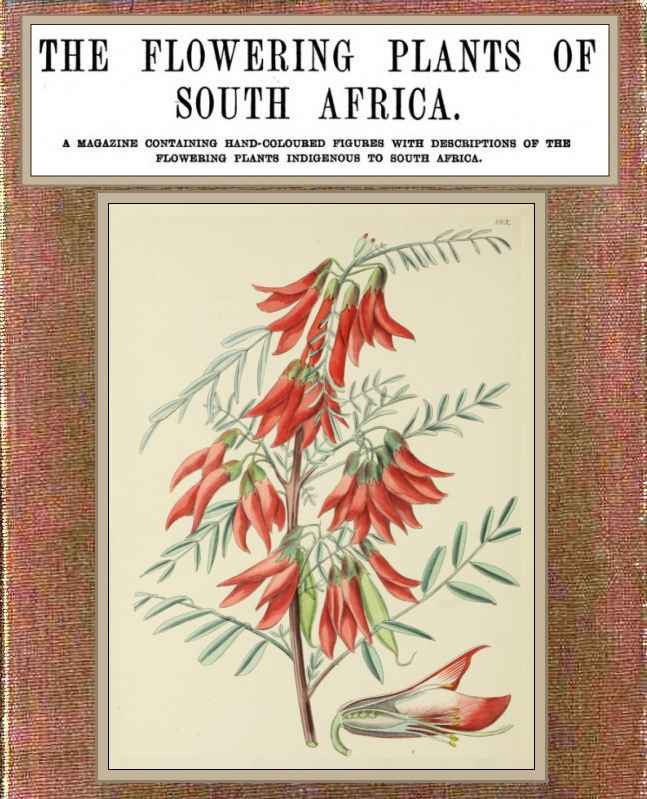
Plate 174.—Fig. 1, ray-floret; Fig. 2, disc-floret.
F.P.S.A., 1925.
Plate 175.
GLADIOLUS TRISTIS.
Cape Province.
Liliaceae. Tribe Ixieae.
Gladiolus, Linn.; Benth. et Hook. f. Gen. Plant. vol. iii. p. 709.
Gladiolus tristis, Linn. Sp. Plant. ed. 2, i. 53, ex parte; Fl. Cap.
vol. vi. p. 139.
There appears to be a great deal of confusion between this species of Gladiolus and G. grandis, even among the specimens quoted under these species in the “Flora Capensis”; and possibly when a large range of living specimens is examined the two species now upheld will be referred to a single species. Gladiolus tristis is quite a handsome member of the genus, and while not so highly coloured as some, the large semi-translucent flowers with such delicate markings have a charm of their own; besides which, the flowers are very sweetly scented. The species is readily raised from seed, and under proper cultivation it flowers about fifteen months after sowing.
Our plate was made from plants grown by Dr. I. B. Pole Evans, C.M.G., at Irene near Pretoria.
Description:—Corm 1·5 cm. in diameter, globose. Produced leaves 2 or 3; the lowest up to 36 cm. long, 4-angled, appearing as a cross in transverse section, glabrous; upper leaves similar but shorter. Inflorescence usually 3-flowered. Outer spathe-valves 3·5 cm. long, lanceolate-oblong, acute; inner spathe-valve similar, but slightly curved and gradually narrowing upwards; lobes 3·5 cm. long, 2·8 cm. broad, ovate, bluntly acuminate, obtuse minutely apiculate. Stamens shorter than the style. Style-branches cuneate, papillose on the margins.[Pg 64]
Plate 175.—Fig. 1, plant, much reduced; Fig. 2, corm, showing bulbil; Fig. 3, median longitudinal section of flower; Fig. 4, portion of leaf; Fig. 5, cross-section of leaf; Fig. 6, anther with part of filament; Fig. 7, stigmae with part of style; Fig. 8, ovary.
F.P.S.A., 1925.
Plate 176.
SARCOPHYTE SANGUINEA.
Cape Province.
Balanophoraceae. Tribe Sarcophyteae.
Sarcophyte, Sparrm.; Benth. et Hook. f. Gen. Plant. vol. iii. p. 234.
Sarcophyte sanguinea, Sparrm. in Vet. Acad. Handl. Stockh. 1776,
300, t. 7; Fl. Cap. vol. v. sect. ii. p. 213.
The family Balanophoraceae, to which our plant belongs, comprises plants all of which are parasitic on the roots of trees and shrubs. There are about fifty species, spread over about fifteen genera, widely distributed in tropical and sub-tropical regions. In South Africa the family is represented by two genera and four species.
Sarcophyte sanguinea is usually found as a parasite on the roots of Acacia Karroo, but so far as we know does not follow the same distribution as its host, but is confined to the eastern portion of the Cape Province. The plant really consists of a large inflorescence arising from the ground, and the two sexes are distinct. When in flower it has a most objectionable stench, so much so that the presence of a plant is known long before it is actually seen.
The accompanying plate illustrates a male plant.
Description:—Male plant about 30 cm. high. Root-stock thick, irregularly lobed, verrucose; stem short erect; leaves reduced to oblong obtuse or subacute scales up to 2 cm. long and 1·2 cm. wide. Inflorescence much-branched; flowers usually in pairs on short pedicels which are connate below. Perianth-segments navicular, almost patent, very thick and fleshy, subacute, 4 mm. long, 2·5 mm. wide; filaments 3 to nearly 4 mm. long, cylindrical; anthers terminal, scarcely wider than the filaments. Female plants very similar to the male, but rather shorter, flowers numerous in subglobose shortly stalked heads about 6 mm. in diameter. Ovary[Pg 68] 1-3-celled; ovule solitary, pendulous; stigma discoid, sessile; fruit a syncarpium; seed about 1 mm. long (Flora Capensis).
Plate 176.—Fig. 1, scale-like leaf; Fig. 2, portion of male inflorescence; Fig. 3, single male flower, showing the three perianth-segments and the 3 stamens; Fig. 4, single stamen.
F.P.S.A., 1925.
Plate 177.
PROTEA PITYPHYLLA.
Cape Province.
Proteaceae. Tribe Proteae.
Protea, Linn.; Benth. et Hook. f. Gen. Plant. vol. iii. p. 169.
Protea pityphylla, Phillips in Kew Bulletin, 1910, 234; Fl. Cap. vol. v.
sect. i. p. 594.
We have pleasure in showing for the first time this species of Protea, hitherto not figured in botanical publications. On a previous occasion we published an illustration of a broad-leaved variety, P. pityphylla, var. latifolia (see Plate 108). Another variety with short leaves resembling those of P. rosacea has been collected in the Ronde Bokkeveld, but it may be at once distinguished from this species by the foliaceous appendages of the outer bracts.
The late Dr. MacOwan distributed the species as a “sp. nov.” in 1888, and it is only within recent years that it has been at all largely collected.
The species has been successfully cultivated at the National Botanic Gardens, Kirstenbosch, and is well worth the attention of gardeners interested in plants typically South African.
Our plate was prepared from specimens presented by Dr. R. Marloth.
Description:—Branches glabrous; leaves 6 to 8 cm. long, about 1 mm. wide, needle-shaped, acute, pungent, channelled and prominently costate on the upper face, glabrous. Head, sessile, 4 to 4·5 cm. long, about 6·5 cm. in diameter, cernuous. Involucral-bracts 7-seriate, glabrous; outer ovate, acuminate, obtuse or acute, the lowest produced into long foliaceous appendages resembling the leaves, inner oblong, slightly concave, exceeding the flowers. Perianth-sheath 1·5 cm. long, dilated, 3-keeled and 7-nerved below, scarious, rufously setulose within in the upper part, otherwise glabrous; lip 5 mm.[Pg 72] long, 3-toothed, 3-keeled, setose below; teeth subequal, 0·5 mm. long. Stamens all fertile; filaments 0·5 mm. long, dilated, concave; anthers oblong-linear, 3 mm. long, apical glands 0·25 mm. long, ovate, subacute, somewhat swollen on the inner face. Ovary 2 mm. long, obovate-oblong, covered with long reddish-yellow hairs; hypogynous scales 1 mm. long, oval-oblong; style up to 2·2 cm. long, widened and much compressed from the base upwards for 6 mm., then much constricted and strongly bent and subulate, the slender portion obliquely arching inwards, glabrous: stigma 3 mm. long, obtuse (Flora Capensis).
Plate 177.—Fig. 1, single flower; Fig. 2, single flower opened; Fig. 3, lip of perianth-segments showing the three stamens; Fig. 4, receptacle.
F.P.S.A., 1925.
Plate 178.
ALOE RUPESTRIS.
Namaqualand.
Liliaceae. Tribe Aloineae.
Aloe, Linn.; Benth. et Hook. f. Gen. Plant. vol. iii. p. 776.
Aloe rupestris, Baker in Flora Capensis, vol. vi. p. 326.
This remarkable Aloe belongs to the same section of the genus as A. ferox, which we figured on Plate 169, but differs in having leaves which are not prickly on the under surface. It is only found, so far as we know, in Namaqualand, where it grows on rocky ground, and was first distributed by MacOwan. The locality from which the original specimens came was between Port Nolloth and Spektakel. The plant grows to a height of 10 to 12 feet, and produces a large terminal panicle of racemes which overtops the leaves. The young flowers are greenish-yellow in colour, but become red when adult. This difference in colour between the young and adult flowers is not an uncommon character in the genus, and we have noted it before in A. Wickensii (Plate 41).
The plant from which our plate was prepared was presented by Dr. R. Marloth, and flowered at the Division of Botany, Pretoria, in September 1924.
Description:—Stem almost 2 m. high, thick. Leaves in a rosette at the apex of the stem, up to 60 cm. long, 5 cm. broad near the base, lanceolate-ovate, acuminate, not prickly on either side, with small deltoid marginal teeth. Inflorescence much-branched; racemes dense, 15 to 20 cm. long. Bracts small. Pedicels short. Perianth over 2 cm. long; segments divided almost to the base, oblong, with a distinct green keel. Stamens and style much exserted.[Pg 76]
Plate 178.—Fig. 1, plant, much reduced; Fig. 2, median longitudinal section of flower; Fig. 3, flowers in various stages of development; Fig. 4, stamen; Fig. 5, apex of style.
F.P.S.A., 1925.
Plate 179.
SENECIO FULGENS.
Natal, Transvaal.
Compositae. Tribe Senecionideae.
Senecio, Linn.; Benth. et Hook. f. Gen. Plant. vol. ii. p. 446.
Senecio fulgens, Nicholson Dict. Gard. vol. iii. p. 420; Kleinia
fulgens, Hook. Bot. Mag. t. 5590.
This species of Senecio belongs to the section Kelinoidei of the genus, to which section Senecio stapelliaeformis, figured on Plate 28, is also referred. The species was first introduced into England from Natal by a Mr. Plant in 1886, and flowered at Kew the same year. From these specimens the plate in the “Botanical Magazine” was made.
A comparison of the present plate with that of the “Botanical Magazine” quoted above will show that our plant has a more lax habit, and this is to be explained by the fact that it is growing under the shelter of a large tree. The shape and dentition of the leaves vary considerably. The young leaves are narrowly (1·5 cm.) lanceolate, while adult leaves are broadly (4·5 cm.) obovate. Some of the leaves are quite entire, while others are remotely toothed. All these variations are found on the same plant. On young branches the leaves are grouped in more or less of a rosette at the apex of the branch.
The species is well worthy of cultivation, as it grows luxuriantly and flowers profusely, and often produces flowering stems over 30 cm. long. The flowers are coral-red (R.C.S., Plate XIII).
Description:—A herbaceous shrub up to ·6 m. high. Leaves more or less crowded at the base, 6 to 12 cm. long, 1·5 to 4·5 cm. broad, lanceolate, lanceolate-obovate to obovate, narrowed at the base, entire or remotely toothed, glaucous, fleshy; the older leaves channelled on the upper surface in[Pg 80] the lower portion and distinctly keeled beneath. Flowering stems up to 30 cm. long, with scattered leaves 2 to 9 cm. apart, which decrease in size upwards, usually simple. Heads homogamous, solitary. Involucral-bracts 1·9 cm. long, concrete, forming a tube 1 cm. in diameter and oblong in outline, produced into nine lanceolate lobes above. Receptacle slightly concave. Corolla-tube 1·9 cm. long, cylindric, very gradually widening upwards; lobes 2 mm. long, spreading, ovate-oblong, obtuse. Anthers blunt at the base, with a lanceolate apical appendage. Style-branches much recurved, obtuse, with marginal papillae. Ovary 5 mm. long, cylindric, glabrous. Pappus 1·2 cm. long, of many fine bristles. (National Herb., Pretoria, No. 2738.)
Plate 179.—Fig. 1, plant, much reduced; Fig. 2, cross-section of leaf; Fig. 3, longitudinal section of head; Fig. 4, median longitudinal section of flower; Fig. 5, anthers; Fig. 6, style; Fig. 7, fruit and pappus.
F.P.S.A., 1925.
Plate 180.
ALOE SESSILIFLORA.
Transvaal.
Liliaceae. Tribe Aloineae.
Aloe, Linn.; Benth. et Hook. f. Gen. Plant. vol. iii. p. 776.
Aloe sessiliflora, Pole Evans in Trans. Roy. Soc. S. Afr. vol. v. p. 708.
The species of Aloe figured on the accompanying plate belongs to the less conspicuous members of the genus. The small cream-yellow flowers do not make the inflorescence very attractive. Aloe sessiliflora was collected in the Barberton District by Mr. J. E. Wickens, and flowered at the Union Buildings for the first time in June and July of 1914. Mr. Geo. Thorncroft subsequently collected the plant near Barberton. During the winter months the leaves are of a distinct reddish colour, while in summer they are bright green. The flowers contain drops of very dark nectar at the base of the perianth.
Our plate was made from specimens growing at the Division of Botany, Pretoria.
Description:—Stem up to 90 cm. high. Leaves in a dense rosette at the apex of the stem, 45 to 60 cm. long. 6 to 8 cm. broad, spreading or recurved, fleshy, channelled above, convex beneath, with the margins toothed. Peduncle simple, 60 to 75 cm. long, laterally compressed, covered with numerous oblong brown bracts. Spike densely many-flowered, more or less cylindric; bracts 10 mm. long, 7 mm. wide, ovate-cuspidate, 3-nerved. Flowers campanulate-cylindric; perianth 14 mm. long; segments free; the outer 5 mm. broad, spathulate, fleshy-coloured with three longitudinal dark nerves; the inner 8 mm. broad, yellowish at the edges and with a reddish or greenish median line. Stamens and style protruding 8 to 10 mm. beyond the perianth. Capsule 9 to 10 mm. long, cylindric-oblong, enclosed in the dry peri-[Pg 84]anth. Seeds 3 mm. long, three-angled, greyish, very narrowly winged. (National Herb., Pretoria, No. 2880.)
Plate 180.—Fig. 1, habit; Fig. 2, median section of flower; Fig. 3, pistil; Fig. 4, stamen; Fig. 5, bract.
F.P.S.A., 1925.
Plate 181.
STAPELIA GIGANTEA var. PALLIDA.
Transvaal (?).
Asclepiadaceae. Tribe Stapelieae.
Stapelia, Linn.; Benth. et Hook. f. Gen. Plant. vol. ii. p. 784.
Stapelia gigantea, N.E. Br. var. Pallida, Phillips var. nov., a typo
corolla depressiore differt.
The Stapelia figured on the accompanying Plate is very near S. gigantea, N.E. Br., from which it differs, however, in having the disc portion of the corolla more depressed and being much lighter in colour. It appears to be an intermediate form between this species and S. nobilis, N.E. Br., differing from the latter species in not having such a cup-shaped corolla-disc and not having the lobes of the outer corona 3-toothed. The locality in which the plant is found is not known, and the specimen from which our Plate was prepared was kindly presented by Dr. A. J. T. Janse, who grew it in his rockery.
Description:—Stems robust, bright green, finely pubescent, prominently ridged, with each ridge ending in a tooth-like leaf. Flowers solitary. Pedicel 5 cm. long, terete, finely pubescent. Sepals 1·1 cm. long, lanceolate, acute, pubescent. Corolla 25 cm. in diameter when expanded; lobes 10 cm. long, 3 cm. broad at the base, ovate, long-attenuate, pubescent without, transversely rugose and with fine purple hairs on the inner face; disc shallowly depressed, covered with long soft purple hairs. Outer corona-lobes oblong; inner corona-lobes deeply cleft, with the outer lobes plate-like and the inner lobes linear. (National Herb., Pretoria, No. 2891.)[Pg 88]
PLATE 181.—Fig. 1, side view of flower; Fig. 2, corona; Fig. 3, cross-section through stem.
F.P.S.A., 1925.
GLADIOLUS CRUENTUS.
Natal, Basutoland.
Iridaceae. Tribe Ixieae.
Gladiolus, Linn.; Benth. et Hook. f. Gen. Plant. vol. iii. p. 709.
Gladiolus cruentus, Moore in Gard. Chron. 1868, 1138; Bot. Mag. t. 5810;
Fl. Cap. vol. vi. p. 157.
This is the first opportunity we have had of figuring a species of Gladiolus belonging to the section Cardinales. As far as our records go the species appears to be little known to botanical science. In 1868 a Mr. Bull flowered it in his nursery at Chelsea, and it was from specimens supplied by Mr. Bull that the Plate in the Botanical Magazine was prepared. We are indebted to Mr. L. F. Wacher, who sent us specimens from Basutoland in 1923, for information about this beautiful plant. Mr. Wacher states that the plant grows in many places in the mountain area of Basutoland, and it is probable that the species is confined to the high mountain regions of Natal and Basutoland. While we have no definite information as to the precise habitat, there appears to be little doubt that it favours similar localities to G. cardinalis of the Cape Province, which is usually found growing near waterfalls.
Description:—Corm 3·5 cm. in diameter, with thick cylindric roots. Leaves about four, 16 to 30 cm. long, 1·5 to 2·5 cm. broad, ensiform, glabrous. Spike few-flowered. Spathe-valves large, lanceolate; the lower from 7 to 15 cm. long. Perianth-tube funnel-shaped, curved; upper segments 5 to 6·5 cm. long, obovate-spathulate; lower segments about 4 cm. long, with a white blotch at the throat covered with red spots. Style-branches papillose on the margins.[Pg 92]
Plate 182.—Fig. 1, median longitudinal section of flower; Fig. 2, style showing the style-branches.
F.P.S.A., 1925.
Plate 183.
GAZANIA SUFFRUTICOSA.
S.W. Africa.
Compositae. Tribe Arctotideae.
Gazania, Gaertn.; Benth. et Hook. f. Gen. Plant, vol. ii. p. 459.
Gazania suffruticosa, Muschler in Engl. Bot. Jahrb. vol. 46, p. 120.
In a collection of succulents received from South-West Africa and planted at the Division of Botany, Pretoria, fruits of this Gazania were evidently mixed with the soil, as a plant grew in the succulent bed. It is a somewhat remarkable species and differs considerably in habit from the two species previously figured on Plates 51 and 64. The whole plant is covered with cobwebby hairs. The leaves are somewhat succulent, extremely brittle, and snap when bent; they are also easily snapped from the branches.
The single specimen in the garden has made vigorous growth and promises to do well under cultivation. It flowered in May of this year.
Description:—A branched herb up to 30 cm. high. Branches cobwebby. Leaves 5·5 to 7·5 cm. long, 1 to 1·5 cm. broad above, obovate-spathulate, narrowed into a petiole, pungent at the apex, irregularly lobed, or toothed, with the lobes and teeth tipped with a short pungent mucro, cobwebby above and beneath. Flower-heads in the axils of the leaves. Peduncles slightly longer, as long as or shorter than the leaves with tufts of cobwebby hairs. Involucre 1·8 cm. long, 6 mm. in diameter below, the concrete portion oblong in outline, inflexed at the base, sparsely cobwebby; outermost lobes 2·5 to 4 mm. long, ovate, acute; inner lobes 1 cm. long, ovate, acuminate, acute, with membranous margin. Ray-florets neuter; tube 9 mm. long, somewhat compressed; limb 1·6 cm. long, 7 mm. broad, obovate-elliptic, yellow, with a black eye-spot. Disc-florets: tube 7 mm. long, cylindric; lobes 1·5 mm. long, oblong, shortly acuminate, subobtuse. Anthers[Pg 96] minutely sagittate at the base. Ovary very villous; style-branches linear, obtuse. Pappus of many delicate very narrow scales 5 mm. long.
Plate 183.—Fig. 1, involucre; Fig. 2, longitudinal section through involucre; Fig. 3, ray-floret; Fig. 4, disc-floret.
F.P.S.A., 1925.
Plate 184.
LACHENALIA RUBIDA var. TIGRINA.
Cape Province.
Liliaceae. Tribe Scilleae.
Lachenalia, Jacq.; Benth. et Hook. f. Gen. Plant. vol. iii. p. 807.
Lachenalia rubida, Jacq. var. tigrina, Bkr. Fl. Cap. vol. vi. p. 424.
On Plate 158 we figured a species Lachenalia pendula belonging to the same subgenus (Eulachenalia) as the species here described. Lachenalia rubida is a graceful little plant, though not so handsome as some species of the genus. It was figured by Jacquin between the years 1786-1793, from plants cultivated in Europe, so that it has been known for over 130 years to botanists.
The species appears to be confined to the Clanwilliam, Calvinia and van Rhynsdorp Districts of the Cape Province, and as far as our records go does not appear to have been frequently collected.
We are indebted to Mrs. E. Rood of van Rhynsdorp for the specimens from which our Plate was prepared.
Description:—Bulb 1·5 cm. in diameter at the base, ovoid, white. Produced leaves 1 or 2, as long or slightly longer than the naked portion of the peduncle, with the free portion 1·8 to 2·2 cm. broad, elliptic-oblong or ovate-oblong, obtuse, with dark brown blotches on a dark green background, sometimes the spots absent, convolute and clasping the peduncle for the greater portion of its length. Peduncle with maroon-coloured spots on a yellowish background; in concolorus leaves peduncle almost uniformly coloured. Inflorescence 6-7-flowered. Bracts forming small pockets from which the flowers arise. Pedicels 3 mm. long. Outer perianth-segments O·5 cm. shorter than the inner, slightly gibbous at the base, thickly speckled with red spots on a yellowish background; inner perianth-segments oblong,[Pg 100] obtuse. Stigma capitulate. (National Herb., Pretoria, No. 2901.)
Plate 184.—Fig. 1, median longitudinal section of a flower; Fig. 2, single flower; Fig. 3, anthers; Fig. 4, pistil.
F.P.S.A., 1925.
Plate 185.
PROTEA Mundii.
Cape Province.
Proteaceae. Tribe Proteae.
Protea, Linn.; Benth. et Hook. f. Gen. Plant. vol. iii. p. 169.
Protea Mundii, Klotz in Otto and Dietr. Garten-Zeit. 1838, 113; Fl. Cap.
vol. v. sect. i. p. 579.
The species of Protea figured on the accompanying Plate represents a member of the section Exertae of the genus. This section comprises four species which may be readily recognised by the fact that in the mature head the perianth is spirally coiled in the open flowers, leaving the style exserted. Protea Mundii is closely related to another species found in the same localities, viz. P. lacticolor, Salisb., and the two were confused by E. Meyer, who named them both P. penicillata. As will be seen from the illustration, the stigma is very distinctly capitate at the apex, and as this character is unique in the genus the species can be easily recognised.
The plant is found in the mountains round Worcester, extends into the George, Knysna and Humansdorp Districts, and then passes through Uitenhage and Stutterheim into the Transkei.
The specimens were collected by Dr. I. B. Pole Evans, C.M.G., in the George District in July 1925.
Description:—Branches tomentellous to tomentose above. Leaves 4 to 11 cm. long, 1·2 to 3·2 cm. broad, lanceolate or lanceolate-elliptic, subobtuse, narrowing at the base, distinctly veined, glabrous or the youngest leaves sometimes loosely pilose. Head sessile, 7 to 8 cm. long, about 5 cm. in diam. Involucral-bracts 11-12-seriate; outer ovate, obtuse, silky on the back, green, ciliate; inner oblong or spathulate-oblong, whitish pubescent to tomentose, fringed with white cilia, shorter than the styles; perianth-sheath 4 cm. long, slender and thin above the middle, gradually dilated and[Pg 104] 5-nerved below, not keeled, the upper half at length coiled up, loosely hairy; lip 1·5 cm. long, tridentate, glabrous, with a dense tuft of hairs at the apex; lateral teeth 2 mm. long; median tooth 1·5 mm. long; stamens all fertile; filaments 1 mm. long, channelled down the middle; anthers linear, 6 mm. long; apical glands 0·5 mm. long, ovate, subacuminate, subacute, keeled on the inner face; ovary covered with a tuft of long brown hairs; style 5 cm. long, almost straight, keeled on one side, compressed above the ovary, then more or less terete, glabrous; stigma 6 mm. long, furrowed, subcapitate at the apex, abruptly and obliquely passing into the much stouter style. (National Herb., Pretoria, No. 2918.)
Plate 185.—Fig. 1, single flower; Fig. 2, receptacle.
F.P.S.A., 1925.
Plate 186.
STRELITZIA Reginae.
Cape Province.
Scitamineae. Tribe Museae.
Strelitzia, Ait. in Benth. et Hook. f. Gen. Plant. vol. iii. p. 656.
Strelitzia Reginae, Banks in Ait. Hort. Kew. ed. 1, i. 285, t. 2; Fl. Cap.
vol. v. sect. iii. p. 316.
In 1792 this plant was figured in the Botanical Magazine, (Plate 119), but had previously been figured by Sir Joseph Banks. Strelitzia Reginae, which was introduced into the Royal Gardens at Kew in 1773, excited a considerable amount of interest when it flowered. In the number of the Botanical Magazine quoted above a double Plate was devoted to the illustration of the flowers so as to give “readers an opportunity of seeing a coloured representation of one of the most scarce and magnificent plants introduced into this country.” That the plant is a particularly handsome one there can be no doubt and it has been appropriately named the “Bird-of-paradise flower”; the Afrikaans name is “Gele piesang.” The species is native of the south-eastern and eastern districts of the Cape Province.
The specimen illustrated on the accompanying Plate was grown at the Division of Botany, Pretoria.
The following description is taken mainly from the Flora Capensis.
Description:—Stemless; leaves oblong-lanceolate, acute, cuneate at the base, up to 0·5 m. long and 10 cm. wide, entire, undulate, especially in the lower part, quite glabrous, bright green above, glaucescent beneath; petiole up to 1·25 m. long; peduncle as long as the petiole. Bracts tubular, oblique and acute at the mouth, uppermost one cymbiform, acuminate, up to 20 cm. long, green, edged with purple. Sepals lanceolate, 7 to 10 cm. long, orange-yellow. Petals dark blue, blade of the lower two 5 cm. long, with a rounded basal auricle; claw[Pg 108] 2·5 cm. long; upper petal ovate, 2·5 cm. long. Stamens reaching to the top of the longer petals; anthers narrowly linear, twice as long as the filaments; style exserted, with 3 linear branches 2·5 cm. long. Fruit a capsule; seeds covered with reddish woolly hairs. (National Herb., Pretoria, No. 2915.)
Plate 186.—Fig. 1, plant much reduced; Fig. 2, median longitudinal section of a flower.
F.P.S.A., 1925.
Plate 187.
ALOE ARBORESCENS var. FRUTESCENS.
Transvaal.
Liliaceae. Tribe Aloineae.
Aloe, Linn.; Benth. et Hook. f. Gen. Plant, vol. iii. p. 776.
Aloe arborescens, Miller, Gard. Chron. ed. viii. No. 3; var. frutescens,
Bkr. Fl. Cap. vol. vi. p. 322.
This Aloe is widely distributed along the eastern mountain range and is known to extend northwards as far as the Victoria Falls. The many stems which grow together give the plant a bush-like appearance which makes a very effective display in a large rockery, and it has the advantage over many other species of the genus in that the inflorescence is not nipped by a severe frost. The species also lends itself admirably to growing on rough stone pillars forming an entrance to a drive.
Our specimen was collected on the hills near Haenertsburg on the Drakensbergen in June 1914, and cultivated at the Division of Botany, Pretoria.
Description:—An arborescent branched shrub. Leaves up to 0·5 m. long, about 4 cm. broad at the base, gradually tapering to the apex, almost flat on the upper surface, convex on the lower surface, with ovate somewhat incurved teeth 1 cm. apart below, about 1·3 cm. apart above, glabrous. Inflorescence solitary or 2-3 from each rosette of leaves, unbranched. Peduncle 7 mm. in diameter, cylindric with scattered membranous bracts. Floral-bracts membranous, 1·3 cm. long, 9 mm. broad, oblong, with straight margins, distinctly veined. Pedicels 2 cm. long, elongating in the old flowers. Raceme dense, up to 22 cm. long. Young flowers erect-spreading, cylindric, with a subacute apex; old flowers pendulous. Perianth (in open flowers) 3·2 cm. long; outer segments reddish, 5 mm. broad, obtuse; inner segments white, 9 mm. broad, with a distinct mid-rib, reddish below,[Pg 112] greenish above, obtuse. Stamens projecting. Ovary 8 mm. long, cylindric; style 3·2 cm. long, cylindric; stigma minute. (National Herb., Pretoria, No. 2904.)
Plate 187.—Fig. 1, young and adult flowers; Fig. 2, median longitudinal section of a flower; Fig. 3, pistil; Fig. 4, bract.
F.P.S.A., 1925.
Plate 188.
DERMATOBOTRYS Saundersii.
Cape Province, Natal.
Scrophulariaceae.
Dermatobotrys, Bolus in Hook. Ic. Pl. 1940.
Dermatobotrys Saundersii, Bolus in Hook. Ic. Pl. Zwilt’s 1940; Fl. Cap. vol. iv.
sect. ii. p. 206.
This interesting member of the Scrophulariaceae is peculiar in that it grows as an epiphyte on other trees. Miss Pegler records it from the Kentani District as growing on the Cape Chestnut (Calodendron capense). It ranges from Kentani to Zululand. It differs also from most members of the family in having 5 well-developed stamens, and for this reason was first referred to the family Solanaceae, but the straight or almost straight embryo indicates an affinity with the family Scrophulariaceae.
Mr. Saunders, who first collected the plant, described it as a parasite which killed the host on which it grew, but the late Dr. Medley Wood states that the plant has a tendency to fix itself to trees already dead.
We are indebted to Mr. K. B. Jameson, Scottsville, Maritzburg, for the specimen from which our illustration was prepared.
Description:—A glabrous epiphytic shrub; root-stock 1·25 m. high, about 1 cm. thick but increasing towards the top to 5 cm., furrowed transversely as in a Dahlia root; rootlets fibrous; stems more or less quadrangular; ultimate branchlets 1·5 to 3 mm. thick. Leaves opposite, decussate, ovate or elliptical, acute or broadly pointed at the apex, more or less narrowed at the entire base, strongly toothed or repand-dentate, fleshy, red-veined, turning black-green in the dried state, 5 to 15 cm. long, 2·5 to 9 cm. broad; petioles 1 to 5 cm. long. Flowers clustered at the nodes on the branchlets, usually three together, bracteate at the base,[Pg 116] about 4 cm. long; peduncles 1 to 3 mm. long, spreading; bract elliptic-linear, acute at both ends, about 2 cm. long, 5 mm. broad; calyx-segments lanceolate, acute, glabrous, 3 to 5 mm. long. Corolla red; tube beset inside towards the base with stiff broad white hairs; lobes about 5 mm. long; anthers glabrous; style glabrous, slender, tapering towards the stigma. Ovary ovoid-conical, glabrous; ripe berry ovoid, blunt, smooth, about 2 cm. long, 1·8 cm. broad, green; embryo about 1/3 to 3/4 of the seed in length. (National Herb., Pretoria, No. 2917.)
Plate 188.—Fig. 1, single flower; Fig. 2, median longitudinal section of flower; Fig. 3, pistil.
F.P.S.A., 1925.
Plate 189.
CRASSULA Laticephala.
Cape Province.
Crassulaceae.
Crassula, Linn.; Benth. et Hook. f. Gen. Plant, vol. i. p. 657.
Crassula laticephala, Schonl. in Rec. Albany Mus. vol. ii. p. 457.
The dwarf Crassula figured on the accompanying Plate was described by Dr. S. Schonland in 1913 from a specimen collected in the Riversdale District by Mr. J. E. A. Volschenk. The species is closely allied to C. congesta, N.E.Br., which we figured on Plate 115, and Dr. Schonland suggests that when more material is available it might be considered a variety of the latter species.
Crassula laticephala is confined, so far as we know, to the Riversdale District, and there only found in the Klein Karroo. We are indebted to Dr. J. Muir of Riversdale for the specimen figured.
Description:—A dwarf succulent 4·5 cm. high. Leaves fleshy, 4-ranked, strongly reflexed, 3 cm. long, 1·2 cm. broad at the base, ovate, acuminate, obtuse, flat above with a distinct keel, somewhat convex beneath, scurfy. Flowers in heads 2·5 to 3 cm. in diameter surrounded by floral-leaves. Floral-leaves 1·2 cm. long, 1·5 cm. broad at the base, ovate, suddenly contracted into a fleshy cylindric appendage. Receptacle convex. Floral-bracts 4·5 mm. long, linear, ciliated. Caylx-lobes 3 mm. long, linear, cucullate at the apex, ciliate. Petals 5·5 mm. long, linear, slightly broadened below, concave. Filaments 1 mm. long, slender; anthers 1·25 mm. long, oblong. Carpels 2 mm. long. Hypogynous scales transversely oblong, on distinct stalks. (National Herb., Pretoria, No. 2936.)[Pg 120]