
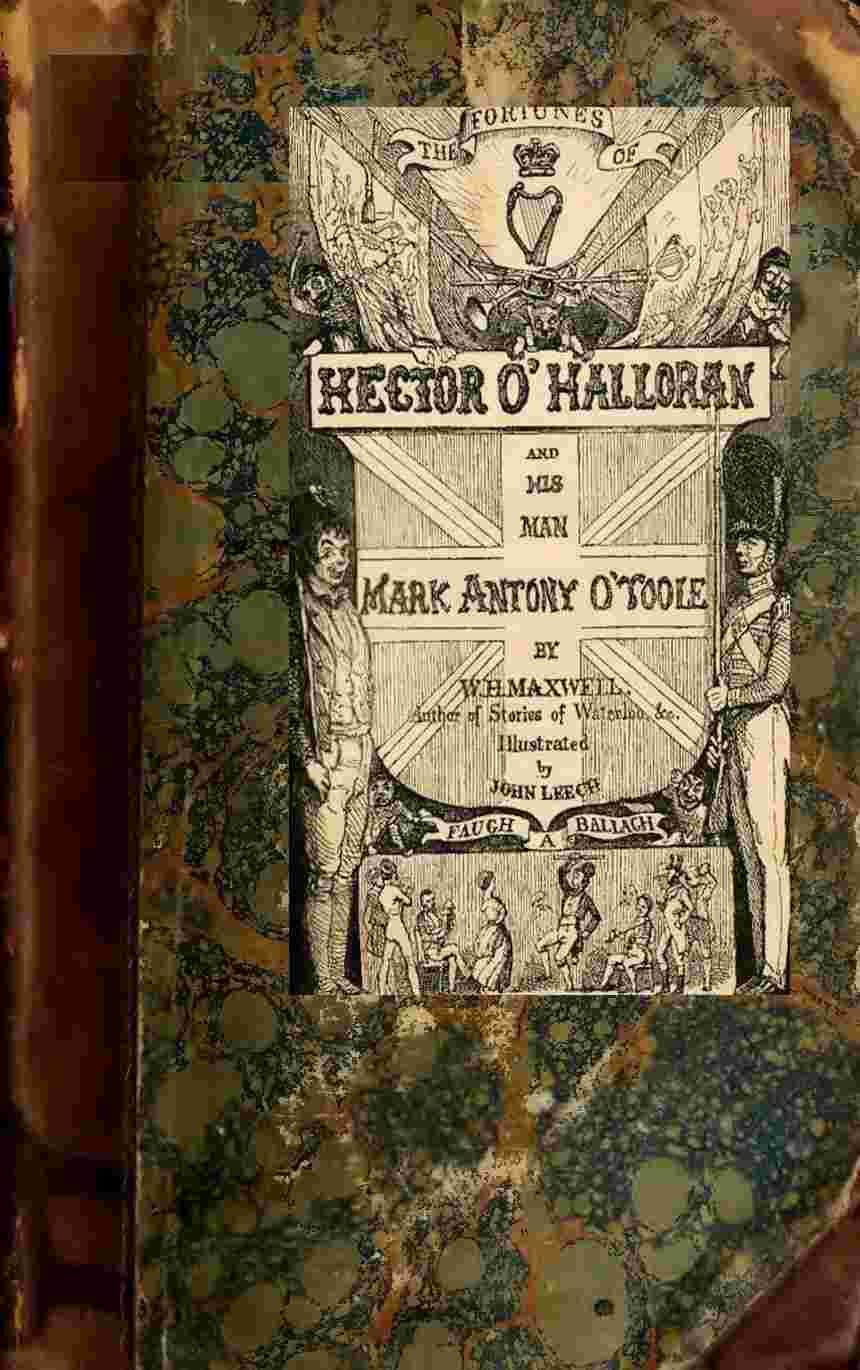
Original
The clock struck eleven.—My mother retired for the night, and the priest had been called out to prescribe for a sick soldier,—for his reverence united leechcraft to divinity, and thus was doubly useful. My father and Dr. Hamilton were consequently left alone, and both for some minutes had been communing with their own thoughts—my father broke the silence.
“I know not wherefore,” said he, “but something whispers me that this night is fated to be an important one in the history of the old house. I’m not inclined for sleep, and I feel a sort of restlessness, as if the day’s events had not yet closed.”
“It is the mental reaction which follows some unusual excitement, replied the divine.
“It may be so,” returned my father. “On with more wood. We’ll order a light supper, and borrow an hour from the night.”
The Doctor threw some billets on the fire, while my father filled his glass, and transferred the wine duly to the churchman.
“Did you remark the opposition which Hackett made when I gave orders to admit the soldiers?”
“I watched him attentively,” replied the Doctor. “His lips grew pale, his brows lowered, and with great difficulty he suppressed a burst of angry feelings which seemed almost too strong to be controlled. Be assured, my dear Colonel, that man is dangerous. If he be not traitor, I wrong him sorely.”
“Hush!” said my father, “the dog is growling. What! more late visitors? This is indeed a busy night; and again honest Cæsar proves himself a worthy sentinel. Wherever treachery may lurk, there’s none within his kennel, Doctor.”
The Colonel reconnoitred from his embrasure, but there was nothing to excite alarm. The moon had risen, and the sky, spangled with frost-stars, was bright and clear. Cæsar, advanced to the full length of his chain, was patted upon the head by a person closely wrapped up, who spoke to him with the admitted familiarity of an old acquaintance. To the Colonel’s demand of name and business, a female voice replied, “I beg your honour’s pardon, it’s me, Mary Halligan. My mother-in-law won’t put over the night. She wants to see his reverence in private, and sent me with some lines * to the priest. None of the boys would venture to the Castle after dark, for fear of Cæsar and your honour.”
instead of “letter.”
“Well, Mary, late as it is, we’ll allow you in. Will you, Hamilton, unlock the door, and let us have the lady here—for entre nous, she belongs to a faithless family.”
The peasant now in waiting at the hall-door was decidedly the handsomest woman in the parish. For time immemorial her fathers had been servants in Knockloftie, and she an occasional inmate of the house. Her brother, educated by my grandfather, had discharged the double duty of schoolmaster and driver—the latter, in plain English, meaning the factotum of an Irish gentleman of small estate. In this department, Halligan had been found dishonest, was disgracefully turned off, joined lawless men, obtained among them a bad pre-eminence, and now, under the double ban of murder and sedition, was skulking in the hills with a reward of fifty pounds offered for his apprehension. After her brother’s disgrace, Mary had seldom visited the mansion of her former master—and, as report said, she was affianced to one of the most troublesome and disaffected scoundrels in the barony.
Mary Halligan, and much against her own inclination, was inducted by the churchman into my father’s presence. “It was too much trouble to his honour,” she muttered; “Mr. Hackett the butler would do all she wanted, and give the lines to Father Dominic.”
“Mary,” said my father, as he handed her a glass of wine, “you tremble. Has anything alarmed you?”
“It is very, very cold, your honour, out of doors.”
“Cold it is, certainly, and Father Dominic will have a dreary ride. ‘Where is the letter for him?”
Mary Halligan’s colour went and came, for my father’s searching eye was turned upon her, and that added to her confusion. She-fumbled in her bosom—pulled out one paper,—a second fell upon the carpet—one she caught up—the other she hastily delivered—and the latter, was the wrong one.
My father carelessly looked over it, while Mary Halligan scrutinized his face with deep attention. As he read it—she became pale as death, and seemed hanging in fearful expectation upon the first words that Colonel O’llalloran would litter.
“Ha!” said my father carelessly, “so the old woman’s bad it seems. She wants, I suppose, to make her will—leave you an heiress, Mary,—and Father Dominic will assist her. Well, the priest will be here directly. Come, Mary, ‘for auld lang syne’ we’ll have a glass. What has become of your brother, the schoolmaster?”
“May God forgive the liars! They slandered him, and turned your honour again him. He would die for a dog belonging to Knockloftie,—and if he didn’t, the bigger villain he!”
“And the young miller, Mary? people say you are about to marry him. Is he slandered, too?”
“God sees he is,” was the response.
“Any nightly meetings at the chapel, Mary?” said the Colonel. The girl changed colour again: “None, your honour—not one. Thanks be to God! the bad people have left the parish.”
“When did you see your brother? To-night?” said the Colonel sharply.
“To-night!” returned the girl, in tones which indicated deep confusion.
“I am jesting, Mary. Where is he now?”
“In Connaught, your honour, with a cousin of my mother’s.”
“There let him remain, Mary. There, he will be safe until things become more quiet. But, Mary, the times are not as they were five years ago, when you and I used to meet by moonlight near the bouilee. * Pshaw! don’t blush;—it was only to gather bilberries, and exchange kisses for new ribbons. Did you come here alone?—no lover—no comrade—none to bear you company?”
the summer months they attend to the cattle which are then
driven to the hills.
“I put my trust in God,” said the girl, “and then, Colonel, you know I was safe.”
“Just as we used to do in Glencullen. Ah, Mary, would that all young women had your prudence and religion, and poor Father Dominic would not be broken-hearted as he is, in fulminating vengeance against broken vows and repairing damaged reputations.”
Notwithstanding my father’s badinage Mary Halligan seemed ill at ease.
“Plase you honour, I would wish to be going,” she said, “and as Father Dominic is not in the way, I would like to say a word or two to Mr. Hackett.”
“Ay, certainly; but, Mary, will you not stop, and see your mistress? Doctor, I must trespass on you to ask my wife to come down.”
The parson left the room, and speedily returned with my mother.
“This, Emily, is an old acquaintance. Not a word, Mary, about bilberries or the bouillee. Bring her to the nursery, my love—and,” he added in a suppressed voice, “be sure you keep her there.”
When the door closed, my father handed the letter he had received from the peasant-girl to the parson, and as the latter read it he became red and pale alternately.
“Good Heaven!” he exclaimed, “how could you with this murderous missive in your hand talk lightly with its bearer, and jest with that fiend in woman’s form, who brought an order that doomed to death or outrage all that your roof-tree covers?”
“Because,” replied my father coolly, “it furnished me with a glorious counterstroke. I threw my eye but hastily over it—read me that precious document!”
The appearance of the paper was remarkable. At the top, a scull and cross-bones were rudely stamped, and though the handwriting was tolerable, the sentences were ungrammatical, and many of the words misspelt. The letter ran thus:—
“Dear Pat.
“I made two attempts to send you information, but your d———d master, like bad fortune, was always in the way; my sister Mary will strive to hand you this. To-night our fate must be decided, for Luke Byrn, Cooney, and your brother are betrayed, and at sunrise to-morrow, if there be a living man in Knockloftie, they’re all dead men; the witnesses are to be removed to Donegal, and if they once reach it, Cooney will split, and you and I are certain of the gallows. At one o’clock I’ll be with you; lave the window open, and I’ll show the boys the way in, as I know the house, and the smith has keys that will open the yard gate. Once when four or five of us gets in, we’ll open the hall door for the remainder; you can finish the master easily when he hears the first alarm and rushes from his room; the rest will be child’s play, and then no quarter. The black seal is to this paper; mind, Hackett, you’re to watch the Colonel’s door, and I’ll be first man through the window. No more at present, from your friend and commander,
“James Halligan.”
“But here’s a postscript,” and the parson turned the paper.
“‘When the job’s over we’ll have a roaring night. As, captain, you know the Colonel’s lady—‘” He paused.
“Read on!” said my father.
“No, no,—mere ribald nonsense,” returned the churchman.
Colonel O’Halloran snatched the letter from his hand, and in one glance his eye passed over the portion of the paper which had been previously overlooked. To the expose of Halligan’s murderous intentions my father had listened with cold and contemptuous indifference: but when he read the postscript, a terrible change came over his countenance, and succeeded its previous expression of calm defiance. The eye flashed, the brow contracted, and springing from his chair the Colonel paced the room, muttering something between his clenched teeth which was but partially overheard. The outbreak of his passion was however as momentary as it had been strong,—and in a minute he resumed his seat, and calmly addressed the Doctor.
“We have,” said my father as he looked at the clock on the mantel, “an hour and twenty minutes to put our house in order, and a tenth portion of the time would be sufficient. You shall be aide-de-camp, Hamilton,—and to Father Dominic we’ll entrust the management of the women, and make his reverence keep matters quiet and administer ghostly consolation until the squall blows over. Mr. Hackett must be secured, but Heaven forbid the honest hangman should be anticipated! Cut down that bell-rope—now pull the other one—and then sit down and fill, Doctor,—ay, fill high, Confusion to all traitors! and here comes a most superlative scoundrel.”
The butler had promptly answered the summons of the bell. “Bring slippers,” said the Colonel, and the order was obeyed. Kneeling he removed his master’s boots, placed the slippers on his feet, and was about to rise, when to his astonishment my father’s powerful arm prevented it, and in a minute more he was bound hand and foot, and flung upon the floor in perfect helplessness, with an intimation “deep not loud” that the first movement he attempted of limb or tongue would prove a certain passport to eternity.
Without hurry or alarm the effective strength of my father’s garrison was speedily assembled in the great parlour, and sixteen men were found fit for duty in Knockloftie—a number more than sufficient for its defence. To all, arms and cartridges were delivered,—and every musket was carefully loaded to ensure a certain and effective fire when the moment of action should arrive. My father’s orders were brief, clear, and easily comprehended—and as every spot of vantage had been occupied, every window that looked upon the front or back approaches had one or more marksmen assigned for its defence according to its local importance. The lights were blinded, the strictest silence was enjoined, and not a trigger was to be drawn until my father gave the signal. Never was a small garrison better prepared or more determined; the soldiers, under a belief that they had been specially betrayed, and that they would have been assailed if their route had been continued, were burning to be revenged upon their intended murderers; while those who had found shelter from their enemies in Knockloftie, already doomed men, knew also that they were the chief objects of attack, and that no alternative remained to them but to defeat it or’ to perish. Thus circumstanced, Knockloftie had little to fear from open force. True, treachery or surprise might possibly have succeeded. Against the former, if there were faith in a stout bell-rope and a parson’s knot, the old house for the present was secure; and from the latter, the mal adresse of Miss Halligan had effectually preserved the garrison.
When all his preparations were completed, my father ascended to the upper story of the tower to satisfy himself that his wife and infant were in safety. On opening the door the chamber presented a sad and striking scene. On one bed, the corpse of the soldier’s widow was “laid out,” attired in the simple habiliments of the grave used by the Irish peasantry; and in another, two children were sleeping side by side, unconscious that murder and rapine were abroad, and that guilty steps were moving to this their abode of peace. My mother, bending over both, was murmuring a prayer for their deliverance, while, by the feeble light of a waxen taper, the priest, in a low and monotonous voice, was reading an office for the dead. One other person was there—a worthless woman. Mary Halligan sat before the fire; she neither spoke nor moved, but with her eyes fixed upon the dying embers, in full conviction that her treachery was suspeeted or discovered, she quailed before my father’s glance, and, while he remained in the apartment, never ventured to look up.
The Colonel’s visit was short: he whispered in his wife’s ear assurances of safety, and affectionately kissed her and the infant; then turning a withering glance upon his former mistress, he left the chamber and joined the men below.
The clock chimed three-quarters—no sound was heard that possibly could cause alarm, nor was there a growl from the kennel of the dog—and yet the murderers were at hand unchallenged. No wonder—Hector was in the agonies of death—Curses light upon the traitress! Mary Halligan, while she patted his honest head, had poisoned him!
CHAPTER III. THE NIGHT ATTACK.
“All heaven and earth are still—though not in sleep—”
* * * *
“Alas! that those who lov’d the most,
Forget they ever lov’d at all.”—Byron.
As the chimes died away, my father took a pistol from the table, placed another in his breast, and beckoned the soldier whom he had previously selected to attend him.
“Honest Philip,” said he, addressing the non-commissioned officer, “keep the lads cool, and wait till you hear my signal. You may expect a rush in front—don’t let that alarm you, the door will defy every effort to break it down. Aim steadily—one well-directed shot is worth a dozen random ones. I shall have the honour of receiving Mr. Hackett’s friends at the pantry-window, and leave them, I trust, no reason to complain that their reception was not warm enough. Should that scoundrel move,” and he pointed to the prostrate menial.
“It will be his last movement in this world,” returned Sergeant Brady. “I’ll pin him with a bayonet to the floor.”
“Has the pantry-window been secured?” inquired the divine. “If it has,” replied my father, “bolt and bar shall be withdrawn, and the aperture stand invitingly open.”
“What!” said Doctor Hamilton, “to give entrance to a band of murderers?”
“No!” returned my father with stern composure, “to stop it with the carcase of their leader. And now, my lads, be steady—a golden guinea for every white-shirt on the lawn at sun-rise!”
So saying, the Colonel quitted the apartment, and, accompanied by the attendant, proceeded to the post of danger.
Leaving the soldier in the passage as a support, my father entered the pantry, unclosed the shutters, and placed himself beside the open casement. For a determined man, the post was excellently adapted. Himself concealed in darkness, all without was visible—for the moon had risen, and although the lofty tower flung its deep shadow across the lower buildings over which it domineered, there was still a narrow alley of light spanning the court-yard, on which each passing object could not fail to be revealed clearly to him who watched within. The time, the circumstances, all, to “coming events” gave an imposing effect. Violence was abroad—and all within prepared for desperate resistance.
Five minutes—long, long, minutes—passed. Another interval,—and another followed; not a light twinkled in the castle—not a sound fell upon the ear. Suddenly, a key grated in the lock—a door opened in the court-yard; a man appeared—he stopped—listened—advanced—hesitated—retired again—and then spoke in soft whispers to some others. There was a pause. Once more the stranger issued from the doorway, crossed the moonlit vista, and stopped before the pantry-window. He passed his arm through the aperture—drew back again, and muttered with evident satisfaction,—“All is right! the window’s open!”
Four—six—eight—ten—twelve!—all issued into moonlight, and grouped themselves around the casement. The leader spoke in smothered tones:
“Hackett! Pat!—hush! no reply. All’s right; he’s at the Colonel’s door. Hackett!”—another pause—“‘Tis safe, and Mary has succeeded. I told you I would show you in; and now for vengeance!” Ay! and vengeance that was to be so easily obtained; for Knockloftie appeared buried in the deep repose which ever attends a false security. The leader turned, “No quarter, boys,” jumped into the open casement, and added, “Mercy to none!”
The words and action were simultaneous. Halligan had passed his head already through the aperture, when a voice, like an echo, responded in deeper tones “Mercy to none!”—A pistol exploded—and the robber chief dropped heavily from the window, a dead man!
To all, the assailants and the assailed, that fatal shot proved the signal. The expected assault was made upon the front, the more daring of the party rushing on with sledge-hammers to try and force an entrance—but not a stroke fell upon the door. From every aperture a withering cross-fire was opened. It was returned by a random volley, which splintered the windows, but inflicted no loss upon those within, who were already carefully protected. In the rear of the building, a still bloodier repulse attended the night attack while their leader reconnoitred, the ruffian group behind had been covered by a dozen muskets, and within a few moments after the robber’s fall, half his companions formed a lifeless heap upon the pavement.
Original
When my father rushed up stairs, the struggle in front was over. Dead and dying men were extended before the door—and in the clear moonlight those who escaped the fire from the house, were seen flying in wild disorder. As in lawless efforts generally, numbers had only produced embarrassment, and rendered failure more fatal.
One glance satisfied my father that the attempt had been fearfully repulsed; and he hastened to the sad but safe asylum, where those most dear to him had been placed for their security. My mother and the children had been already removed by the priest and servants to their respective chambers—and Colonel O’Halloran, with a dead and living woman, was left in possession of the melancholy apartment.
Mary Halligan was seated as when my father had quitted the room; her eyes were fixed upon the wood-fire—a minute passed—and not a word was uttered. My father laid his hand upon her shoulder, “Mary!” said he, “treachery! and from you!”
“And wherefore not?” exclaimed the peasant girl, as she sprang upon her feet, and boldly returned his glance. “Why should not the deceived in turn become deceiver’s?”
“Wretched woman! even had I wronged you, would you wreak vengeance on those who never wished you evil?”
The girl sighed heavily.
“There was a time, Mary, when you would not have betrayed the doomed one to the destroyer, and that victim—me.”
Mary Halligan was deeply affected; she sobbed, and tears, like raindrops, fell fast upon the floor.
“And could a few brief years change that once gentle nature, and so fearfully? Would nothing satisfy revenge, but death for me—insult for my wife?”
“Death—insult!” she repeated. “Neither was intended.”
“Read—‘tis the paper you gave me by mistake.”
Mary Halligan cast her eyes upon the scroll; her lips and checks grew pale; her hand shook violently; the paper dropped upon the floor; and turning her eyes upwards, she exclaimed, “As I was unconscious that such villany was designed, so may Heaven grant me pardon!”
“What brought you here, then?”
“To save my uncle from the gallows. They told me that witnesses who must convict him and others were sheltered in this house; and that could they but be carried off and concealed until after the assizes, then the prisoners’ lives were safe. They stated that they only wanted the arms deposited in Knockloftie;—that they would swear you to quit the country—and thus intimidate those who had followed your example and ventured to remain. Before I consented to carry the letter which my brother wished to have conveyed to Hackett, he swore upon the chapel-altar where the party had collected, that not one hair of your head should suffer injury. May God forgive him!”
“To that prayer, Mary, I add a sincere amen! He is gone to his account—a perjurer!”
“Gone to his account!” exclaimed the girl. “Is he dead? Who killed him?”
“He fell by the hand of one whom he would have more than murdered!”
“Then am I now indeed alone upon the world!” A long and liar-rowing silence followed. “Denis,” she said, “I dare not curse, and cannot bless you. Four short years have passed. How bitterly have all things changed?”
“Stop, Mary! From my soul, I pity and believe you. You tell me that you did not know the purport of this night attack!”
“God knows, I did not. You wrecked my happiness; but still I would not—could not subdue feelings now best forgotten. Forgotten, said I?—never!”
Mary Halligan had spoken to my father in her native tongue; and those who are intimate with that portion of the kingdom where the Celtic language is still retained, will remember with what poetic imagery, the Irish peasantry at times detail their mingled story of grief and joy, wrong and suffering.
Mary was one of those on whom nature stamps the grace which art idly or imperfectly can simulate. Her voice had all “The sweetness of the mountain-tongue and more affecting still, all that it uttered seemed to come directly from the heart.”
“I loved you, Denis—ay, loved in all the madness with which woman loves. The peasant girl never dreamed that birth and rank had divided us immeasurably. She never thought that she should be wooed and won, and cast aside for others. She knew nothing of the world. Those, for whom Heaven had designed her, sought her, and sued, and were rejected. You came. Six years had changed us—the child had become a girl—the boy had become a man. There was joy and merriment at Knockloftie—I was your chosen partner in the dance—and you would leave your dogs upon the moor, to steal to the bouillee, and sit for hours beside me. Is it to be wondered at that I loved with the ardour of a first passion—and the undoubting confidence of woman? While no sound was heard above the rushing waterfall, you plucked heath and wild-flowers from the bank, placed them in my hair, and swore you would be constant. Fool that I was! I believed you,—hid them in my bosom,—and before they faded, I found myself deserted and betrayed.” She paused,—her agitation was fearful; but a flood of tears relieved it, and she thus continued:—“You went to another land,—the sea rolled between us,—and were you forgotten? Oh, no! In fancy, I saw you still upon the moor—in sleep, I sate beside you on the heather—your name was mingled in my prayers—and when one was offered for my own sins, three were poured warm from the heart, to implore a blessing on the absent one. Well, well; the dream is over,—the spell is broken,—and in this world you and I shall never meet again. Farewell, Colonel. There were two beings between whom this heart once was shared. I look my last upon the living one—and, too soon, I shall have looked my last upon the dead. I dare not press that hand—there’s blood upon it; and—oh, God! that blood—a brother’s!”
The priest, who had witnessed the termination of this painful interview, led Mary Halligan from the room. Her brother’s body, with those of the other lawless men who had fallen or been wounded in the night affray, were already by my father’s orders removed to an adjacent village. Presently, the sky was overcast, the moon withdrew her light, and a heavy snow shower fell for miles around, covering the surface of the ground; and when morning dawned no traces of a recent affray were seen, and not a blood-stain was visible. One melancholy memorial of foul treachery alone remained:—hidden by a sward of snow, poor Caesar lay before his empty kennel; and, true to the last, even in the agonies of death he had howled a bold defiance at his enemies.
“Emily,” said my father, when breakfast was removed, “I need not tell you that a soldier’s wife must always hold herself in readiness to move. Until better times arrive, you and the boy must leave this unquiet mansion. Nay, start not, love! I shall be your companion. That fading cheek and heavy eye bear silent evidence that cannot be mistaken. There is not in this old tower a single stone that I do not regard with veneration; but were this gloomy pile a palace, and you unhappy, it should be abandoned. I have already sent a requisition for an escort, and do you get all you wish to be removed in marching order. To society,—to myself,—I owed a duty; that duty is discharged. A tenderer claim remains. Can I forget, dear Emily, that for me you gave up the convent’s quiet?—that for me title and wealth were thrown away?—that for me even the stronger ties of kindred were dissolved? Can I forget that though a gentle spirit like yours trembles at a life of danger, and recoils from scenes of bloodshed, still not a murmur passed your lips?—not a remonstrance urged upon me your apprehensions? Enough;—a soldier’s pride would prompt me to remain where we are,—while a husband’s affections demand that my wife and child should be placed in full security. The struggle is ended, and pride must yield to love.”
Before the last word was spoken, a happy wife was shedding tears of joy upon her husband’s bosom. Instant preparations were made; such valuables as were portable were packed up; Knockloftie for a time formally abandoned; and ere another week elapsed, my mother, my foster-brother and myself found ourselves in perfect safety—and for some months succeeding became residents of the metropolis.
My first anniversary formed a remarkable epoch in the story of our house; and as many subsequent adventures in my humble history were referable to that event, I shall briefly narrate the more immediate consequences that resulted. Mary Halligan quitted the country, as it was believed, to reside with some relatives in the west. Hackett received sentence of death, but the extreme penalty of the law was commuted into transportation. Sergeant Brady retired on a pension, and became henchman to my father. Mr. Hamilton, after Knockloftie was deserted, with a fatal imprudence still continued in the neighbourhood. A few weeks afterwards, the house where he resided was forced by a numerous banditti, the unfortunate clergyman dragged from his concealment, carried to the door, and slaughtered under circumstances of fearful barbarity. *
Time passed,—months slipped away,—and my mother’s birth-day returned. That morning, a letter containing a bank-note for five hundred pounds was received. It was addressed to the lady—with a brief intimation in an unknown hand, that a similar gift should be annually presented. Another brief period passed, and another letter came. It brought but sorry news. Knockloftie was burned to the ground;—not a fragment that was combustible remained;—and what was once “a merrie hall” now frowned upon the ocean in black and ruined loneliness.
As my father read the letter, a change came over his face, and revealed to the inquiring eyes then bent upon it, that evil tidings had arrived.
“Denis,” said my mother, “what is wrong?”
“Nothing, love, but that Knockloftie—”
“What of it? Go on.”
“Is, with all that it contained, a heap of ashes!”
“Good Heaven!”—and my mother crossed herself,—“are we not ruined, Denis?”
“No, no, love; not exactly ruined. I had the vanity to call my abiding place ‘a castle.’ Well, we must change the name; and surely ‘cottage’ will sound as sweetly.”
“Pshaw!” said the lady, “is that all?”
“Why—I can spare a horse or two,—part with a dozen dogs,—and then, my love, we will require the fewer servants.”
“And the carriage,—what need of it?” exclaimed the lady.
“Well, well; possibly if things come to the worst, it too might be dispensed with.”
“And then my jewels, Denis!”—and my mother’s eyes brightened with delight—“ay, those useless baubles. I have heard that they are precious! They shall be sold, and—”
“Never—by Heaven!” exclaimed my father, as he spurned the chair over the carpet, and strode across the room. In another minute his calmness had returned, and my mother was sitting on his knee, smiling away with woman’s tact, every recollection of annoyance; and propounding with the sweetest philosophy upon earth, visionary plans for future happiness.
Again the postman’s knock was heard, and another letter was presented. My father flung it unopened on the table. “Curse the particulars!” he exclaimed, “what matters it whether the old roof-tree fell by carelessness or villany?”
My mother impressed a consolatory kiss upon her husband’s cheek.
“Read it, love,” said he. “You and I have no secrets, Emily.”
The lady broke the seal, and looked at the signature.
“Who is Constantine Mac Donough?” she inquired.
“A very singular old man; a distant relation of my mother. Many years ago, my father and he quarrelled at an election. They fought in half an hour,—left the ground after three shots had been discharged,—and both refused a reconciliation. What was the cause of quarrel, I never could discover from my father; indeed, I question whether the worthy man himself even knew what it was distinctly; and with Mr. Mae Donough, of course, I never had even any acquaintance. He lives a bachelor, and report states, that he is very wealthy and very eccentric.”
“Lived! my love; the old man’s dead.”
“Dead!” exclaimed my father. “And has left you heir to all his property?”
The Colonel sprang from his chair—his solitary arm encircled my mother’s waist, as he pressed her passionately to his heart.
“Emily,” said he, “when the sad tidings arrived this morning that we were houseless, I felt only for the boy and thee. Well, before the same sun went down, dove-like you came, the harbinger of happiness. The ‘barren heritage’ I quitted with regret, will be amply replaced by the rich lands of Killucan; and, once more, a peaceful home—such as we had in England, love—is ours. Never despond, Emily—and even in his darkest hour let an Irishman trust to the lady of the wheel—for I verily believe, if there be a spot on earth for which the blind baggage has a particular fancy, blessed Saint Patrick! that island is your own.”
CHAPTER IV. MY ENTRÉE ON THE WORLD.
“My father bless’d me fervently,
Yet did not much complain;
But sorely will my mother sigh
Till I come hack again.”—Childe Harold.
The residence and domain so opportunely bequeathed to Colonel O’Halloran, formed a striking contrast to his ancient home. Like the domicile of Justice Shallow, every thing about Knockloftie might have been described as “barren all,” with the qualification of “marry, good air,” while Killucan was situated in an inland county remarkable for its fertility. The house was a large and commodious building, almost concealed by trees, the growth of at least a century; the parks were rich and well laid down; comfort was within the dwelling,—plenty without it; and as they say in Connaught, no man “came into a snugger sitting down” than my worthy father.
Here ten years of boyhood passed away: and here at the feet of that gifted Gamaliel, father Dominic, my foster-brother and myself were indoctrinated. The priest had borne the departure of my parents with all the resignation a Christian man could muster; but as he declared afterwards, the destruction of Knockloftie fairly broke his heart. When his patron unexpectedly succeeded to a goodly inheritance, it is difficult to decide whether to the churchman or the commander, this fortunate event caused the greater satisfaction. At the first summons, father Dominic abandoned his wild charge, and resumed the official duties in our establishment;—said mass for my mother, confessed the maids, aided and assisted the Colonel in the diurnal demolition of three bottles of antiquated port, and endeavoured into the bargain, to knock Latin into me, and “the fear of God,” as he called it, into the heart of my foster-brother. How far either attempt proved successful, it is not for me to say. As to myself, Dominic occasionally declared that I should try the temper of a saint; and as to Marc Antony, he rather hoped than expected that he might not “spoil a market;” meaning thereby, that the aforesaid Marc Antony would be hanged.
But, alas! from the pupilage of that worthy churchman, Marc and I were fated to be delivered. Father Dominic caught fever at the bedside of a sick tenant; and to the universal regret of the whole household, he went the way which all, priest and levite, are doomed to go. At the time, his loss was severely felt, and after-experience did not tend to lessen it. Father Grady, who in spiritual matters became his successor, was ill fitted to step into poor Dominic’s shoes. He was a low-born, illiterate, intermeddling priest, of forbidding exterior and repulsive manners. His gaucheries disgusted my mother, and my father fired at his vulgar arrogance. Except professionally, the visits of the priest became infrequent; and when the maids returned from confession with a route made out for the Reek, * they would call to memory the gentle penances of father Dominic,—offer a tear as a tribute to his memory,—and murmur a “Heaven be merciful to his soul.” The first consequence of the death of Father Dominic was my being transmitted to the school of Enniskillen, while my foster-brother finished his education under the instruction of the village pedagogue. As to the latter, a more unpromising disciple never figured on a slate; but, to give the devil his due, Marc Antony was even as his enemies allowed, the best boxer of his inches in the parish.
Catholic penances are performed.
How quickly years roll on! Six passed rapidly away.—I grew fast—manhood came on apace—every day the thrall of school-discipline became more irksome, and made me long to be emancipated. I had indeed sprung up with marvellous rapidity, and I looked with impatience to the moment when I should make my entrée on the world. Nor was I kept much longer in suspense, for a mandate from my father unexpectedly arrived, commanding my return to Kilcullen, and acquainting me that I had been gazetted to a second lieutenancy in the Twenty-first fusileers. With a joyous heart I took leave of my companions; exchanged forgiveness with the ushers; flung boyhood to the winds: and, ignorant of the world as an infant, at eighteen years, deemed myself in pride of heart a man.
It was singular enough that the day of my return also proved to be the anniversary of my birth; and of this I was duly apprized by Sergeant Brady, as he unclosed the gate to let me in. Having returned the honest squeeze with which the non-commissioned officer bade me welcome, I gave my horse to one of the eternal hangers-on whom I overtook lounging slowly home from the village tobacco-shop, and passed through a sort of pleasure-ground that led directly to the house. Turning the hedge, I came suddenly on Susan, my mother’s maid. She was spreading caps and muslins on the bushes—and, never before, did her eyes look so black, or her cheeks half so rosy. She littered a faint scream.
“Holy Virgin! Master Hector, is it you?”
“Arrah, Susan, my beauty, to be sure it is.” And with Hibernian affection we flew into each other’s arms—and down went the basket with my mother’s finery. I never reckoned the kisses I inflicted on the Abigail; but, poor soul, to do her justice, she bore them patiently.
“Go, Hector, dear,” she muttered poutingly, “there are holes in the hedge, and some one might tell the mistress.” Then, as if the recent contact of our lips had for the first time exhibited its sinful impropriety, she crossed herself like a true catholic, and continued, as I moved away, “Blessed Mary! had the priest seen us, I were undone. Lord! but he’s grown! Hark! I hear a foot. Hurry in, Master Hector. Your mother is dying to see you; and dinner has been waiting half an hour.”
My reception by my parents was as warm as it was characteristic. Both were in the drawing-room when I entered it; and in a moment I was locked in my mother’s arms. “How handsome!” said she, as tears rolled down her cheeks. “Alas! that he should be devoted to that horrible profession, Denis, and that his name should some fatal day be recorded in that list of bloodshed which always damps the joy of victory,” and she pointed to the official account of a Peninsular battle which had that morning reached Kilcullen.
My father’s was a very different reception. Moulded of sterner stuff, he eyed me as a crimp sergeant scrutinizes a doubtful recruit; then shaking me by the hand, he proceeded regularly with his examination.
“By the Lord! a finer lad never tapped a cartouch-box. Five feet eleven and a quarter at eighteen! He’ll be size enough for the Lifeguards in a twelvemonth. Zounds! what is the woman snivelling about? Is it because her son comes home figure for a flanker, instead of growing a sneaking, shambling, round-shouldered, flat-footed, fish-eater, that the devil couldn’t drill? But here comes the summons to dinner.”
When the cloth had been removed, and my mother had retired, the Colonel reverted to the first grand movement in my life, on which he descanted most learnedly; and, a little military pedantry apart, his advice and opinions were sound and soldierly. He reprobated play—gave serious warnings against debt—discouraged gallantry, and inculcated the necessity of duelling. He lamented, in the course of his harangue, the loss of my ancient preceptor Father Dominic; to himself, he stated, that the loss was irreparable—he could not, unfortunately, drink the left hand against the right, nor uncork a bottle without being bothered by a d——d servant. He complained that he felt a twinge in his infirm shoulder—well, that was rheumatism; he had also an obnubilation in his eyes—but that was bile; it could not be what he drank:—by the way, he had two bottles of Page’s best in.—He should go to bed—exhorted me to be up at cock-crow—gave me some parting admonitions—an order on a Dublin tailor for an outfit—a bundle of country bank-notes—his blessing into the bargain—shook my hand—and, with the assistance of Sergeant Brady, toddled off to his apartment.
The Commander was scarcely gone, when Susan’s black eye peered into the room cautiously, to ascertain that all was quiet.
“Hist! Master Hector! Is the Colonel gone to bed?”
“He’s safe for the night, my fair Susan. The house is all our own. Come in—shut the door, for I want to confess you.”
“And finish the godly exercise you commenced in the flower-garden! No, no, Master Hector; no more of that. Come, your mother wants to see you alone—I’ll light you to her dressing-room.”
I attended the demoiselle immediately, and was inducted to her lady’s chamber. When the door opened I found her seated at a work-table, with a book of religious exercises and a huge rosary before her. Bursting into tears, she clasped me to her bosom, and muttered in an under voice, “Sit down, Hector—many months have elapsed since we met, and many more may probably pass over before we meet again. And so they have destined you for that horrible profession—and you are going to-morrow?”
“Yes, madam, by peep of day.”
“Well, Hector, will you in one thing oblige me, and grant your mother a request?”
“Undoubtedly, madam.”
She placed a purse in my hand—and taking from the leaves of her Missal a small silken bag, opened my shirt collar, and bound it round my neck. I smiled at the ceremony, and submitted. It was, of course, some charm or reliquary; and though the one-armed commander would have laughed, at what he would have considered on my part a symptom of apostasy, I thought it was no crime to carry an inch or two of silk upon my person, when my compliance would render happy a mother who loved me so tenderly.
“Hector,” said she, after investing me with this important amulet, “promise, for my sake, that you will wear it night and day; and, until misfortune overtakes, and all other hope fails—which Heaven grant may never happen!—that you will not unclose the cover, or read the writing of the Gospel.” *