
WeRead Powered by ReaderPub
The German Classics from the Fourth to the Nineteenth Century, Vol. 1 (of 2) cover

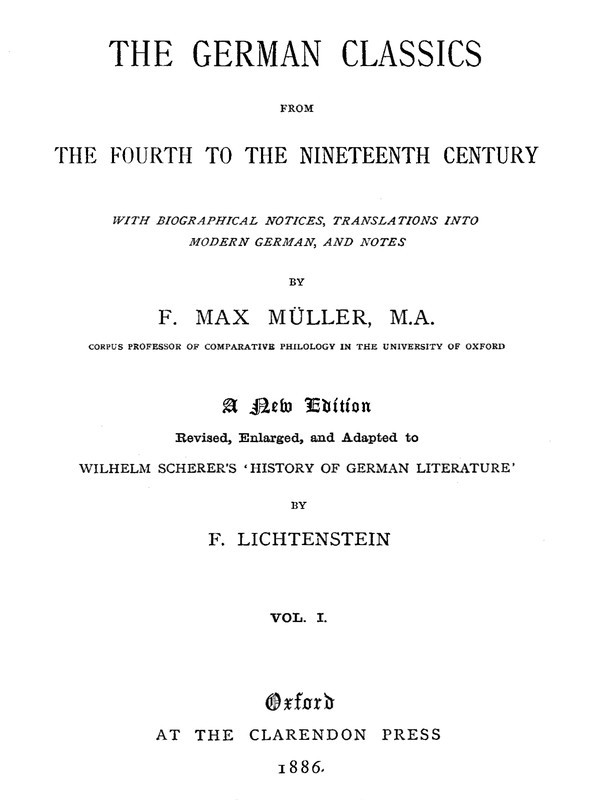
The German Classics from the Fourth to the Nineteenth Century, Vol. 1 (of 2)

Chapter 83: SÄNGER UND PREDIGER.
Open in WeRead

About This Book

A companion anthology assembles representative extracts of German prose and poetry from the fourth to the nineteenth century, chosen to illustrate the literary periods treated in a contemporary scholarly history. It presents original medieval and early‑modern texts alongside modern German renderings, and includes biographical notices, editorial notes, and guidance on transcription, orthography, and layout. Selection principles and chapter headings follow the historian’s framework while certain major figures receive extended treatment, and the volume intermixes poems, prose excerpts, and critical commentary to serve as a practical reading‑book and reference for students and general readers.

SÄNGER UND PREDIGER.

ANONYME VOLKSTHÜMLICHE LIEDER.

[Scherer D. 196, 202, E. 188, 194.]

Herausgegeben in Minnesangs Frühling, Nr. 1. und in den Carmina Burana.

1.
Dû bist mîn, ich bin dîn:
des solt dû gewis sîn.
dû bist beslozzen
in mînem herzen:
verlorn ist daz slüzzelîn:
dû muost immer drinne sîn.
2.
Swaz hie gât umbe,
daz sint allez megede:
die wellent âne man
allen disen sumer gân. 10
3.
Tougen minne diu ist guot,
si kan geben hôhen muot.
der sol man sich vlîzen.
swer mit triwen der niht phliget,
dem sol man daz verwîzen.
Geheime Liebe die ist gut,
Sie verleiht wohl frohen Muth.
Um die soll man sich mühen.
Wer in Treuen sie nicht hegt,
Dem wird das nie verziehen.
4.
‘Sô wê dir, sumerwunne!
daz vogelsanc ist geswunden:
als ist der linden ir loup.
jârlanc mir truobent ouch
mîniu wol stênden ougen. 10
mîn trût, du solt gelouben
dich anderre wîbe:
wan, helt, die solt du mîden.
dô du mich êrst sæhe,
dô dûhte ich dich zewâre
sô rehte minneclîch getân:
des man ich dich, lieber man.’