
MACMILLAN & CO.’S SIX-SHILLING NOVELS AUTUMN, 1902
THE SPECTATOR.—“Brilliant and eloquent.”
MORNING POST.—“Has an extraordinary interest as a loving presentment of a most extraordinary personage.”
DAILY TELEGRAPH.—“In a series of brilliant chapters, Mrs. Atherton enables us to see how, mixed with the rare and original essence of Hamilton’s character, there were ordinary human elements which, though they interfered in some measure with his success, only made him the more lovable.... His career forms so rounded and complete a narrative, revealing throughout one prevailing character, that it lends itself to the author’s purposes of a ‘dramatic biography’ better, perhaps, than any other that could be selected.”
GLASGOW HERALD.—“An entrancing book.”
WORLD.—“Mr. Charles Major’s picture of the wilful, impetuous girl, whose name has come down to us from the days of Good Queen Bess, is vigorous and effective.”
MORNING POST.—“It is but a small percentage of works of fiction that one can read from start to finish without weariness. But few will take up Mr. Charles Major’s ‘Dorothy Vernon of Haddon Hall’ and not read it with growing pleasure.... Dorothy Vernon is a glorious creature, and the author is entitled to full praise for a singularly vivid and passionate portrait of a beautiful and passionate woman.... All readers of this book about her must needs follow John Manners’s example, and fall madly in love with her as well.... A book that will be thoroughly enjoyed in the reading. One wishes there were more of the same.”
DAILY MAIL.—“Mr. Major writes with dash and spirit.”
SCOTSMAN.—“Will appeal to all lovers of romance.”
TIMES.—“Treated with Mr. Kipling’s amazing knowledge, insight, and sureness of touch.”
MORNING POST.—“‘Kim’ is undoubtedly the finest Indian story that the author of ‘The Man who would be King,’ and a hundred other tales, has yet written.”
PALL MALL GAZETTE.—“Mr. Kipling’s varied and complex powers are seen at their strongest and best.... ‘Kim’ is the creation of a great and true artist.”
WESTMINSTER GAZETTE.—“Full, rich, and animated in every detail ... informed as before with a masterly intuition of Eastern modes of thought.”
GUARDIAN.—“A series of wonderful kaleidoscopic pictures, ever shifting and changing.... May Mr. Kipling soon give us more of this kind.”
DAILY NEWS.—“A wonderful procession of picturesque and interesting figures pass through the pages of the book.”
STANDARD.—“By far the most successful piece of work Mr. Kipling has done for some time past.”
ST. JAMES’S GAZETTE.—“It is beyond question the finest picture of Indian life which Mr. Kipling has yet made; it is the finest picture that has been made by any writer.”
GLOBE.—“The pictures of persons and places in ‘Kim’ are among the best things that Mr. Kipling has done.”
Mr. W. L. Courtney in the DAILY TELEGRAPH.—“‘The Virginian’ represents the best work of a writer not only of uncommon virility, but possessed also of a stage-craft, and of a literary manner which are in their way quite admirable.... The best of Mr. Wister’s novel is that this hero of his, ‘The Virginian,’ is actually so real and vital, so throbbing with the red blood in his veins, that we should recognise him if we ever had the good fortune to meet him.... In Mr. Owen Wister’s book the scenery, the incidents, the graphic and absorbing narrative, the sense of atmosphere, are without exception on a high and spirited plane. Quotations are useless in a book like this. It is written all in one piece; it has a central unity of its own, and from such a whole you cannot detach parts. It is, in truth, a remarkable piece of work, quite as good, in its way, as Mr. Churchill’s ‘The Crisis,’ and quite as well worth reading.”
PALL MALL GAZETTE.—“One of the best novels that have appeared for some time, and we advise everyone who is in need of a novel of incident and freshness to buy, borrow, or steal ‘The Virginian.’”
ST. JAMES’S GAZETTE.—“A rattling good story.”
DAILY GRAPHIC.—“A very fine novel.”
SPECTATOR.—“Mr. Crockett’s admirers will find plenty of his characteristic matter and manner to mystify and amuse them in ‘The Dark o’ the Moon.’”
TIMES.—“A rousing story, with plenty of love and fighting.... The story is told with unflagging spirit.”
PALL MALL GAZETTE.—“The story is good Crockett from first to last, exactly what the author’s many admirers will expect.”
WESTMINSTER GAZETTE.—“A rousing book in the novelist’s earlier manner, full of stir and picturesque movement. With a plot that is interesting and developed with skill.... It is in every way satisfactory to find Mr. Crockett on his native heath once more.”
GLOBE.—“Should have a wide vogue and much appreciation.”
WORLD.—“A stirring tale.”
DAILY CHRONICLE.—“A romance, swift and compact, and told with spirit.”
“We should class this book as among the best of its author’s recent works.”
ATHENÆUM.—“We should class this book as among the best of its author’s recent works.”
LITERATURE.—“A bustling novel.... Something is always happening in Mr. Crockett’s books—generally something ingenious and unexpected. Not many writers can spin the web of a story better.”
WORLD.—“The story of the ‘firebrand,’ Rollo Blair, a Scottish gentleman-adventurer, and his two incongruous associates, of the Abbot of Montblanch, the kidnapping of the Queen, the outlawry of Ramon Garcia, the outwitting of Cabrera by Rollo, and the doings of the gipsies, is decidedly good.”
DAILY TELEGRAPH.—“A full-blooded tale of adventure.”
DAILY NEWS.—“The story is a good one.... Will be read with interest and pleasure.”
GLOBE.—“Mr. Crockett is a born story-teller; he has the knack of spirited and sentimental narration. In ‘The Firebrand’ he runs to the length of 519 pages, and none of his admirers would desire that they should be fewer.”
THE TIMES.—“A good story, as is usual with Mr. Crawford. Custom does not stale him; ‘the tea is not weak,’ as an experienced novelist admitted was the case with his own productions.”
PUNCH.—“Marion Crawford is at his very best in ‘Marietta: A Maid of Venice.’ It is a powerfully dramatic story of Venice under ‘The Ten,’ told in a series of picturesque scenes described in strikingly artistic word-painting, the action being carried on by well-imagined, clearly defined characters. Perfect is the description of Venice, and of the hour of Ave Maria. Hero and heroine are skilfully drawn types; while the quaint old salt Pasquale, retired from active naval service and now gate-porter to Beroviero, the celebrated glass-blower, is drawn with the keenest sense of humour.”
THE ATHENÆUM.—“Here is a story of Italy, and Italy in full Renaissance, which offends neither by sentimental maundering, nor by affected diction, nor by leering ‘naturalism’—not a hint of ‘the erotic, the neurotic, or the tommy-rotic’—just a healthy, straightforward romance of the old school, with plenty of adventure, and ending as it should, told in good English without any straining after phrases.”
THE SKETCH.—“No one who has ever visited Venice and come under its spell, can afford to miss ‘Marietta.’”
THE DAILY MAIL.—“The reviewer too rarely comes across so charming a tale as Mr. F. Marion Crawford’s ‘Marietta: A Maid of Venice.’”
THE MORNING POST.—“‘Marietta’ is one of the more daintily charming of Mr. Crawford’s stories, and deserves the recognition it will undoubtedly receive.”
“Triumphantly successful.”
“Delightful from beginning to end.”
THE SPECTATOR.—“If ‘Elizabeth’s’ satire is somewhat cruel, it is in the main justified by the situation and the results. For the moral of the story is as sound as the wit is mordant. ‘The Benefactress,’ in a word, combines the rare qualities of being at once wholesome, agreeably malicious, and in full accord with the principles of the Charity Organisation Society.”
Mr. W. L. Courtney in the DAILY TELEGRAPH.—“It is difficult to describe by any single epithet the peculiar charm which surrounds the work of the authoress of ‘Elizabeth and her German Garden.’... Quiet, tender, incisive, humorous.... Triumphantly successful.”
LITERATURE.—“Fully equal to ‘Elizabeth and her German Garden.’... Maintains its interest throughout, and is full of well drawn characters.”
STANDARD.—“Delightful from beginning to end. It is wholesome, full of charm and joyousness.”
WORLD.—“The writer holds the reader, not to lose her hold while a line of the book remains to be read and read again. Every character is a living individuality, and every incident is a necessity.”
MORNING POST.—“An excellent piece of work.... The most amusing reading which has come our way for some time.”
DAILY NEWS.—“One of the most attractive novels we have read for a long time.”
GLOBE.—“The story, as a whole, is eminently effective, eminently readable, and can be recommended cordially to all and sundry.”
WORLD.—“The persons are all well drawn, and the interest is great.”
PALL MALL GAZETTE.—“A very clever and a very good book.”
DAILY CHRONICLE.—“We expected much.... ‘The Secret Orchard’ does more than rise to our expectations.... We follow the rapid development of the tragedy with a sympathetic interest which never flags.”
DAILY MAIL.—“A novel of signal distinction and beauty.”
ACADEMY.—“The style and manner of telling the story is of the easy luminous character that we associate with the authors of ‘The Bath Comedy.’”
MORNING POST.—“There can be no doubt of the dramatic force with which it is told or of the interest it inspires.”
THE TIMES.—“A finished piece of work.”
“The story is absorbing.”
“Altogether worth reading.”
ATHENÆUM.—“It is a rare pleasure to find a book which is satisfactory in almost all respects. ‘St. Nazarius’ is such a book. The story is absorbing; its treatment is admirable, especially in restraint; and the tone is one of unusual distinction.... The deep thought of the book, its essential sanity, its presentation of a high religious ideal, interest us in the work of the author.”
WESTMINSTER GAZETTE.—“A novel out of the common.... Altogether worth reading.”
ST. JAMES’S GAZETTE.—“Should give delight to many readers who do not as a rule trouble themselves to cut the leaves of ordinary novels. The writer has dared to probe the depths and to scale the heights.... The story is clothed in language perfectly suited to its mysterious charm.”
OUTLOOK.—“Mr. Farquharson has grip, and his story is well worked out.”
SCOTSMAN.—“A striking story and one in which the reader’s interest and admiration strengthen, from a somewhat formal opening, to an end which is unconventionally fine and sad.”
WESTMINSTER GAZETTE.—“It is long since it has been our good fortune to meet with a novel so fresh, breezy, and altogether charming.”
SUNDAY SUN.—“A good book, very far above the customary novel of the day in all important matters. It has charm of manner, a delicate and indefinable melancholy—the inalienable melancholy of the Irish—and also a very welcome touch of Irish humour.... It introduces us to several very charming people.”
DAILY EXPRESS.—“A very pretty story, wholesome and refreshing, with the sweet air of Donegal.... The humour, the prettiness, and the trouble of the story are all perfect in their lightness and harmony. Mr. Gwynn is among the most graceful and pleasant of Irish writers.”
THE SPECTATOR.—“It is admirably written: it has an interesting theme, and its development in plot and characterisation ... is in faithful correspondence with the facts of life. In a word, the book is both charming and convincing.”
MORNING POST.—“Has all the charm which we have come to expect from American stories which describe the lives of simple people in remote parts of that vast continent.... A book to read and to enjoy.”
SPECTATOR.—“‘Oldfield’ is a Kentucky ‘Cranford’—with a difference. The difference is that the setting of outside things in which Miss Banks puts her human figures is much more vivid than what we find in Mrs. Gaskell’s story.”
SCOTSMAN.—“At once picturesque, pathetic, and removed from the ordinary lines of modern fiction.... The incidents of the romance are fresh, healthy, and invigorating. The characters are strongly and clearly defined.... Is bid heartily welcome.”
THE PILOT.—“It is unspeakably refreshing to come upon a book so bubbling over with life and love and character and humour as ‘Princess Puck’ that to notice it forthwith is an imperative duty and pleasure. This is a novel to read once so that you may find out how good it is, and then straightway over again because it is so good that you must enjoy it more leisurely.”
THE SPECTATOR.—“Miss Silberrad’s exceedingly clever, fresh, and wholesome story.... Bill Alardy is a delightful creation: she bubbles over with life and goodwill, humour, energy, and affection; and everything she touches turns to romance.”
THE ACADEMY.—“The whole story is in the aggregate so pleasing and entertaining that we have little inclination to pick holes. Let it go as fresh and recommendable.”
PUNCH.—“... the exceeding charm of the creation of Wilhelmina Alardy, commonly known as Bill. In her freshness, her unconventionality, her keen insight, and her honesty, Bill is delightful.”
THE DAILY CHRONICLE.—“Miss Silberrad’s book deserves a high place in the fiction of the moment. The story is interesting and rattles along to the end without a pause; there is originality in the construction of the plot, and perception as well in the way the characters are conceived and presented. Bill herself is a charming conception.... Altogether, ‘Princess Puck’ is a book to be read, and to be read with discrimination.”
“Most remarkable story.”
“An interesting and amusing book.”
“Calumet ‘K’” is a two-million-bushel grain-elevator, and this story tells how Charlie Bannon built it “against time.” The elevator must be done by December 31. There are persons that are interested in delaying the work, and it is these, as well as the “walking delegates,” that Bannon has to fight. The story of how they tried to “tie up” the lumber two hundred miles away, and of how he outwitted them and just “carried it off,” shows the kind of thing that Bannon can do best.
DAILY MAIL.—“Most remarkable story.... The story makes an epic—the epic of a sleepless, tireless man who can never be beaten. Every young man who is to-day starting out on the business of life should read it.”
SUNDAY SPECIAL.—“No romance of the Middle Ages surpasses this story in stirring interest, virility, and strength. It is a moving picture of the resistless American of to-day, and, as such, is worth a hundred average novels.”
SCOTSMAN.—“It is an interesting and amusing book, and once taken up will be read to a finish.”
SPECTATOR.—“The story will delight readers who combine mechanical taste with the spirit of practical enterprise.”
THE ATHENÆUM.—“Told with much humour.”
THE ACADEMY.—“A most amusing story.”
LITERATURE.—“A vivid picture of a girl’s school.”
THE PILOT.—“... its raciness and humour.”
PALL MALL GAZETTE.—“Extremely diverting to the average man.”
THE GRAPHIC.—“Very fresh and natural.”
THE SPECTATOR.—“Shows a wholesome and humorous grasp of life.”
THE DAILY CHRONICLE.—“Miss Evelyn Sharp has scored a brilliant success in a genre where success has been attained by few. Schoolgirls have suffered rather more than schoolboys at the hands of writers of fiction. Miss Sharp possesses an endowment of humour, rich, sensitive, radiant, that pervades her book like a joyous elemental spirit. And with this frolic spirit, ever alive to the humorous aspects of life, the subtlest apprehension is revealed of the psychical depths beneath the exuberant manifestations of healthy aspiring youth.”
Michael Ferrier is the story of a young poet who loves and is loved by a beautiful girl, Helen Umfraville. In a moment of frenzy he kills, half by accident, the man who attempts to stand between them. The death passes for either accident or suicide, and no suspicion is aroused; but the girl sees her lover’s trouble, questions him, and the turning point of the book is the scene when he confesses to her his act, and she takes the decision that seems to her right in consequence.
DAILY TELEGRAPH.—“There are so many real tragedies in life, and so few convincing ones in fiction, that the perusal of Miss E. Frances Poynter’s little study is likely to make a deep impression on the reader. For here is real tragedy.... In her characterisation the authoress is most happy.... Miss Poynter possesses keen psychological insight and a not unkindly satire when she pleases, as well as the power to depict pathos and suffering, with the pen of the artist.”
PUNCH.—“Miss Frances Poynter, though not a new novelist, is a fresh acquaintance of my Baronite’s. If her earlier works are as good as ‘Michael Ferrier,’ they are worth looking up.”
“Circumstance” is a study of life in Philadelphia, rather curious as showing the exclusiveness of American Society. It is also a study of an adventuress. The point of the title lies in the varying resistance of character to external events, and the striking influence on inferior character of accidents, such as that which almost made Mrs. Hunter a murderess, or that which enabled her to attain her end without resorting to so disagreeable a step or sacrificing any of her complacency.
THE PILOT.—“Carried out with admirable effect.”
THE OUTLOOK.—“Contains an extremely able study of senile decay and one of the most sagacious portraits of a pretty coquette ... which we have ever seen.”
THE STANDARD.—“The book is very clever.”
“Well conceived and well sustained.”
“Highly interesting.”
WESTMINSTER GAZETTE.—“A clever delineator of character, possessed of a reserve of strength in a quiet, easy, flowing style, Miss Carey never fails to please a large class of readers. ‘Herb of Grace’ is no exception to the rule....”
DAILY GRAPHIC.—“An entirely pleasant and wholesome story.”
GLOBE.—“Told in the writer’s best and most popular manner.”
MORNING POST.—“Highly interesting.”
ST. JAMES’S GAZETTE.—“Very pleasant reading, and full of quiet charm. There is much skilful portrayal of character.”
WORLD.—“The story is well conceived and well sustained.”
DAILY CHRONICLE.—“In every respect a worthy successor to ‘Rue with a Difference.’”
MANCHESTER GUARDIAN.—“On the picture of the two sisters living so happily together, Miss Carey has expended some of her most careful and successful work.”
Mr. Frederic Harrison in THE FORTNIGHTLY REVIEW.—“Such historic imagination, such glowing colour, such crashing speed, set forth in such pregnant form carry me away spell-bound.... ‘Richard Yea-and-Nay’ is a fine and original romance.”
DAILY TELEGRAPH.—“The story carries us along as though throughout we were galloping on strong horses. There is a rush and fervour about it all which sweeps us off our feet till the end is reached and the tale is done. It is very clever, very spirited.”
DAILY NEWS.—“A memorable book, over-long, over-charged with scenes of violence, yet so informed with the atmosphere of a tumultuous time, written with a pen so vital and picturesque, that it is the reader’s loss to skip a page.”
DAILY CHRONICLE.—“We have to thank Mr. Hewlett for a most beautiful and fascinating picture of a glorious time.... We know of no other writer to-day who could have done it.”
SPECTATOR.—“‘The Forest Lovers’ is no mere literary tour de force, but an uncommonly attractive romance, the charm of which is greatly enhanced by the author’s excellent style.”
DAILY TELEGRAPH.—“Mr. Maurice Hewlett’s ‘The Forest Lovers’ stands out with conspicuous success.... There are few books of this season which achieve their aim so simply and whole-heartedly as Mr. Hewlett’s ingenious and enthralling romance.”
ACADEMY.—“This is a remarkable book.... ‘The Forest Lovers’ has been a fresh sensation. Mr. Hewlett can write! What a sense of colour, of contrast; what vigour, what rapid movement!”
THE GUARDIAN.—“Quaint and delightful.”
DAILY CHRONICLE.—“Here is a romance of the glamorous mediæval time, done just as such a thing should be done.... It is a book to be read. Not to be read at a sitting, but to be read slowly, when one is in the mood.”
ILLUSTRATED LONDON NEWS.—“It is not easy to describe the charm of Mr. Hewlett’s romance.... ‘The Forest Lovers’ is a distinct acquisition to the true literature of romance.”
WESTMINSTER GAZETTE.—“Such a book as this is a rare event, and as refreshing as it is rare. This book ... is a beautiful one—beautiful alike in thought, tone, and language.”
LITERATURE.—“We may safely assert that it will achieve a large success, and achieve it on its merits.”
DAILY CHRONICLE.—“We like this book. It stands apart from the ordinary novel. It tells the story of the growth of a soul.... A great charm of the book is its pictures of outdoor life on a Kentucky farm.... But the greatest charm of all, perhaps, is Mr. Allen’s clear-cut, simple, and vigorous style.”
SPECTATOR.—“Written with all the delicacy and distinction which have already won him so many admirers.”
WORLD.—“Lays upon the reader a grip from which there is no escape.”
DAILY GRAPHIC.—“The character of David, the first figure in the book, is finely drawn.... The book is well worth reading.”
ACADEMY.—“Full of racial warmth and freshest human nature.... Life is intense, richly coloured, and splendidly aspirant in these pages; yet the eternal note of sadness is brought in.”
ACADEMY.—“A book to read and a book to keep after reading. Mr. Allen’s gifts are many—a style pellucid and picturesque, a vivid and disciplined power of characterisation, and an intimate knowledge of a striking epoch and an alluring country. ‘The Choir Invisible’ is a fine achievement.”
PALL MALL GAZETTE.—“Mr. Allen’s power of character drawing invests the old, old story with renewed and absorbing interest.... The fascination of the story lies in great part in Mr. Allen’s graceful and vivid style.”
OUTLOOK.—“His work has purity, delicacy, and unfailing charm. He gives you matter for laughter, matter for tears, and matter to think upon, with a very fine hand.”
PALL MALL GAZETTE.—“Mr. Allen has attained to an enviable position; it is his to interpret his native country to the world, and it is not easy to imagine a better interpreter. These four volumes are worthy of the author of ‘The Choir Invisible.’”
DAILY TELEGRAPH.—“‘The Crisis’ is a story of the American Civil War, a theme as inspiring to the American writer of genius as the English Civil War has proved to some of our best romancers. But, so far as we are aware, there has hitherto been no novel on that subject produced in America to equal either the ‘Woodstock’ of Sir Walter Scott or Whyte-Melville’s ‘Holmby House.’ That reproach is at length removed by Mr. Churchill, and ‘The Crisis’ will bear comparison with either of these justly famous books.”
LITERATURE.—“As well executed a novel as we have come across for many a long day.”
SPECTATOR.—“An exceedingly spirited, interesting, and right minded romance of the Civil War.”
GUARDIAN.—“‘The Crisis’ is a remarkable book.... It is a grand book.”
PALL MALL GAZETTE.—“A singularly fascinating and, in many respects, an important and valuable book.”
DAILY CHRONICLE.—“Well as Mr. Churchill did with some of his characters in ‘Richard Carvel,’ he has done still better in this story with some of their descendants.”
ST. JAMES’S GAZETTE.—“It is a sound book, well put together and well written.”
PILOT.—“A worthy pendant to his brilliant romance ‘Richard Carvel.’”
ATHENÆUM.—“A bright, vividly written book, which holds the reader’s interest.”
DAILY NEWS.—“We congratulate Mr. Churchill. ‘The Crisis’ is a warm, inspiriting book.”
One of the most striking successes in recent fiction.
GUARDIAN.—“The book is one we can warmly recommend to readers who like to have their historical memories freshened by fiction.”
LITERATURE.—“Has a full and stirring plot.... A piece of work creditable both to his industry and his imagination.”
THE SPEAKER.—“We have not read a better book for many a day than ‘Richard Carvel.’”
DAILY TELEGRAPH.—“Full of good things. The narrative excels in incidents, interesting, vivid, and picturesque....”
ATHENÆUM.—“Distinctly good reading. It is witty and devoid of offence to the most sensitive disposition.... Can be recommended to old and young alike.”
CHICAGO TRIBUNE.—“An exceptionally pleasing novel.”
NEW YORK INDEPENDENT.—“Fresh, dashing, and entertaining from beginning to end.”
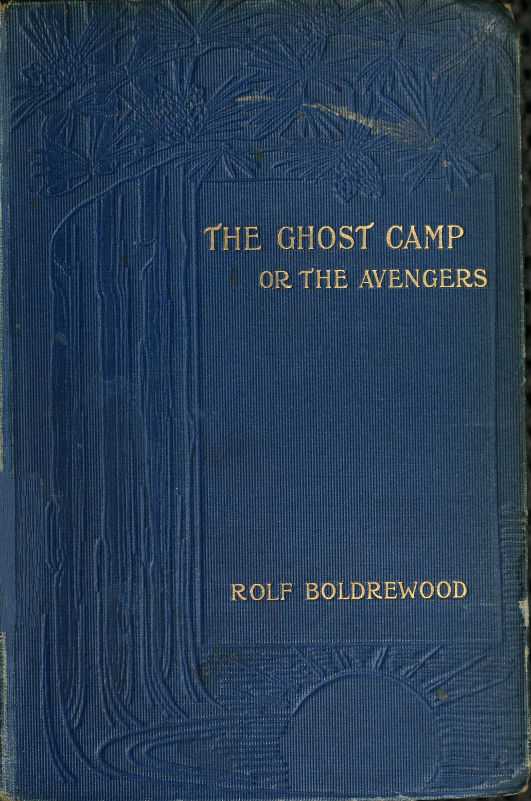
A collection of Australian stories and sketches. The longest, which gives its title to the volume, turns on the wickedness of a trades-unionist agitator among the shearers and the violent accompaniments of an Australian strike. Others describe bushrangers, rough-riding contests, kangaroo shoots, lapsed gentlefolk, and, of course, a drought.
THE OUTLOOK.—“Very good reading.”
DAILY NEWS.—“It is the best work this popular author has done for some time.”
DAILY GRAPHIC.—“Both the quantity and quality of the stories are first rate.”
DUNDEE ADVERTISER.—“There are many charming pictures in words of Australia and her people, free from conventional phraseology, to be found in these pages, and the book forms a fit companion to such capital volumes as ‘Robbery Under Arms’ and ‘The Miner’s Right,’ which made Mr. Boldrewood’s name.”
COURT CIRCULAR.—“A breezy, bracing, healthy book.”
DAILY TELEGRAPH.—“An ingenious tale, and pleasing, by reason of the fresh wholesomeness of the characters and atmosphere—a trait hard to discover in many contemporary novels.”
TRUTH.—“The author of ‘Misunderstood’ keeps up her deservedly high reputation by her very pretty story ‘Prejudged.’”
LITERARY WORLD.—“The story is simple and charming.”
MANCHESTER COURIER.—“A study of character which is sincere and convincing, and a story which from cover to cover is well written.”
THE SPECTATOR.—“Miss Montgomery’s graceful story.”
ST. JAMES’S GAZETTE.—“Well told and amusing.”
SCOTSMAN.—“Worthy of the reputation made by ‘Misunderstood.’”
THE OUTLOOK.—“She sketches her characters in both prettily and wittily.”
Diary of Dr. WILBERFORCE, Bishop of Winchester.—“Read ‘Misunderstood,’ very touching and truthful.”
VANITY FAIR.—“This volume gives us what of all things is the most rare to find in contemporary literature—a true picture of child-life.”
WORLD.—“In the marvellous world of the pathetic conceptions of Dickens there is nothing more exquisitely touching than the loving, love-seeking, unloved child, Florence Dombey. We pay Miss Montgomery the highest compliment within our reach when we say that in ‘Seaforth’ she frequently suggests comparisons with what is at least one of the masterpieces of the greatest master of tenderness and humour which nineteenth-century fiction has known. ‘Seaforth’ is a novel full of beauty, feeling, and interest.”
VANITY FAIR.—“This charming story cannot fail to please.”
WASHINGTON DAILY CHRONICLE.—“A delightful story. There is a thread of gold in it upon which are strung many lovely sentiments.”