
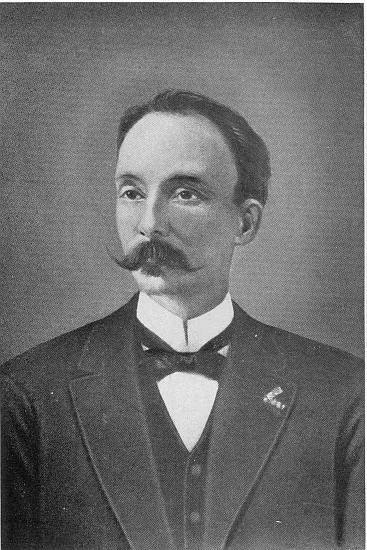
As a natural result of the revolution started a few days before, the two additional elections ordered by the Supreme Court, were necessarily postponed, since the island had been thrown into a turmoil by the action of General Gomez. They were, however, afterwards held, and resulted in decided Conservative majorities, which were carried by the electoral boards to the Central Electoral Junta, presided over by the Chief Justice of the Supreme Court, Señor Pichardo, and justified that body in announcing the election of General Menocal to a second term as President. In spite of this decision of the courts, which General Menocal had previously agreed to abide by, the insurrectionary elements of the Liberal party still insisted that General Menocal's second term was secured through deliberate and carefully planned frauds and intimidation of the voters at the polls. The fact is that the election laws of Cuba forbid and prevent any soldier from standing even in the doorway of a polling place. He cannot approach nearer than the corner of the building in which the votes are being deposited, nor can he leave his post and come closer to the polls, unless some serious disturbance, where lives are threatened, occurs, with which the police of the district cannot cope. Since the minority is represented during the time of voting, and during the count by a man selected for that purpose, no fraud could{342} well be perpetrated without the consent of someone responsible to the opposition.
The army officers who had been led by José Miguel Gomez to revolt, had been captured with arms in their hands, fighting to overthrow the constitutional government of the island; a purpose of which they had made no secret. They were therefore guilty of sedition and treason, and were subject to trial by court martial and to capital punishment upon conviction of their crime. They were thus tried, and some were condemned to death and others to long terms of imprisonment; but the extreme sentence was never executed upon one of them, while many of the prison sentences were shortened and some of the men were pardoned outright. This generous action of President Menocal's was performed through the same spirit of magnanimity that moved Estrada Palma to like clemency, years before; and it was as ill requited. Some of the men whom he had thus saved from the gallows or the firing squad promptly resumed criminal conspiracies against him; while the Liberal party as a whole demanded that the pardoned officers should be at once reinstated in the army with full rank and back pay for the time which they had spent in insurrection and in prison, and railed against President Menocal for not granting that additional act of grace!
The government of the United States is naturally always on the side of law and order among its neighbors, and while it of course scrupulously refrains from meddling in their affairs unless under intolerable provocation, as in the case of Cuba in 1898, it has always given and doubtless will always give its sympathy and moral support to those who are striving for peace and progress and the security of life and property. Toward Cuba its attitude{343} is more marked than toward other states, because of the special relations which exist between the two countries. We have seen how it intervened in Cuban affairs for what it supposed to be the restoration of tranquillity in 1906. While unfortunately its influence was on that occasion made to appear as though given to the revolutionary rather than the legitimate side, its intent was unmistakable. In spite of the advantage which they took of its intervention at that time, the Liberal leaders in Cuba have since felt much aggrieved at it for standing in the way of their designs on more than one occasion when they wished to revolt against constitutional order.
The United States did not intervene in 1917. It was not, as President Menocal confidently assured it, necessary for it to do so. But it is pleasant to recall that it stood ready to do so, and there is of course no possible doubt as to what the purport of its intervention would have been. During that episode no fewer than five messages were addressed to the people of Cuba by the government of the United States, warning them against any attempt at forcible revolution. They breathed the spirit of the epigram of John Hay in 1903: "Revolutions have gone out of fashion in our neighborhood." Thus on February 19, 1917, the United States made it known to the Cuban government and through it to the Cuban people that—
"The American Government has in previous declarations defined its attitude respecting the confidence and support it gives the constitutional governments and the policy it has adopted toward any disturbers of the peace through revolutionary ventures. The American government again wishes to inform the Cuban people of the attitude it has assumed in view of the present events:{344}
"First—The government of the United States gives its support to and stands by the Constitutional Government of the Republic of Cuba.
"Second—The present insurrection against the Constitutional Government of Cuba is regarded by the American Government in the light of an anti-constitutional and illegal act, which it will not tolerate.
"Third—The leaders of the revolt will be held responsible for the damages which foreigners may suffer in their persons or their property.
"Fourth—The government of the United States will examine attentively what attitude it will adopt respecting those concerned in the present disturbance of the peace in Cuba, or those who are actually participating in it."
At the beginning of March American Marines and Bluejackets were landed at Santiago, Guantanamo, Manzanillo, Nuevitas, and El Cobre, for patrol duty for the protection of American interests.
Again, on March 24 the American government sent a note saying:
"It has come to the knowledge of the United States Government that in Cuba propaganda persists that in response to efforts of agents against the constitutional government the United States is studying the adoption of measures in their favor."
It was quite true. The remaining insurgents—Gomez and the other principal leaders had already been captured—were declaring that just as in 1906 American intervention had meant the success of the revolution, so now the United States was about to intervene again to the same effect. Wherefore this American note continued:
"The constitutional government of Cuba has been and will continue to be sustained and backed by the government{345} of the United States in its efforts to reestablish order throughout the territory of the republic.
"The United States government, emphasizing its condemnation of the reprehensible conduct of those rising against the constitutional government in an effort to settle by force of arms controversies for which existing laws establish adequate legal remedies, desires to make known that until those in rebellion recognize their duties as Cuban citizens, lay down their arms and return to legality, the United States can hold no communication whatever with any of them and will be forced to regard them as outside the law and unworthy of its consideration."
That was plain talk, and it had its effect. But the climax was yet to come in a final message which stated that if destruction of property, disturbance of public order and deliberate attempts to overthrow the established government were continued, Cuba being an ally of the United States, the United States would be compelled to regard the doers of such deeds as enemies and to proceed against them as such. At that time both the United States and Cuba were at war with Germany, and were therefore allies in offense and defense, and it was quite logical for one ally to regard as its enemy any enemy of the other ally. In brief, any one waging war against the Cuban government was in effect waging war against the government of the United States. That stern logic put a quietus upon the attempted insurrection. "Our last recourse," said one of the rebel leaders, "has been taken from us. There is no use in starting a revolution if it is to be doomed to failure before it begins."{346}
CHAPTER XIX
Cuba entered the Great War. That fact was the supreme seal to her title-deeds to a place as peer among the nations; placing her in blood-brotherhood with her neighbors. She entered the war almost simultaneously with the United States, though with less delay than that country. At Washington the President addressed Congress on April 2, advising a declaration of war against Germany, and the declaration was made on April 6. At Havana the President delivered his war message on April 6, and on April 7 war was declared. In that impressive and epochal message, the most momentous and solemn that any chief of state can ever utter, President Menocal reviewed in dispassionate detail the criminal record of Germany in her unrestricted submarine warfare, and then continued:
"The government of the United States, to which country we are bound by the closest ties, had during the last two years incessantly formulated energetic protests and claims based on the most elemental principles of justice in defence of its citizens who were victims on many occasions of attacks by German submarines; of the liberty of the seas and the respect due the lives and property of neutrals; and revindicating the right to navigate and engage in commerce freely, without restrictions save those sanctioned by international law, by treaties, and by the universal practise of civilized nations.
"Since February 1 submarines have attacked and sunk without mercy. Such acts of war without quarter,{347} directed against all nations, to close down the world's commerce under terrible penalties, cannot be tolerated without accepting them as legitimate to-day and always.
"Cuba cannot appear indifferent to such violations, which at any moment may be carried out at the cost of the lives and interests of its own citizens. Nor can it, without loss of dignity and decorum, show indifference to the noble attitude assumed by the United States, to which we are bound by ties of gratitude and by treaties. Cuba cannot remain neutral in this supreme conflict, because a declaration of neutrality would compel it to treat alike all belligerents, denying them with equal vigor entrance to our ports and imposing other restrictions which are contrary to the sentiment of the Cuban people and which inevitably in the end would result in conflict with our friend and ally.
"In full and firm consciousness that I am fulfilling one of my most sacred duties, although with profound sentiment, because I am about to propose a resolution which will plunge our country into the dangers of the greatest conflagration in history, but without casting odium upon, or without animosity toward, the German people, but convinced that we are compelled to take this step by our international obligations and the principles of justice and liberty, I appeal to the honorable Congress in the use of its executive faculties, with full knowledge of all the antecedents in the case and with the mature deliberation of its important claim, to resolve, as a result of these unjustifiable and repeated acts of aggression by submarines, notwithstanding the protests of neutral governments, among them Cuba, that there has been created and exists a state of war between Cuba and the imperial German government, and adopt all measures necessary, which I reserve to myself the right to recommend at the proper{348} moment, for the maintenance of our rights; to defend our territory; to provide for our security, and to cooperate decidedly to these ends with the United States government, lending it what assistance may be in our power for the defence of the liberty of the seas, of the rights of neutrals, and of international justice."
The next day the Cuban Congress adopted the declaration of war, in the exact words of the President's message. A resolution was at the same time introduced and adopted, authorizing the President to organize and to place at the disposal of the President of the United States a contingent of 10,000 men, for military service in Europe.
It would be superfluous to dwell upon the causes which led Cuba thus promptly and heartily to commit herself to the side of the Allies in the war. They were largely identical with those which impelled other nations to the same course. There was a resolution to vindicate the sanctity of treaties and the majesty of international law. There was an abhorrence of the infamous practices of the German government and the German army. There was resentment against the gross violation of neutral rights of which Germany had been guilty. There was recognition of the grave menace to popular governments the world over which was presented by the voracious and unscrupulous ambitions of Prussian militarism. There was a feeling that as the war had first been directed against two small nations, on the principle that small states had no rights that large ones were bound to respect, it was incumbent upon other small states to protest against that arrogant attitude. There was a desire to show that Cuba, youngest and one of the smallest of the nations, was ready to take her full part as a nation among nations, in war as well as in peace. There was, also, no doubt a legitimate feeling that in this matter it{349} would be appropriate for Cuba—though of course under no compulsion—to align herself with the great northern neighbor with whom she sustained such close relations.
At the same time, backed undoubtedly by German money, and as a part of the German propaganda, financial interests, banks and houses of long standing in Cuba, all of which were eventually placed on a black list, exerted a very strong influence among their customers and through their connections, commercial, social and political, in favor of Germany. They did succeed in influencing and directing the editorial policy of some prominent newspapers, but the chief result of their pernicious activities was to get themselves and their sympathizers into trouble. One of the foremost bankers of Havana, where he had lived for many years and was personally much liked and esteemed in society, while not openly espousing the cause of Germany, after Cuba had declared war, was known to be thoroughly in sympathy with Germany. He with over a hundred other Germans was interned, or kept incommunicado, and in his house documents were found demonstrating that he was not only an agent in distributing German propaganda, but also a distributor of funds intended to promote the cause of Germany in Cuba and the West Indies.
Another very strong influence that was exerted in Cuba against the attitude of President Menocal and his government was that of many of the clergy of the Roman Catholic church, who openly spoke to their congregations in favor of Germany and against the cause of the Allies. Nor was the Liberal party by any means as loyal to the Allies as the unanimous vote in Congress might seem to suggest. Many of its members either openly or secretly gave their sympathy and influence to the German side. This was partly because of their inveterate{350} opposition to anything advocated by the Conservative government; and partly because of the aid which German interests in Cuba had given, morally, politically and pecuniarily, to the insurrection of José Miguel Gomez in 1917. It was proved in trials in the courts of Cuba, which were held in consequence of the damages wrought by that uprising, that Germans and men of German parentage had conspired to give information to the rebels and to supply them with munitions, and in other ways strove to aid that movement in overthrowing the government. But these seditious and disloyal elements in Cuba were probably no stronger in Cuba than in the United States or other countries.
Cuba did not suffer from incendiarism and similar German outrages as did the United States. On the other hand, the Cuban government was fully as strict as that of the United States in taking possession of German property, and in blacklisting all firms and individuals known to be in sympathy with Germany. All trading of any kind with such parties was forbidden; an arrangement being made by which open accounts with them could be closed. A Custodian of Alien Property was also appointed.
Even before the declaration of war the Cuban government took strenuous means to prevent violations of neutrality. A few weeks before the declaration of war German agents fitted up a steamer in Havana harbor as a commerce-destroying cruiser, and watched for an opportunity to take her out to the high seas. Learning of these plans, the Cuban government stationed a cruiser alongside that vessel, with guns trained upon her, to prevent the purposed escape. Immediately upon the declaration of war the four German ships which were lying interned in Havana harbor were seized by the{351} Cuban government. It was found that the German crews had seriously damaged the machinery of the vessels, as they did at New York and elsewhere; but the Cuban government had repairs made and then turned the vessels over to the United States.
In what we may call the non-military activities of the war, Cuba was notably energetic and efficient. There was close cooperation with the United States government in the matter of food conservation and supply. Cuba was naturally looked to for an increased supply of sugar, for which there was great need; and as a result of inquiries by Mr. Hoover, the United States Food Commissioner, as to what the island could do in that respect, the Cuban Department of Agriculture sent the chief of its Bureau of Information, Captain George Reno, to Washington to confer with Mr. Hoover and to formulate plans for the exercise of the most efficient cooperation possible between Cuba and the United States. Recognizing the desirability if not the necessity that Cuba should not only be able to feed herself during the war but should also export as much food as possible, the insular government took steps at once for the increase of food production to the highest attainable degree, and also for the practice of thrift and economy. In consequence Cuba endured cheerfully the same system of wheatless days and meatless days and rationing in various articles of food that prevailed in the United States; with excellent results.
President Menocal also made preparations, at the suggestion of and in conjunction with the United States War Department, for the provision of a detachment of troops for service either in Europe or in any part of the world that the Department at Washington might deem expedient. The best officers of the Cuban army accepted{352} an invitation from the military authorities of the United States to receive instruction in modern military tactics, which had been brought out by the war, and Senator Manuel Coronado patriotically gave a sum sufficient for the building of a number of airplanes, to be used by Cuban aviators. Volunteers for this division were easily secured and the instruction began under the direction of Cuban aviators who had been in the service of France. The War Department of the United States notified the Republic of Cuba that owing to the severe exposure of the men to the freezing water and mud of the trenches of Belgium and France, it was doubtful whether soldiers of tropical countries could withstand the strain upon their health necessarily endured during the winter campaign in Europe, intimating that their services would be far more useful in taking the place of other troops stationed in warmer climates, as the Porto Ricans were taking the place of the marines that were stationed in the Panama Canal Zone. This was a rather severe disappointment to General Pujol and the other officers, who were very anxious to take their places in the line of fire.
Noteworthy and most admirable were the achievements of Cuba in the financial operations of the war. Subscriptions were eagerly made to every one of the Liberty Loans, and to the final Victory Loan, with the result that in every case the amount allotted to Cuba was far exceeded. The quota for the third loan was subscribed twice over within five days. In this work not only did banks and commercial houses take part, as a matter of business, but also many private citizens volunteered as canvassers; though indeed the eagerness of people to subscribe made canvassing perfunctory and urging superfluous.
SEÑORA MENOCAL
It is not alone through the felicitous circumstance of her being the wife of President Mario G. Menocal that Señora Marienita Seva de Menocal is entitled to the distinction—never more appropriate than in her case—of being the "first lady of the land." Her title rests equally upon personal charm, the graces of social hospitality, and womanly leadership of the most efficient kind in philanthropic and patriotic endeavor for the advancement of the public welfare and the confirmation of the integrity and promotion of the prosperity of the Republic; while her indefatigable labors in the great war invested her name with affectionate and grateful distinction in the camps and among the peoples of the Allied nations.
A similar interest was manifested in Red Cross contributions and Red Cross work, with equally gratifying results. In both of these activities a leading and most efficient part was taken by the women of Cuba. In subscribing to the loans they were most generous; in canvassing for subscriptions from others and in collecting and working for the Red Cross they were indefatigable and irresistible. They made it a point of patriotic honor, and almost a condition of social acceptability, to respond in the fullest possible manner to every such call of the war. In Cuba's domestic struggles, the women had suffered cruelly, and their sympathies sprang spontaneously and generously toward the lands of Europe where womanhood was suffering a thousand martyrdoms. Thus as the manhood of Cuba with a unanimity which the few exceptions only emphasized rallied to the call of the President to throw the material and militant might of the Republic on the side of law, of civilization and of democracy, the womanhood of Cuba, with no less unanimity and zeal, followed Señora Menocal in the equally necessary and grateful tasks of the campaign which women even better than men could perform.
No tribute could be too high to render to these devoted women, who were always ready to make personal sacrifices of time, of strength, of money, of work, for the cause of humanity. Amid all its historic fiestas and pageants, Havana has seen no fairer or more inspiring spectacle than that of the Red Cross women, Senora Menocal at their head, marching in stately procession through her streets to manifest their devotion to the cause and to arouse others to equal earnestness. The magnitude of the sums raised by the women of Cuba for the war loans and for the Red Cross, and for Cuban hospital units at the front, and the amount of bandages and other hospital supplies and clothing prepared by them{354} for the armies "over there," made proud items in Cuban statistics of the Great War.
Thitherto Cuba had often been engaged in war, but it was always in what may be termed selfish war, for her own defence against an alien enemy or for her own liberation from oppressors who, at first kin, had become alien. Now for the first time it was her privilege to engage in a greater struggle than any before, and one which was for her own interests only to the extent to which those interests were involved with and were practically identical with the interests of all civilized nations and of world-wide humanity. Said Thomas Jefferson on a memorable occasion, referring to the relations between America and Great Britain:
"Nothing would more tend to knit our affections than to be fighting once more, side by side, in the same cause."
Thus we must reckon that affection and confidence between Cuba and the United States were greatly strengthened and confirmed by the fact that they were at least potentially and indeed to some degree actually fighting side by side in the same cause, and that cause not exclusively their own but that of the whole world. Nor was the event without a comparable effect upon Cuba's relations to the world at large. Her sympathies were broadened; her recognition by other powers was extended; and as once she had been a mere pawn in the international game, now she became a vital and potent factor in international affairs.{355}
CHAPTER XX
"A revolution which comprehends the responsibilities incumbent upon the founders of nations." Those were almost the last words of José Marti, epigrammatically expressive of his purpose in fomenting the ultimate and triumphant revolution of 1895-1898, and of the purpose of those devoted men who caught the standard of liberty from his dying hand and through labors and perils and tragedies incommensurable bore it on to victory. How well that purpose has been served in these scarcely twenty years of the independent Republic of Cuba, how true to Marti's transcendent ideal his successors in Cuban leadership have been, the record which we have briefly rehearsed must tell. On the whole, the answer to the implied interrogatory is gratifying and reassuring.
The real leaders of the Cuban nation have comprehended the responsibilities, unspeakably profound and weighty, that rest upon the founders of a nation, and no less upon those who direct the affairs of a nation after its foundation, to the last chapter in its age-long annals. We should go far, very far, before we could find a statesman more appreciative of that responsibility than Tomas Estrada Palma, or one who more manfully strove to discharge its every duty with scrupulous fidelity and with all the discretion and wisdom with which he had himself been plenteously endowed and which he could summon to his council board from among his loyal compatriots.{356}
We must regard it as the supreme reproach of José Miguel Gomez that, with all his ability and energy, he lacked that supreme quality, the sense of civic responsibility, which Marti prescribed for Cuba and for Cubans. His shameful and unpardonable treason—a double treason, to his own party partner as well as to the government of his country—was not inspired by the genius of Marti. It did not comprehend the gigantic responsibilities which it so lightly sought to assume, but was marked with the irresponsibility which has characterized so many revolutions in other Latin American countries, and which has brought upon those lands disaster and measureless reproach.
Under the third Presidency which Cuba has enjoyed that responsibility is happily comprehended in complete degree. Not even Estrada Palma possessed a higher sense of duty to the state and to the world than Mario G. Menocal, nor gave to it more tangible and efficient exposition. Nor shall we incur reproach of lack of reverence for a great name if we perceive that in certain essential and potent particulars Cuba's third President is even more capable of discharging that responsibility than was the first. The younger, alert, practical man of affairs, expert in the duties of both peace and war, has the advantage over the elder sage whose life for many years had been cloistered in academic calm.
We might not inappropriately gauge the extent of Cuba's discharge of her responsibilities as a sovereign nation by the measure of her progress in various paths of human welfare. This is not the place for a comprehensive census of the island, or for a conspectus of its statistics. Ex pede Herculem. From a few items we may estimate the whole. In the days of unembarrassed Spanish rule, before that sovereignty was challenged by revolutions,{357} the island had a population of a million souls. It had between two hundred and three hundred teachers, and—in 1841—9,082 children enrolled in schools. That was one schoolchild in every 110 of the population. To-day the island has a population of 2,700,000, and it has 350,000 children enrolled in its schools. That is one child in every eight of the population. The contrast between one-eighth and one-one hundred and tenth is one valid and expressive measure of Cuba's discharge of her responsibility.
Under the administration of President Menocal the annual appropriation for public education is more than $10,000,000. There are six great normal schools to train the 5,500 teachers who are needed to care for the 350,000 pupils; and as the national government conducts all the schools there is no discrimination between poor places and wealthy communities, but an equal grade of teaching is maintained in all. Nor does the state stop with primary education, but provides practically free secondary and university education for all who desire it.
Shall we take public health as another measure of progress? In the half dozen years just before the War of Independence the death rate in Havana was 33 to the 1,000. By 1902 it was reduced to 22, or only a little more than in New York. To-day, under President Menocal, the death rate for all Cuba is only 11.2. In the registration area of the United States it is 14. In the United Kingdom it is 14.2, and Britain vaunts herself {358}upon its lowness. In France it is 19.6; in Argentina it is 21.6; in Chili it is 31.1. There are only three countries in the world with lower rates of mortality than Cuba; and they are New Zealand, with 9.5, Newfoundland with 10.5, and Australia with 10.6.
BONEATO ROAD, ORIENTE
No country in the world, probably, is more amply equipped with good road—for both industrial and pleasure purposes, than Cuba. Radiating from the capital and other important cities splendid automobile highways give access to all parts of the island, leading not only to cities and ports but also for hundreds of miles through enchanting scenery. Of such highways the Boneato Road, winding through the mountains of Santiago, in the Province of Oriente, is a superb example.
Again, consider what is still the chief industry of Cuba. Before the administration of President Menocal, these were the yearly sugar crops, in tons:
| 1908 | 961,958 |
| 1909 | 1,513,582 |
| 1910 | 1,804,349 |
| 1911 | 1,480,217 |
| 1912 | 1,893,687 |
Compare or contrast those figures with these, under the administration of a President who comprehends his responsibilities:
| 1913 | 2,429,240 |
| 1914 | 2,596,567 |
| 1915 | 2,583,845 |
| 1916 | 3,006,624 |
| 1917 | 3,019,936 |
| 1918 | 3,444,605 |
| 1919 | 4,000,000 |
No less impressive and significant are the figures which indicate the volume of trade between Cuba and the United States. The imports of 3,000,000; in 1908 they were $48,577,000; in 1917 they were $189,875,000. The exports of Cuban goods to the United States were in 1908 only $78,869,000, and in 1917 25,275,000, and in 1919 more than $500,000,000. The balance of trade is thus heavily in Cuba's favor. Small as Cuba is{359} in comparison with some of her neighbors, her commerce with the United States far exceeds theirs. Thus in 1917 the commerce, in both directions, of Brazil with the United States was $180,000,000; of Chili, 048,000,000; and of Cuba, $415,150,000.
Financially, the administration of President Menocal is to be credited with the cancellation of the heavy and largely unnecessary debts which were left to it by the preceding administration; an achievement which contributed greatly to the improvement of Cuba's international credit. The foreign claims of Great Britain, France and Germany, which had been an embarrassing problem for several years, have been so satisfactorily adjusted that their complete settlement will be effected at a time convenient to all parties concerned. The grave fiscal and economic crisis which followed the beginning of the war of 1914, in practically all the markets of the world was avoided in Cuba by the Economic Defense Bill, and the establishment of a Cuban national monetary system has facilitated exchange and all manner of transactions in Cuba, and has redeemed the country from the reproach of being ridden by and dependent upon foreign coin as its medium of exchange.
The sanitary redemption of Cuba was indeed effected under the administration of Leonard Wood in the first American Government of Intervention. But the fortunate condition then attained has been not only fully maintained but constantly and materially bettered{360} through the activity of the public health department of the Menocal administration. New problems in sanitation have arisen, only to be met with promptness, thoroughness and success. One of the most severe tests of the efficiency of the organization against disease occurred when the dreaded bubonic plague was imported; and that efficiency was amply vindicated by the complete eradication of that pestilence within a few weeks.
Shortly after his accession to the Presidency, General Menocal effected a complete reorganization of the military system. It was not his purpose to burden the country with unnecessary armaments, but he realized the necessity of a certain degree of militant preparation for emergencies and therefore provided it with a small but efficient army and navy, commensurate with the necessities of the country, and entirely subject, of course, to the control and direction of the people through their civil government. The efficiency of this arm of the Government was well demonstrated at the time already described in these pages when, early in 1917, a widespread revolution was attempted for the purpose of overthrowing the constitutional and legal government of the country. At that time the President showed the same triumphant ability as a military strategist that he had{361} displayed as a civil administrator, in directing the movements of the Government troops from the Palace in Havana. It was due to his vigilance and energy in directing the campaign, as well, of course, as to the able assistance of his staff, that the rebel forces were promptly surrounded and captured and thus a death blow was struck at what we may hope will prove to have been the last attempt at revolution in Cuba.
No less remarkable than his energy in war was the President's magnanimity in dealing with his vanquished enemies when peace had been restored, though sometimes against the will of many of his foremost advisers. He led the movement of opinion favorable to harmony and reconciliation, which was finally confirmed by a law of congress granting full amnesty to all civilians who participated in that ill advised insurrection. Instead of using persecution, bitterness and vindictive oppression against his enemies, President Menocal restored good will through the Island by his magnanimous generosity and abundant acts of grace.
We have already spoken of President Menocal's admirable course in pointing out where the duty of his country lay in the great crisis of the European war, and in confirming the traditional friendship between Cuba and the United States by making the insular republic an ally of its great northern neighbor in that world-wide conflict. His recommendation of a declaration of war was immediately and unanimously adopted by the Cuban Congress, and thereafter the policy of the republic, under his direction, was one of close cooperation with the United States, and of placing all the resources and energies of the Island at the disposal of the Allied cause. It is worthy of record that the French Government showed its appreciation, not only of his spirit and purpose{362} but of his actual achievements in the war, by conferring upon him the Grand Cross of the Legion of Honor.
During these last few years the agricultural, industrial and economical resources of Cuba have been developed to an extent hitherto unknown and undreamed of in the history of the country. Industries have been immensely stimulated, great new enterprises have been created, and an expansion of foreign trade has been attained which makes Cuba in proportion to its size the foremost commercial country of the world.
EUGENIO SANCHEZ AGRAMONTE
Bearing a name which has been identified with many high achievements in medical and other science, Dr. Eugenio Sanchez Agramonte has added new lustre to it by his own achievements for the health of humanity and for the welfare of his fatherland. He was born in Camaguey on April 17, 1865, and had already attained enviable rank as a physician and sanitarian when, still a young man, he entered the War of Independence. His chief services were rendered as Director of the Sanitary Department of the Army of Liberation, in which place he had the rank of General. He was also Director of the great Casa de Beneficia. After the war he took an active interest in civic affairs, and became the president of the Conservative party. With the election of General Menocal to the Presidency of the Cuban Republic, General Agramonte was elected president of the Senate, which position he held until 1917, when President Menocal appointed him Secretary of Agriculture, Commerce and Labor.
According to recent data the foreign trade of Cuba is $800,000,000. Reckoning the population of the Island at about 2,700,000, that means a 96 per capita. In the year immediately preceding the outbreak of the European war, and before the great disturbance of commerce caused by that conflict, the foreign trade of the United States of America amounted to only $39 per{363} capita, and even that of the United Kingdom of Great Britain and Ireland to only $170.
Before the enraptured vision of Columbus, Cuba baffled appreciation. To the more discriminating vision of to-day, her future equally baffles while it piques imagination. Louis Napoleon, meditating upon the possibilities of an American Isthmian canal, once said:
"The geographical position of Constantinople rendered her the Queen of the ancient world. Occupying, as she does, the central point between Europe, Asia and Africa, she could become the entreport of the commerce of all those countries, and obtain over them immense preponderance; for in politics, as in strategy, a central position always commands the circumference."
Then he pointed out the similarity of position of Nicaragua, where he hoped to construct a canal, and argued that it similarly might obtain a like status in the Western World. It needs little suggestion to point out that Cuba fulfils those conditions in a supreme degree. It was not vainly that Spaniards centuries ago called Havana the Key of the Gulf, of the Caribbean, of the Indies, of the Western World. The position of Cuba is unique and incomparable, with relation to the United States, Mexico, Central America and South America, and the two enclosed seas which form the Mediterranean of the American Continents. Of old the treasure fleets of Spain passed by her coasts, and visited her harbors. To-day she is similarly visited by the fleets which ply between North America and South America, and between the Atlantic and the Pacific oceans. Reckoned by routes of traffic on the charted seas, she is the commercial centre of the world.
It is not with ambition for conquest or for political ascendancy that Cuba exults in that proud position, but{364} merely that she may in the words of her President "show herself worthy of the favors which God has lavished upon her," and make herself a joy unto herself and a convenience and a benefaction to the peaceful world.
It is into such an estate that she has now found the sure way to enter, and is indeed confidently and triumphantly entering, through achievements which, though embraced in only half a dozen years, are worthy of a generation of progress and are auspicious of immeasurable generations of progress yet to come; achievements toward which{365} her present Chief of State has greatly and indispensably contributed.
The story of Cuba is from Velasquez to Menocal. That is the story which we have tried to tell. But that is by no means the whole history of Cuba. Even of that portion of it we have been able here to give only an outline of the essential facts. But surely the span of four hundred and seven years must not be reckoned as a finality. It is only the beginning of the annals of a land and a people whose place among the nations of the world in honorable perpetuity is now assured as far as it can be assured by human purpose and achievement.
These pages are, then, in fact, merely the prologue to records of progress and attainment which shall honor the name of Cuba and adorn the story of the world, "far on, in summers that we shall not see."
From Velasquez to Menocal. The span is tremendous, in character as well as in lapse of time. It is a span from the fanatical and ruthless conqueror seeking only his own and his country's advantage, selfish and sordid, to the broad-minded and altruistic statesman and philanthropist, seeking the advantage and the advancement of his fellow men. It is a span, in brief, from the Sixteenth Century age of force to the Twentieth Century age of law.
Nevertheless, the span and the contrast involve a certain analogy. It was the work of Velasquez, masterful man of vision that he was, to begin the transformation of a land of aboriginal barbarians into at least a semblance of civilization; the transformation from the primitive, scarcely more than animal, existence of the Cuban autochthones, to the strenuous if sophisticated life of Spain. It has been and is the work of President Menocal and his accomplished and patriotic colleagues to induct the land{366} and people from the discredited remnants of a false colonial system into the clearer light, the fuller life and the immeasurably more spacious and elevated opportunities of a free and independent people who "comprehend the responsibilities incumbent upon the founders of nations."
INDEX
- Abarzuza, Sr. proposes reforms for Cuba, IV, 6.
- Abreu. Marta and Rosalie, patriotism of, IV, 25.
- Academy of Sciences, Havana, picture of, IV, 364.
- Adams, John Quincy, enunciates American policy toward Cuba, II, 258;
- portrait, 259;
- on Cuban annexation, 327.
- Aglona, Prince de. Governor, II, 363.
- Agramonte, Aristide, in yellow fever campaign, IV, 172.
- Agramonte, Enrique, in Cuban Junta, IV, 12.
- Agramonte, Eugenio Sanchez, sketch and portrait, IV, 362.
- Agramonte, Francisco, IV, 41.
- Agramonte, Ignacio, portrait, facing. III, 258.
- Agriculture, early attention to, I, 173, 224;
- progress, 234;
- II, 213;
- absentee landlords, 214;
- statistics, 223;
- discussed in periodicals, 250;
- rehabilitation of after War of Independence, IV, 147.
- Aguayo, Geronimo de, I, 161.
- Aguero, Joaquin de, organizes revolution, III, 72;
- final defeat, 87.
- Aguiar, Luis de, II, 60.
- Aguiera, Jose, I, 295.
- Aguila, Negra, II, 346.
- Aguilera, Francisco V., sketch and portrait, III, 173.
- Aguirre, Jose Maria, filibuster, IV, 55;
- death, 85.
- Albemarle, Earl of, expedition against Havana, II, 46;
- occupies Havana, 78;
- controversy with Bishop Morell, 83.
- Alcala, Marcos, I, 310.
- Aldama, Miguel de, sketch and portrait, III, 204.
- Aleman, Manuel, French emissary, II, 305.
- Algonquins, I, 7.
- Allen, Robert, on "Importance of Havana," II, 81.
- Almendares River, tapped for water supply, I, 266;
- view on, IV, 167.
- Almendariz, Alfonso Enrique, Bishop, I, 277.
- Alquiza, Sancho de, Governor, I, 277.
- Altamarino, Governor, I, 105;
- post mortem trial of Velasquez, 107;
- attacked by the Guzmans, 109;
- removed, 110.
- Altamirano, Juan C., Bishop, I, 273;
- seized by brigands, 274.
- Alvarado, Luis de, I, 147.
- Alvarado, Pedro de, in Mexico, I, 86.
- Amadeus, King of Spain, III, 260.
- America, relation of Cuba to, I, 1;
- II, 254. See United States.
- American Revolution, effect of upon Spain and her colonies, II, 138.
- American Treaty, between Great Britain and Spain, I, 303.
- Andrea, Juan de, II, 9.
- Angulo, Francisco de, exiled, I, 193.
- Angulo, Gonzales Perez de, Governor, I, 161;
- emancipation proclamation, 163;
- quarrel with Havana Council, 181;
- flight from Sores, 186;
- end of administration, 192.
- Anners, Jean de Laet de, quoted, I, 353.
- Annexation of Cuba to United States, first suggested, II, 257, 326;
- campaign for, 380;
- sought by United States, III, 132, 135;
- Marcy's policy, 141;
- Ostend Manifesto, 142;
- Buchanan's efforts, 143;
- not considered in War of Independence, IV, 19.
- Antonelli, Juan Bautista, engineering works in Cuba, I, 261;
- creates water supply for Havana, 266.
- Apezteguia. Marquis de, Autonomist leader, IV, 94.
- Apodaca, Juan Ruiz, Governor, II, 311.
- Arana, Martin de, warns Prado of British approach, II, 53.
- Arana, Melchior Sarto de, commander of La Fuerza, I, 237.
- Arana, Pedro de, royal accountant, I, 238.
- Aranda, Esquival, I, 279.
- Arango, Augustin, murder of, III, 188.
- Arango, Napoleon, treason of, III, 226.
- Arango y Pareño, Francisco, portrait, frontispiece, Vol. II;
- organizes Society of Progress, II, 178;
- leadership in Cuba, 191;
- attitude toward slavery, 208;
- his illustrious career, 305 et seq.
- Aranguren, Nestor, revolutionist, IV, 85;
- death, 92.
- Araoz, Juan, II, 181.
- Arias, A. R., Governor, III, 314.
- Arias, Gomez, I, 145.
- Arignon, Villiet, quoted, II, 26, 94.
- Armona, José de, II, 108.
- Army, Cuban, organization of, III, 178;
- reorganized, 263;
- under Jose Miguel Gomez, IV, 301.
- Army, Spanish, in Cuba, III, 181, 295.
- Aroztegui, Martin de, II, 20.
- Arrate, José Martin Felix, historian, II, 17, 179.
- Arredondo, Nicolas, Governor at Santiago, II, 165.
- Asbert, Gen. Ernesto, amnesty case, IV, 326.
- "Assiento" compact on slavery, II, 2.
- Assumption, Our Lady of the, I, 61.
- Astor, John Jacob, aids War of Independence, IV, 14.
- Asylums for Insane, II, 317.
- Atares fortress, picture, II, 103.
- Atkins, John, book on West Indies, II, 36.
- Atrocities, committed by Spanish, III, 250;
- Cespedes's protest against, 254;
- "Book of Blood," 284;
- Spanish confession of, 286;
- war of destruction,{368}
- 295;
- Weyler's "concentration" policy, IV, 85.
- Attwood's Cay. See Guanahani.
- Autonomist party, III, 305;
- IV, 34;
- attitude toward Campos in War of Independence, 59;
- Cabinet under Blanco, 94;
- earnest efforts for peace, 101;
- record of its government, 102.
- Avellanda, Gertrudis Gomez de, III, 331;
- portrait, facing, 332.
- Avila, Alfonso de, I, 154.
- Avila, Juan de, Governor, I, 151;
- marries rich widow, 154;
- charges against him, 157;
- convicted and imprisoned, 158.
- Avila. See Davila.
- Aviles, Pedro Menendez de, See Menendez.
- Ayala, Francisco P. de, I, 291.
- Ayilon, Lucas V. de, strives to make peace between Velasquez and Cortez, I, 98.
- Azcarata, José Luis, Secretary of Justice, sketch and portrait, IV, 341.
- Azcarate, Nicolas, sketch and portrait, III, 251, 332.
- Azcarraga, Gen., Spanish Premier, IV, 88.
- "Barbeque" sought by Columbus, I, 18.
- Bachiller, Antonio, sketch and portrait, III, 317.
- Bacon, Robert, Assistant Secretary of State of U. S., intervenes in revolution, IV, 272.
- Bahia Honda, selected as U. S. naval station, IV, 256.
- Balboa, Vasco Nuñez de, I, 55, 91.
- Bancroft, George, quoted, I, 269;
- II, 1, 24, 41, 117, 120, 159.
- Banderas, Quintin, revolutionist, IV, 34;
- raid, 57;
- death, 84.
- Baracoa, Columbus at, I, 18;
- Velasquez at, 60;
- picture, 60;
- first capital of Cuba, 61, 168.
- Barreda, Baltazar, I, 201.
- Barreiro, Juan Bautista, Secretary of Education, IV, 160.
- Barrieres, Manuel Garcia, II, 165.
- Barrionuevo, Juan Maldonado, Governor, I, 263.
- Barsicourt, Juan Procopio. See Santa Clara, Conde.
- Bayamo, founded by Velasquez, I, 68, 168;
- Cuban Republic organized there, III, 157.
- Bayoa, Pedro de, I, 300.
- Bay of Cortez, reached by Columbus, I, 25.
- Bees, introduced by Bishop Morell, II, 104;
- increase of industry, 132.
- "Beggars of the Sea," raid Cuban coasts, I, 208.
- Bells, church, controversy over, II, 82.
- Bembrilla, Alonzo, I, 111.
- Benavides, Juan de, I, 280.
- Berrea, Esteban S. de, II, 6.
- Betancourt, Pedro, Civil Governor of Matanzas, IV, 179;
- loyal to Palma, 271.
- Betancourt. See Cisneros.
- "Bimini," Island of, I, 139.
- Bishops of Roman Catholic Church in Cuba, I, 122.
- "Black Eagle," II, 346.
- Black Warrior affair, III, 138.
- Blanchet, Emilio, historian, quoted, II, 9, 15, 24;
- on siege of Havana, 57, 87.
- Blanco, Ramon, Governor, IV, 88;
- undertakes reforms, 89;
- plans Cuban autonomy, 93;
- on destruction of Maine, 99;
- resigns, 121.
- Blue, Victor, observations at Santiago, IV, 110.
- Bobadilla, F. de, I, 54.
- Boca de la Yana, I, 18.
- "Bohio" sought by Columbus, I, 18.
- Bolivar, Simon, II, 333;
- portrait, 334;
- "Liberator," 334 et seq.;
- influence on Cuba, 341;
- "Soles de Bolivar," 341.
- Bonel, Juan Bautista, II, 133.
- "Book of Blood," III, 284.
- Bourne, Edward Gaylord, quoted, on slavery, II, 209;
- on Spanish in America, 226.
- Brinas, Felipe, III, 330.
- British policy toward Spain and Cuba, I, 270;
- aggressions in West Indies, 293;
- slave trade, II, 2;
- war of 1639, 22;
- designs upon Cuba, 41;
- expedition against Havana, 1762, 46;
- conquest of Cuba, 78;
- relinquishment to Spain, 92. See Great Britain.
- Broa Bay, I, 22.
- Brooke, Gen. John R., receives Spanish surrender of Cuba, IV, 122;
- proclamation to Cuban people, 145;
- retired, 157.
- Brooks, Henry, revolutionist, IV, 30.
- Buccaneers, origin of, I, 269.
- Buccarelli, Antonio Maria, Governor, II, 110;
- retires, 115.
- Buchanan, James, on U. S. relations to Cuba, II, 263;
- III, 135;
- Minister to Great Britain, 142;
- as President seeks annexation of Cuba to U. S., 143.
- Bull-fighting, II, 233.
- Burgos, Juan de, Bishop, I, 225.
- Burtnett, Spanish spy against Lopez, III, 65.
- Bustamente, Antonio Sanchez de, jurist, sketch and portrait, IV, 165.
- Caballero, José Agustin, sketch and portrait, III, 321.
- Caballo, Domingo, II, 173.
- Cabanas, defences constructed, II, 58;
- Laurel Ditch, view, facing, 58.
- Caballero, Diego de, I, 111.
- Cabezas, Bishop, I, 277.
- Cabrera, Diego de, I, 206.
- Cabrera, Luis, I, 198.
- Cabrera, Lorenzo de, Governor, I, 279;
- removed, 282.
- Cabrera, Rafael, filibuster, IV, 70.
- Cabrera, Raimundo, conspirator in New York, IV, 334;
- warned, 339.
- Cadreyta, Marquis de, I, 279.
- Cagigal, Juan Manuel de, Governor, II, 154;
- defence of Havana, 155;
- removed and imprisoned, 157.
- Cagigal, Juan Manuel, Governor, II, 313;
- successful administration, 315.
- Cagigal de la Vega, Francisco, defends Santiago, II, 29;
- Governor, 32;
- Viceroy of Mexico, 34.
- Caguax, Cuban chief, I, 63.
- Calderon, Gabriel, Bishop, I, 315.
- Calderon, Garcia, quoted, II, 164, 172.
- Calderon de la Barca, Spanish Minister,{369}
- on La Verdad, III, 19;
- on colonial status, 21;
- negotiations with Soulé, 140.
- Calhoun, John C., on Cuba, III, 132.
- Calleja y Isisi, Emilio, Governor, III, 313;
- proclaims martial law, IV, 30;
- resigns, 35.
- Camaguey. See Puerto Principe, I, 168.
- Campbell, John, description of Havana, II, 14.
- Campillo, Jose de, II, 19.
- Campos, Martinez de, Governor, III, 296;
- proclamations to Cuba, 297, 299;
- makes Treaty of Zanjon and ends Ten Years War, 299;
- in Spanish crisis, IV, 36;
- Governor again, 37;
- establishes Trocha, 44;
- defeated by Maceo, 46;
- conferences with party leaders, 59, 63;
- removed, 63.
- Cancio, Leopoldo, Secretary of Treasury, IV, 161, 320.
- Canizares, Santiago J., Minister of Interior, IV, 48.
- Canning, George, policy toward Cuba, II, 257;
- portrait, 258.
- Canoe, of Cuban origin, I, 10.
- Canon, Rodrigo, I, 111.
- Canovas del Castillo, Spanish Premier, IV, 36;
- assassinated, 88.
- Cape Cruz, Columbus at, I, 20.
- Cape Maysi, I, 4.
- Cape of Palms, I, 17.
- Capote, Domingo Menendez. Vice-President, IV, 90;
- Secretary of State, 146;
- President of Constitutional Convention. 189.
- Carajaval, Lucas, defies Dutch, I, 290.
- Cardenas, Lopez lands at, III, 49.
- Caribs, I, 8.
- Carillo, Francisco, filibuster, IV, 55.
- Carleton, Sir Guy, at Havana, II, 47.
- Carranza, Domingo Gonzales, book on West Indies, II, 37.
- Carrascesa, Alfonso, II, 6.
- Carreño, Francisco, Governor, I, 219;
- conditions at his accession, 228;
- dies in office, 229;
- work in rebuilding Havana, 231.
- Carroll, James, in yellow fever campaign, IV, 172.
- Casa de Beneficienca, founded, I, 335;
- II, 177.
- Casa de Resorgiamento, founded, II, 31.
- Casares, Alfonso, codifies municipal ordinances, I, 207.
- Castellanos, Jovellar, last Spanish Governor of Cuba, IV, 121;
- surrenders Spanish sovereignty, 123.
- Castillo, Demetrio, Civil Governor of Oriente, IV, 180.
- Castillo, Ignacio Maria del, Governor, III, 314.
- Castillo, Loinaz, revolutionist. IV, 269.
- Castillo, Pedro del, Bishop, I, 226.
- Castro, Hernando de, royal treasurer, I, 115.
- Cathcart Lord, expedition to West Indies, II, 28.
- Cathedral of Havana, picture, facing I, 36;
- begun, I, 310.
- Cat Island. See Guanahani.
- Cayo, San Juan de los Remedios del, removal of, I, 319.
- Cazones, Gulf of, I, 21.
- Cemi, Cuban worship of, I, 55.
- Census, of Cuba, first taken, by Torre, II, 131;
- by Las Casas, 176;
- of slaves, 205;
- of 1775, 276;
- of 1791, 277;
- Humboldt on, 277;
- of 1811, 280;
- of 1817, 281;
- of 1827, 283;
- of 1846, 283;
- of 1899, IV, 154;
- of 1907, 287.
- Cespedes, Carlos Manuel, III, 157;
- portrait, facing 158;
- in Spain, 158;
- leads Cuban revolution, 158;
- President of Republic, 158;
- proclamation, 168;
- negotiations with Spain, 187;
- removed from office, 275.
- Cespedes, Carlos Manuel, filibuster, IV, 55.
- Cespedes, Enrique, revolutionist, IV, 30.
- Cervera, Admiral, brings Spanish fleet to Cuba, IV, 110;
- portrait, 110;
- surrenders, 114.
- Chacon, José Bayoma, II, 13.
- Chacon, Luis, I, 331, 333.
- Chalons, Sr., Secretary of Public Works, IV, 297.
- Chamber of Commerce founded, II, 307.
- Charles I, King, I, 74;
- denounces oppression of Indians, 128.
- Chaves, Antonio, Governor, I, 157;
- prosecutes Avila, 157;
- ruthless policy toward natives, 159;
- controversy with King, 160;
- dismissed from office, 161.
- Chaves, Juan Baton de, I, 331.
- Chilton, John, describes Havana, I, 349.
- Chinchilla, José, Governor, III, 314.
- Chinese, colonies in America, I, 7;
- laborers imported into Cuba, II, 295.
- Chorrera, expected to be Drake's landing place, I, 248.
- Chorrera River, dam built by Antonelli, I, 262.
- Christianity, introduced into Cuba by Ojeda, I, 55;
- urged by King Ferdinand, 73.
- Church, Roman Catholic, organized and influential in Cuba, I, 122;
- cathedral removed from Baracoa to Santiago, 123;
- conflict with civil power, 227;
- controversy with British during British occupation, II, 84;
- division of island into two dioceses, 173;
- attitude toward War of Independence, IV, 26;
- controversy over property, 294.
- Cienfuegos, José, Governor, II, 311.
- Cimmarones, "wild Indians," I, 126;
- revolt against De Soto, 148.
- Cipango, Cuba identified with, by Columbus, I, 5.
- Cisneros, Gaspar Betancourt, sketch and portrait, II, 379.
- Cisneros, Pascal Jiminez de, II, 110, 127.
- Cisneros, Salvador, III, 167;
- sketch and portrait, 276;
- President of Cuban Republic, 277;
- President of Council of Ministers, IV, 48;
- in Constitutional Convention, 190.
- Civil Service, law, IV, 325;
- respected by President Menocal, 325.
- Clay, Henry, policy toward Cuba, II, 261.
- Clayton, John M., U. S. Secretary of State, issues proclamation against filibustering, III, 42.
- Cleaveland, Samuel, controversy over church bells, II, 83.
- Cleveland, Grover. President of United States, issues warning against breaches of neutrality, IV, 70;
- reference to Cuba{370}
- in message of 1896, 79;
- its significance, 80.
- Coat of Arms of Cuba, picture, IV, 251;
- significance, 251.
- Cobre, copper mines, I, 173, 259.
- "Cockfighting and Idleness" campaign, IV, 291.
- Coffee, cultivation begun, II, 33, 113.
- Coinage, reformed, II, 142;
- statistics of, 158.
- Collazo, Enrique, filibuster, IV, 55.
- Coloma, Antonio Lopez, revolutionist, IV, 30.
- Colombia, designs upon Cuba, II, 262;
- III, 134;
- attitude toward Cuban revolution, 223.
- Columbus, Bartholomew, recalled to Spain, I, 57.
- Columbus, Christopher, portrait, frontispiece, Vol. I;
- discoverer of America, I;
- i;
- first landing in America, 2;
- monument on Watling's Island, picture, 3;
- arrival in Cuba, 11;
- question as to first landing place, 12;
- first impressions of Cuba and intercourse with natives, 14;
- exploration of north coast, 16;
- end of first visit, 18;
- second visit, 19;
- exploration of south coast, 21;
- at Bay of Cortez, 25;
- turns back from circumnavigation, 26;
- at Isle of Pines, 26;
- final departure from Cuba, 27;
- diary and narrative, 28 et seq.;
- death and burial, 33;
- tomb in Havana cathedral, 34;
- removal to Seville, 36;
- removal from Santo Domingo to Havana, II, 181;
- epitaph, 182.
- Columbus, Diego, plans exploration and colonization of Cuba, I, 57;
- attempts mediation between Velasquez and Cortez, 97;
- replaces Velasquez with Zuazo, 100;
- rebuked by King, 100.
- Comendador, Cacique, I, 55.
- Commerce, begun by Velasquez, I, 68;
- rise of corporations, II, 19;
- after British occupation, 98;
- under Torre, 132;
- reduction of duties, 141;
- extension of trade, 163;
- Tribunal of Commerce founded, 177;
- Real Compania de Havana, 199;
- restrictive measures, 200;
- Chamber of Commerce founded, 307;
- commerce with United States, III, 2;
- during American occupation, IV, 184;
- present, 358.
- Compostela, Diego E. de, Bishop, I, 318;
- death, 332.
- Concepcion, Columbus's landing place, I, 3.
- Concessions, forbidden under American occupation, IV, 153.
- Concha, José Gutierrez de la, Governor, III, 62, 290.
- Conchillos, royal secretary, I, 59.
- Congress, Cuban, welcomed by Gen. Wood, IV, 246;
- turns against Palma, 269;
- friendly to Gomez, 303;
- hostile to Menocal, 323;
- protects the lottery, 324.
- Constitution: Cuban Republic of 1868, III, 157;
- of 1895, IV, 47;
- call for Constitutional Convention, 185;
- meeting of Convention, 187;
- draft completed, 192;
- salient provisions, 193;
- Elihu Root's comments, 194;
- Convention discusses relations with United States, 197;
- Platt
- Amendment, 199;
- amendment adopted, 203;
- text of Constitution, 304 et seq.;
- The Nation, 205;
- Cubans, 205;
- Foreigners, 207;
- Individual Rights, 208;
- Suffrage, 211;
- Suspension of Guarantees, 212;
- Sovereignty, 213;
- Legislative Bodies, 214;
- Senate, 214;
- House of Representatives, 216;
- Congress, 218;
- Legislation, 221;
- Executive, 222;
- President, 222;
- Vice-President, 225;
- Secretaries of State, 226;
- Judiciary, 227;
- Supreme Court, 227;
- Administration of Justice, 228;
- Provincial Governments, 229;
- Provincial Councils, 230;
- Provincial Governors, 231;
- Municipal Government, 233;
- Municipal Councils, 233;
- Mayors, 235;
- National Treasury, 235;
- Amendments, 236;
- Transient Provisions, 237;
- Appendix (Platt Amendment), 238.
- "Constitutional Army," IV, 268.
- Contreras, Andres Manso de, I, 288.
- Contreras, Damien, I, 278.
- Convents, founded, I, 276;
- Nuns of Santa Clara, 286.
- Conyedo, Juan de, Bishop, II, 35.
- Copper, discovered near Santiago, I, 173;
- wealth of mines, 259;
- reopened, II, 13;
- exports, III, 3.
- Corbalon, Francisco R., I, 286.
- Cordova de Vega, Diego de, Governor, I, 239.
- Cordova, Francisco H., expedition to Yucatan, I, 84.
- Cordova Ponce de Leon, José Fernandez, Governor, I, 316.
- Coreal, Francois, account of West Indies, quoted, I, 355.
- Coronado, Manuel, gift for air planes, IV, 352.
- Cortes, Spanish, Cuban representation in, II, 308;
- excluded, 351;
- lack of representation, III, 3;
- after Ten Years' War, 307.
- Cortez, Hernando, Alcalde of Santiago de Cuba, I, 72;
- sent to Mexico by King, 74;
- agent of Velasquez, 86;
- early career, 90;
- portrait, 90;
- quarrel with Velasquez, 91;
- marriage, 92;
- commissioned by Velasquez to explore Mexico, 92;
- sails for Mexico, 94;
- final breach with Velasquez, 96;
- denounced as rebel, 97;
- escapes murder, 99.
- Cosa, Juan de la, geographer, I, 6, 53.
- Councillors, appointed for life, I, 111;
- conflict with Procurators, 113.
- Creoles, origin of name, II, 204.
- Crittenden, J. J., protests against European intervention in Cuba, III, 129.
- Crittenden, William S., with Lopez, III, 96;
- captured, 101;
- death, 105.
- Crombet, Flor, revolutionist, IV, 41, 42.
- Crooked Island. See Isabella.
- Crowder, Gen. Enoch H., head of Consulting Board, IV, 284.
- Cuba: Relation to America, I, 1;
- Columbus's first landing, 3;
- identified with Mangi or Cathay, 4;
- with Cipango, 5;
- earliest maps, 6;
- physical history, 7, 37 et seq.;
- Columbus's discovery, 11 et seq.;
- named Juana, 13;
- other names, 14;
- Columbus's account of, 28;
- geological history, 37-42;
- topography, 42-51;
- climate, 51-52;
- first circumnavigation, 54;
- colonization, 54;
- Velasquez at Baracoa, 60;
- commerce begun, 68;
- government organized, 69;{371}
- named Ferdinandina, 73;
- policy of Spain toward, 175;
- slow economic progress, 215;
- land legislation, 232;
- Spanish discrimination against, 266;
- divided into two districts, 275;
- British description in 1665, 306;
- various accounts, 346;
- turning point in history, 363;
- close of first era, 366;
- British conquest, II, 78;
- relinquished to Spain, 92;
- great changes effected, 94;
- economic condition, 98;
- reoccupied by Spain, 102;
- untouched by early revolutions, 165;
- effect of revolution in Santo Domingo, 190;
- first suggestion of annexation to United States, 257;
- "Ever Faithful Isle," 268;
- rise of independence, 268;
- censuses, 276 et seq.;
- representation in Cortes, 308;
- "Soles de Bolivar," 341;
- representatives rejected from Cortes, 351;
- transformation of popular spirit, 383;
- independence proclaimed, III, 145;
- Republic organized, 157;
- War of Independence, IV, 15;
- Spanish elections held during war, 67;
- Blanco's plan of autonomy, 93;
- sovereignty surrendered by Spain, 123;
- list of Spanish Governors, 123. See Republic of Cuba.
- Cuban Aborigines;
- I, 8;
- manners, customs and religion, 8 et seq.;
- Columbus's first intercourse, 15, 24;
- priest's address to Columbus, 26;
- Columbus's observations of them, 29;
- hostilities begun by Velasquez, 61;
- subjected to Repartimiento system, 70;
- practical slavery, 71;
- Key Indians, 125;
- Cimmarones, 126;
- new laws in their favor, 129;
- Rojas's endeavor to save them, 130;
- final doom, 133;
- efforts at reform, 153;
- oppression by Chaves, 159;
- Angulo's emancipation proclamation, 163.
- "Cuba-nacan," I, 5.
- "Cuba and the Cubans," quoted, II, 313.
- "Cuba y Su Gobierno," quoted, II, 354.
- Cuellar, Cristobal de, royal accountant, I, 59.
- Cushing, Caleb, Minister to Spain, III, 291.
- Custom House, first at Havana, I, 231.
- Dady, Michael J., & Co., contract dispute, IV, 169.
- Davila, Pedrarias, I, 140.
- Davis, Jefferson, declines to join Lopez, III, 38.
- Del Casal, Julian, sketch and portrait, IV, 6.
- Del Cueta, José A., President of Supreme Court, portrait, IV, 359.
- Delgado, Moru, Liberal leader, IV, 267.
- Del Monte, Domingo, sketch, portrait, and work, II, 323.
- Del Monte, Ricardo, sketch and portrait, IV, 2.
- Demobilization of Cuban army, IV, 135.
- Desvernine, Pablo, Secretary of Finance, IV, 146.
- Diaz, Bernal, at Sancti Spiritus, I, 72;
- in Mexico, 86.
- Diaz, Manuel, I, 239.
- Diaz, Manuel Luciano, Secretary of Public Works, IV, 254.
- Diaz, Modeste, III, 263.
- Divino, Sr., Secretary of Justice, IV, 297.
- Dockyard at Havana, established, II, 8.
- Dolz, Eduardo, in Autonomist Cabinet, IV, 96.
- Dominguez, Fermin V., Assistant Secretary of Foreign Affairs, IV, 50.
- Dorst, J. H., mission to Pinar del Rio, IV, 107.
- "Dragado" deal, IV, 310.
- Drake, Sir Francis, menaces Havana, I, 243;
- in Hispaniola, 246;
- leaves Havana unassailed, 252;
- departs for Virginia, 255.
- Duany, Joaquin Castillo, in Cuban Junta, IV, 12;
- Assistant Secretary of Treasury, 50;
- filibuster, 70.
- Dubois, Carlos, Assistant Secretary of Interior, IV, 50.
- Duero, Andres de, I, 93, 115.
- Dulce y Garay, Domingo, Governor, III, 190, 194;
- decree of confiscation, 209;
- recalled, 213.
- Dupuy de Lome, Sr., Spanish Minister at Washington, IV, 40;
- writes offensive letter, 98;
- recalled, 98.
- Duque, Sr., Secretary of Sanitation and Charity, IV, 297.
- Durango, Bishop, I, 225.
- Dutch hostilities, I, 208, 279;
- activities in West Indies, 283 et seq.
- Earthquakes, in 1765, I, 315;
- II, 114.
- Echeverria, Esteban B., Superintendent of Schools, IV, 162.
- Echeverria, José, Bishop, II, 113.
- Echeverria, José Antonio, III, 324.
- Echeverria, Juan Maria, Governor, II, 312.
- Education, backward state of, II, 244;
- progress under American occupation, IV, 156;
- A. E. Frye, Superintendent, 156;
- reorganization of system, 162;
- Harvard University's entertainment of teachers, 163;
- achievements under President Menocal, 357.
- Elections: for municipal officers under American occupation, IV, 180;
- law for regulation of, 180;
- result, 181;
- for Constitutional Convention, 186;
- for general officers, 240;
- result, 244;
- Presidential, 1906, 265;
- new law, 287;
- local elections under Second Intervention, 289;
- Presidential, 290;
- for Congress in 1908, 303;
- Presidential, 1912, 309;
- Presidential, 1916, disputed, 330, result confirmed, 341.
- Enciso, Martin F. de, first Spanish writer about America, I, 54.
- Epidemics: putrid fever, 1649, I, 290;
- vaccination introduced, II, 192;
- small pox and yellow fever, III, 313;
- at Santiago, IV, 142;
- Gen. Wood applies Dr. Finlay's theory of yellow fever, 171;
- success, 176;
- malaria, 177.
- Escudero, Antonio, de, II, 10.
- Espada, Juan José Diaz, portrait, facing II, 272.
- Espagnola. See Hispaniola.
- Espeleta, Joaquin de, Governor, II, 362.
- Espinosa, Alonzo de Campos, Governor, I, 316.
- Espoleto, José de, Governor, II, 169.
- Estenoz, Negro insurgent, IV, 307.
- Estevez, Luis, Secretary of Justice, IV, 160;
- Vice-President, 245.{372}
- Evangelista. See Isle of Pines.
- Everett, Edward, policy toward Cuba, III, 130.
- "Ever Faithful Isle," II, 268, 304.
- Exquemeling, Alexander, author and pirate, I, 302.
- "Family Pact," of Bourbons, effect upon Cuba, II, 42.
- Felin, Antonio, Bishop, II, 172.
- Fels, Cornelius, defeated by Spanish, I, 288.
- Ferdinand, King, policy toward Cuba, I, 56;
- esteem for Velasquez, 73.
- Ferdinandina, Columbus's landing place, I, 3;
- name for Cuba, 73.
- Ferrara, Orestes, Liberal leader, IV, 260;
- revolutionist, 269;
- deprecates factional strife, 306;
- revolutionary conspirator in New York, 334;
- warned by U. S. Government, I, 239.
- Ferrer, Juan de, commander of La Fuerza, I, 239.
- Figueroa, Vasco Porcallo de, I, 72;
- De Soto's lieutenant, 142;
- returns from Florida in disgust, 145.
- Figuerosa, Rojas de, captures Tortuga, I, 292.
- Filarmonia, riot at ball, III, 119.
- Filibustering, proclamation of United States against, III, 42;
- after Ten Years' War, 311, in War of Independence, IV, 20;
- expeditions intercepted, 52;
- many successful expeditions, 69;
- warnings, 70.
- Fine Arts, II, 240.
- Finlay, Carlos G., theory of yellow fever successfully applied under General Wood, IV, 171;
- portrait, facing, 172.
- Fish, Hamilton, U. S. Secretary of State, prevents premature recognition of Cuban Republic, III, 203;
- protests against Rodas's decree, 216;
- on losses in Ten Years' War, 290;
- seeks British support, 292;
- states terms of proposed mediation, 293.
- Fish market at Havana, founder for pirate, II, 357.
- Fiske, John, historian, quoted, I, 270.
- Flag, Cuban, first raised, III, 31;
- replaces American, IV, 249;
- picture, 250;
- history and significance, 250.
- Flores y Aldama, Rodrigo de, Governor, I, 301.
- Florida, attempted colonization by Ponce de Leon, I, 139;
- De Soto's expedition, 145. See Menendez.
- Fonseca, Juan Rodriguez de, Bishop of Seville, I, 59.
- Fonts-Sterling, Ernesto, Secretary of Finance, IV, 90;
- urges resistance to revolution, 270.
- Fornaris, José, III, 230.
- Forestry, attention paid by Montalvo, I, 223;
- efforts to check waste, II, 166.
- Foyo, Sr., Secretary of Agriculture, Commerce and Labor, IV, 297.
- France, first foe of Spanish in Cuba, I, 177;
- "Family Pact," II, 42;
- interest in Cuban revolution, III, 126.
- Franquinay, pirate, at Santiago, I, 310.
- French refugees, in Cuba, II, 189;
- expelled, 302.
- French Revolution, effects of, II, 184.
- Freyre y Andrade, Fernando, filibuster,
- IV, 70;
- negotiations with Pino Guerra, 267.
- Frye, Alexis, Superintendent of Schools, IV, 156;
- controversy with General Wood, 162.
- Fuerza, La: picture, facing I, 146;
- building begun by De Soto, I, 147;
- scene of Lady Isabel's tragic vigil, 147, 179;
- planned and built by Sanchez, 194;
- work by Menendez, and Ribera, 209;
- slave labor sought, 211;
- bad construction, 222;
- Montalvo's recommendations, 223;
- Luzan-Arana quarrel, 237;
- practical completion, 240;
- decorated by Cagigal, II, 33.
- Galvano, Antony, historian, quoted, I, 4.
- Galvez, Bernardo, seeks Cuban aid for Pensacola, II, 146;
- Governor, 168;
- death, 170.
- Galvez, José Maria, head of Autonomist Cabinet, IV, 95.
- Garaondo, José, I, 317.
- Garay, Francisco de, Governor of Jamaica, I, 102.
- Garcia, Calixto, portrait, facing III, 268;
- President of Cuban Republic, III, 301;
- joins War of Independence, IV, 69;
- his notable career, 76 et seq.;
- joins with Shafter at Santiago, 111;
- death, 241.
- Garcia, Carlos, revolutionist, IV, 269.
- Garcia, Esequiel, Secretary of Education, IV, 320.
- Garcia, Marcos, IV, 44.
- Garcia, Quintiliano, III, 329.
- Garvey, José N. P., II, 222.
- Gastaneta, Antonio, II, 9.
- Gelder, Francisco, Governor, I, 292.
- Gener y Rincon, Miguel, Secretary of Justice, IV, 161.
- Geraldini, Felipe, I, 310.
- Germany, malicious course of in 1898, IV, 104;
- Cuba declares war against, 348;
- property in Cuba seized, 349;
- aid to Gomez, 350.
- Gibson. Hugh S., U. S. Chargé d'Affaires, assaulted, IV, 308.
- Giron. Garcia, Governor, I, 279.
- Godoy, Captain, arrested at Santiago, and put to death, I, 203.
- Godoy, Manuel, II, 172.
- Goicouria, Domingo, sketch and portrait, III, 234.
- Gold, Columbus's quest for, I, 19;
- Velasquez's search, 61;
- the "Spaniards' God," 62;
- early mining, 81;
- value of mines, 173.
- Gomez, José Antonio, II, 18.
- Gomez, José Miguel, Civil Governor of Santa Clara, IV, 179;
- aspires to Presidency, 260, 264;
- turns from Conservative to Liberal party, 265;
- compact with Zayas, 265;
- starts revolution, 269;
- elected President, 290;
- becomes President, 297;
- Cabinet, 297;
- sketch and portrait, 298;
- acts of his administration, 301;
- charged with corruption, 304;
- conflict with Veterans' Association, 304;
- quarrel with Zayas, 306;
- suppresses Negro revolt, 307;
- amnesty bill, 309;
- National Lottery, 310;
- "Dragado" deal, 310;
- railroad deal, 310;
- estimate of his administration, 311;
- double treason in 1916, 332;
- defeated and captured, 337;{373}
- his orders for devastation, 337;
- aided by Germany, 350.
- Gomez, Juan Gualberto, revolutionist, IV, 30;
- captured and imprisoned, 52;
- insurgent, 269.
- Gomez, Maximo, III, 264;
- succeeds Gen. Agramonte, 275;
- makes Treaty of Zanjon with Campos, 299;
- in War of Independence, IV, 15;
- commander in chief, 16, 43;
- portrait, facing 44;
- plans great campaign of war, 53;
- controversy with Lacret, 84;
- opposed to American invasion, 109;
- appeals to Cubans to accept American occupation, 136;
- impeachment by National Assembly ignored, 137;
- influence during Government of Intervention, 149;
- considered by Constitutional Convention, 191;
- proposed for Presidency, 240;
- declines, 241.
- Gonzalez, Aurelia Castillo de, author, sketch and portrait, IV, 192.
- Gonzales, William E., U. S. Minister to Cuba, IV, 335;
- watches Gomez's insurrection, 336.
- Gorgas, William C., work for sanitation, IV, 175.
- Government of Cuba: organized by Velasquez, I, 69;
- developed at Santiago, 81;
- radical changes made, 111;
- revolution in political status of island, 138;
- codification of ordinances, 207;
- Ordinances of 1542, 317;
- land tenure, II, 12;
- reforms by Governor Guemez, 17;
- reorganization after British occupation, 104;
- great reforms by Torre, 132;
- budget and tax reforms, 197;
- authority of Captain-General, III, 11;
- administrative and judicial functions, 13 et seq.;
- military and naval command, 16;
- attempted reforms, 63;
- concessions after Ten Years' War, 310.
- Governors of Cuba, Spanish, list of, IV, 123.
- Govin, Antonio, in Autonomist Cabinet, IV, 95;
- sketch and portrait, 95.
- Grammont, buccaneer, I, 311.
- Gran Caico, I, 4.
- Grand Turk Island. See Guanahani.
- Grant, U. S., President of United States, III, 200;
- inclined to recognize Cuban Republic, 202;
- prevented by his Secretary of State, 203;
- comments in messages, 205, 292.
- Great Britain, interest in Cuban revolution, III, 125;
- protection sought by Spain, 129;
- declines cooperation with United States, 294;
- requires return of fugitives, 310.
- Great Exuma. See Ferdinandina.
- Great Inagua, I, 4.
- Great War, Cuba enters, IV, 348;
- offers 10,000 troops, 348;
- German intrigues and propaganda, 349;
- attitude of Roman Catholic clergy, 349;
- ships seized, 350;
- cooperation with Food Commission, 351;
- military activities, 352;
- liberal subscriptions to loans, 352;
- Red Cross work, 352;
- Señora Menocal's inspiring leadership, 353.
- Grijalva, Juan de, I, 65;
- expedition to Mexico, 66;
- names Mexico New Spain, 97;
- unjustly recalled and discredited, 88.
- Guajaba Island, I, 18.
- Guama, Cimmarron chief, I, 127.
- Guanabacoa founded, II, 21.
- Guanahani, Columbus's landing place, I, 2.
- Guanajes Islands, source of slave trade, I, 83.
- Guantanamo, Columbus at, I, 19;
- U. S. Naval Station, IV, 256.
- Guardia, Cristobal de la, Secretary of Justice, IV, 320.
- Guazo, Gregorio, de la Vega, Governor, I, 340;
- stops tobacco war, 341;
- warnings to Great Britain and France, 342;
- military activity and efficiency, II, 5.
- Guemez y Horcasitas, Juan F., Governor, II, 17;
- reforms, 17;
- close of administration, 26.
- Guerra, Amador, revolutionist, IV, 30.
- Guerra, Benjamin, treasurer of Junta, IV, 3.
- Guerro, Pino, starts insurrection, IV, 267, 269;
- commander of Cuban army, 301;
- attempt to assassinate him, 303.
- Guevara, Francisco, III, 265.
- Guiteras, Juan, physician and scientist, sketch and portrait, IV, 321.
- Guiteras, Pedro J., quoted, I, 269;
- II, 6;
- 42;
- 207.
- Guzman, Gonzalez de, mission from Velasquez to King Charles I, I, 85;
- vindicates Velasquez, 108;
- Governor of Cuba, 110;
- marries rich sister-in-law, 116;
- litigation over estate, 117;
- tremendous indictment by Vadillo, 120;
- appeals to King and Council for Indies, 120;
- seeks to oppress natives, 128;
- second time Governor, 137;
- makes more trouble, 148;
- trouble with French privateers, 178.
- Guzman, Nuñez de, royal treasurer, I, 109;
- death and fortune, 115.
- Guzman, Santos, spokesman of Constitutionalists, IV, 59.
- Hammock, of Cuban origin, I, 10.
- Hanebanilla, falls of, view, facing III, 110.
- Harponville, Viscount Gustave, quoted, II, 189.
- Harvard University, entertains Cuban teachers, IV, 163.
- Hatuey, Cuban chief, leader against Spaniards, I, 62;
- death, 63.
- Havana: founded by Narvaez, I, 69;
- De Soto's home and capital, 144;
- rise in importance, 166;
- Governor's permanent residence, 180;
- inadequate defences, 183;
- captured by Sores, 186;
- protected by Mazariegos, 194;
- sea wall proposed by Osorio, 202;
- fortified by Menendez, 209;
- "Key of the New World," 210;
- commercial metropolis of West Indies, 216;
- first hospital founded, 226;
- San Francisco church, picture, facing 226;
- building in Carreño's time, 231;
- custom house, 231;
- threatened by Drake, 243;
- preparations for defence, 250;
- officially called "city," 262;
- coat of arms, 202;
- primitive conditions, 264;
- first theatrical performance, 264;
- capital of western district, 275;
- great fire, 277;
- attacked by Pit Hein, 280;
- described by John Chilton, 349;
- first dockyard established, II, 8;
- attacked by British under Admiral{374}
- Hosier, 9;
- University founded, 11;
- described by John Campbell, 14;
- British expedition against in 1762, 46;
- journal of siege, 54;
- American troops engaged, 66;
- surrender, 69;
- terms, 71;
- British occupation, 78;
- great changes, 94;
- description, 94;
- view from Cabanas, facing, 96;
- reoccupied by Spanish, 102;
- hurricane, 115;
- improvements in streets and buildings, 129;
- view in Old Havana, facing 130;
- street cleaning, and market, 169;
- slaughter house removed, 194;
- shopping, 242;
- cafés, 243;
- Tacon's public works, 365;
- view of old Presidential Palace, facing III, 14;
- view of the Prado, facing IV, 16;
- besieged in War of Independence, 62;
- view of bay and harbor, facing, 98;
- old City Wall, picture, 122;
- view of old and new buildings, facing 134;
- General Ludlow's administration, 146;
- Police reorganized, 150;
- view of University, facing 164;
- view of the new capitol, facing 204;
- view of the President's home, facing 268;
- view of the Academy of Arts and Crafts, facing 288;
- new railroad terminal, 311.
- Hay, John, epigram on revolutions, IV, 343
- Hayti. See Hispaniola.
- Hein, Pit, Dutch raider, I, 279.
- Henderson, John, on Lopez's expedition, III, 64.
- Herald, New York, on Cuban revolution, III, 89.
- Heredia, José Maria. II, 274;
- exiled, 344;
- life and works, III, 318;
- portrait, facing 318.
- Hernani, Domingo, II, 170.
- Herrera, historian, on Columbus's first landing, I, 12;
- on Hatuey, 62;
- description of West Indies, 345.
- Herrera, Geronimo Bustamente de, I, 194.
- Hevea, Aurelio, Secretary of Interior, IV, 320.
- Hispaniola, Columbus at, I, 19;
- revolution in, II, 173;
- 186;
- effect upon Cuba, 189.
- Hobson, Richmond P., exploit at Santiago, IV, 110.
- Holleben, Dr. von, German Ambassador at Washington, intrigues of, IV, 104.
- Home Rule, proposed by Spain, IV, 6;
- adopted, 8.
- Horses introduced into Cuba, I, 63.
- Hosier, Admiral, attacks Havana, I, 312;
- II, 9.
- Hospital, first in Havana, I, 226;
- Belen founded, 318;
- San Paula and San Francisco, 195.
- "House of Fear," Governor's home, I, 156.
- Humboldt, Alexander von, on slavery, II, 206;
- on census, 277;
- 282;
- on slave trade, 288.
- Hurricanes, II, 115, 176, 310.
- Hurtado, Lopez, royal treasurer, I, 116;
- has Chaves removed, 162.
- Ibarra, Carlos, defeats Dutch raiders, I, 288.
- Incas, I, 7.
- Independence, first conceived, II, 268;
- 326;
- first revolts for, 343;
- sentiment fostered by slave trade, 377;
- proclaimed by Aguero, III, 72;
- proclaimed by Cespedes at Yara, 155;
- proposed by United States to Spain, 217;
- War of Independence, IV, 1;
- recognized by Spain, 119. See War of Independence.
- Intellectual life of Cuba, I, 360;
- lack of productiveness in Sixteenth Century, 362;
- Cuban backwardness, II, 235;
- first important progress, 273;
- great arising and splendid achievements, III, 317.
- Insurrections. See Revolutions, and Slavery.
- Intervention, Government of: First, established, IV, 132;
- organized, 145;
- Cuban Cabinet, 145;
- saves island from famine, 146;
- works of rehabilitation and reform, 148;
- marriage law, 152;
- concessions forbidden, 153;
- census, 154;
- civil governments of provinces, 179;
- municipal elections ordered, 180;
- electoral law 180;
- final transactions, 246;
- Second Government of Intervention, 281;
- C. E. Magoon, Governor, 281;
- Consulting Board, 284;
- elections held, 289, 290;
- commission for revising laws, 294;
- controversy over church property, 294.
- Intervention sought by Great Britain and France, III, 128;
- by United States, IV, 106.
- Iroquois, I, 7.
- Irving, Washington, on Columbus's landing place, I, 12.
- Isabella, Columbus's landing place, I, 3.
- Isabella, Queen, portrait, I, 13.
- Isidore of Seville, quoted, I, 4.
- Islas de Arena, I, 11.
- Isle of Pines, I, 26;
- recognized as part of Cuba, 224;
- status under Platt Amendment, IV, 255.
- Italian settlers in Cuba, I, 169.
- Ivonnet, Negro insurgent, IV, 307.
- Jamaica, Columbus at, I, 20.
- Japan. See Cipango.
- Jaruco, founded, II, 131.
- Jefferson, Thomas, on Cuban annexation, II, 260;
- III, 132.
- Jeronimite Order, made guardian of Indians, I, 78;
- becomes their oppressor, 127.
- Jesuits, controversy over, II, 86;
- expulsion of, 111.
- Jordan, Thomas, joins Cuban revolution, III, 211.
- Jorrin, José Silverio, portrait, facing III, 308.
- Jovellar, Joachim, Governor, III, 273;
- proclaims state of siege, 289;
- resigns, 290.
- Juana, Columbus's first name for Cuba, I, 13.
- Juan Luis Keys, I, 21.
- Judiciary, reforms in, II, 110;
- under Navarro, 142;
- under Unzaga, 165;
- under Leonard Wood, IV, 177.
- Junta, Cuban, in United States, III, 91;
- New York, IV, 2;
- branches elsewhere, 3;
- policy in enlisting men, 19.
- Junta de Fomento, II, 178.
- Juntas of the Laborers, III, 174.
- Keppel, Gen. See Albemarle.{375}
- Key Indians, I, 125;
- expedition against, 126.
- "Key of the New World and Bulwark of the Indies," I, 210.
- Kindelan, Sebastian de, II, 197, 315.
- Lacoste, Perfecto, Secretary of Agriculture, Industry and Commerce, IV, 160.
- Land tenure, II, 12;
- absentee landlords, 214.
- Lanuza, Gonzalez, Secretary of Justice, IV, 146;
- portrait, 146.
- Lares, Amador de, I, 93.
- La Salle, in Cuba, I, 73.
- Las Casas, Bartholomew, Apostle to the Indies, arrival in Cuba, I, 63;
- portrait, 64;
- denounces Narvaez, 66;
- begins campaign against slavery, 75;
- mission to Spain, 77;
- before Ximenes, 77.
- Las Casas, Luis de, Governor, II, 175;
- portrait, 175;
- death, 182.
- Lasso de la Vega, Juan, Bishop, II, 17.
- Lawton, Gen. Henry W., leads advance against Spanish, IV, 112;
- Military Governor of Oriente, 139.
- Lazear, Camp, established, IV, 172.
- Lazear, Jesse W., hero and martyr in yellow fever campaign, IV, 172.
- Ledesma, Francisco Rodriguez, Governor, I, 310.
- Lee, Fitzhugh, Consul General at Havana, IV, 72;
- reports on "concentration" policy of Weyler, 86;
- asks for warship to protect Americans at Havana, 97;
- Maine sent, 98;
- commands troops at Havana, 121.
- Lee, Robert Edward, declines to join Lopez, III, 39.
- Legrand, Pedro, invades Cuba, I, 302.
- Leiva, Lopez, Secretary of Government, IV, 297.
- Lemus, Jose Morales, III, 333.
- Lendian, Evelio Rodriguez, educator, sketch and portrait, IV, 162.
- Liberal Party, III, 306;
- triumphant through revolution, IV, 285;
- dissensions, 303;
- conspiracy against election, 329.
- Liberty Loans, Cuban subscriptions to, IV, 352.
- Lighthouse service, under Mario G. Menocal, IV, 168.
- Linares, Tomas de, first Rector of University of Havana, II, 11.
- Lindsay, Forbes, quoted, II, 217.
- Linschoten, Jan H. van, historian, quoted, I, 351.
- Liquor, intoxicating, prohibited in 1780, II, 150.
- Literary periodicals: El Habanero, III, 321;
- El Plantel, 324;
- Cuban Review, 325;
- Havana Review, 329.
- Literature, II, 245;
- early works, 252;
- poets, 274;
- great development of activity, III, 315 et seq.
- Little Inagua, I, 4.
- Llorente, Pedro, in Constitutional Convention, IV, 188, 190.
- Lobera, Juan de, commander of La Fuerza, I, 182;
- desperate defence against Sores, 185.
- Lolonois, pirate, I, 296.
- Long Island. See Ferdinandina.
- Lopez, Narciso, sketch and portrait, III, 23;
- in Venezuela, 24;
- joins the Spanish
- army, 26;
- marries and settles in Cuba, 30;
- against the Carlists in Spain, 31;
- friend of Valdez, 31;
- offices and honors, 33;
- plans Cuban revolution, 36;
- betrayed and fugitive, 37;
- consults Jefferson Davis and Robert E. Lee, 38;
- first American expedition, 39;
- members of the party, 40;
- activity in Southern States, 43;
- expedition starts, 45;
- proclamation to his men, 46;
- lands at Cardenas, 49;
- lack of Cuban support, 54;
- reembarks, 56;
- lands at Key West, 58;
- arrested and tried, 60;
- second expedition organized, 65;
- betrayed, 67;
- third expedition, 70;
- final expedition organized, 91;
- lands in Cuba, 98;
- defeated and captured, 112;
- death, 114;
- results of his works, 116.
- Lorenzo, Gen., Governor at Santiago, II, 347.
- Lorraine, Sir Lambton, III, 280.
- Los Rios, J. B. A. de, I, 310.
- Lottery, National, established by José Miguel Gomez, IV, 310.
- Louisiana, Franco-Spanish contest over, II, 117;
- Ulloa sent from Cuba to take possession, 118;
- O'Reilly sent, 123;
- Uznaga sent, 126.
- Louverture, Toussaint, II, 186.
- Luaces, Joaquin Lorenzo, sketch and portrait, III, 330.
- Ludlow, Gen. William, command and work at Havana, IV, 144.
- Lugo, Pedro Benitez de, Governor, I, 331.
- Luna y Sarmiento, Alvaro de, Governor, I, 290.
- Luz y Caballero, José de la, "Father of the Cuban Revolution," III, 322;
- great work for patriotic education, 323;
- Portrait, frontispiece, Vol III.
- Luzan, Gabriel de, Governor, I, 236;
- controversy over La Fuerza, 237;
- feud with Quiñones, 241;
- unites with Quiñones to resist Drake, 243;
- energetic action, 246;
- tenure of office prolonged, 250;
- end of term, 260.
- Macaca, province of, I, 20.
- Maceo, José Antonio, proclaims Provisional Government, IV, 15;
- leader in War of Independence, 41;
- commands Division of Oriente, 43;
- defeats Campos, 46;
- plans great campaign, 53;
- invades Pinar del Rio, 61;
- successful campaign, 73;
- death, 74;
- portrait, facing 74.
- Maceo, José, IV, 41;
- marches through Cuba, 76.
- Machado, Eduard, treason of, III, 258.
- Machete, used in battle, IV, 57.
- Madison, James, on status of Cuba, III, 132.
- Madriaga, Juan Ignacio, II, 59.
- Magoon, Charles E., Provisional Governor, IV, 281;
- his administration, 283;
- promotes public works, 286;
- takes census, 287;
- election law, 287;
- retires, 295.
- Mahy, Nicolas, Governor, II, 315.
- Mail service established, II, 107;
- under American occupation, IV, 168.
- Maine sent to Havana, IV, 98;
- destruction of, 98;
- investigation, 100.
- Maldonado, Diego, I, 146.
- Mandeville, Sir John, I, 20.
- Mangon, identified with Mangi, I, 20.{376}
- Manners and Customs, II, 229 et seq.;
- balls, 239;
- shopping, 242;
- relations of black and white races, 242;
- cafés, 243;
- early society, 248.
- Monosca, Juan Saenz, Bishop, I, 301.
- Manrique, Diego, Governor, II, 109.
- Manzaneda y Salines, Severino de, Governor, I, 320.
- Manzanillo, Declaration of Independence issued, III, 155.
- Maraveo Ponce de Leon, Gomez de, I, 339.
- Marco Polo, I, 4, 20.
- Marcy, William L., policy toward Cuba, III, 136.
- Mar de la Nuestra Señora, I, 18.
- Mariguana. See Guanahani.
- Marin, Sabas, succeeds Campos in command, IV, 63.
- Markham, Sir Clements, on Columbus's first landing, I, 12.
- Marmol, Donato, III, 173, 184.
- Marquez, Pedro Menendez, I, 206.
- Marriage law, reformed under American occupation, IV, 152;
- controversy over, 153.
- Marti, José, portrait, frontispiece, Vol IV;
- leader of War of Independence, IV, 2;
- his career, 9;
- in New York, 11;
- organizes Junta, 11;
- goes to Cuba, 15;
- death, 16;
- his war manifesto, 17;
- fulfilment of his ideals, 355.
- Marti, José, secretary of War, portrait, IV, 360.
- Marti, the pirate, II, 357.
- Martinez Campos. See Campos.
- Martinez, Dionisio de la Vega, Governor, II, 8;
- inscription on La Punta, 14.
- Martinez, Juan, I, 192.
- Martyr, Peter, I, 53.
- Maso, Bartolome, revolutionist, IV, 34;
- rebukes Spotorno, 35;
- President of Cuban Republic, 43;
- Vice President of Council, 48;
- President of Republic, 90;
- candidate for Vice President, 242;
- seeks Presidency, 243.
- Mason, James M., U. S. Minister to France, III, 141.
- Masse, E. M., describes slave trade, II, 202;
- rural life, 216;
- on Spanish policy toward Cuba, 227;
- social morals, 230.
- Matanzas, founded, I, 321;
- meaning of name, 321.
- Maura, Sr., proposes Cuban reforms, IV, 5.
- McCullagh, John B., reorganizes Havana Police, IV, 150.
- McKinley, William, President of United States, message of 1897 on Cuba, IV, 87;
- declines European mediation, 103;
- message for war, 104.
- Maza, Enrique, assaults Hugh S. Gibson, IV, 308.
- Mazariegos, Diego de, Governor, I, 191;
- a scandalous moralist, 193;
- defences against privateering, 193;
- takes charge of La Fuerza, 195;
- controversy with Governor of Florida, 196;
- replaced by Sandoval, 197.
- Medina, Fernando de, I, 111.
- Mendez-Capote, Fernando, Secretary of Sanitation, portrait, IV, 360.
- Mendieta, Carlos, candidate for Vice President, IV, 328;
- rebels, 338.
- Mendive, Rafael Maria de, III, 328.
- Mendoza, Martin de, I, 204.
- Menendez, Pedro de Aviles, I, 199;
- commander of Spanish fleet, 200;
- clash with Osorio, 201;
- Governor of Cuba, 205;
- dealing with increasing enemies, 208;
- fortifies Havana, 209;
- recalled to Spain, 213;
- conflict with Bishop Castillo, 226.
- Menocal, Aniceto G., portrait, IV, 50.
- Menocal, Mario G., Assistant Secretary of War, IV, 49;
- Chief of Police at Havana, 144, 150;
- in charge of Lighthouse Service, 168;
- candidate for President, 290;
- slandered by Liberals, 291;
- elected President, 312;
- biography, 312;
- portrait, facing 312;
- view of birthplace, 313;
- Cabinet, 320;
- opinion of Cuba's needs, 321;
- first message, 322;
- conflict with Congress, 323;
- important reforms, 324;
- suppresses rebellion, 327;
- candidate for reelection, 328;
- vigorous action against Gomez's rebellion, 335;
- declines American aid, 337;
- escapes assassination, 339;
- reelection confirmed, 341;
- clemency to traitors, 342;
- message on entering Great War, 346;
- fulfilment of Marti's ideals, 355;
- estimate of his administration, 356;
- achievements for education, 357;
- health, 357;
- industry and commerce, 358;
- finance, 359;
- "from Velasquez to Menocal," 365.
- Menocal, Señora, leadership of Cuban womanhood in Red Cross and other work, IV, 354;
- portrait, facing 352.
- Mercedes, Maria de las, quoted, II, 174;
- on slave insurrection, 368.
- Merchan, Rafael, III, 174;
- patriotic works, 335.
- Merlin, Countess de. See Mercedes.
- Merrimac, sunk at Santiago, IV, 111.
- Mesa, Hernando de, first Bishop, I, 122.
- Mestre, José Manuel, sketch and portrait, III, 326.
- Meza, Sr., Secretary of Public Instruction and Arts, IV, 297.
- Mexico, discovered and explored from Cuba, I, 87;
- designs upon Cuba, II, 262;
- Cuban expedition against, 346;
- warned off by United States, III, 134;
- fall of Maximilian, 150.
- Milanes, José Jacinto, sketch, portrait and works, III, 324.
- Miles, Gen. Nelson A., prepares for invasion of Cuba, IV, 111.
- Miranda, Francisco, II, 156;
- with Bolivar, 335.
- Miscegenation, II, 204.
- Molina, Francisco, I, 290.
- Monastic orders, I, 276.
- Monroe Doctrine, foreshadowed, II, 256;
- promulgated, 328.
- Monroe, James, interest in Cuba, II, 257;
- promulgates Doctrine, 328;
- portrait, 329.
- Monserrate Gate, Havana, picture, II, 241.
- Montalvo, Gabriel, Governor, I, 215;
- feud with Rojas family, 218;
- investigated and retired, 219;
- pleads for naval protection for Cuba, 220.
- Montalvo, Lorenzo, II, 89.
- Montalvo, Rafael, Secretary of Public Works, urges resistance to revolutionists, IV, 270.{387}
- Montanes, Pedro Garcia, I, 292.{377}
- Montano See Velasquez, J. M.
- Montes, Garcia, Secretary of Treasury, IV, 254.
- Montesino, Antonio, I, 78.
- Montiel, Vasquez de, naval commander, I, 278.
- Montoro, Rafael, Representative in Cortes, III, 308;
- spokesman of Autonomists, IV, 59;
- in Autonomist Cabinet, 95;
- candidate for Vice President, 290;
- attacked by Liberals, 291;
- biography, 317;
- portrait, facing 320.
- Morales case, IV, 92.
- Morales. Pedro de, commands at Santiago, I, 299.
- Morals, strangely mixed with piety and vice, II, 229.
- Morell, Pedro Augustino, Bishop, II, 53;
- controversy with Albemarle, 83;
- exiled, 87;
- death, 113.
- Moreno, Andres, Secretary of Foreign Affairs, IV, 90.
- Moret law, abolishing slavery, III, 243.
- Morgan, Henry, plans raid on Havana, I, 297;
- later career, 303.
- Morro Castle, Havana, picture, facing I, 180;
- site of battery, 180;
- tower built by Mazariegos, 196;
- fortified against Drake, 249;
- planned by Antonelli, 261;
- besieged by British, II, 55.
- Morro Castle, Santiago, built, I, 289;
- picture, facing 298.
- Mucaras, I, 11.
- Muenster, geographer, I, 6.
- Mugeres Islands, I, 84.
- Munive, Andres de, I, 317.
- Murgina y Mena, A. M., I, 317.
- Music, early concerts at Havana, II, 239.
- Nabia, Juan Alfonso de, I, 207.
- Nancy Globe, I. 6.
- Napoleon's designs upon Cuba, II, 203.
- Naranjo, probable landing place of Columbus, I, 12.
- Narvaez, Panfilo de, portrait, I, 63;
- arrival in Cuba, 63;
- campaign against natives, 65;
- explores the island, 67;
- errand to Spain, 77;
- sent to Mexico to oppose Cortez, 98;
- secures appointment of Councillors for life, 111.
- Naval stations, U. S., in Cuba, IV, 255.
- Navarrete, quoted, I, 3, 12.
- Navarro, Diego Jose, Governor, II, 141, 150.
- Navy, Spanish, in Cuban waters, III, 182, 225.
- Negroes, imported as slaves, I, 170;
- treatment of, 171;
- slaves and free, increasing numbers of, 229. See Slavery.
- New Orleans, anti-Spanish outbreak, III, 126.
- New Spain. See Mexico.
- Newspapers: Gazeta, 1780, II, 157;
- Papel Periodico, 179;
- 246;
- publications in Paris, Madrid and New York, 354;
- El Faro Industrial, III, 18;
- Diario de la Marina, 18;
- La Verdad, 18;
- La Vos de Cuba, 260;
- La Vos del Siglo, 232;
- La Revolucion, 333;
- El Siglo, 334;
- El Laborante, 335.
- Norsemen, American colonists, I, 7.
- Nougaret, Jean Baptiste, quoted, II, 26.
- Nuñez, Emilio, in Cuban Junta, IV, 12;
- in war, 57;
- Civil Governor of Havana, 179;
- head of Veterans' Association, 305;
- Secretary of Agriculture, 320;
- candidate for Vice President, 328;
- election confirmed, 341.
- Nuñez, Enrique, Secretary of Health and Charities, IV, 320.
- Ocampo, Sebastian de, circumnavigates Cuba, I, 54.
- O'Donnell, George Leopold, Governor, II, 365;
- his wife's sordid intrigues, 365.
- Oglethorpe, Governor of Georgia, hostile to Spain, II, 24, 30.
- O'Hara, Theodore, with Lopez, III, 46.
- Ojeda, Alonzo de, I, 54;
- introduces Christianity to Cuba, 55.
- Olid, Christopher de, sent to Mexico, I, 88.
- Olney, Richard. U. S. Secretary of State, attitude toward War of Independence, IV, 71.
- Oquendo, Antonio de, I, 281.
- Orejon y Gaston, Francisco Davila de, Governor, I, 301, 310.
- O'Reilly, Alexandre, sent to occupy Louisiana, II, 123;
- ruthless rule, 125.
- Orellano, Diego de, I, 86.
- Ornofay, province of, I, 20.
- Ortiz, Bartholomew, alcalde mayor, I, 146;
- retires, 151.
- Osorio, Garcia de Sandoval, Governor, I, 197;
- conflict with Menendez, 199, 201;
- retired, 205;
- tried, 206.
- Osorio, Sancho Pardo, I, 207.
- Ostend Manifesto, III, 142.
- Ovando, Alfonso de Caceres, I, 214;
- revises law system, 233.
- Ovando, Nicolas de, I, 54.
- Palma, Tomas Estrada, head of Cuban Junta in New York, IV, 3;
- Provisional President of Cuban Republic, 15;
- Delegate at Large, 43;
- rejects anything short of independence, 71;
- candidate for Presidency, 241;
- his career, 241;
- elected President, 245;
- arrival in Cuba, 247;
- portrait, facing 248;
- receives transfer of government from General Wood, 248;
- Cabinet, 254;
- first message, 254;
- prosperous administration, 259;
- non-partisan at first, 264;
- forced toward Conservative party, 264;
- reelected, 266;
- refuses to believe insurrection impending, 266;
- refuses to submit to blackmail, 268;
- betrayed by Congress, 269;
- acts too late, 270;
- seeks American aid, 271;
- interview with W. H. Taft, 276;
- resigns Presidency, 280;
- estimate of character and work, 282;
- death, 284.
- Palma y Romay, Ramon, III, 327.
- Parra, Antonio, scientist, II, 252.
- Parra, Maso, revolutionist, IV, 30.
- Parties, political, in Cuba, IV, 59;
- origin and characteristics of Conservative and Liberal, 181, 261.
- Pasalodos, Damaso, Secretary to President, IV, 297
- Pasamonte, Miguel, intrigues against Columbus, I, 58.
- Paz, Doña de, marries Juan de Avila, I, 154.
- Paz, Pedro de, I, 109.
- Penalosa, Diego de, Governor, II, 31.{378}
- Penalver. See Penalosa.
- Penalver, Luis, Bishop of New Orleans, II, 179.
- "Peninsulars," III, 152.
- Pensacola, settlement of, I, 328;
- seized by French, 342;
- recovered by Spanish, II, 7;
- defended by Galvez, 146.
- Pereda, Gaspar Luis, Governor, I, 276.
- Perez, Diego, repels privateers, I, 179.
- Perez, Perico, revolutionist, IV, 15, 30, 78.
- Perez de Zambrana, Luisa, sketch and portrait, III, 328.
- Personal liberty restricted, III, 8.
- Peru, good wishes for Cuban revolution, III, 223.
- Philip II, King, appreciation of Cuba, I, 260.
- Pieltain, Candido, Governor, III, 275.
- Pierce, Franklin, President of United States, policy toward Cuba, III, 136.
- Pina, Severo, Secretary of Finance, IV, 48.
- Pinar del Rio, city founded, II, 131;
- Maceo invades province, IV, 61;
- war in, 73.
- Pineyro, Enrique, III, 333;
- sketch and portrait, 334.
- Pinto, Ramon, sketch and portrait, III, 62.
- "Pirates of America," I, 296.
- Pizarro, Francisco de, I, 54, 91.
- Platt, Orville H., Senator, on relations of United States and Cuba, IV, 198;
- Amendment to Cuban Constitution, 199;
- Amendment adopted, 203;
- text of Amendment, 238.
- Pococke, Sir George, expedition against Havana, II, 46.
- Poey, Felipe, sketch and portrait, III, 315.
- Point Lucrecia, I, 18.
- Polavieja, Gen., Governor, III, 314.
- Police, reorganized, II, 312;
- under American occupation, IV, 150;
- police courts established, 171.
- Polk, James K., President of the United States, policy toward Cuba, III, 135.
- Polo y Bernabe, Spanish Minister at Washington, IV, 98.
- Ponce de Leon, in Cuba, I, 73;
- death, 139.
- Ponce de Leon, of New York, in Cuban Junta, IV, 13.
- Pope, efforts to maintain peace, between United States and Spain, IV, 104.
- Porro, Cornelio, treason of, III, 257.
- Port Banes, I, 18.
- Port Nipe, I, 18.
- Port Nuevitas, I, 3.
- Portuguese settlers, I, 168.
- Portuondo, Rafael, Secretary for Foreign Affairs, IV, 48;
- filibuster, 70.
- Prado y Portocasso, Juan, Governor, II, 49;
- neglect of duty, 52;
- sentenced to degradation, 108.
- Praga, Francisco de, I, 282.
- Presidency, first candidates for, IV, 240;
- Tomas Estrada Palma elected, 245;
- José Miguel Gomez aspires to, 260;
- candidates in 1906, 265;
- Palma's resignation, 280;
- Jose Miguel Gomez elected, 290;
- fourth campaign, 312;
- Mario G. Menocal elected, 312;
- fifth campaign, 328;
- General Menocal reelected, 341.
- Prim, Gen., Spanish revolutionist, III, 145.
- Printing, first press in Cuba, II, 245.
- Privateers, French ravage Cuba, I, 177;
- Havana and Santiago attacked, 178;
- Havana looted, 179;
- Jacques Sores, 183;
- Havana captured, 186;
- Santiago looted, 193;
- French raids, 220, et seq.
- Proctor, Redfield, Senator, investigates and reports on condition of Cuba in War of Independence, IV, 87.
- Procurators, appointment of, I, 112.
- Protectorate, tripartite, refused by United States, II, 261;
- III, 130, 133.
- Provincial governments organized, IV, 179, confusion in, 292.
- Public Works, promoted by General Wood, IV, 166;
- by Magoon, 286.
- Puerto Grande. See Guantanamo.
- Puerto Principe, I, 18, 167.
- Punta, La, first fortification, I, 203;
- strengthened against Drake, 249;
- fortress planned by Antonelli, 261;
- picture, IV, 33.
- Punta Lucrecia, I, 3.
- Punta Serafina, I, 22.
- Queen's Gardens, I, 20.
- Quero, Geronimo, I, 277.
- Quesada, Gonzalo de, Secretary of Cuban Junta, IV, 3;
- Minister to United States, 275.
- Quesada, Manuel, sketch and portrait, III, 167;
- proclamation, 169;
- death, 262.
- Quezo, Juan de, I, 113.
- Quilez, J. M., Civil Governor of Pinar del Rio, IV, 179.
- Quiñones, Diego Hernandez de, commander of fortifications at Havana, I, 240;
- feud with Luzan, 241;
- unites with Luzan to resist Drake, 243.
- Quiñones, Doña Leonora de, I, 117.
- Rabi, Jesus, revolutionist, IV, 34, 42.
- Railroads, first in Cuba, II, 343.
- Raja, Vicente, Governor, I, 337.
- Ramirez, Alejandro, sketch and portrait, II, 311.
- Ramirez, Miguel, Bishop, partisan of Guzman, I, 120;
- political activities and greed, 124.
- Ramos, Gregorio, I, 274.
- Ranzel, Diego, I, 295.
- Recio, R. Lopez, Civil Governor of Camaguey, IV, 180.
- Recio, Serafin, III, 86.
- Reciprocity, secured by Roosevelt for Cuba, IV, 256.
- "Reconcentrados," mortality among, IV, 86.
- Red Cross, Cuban activities, IV, 353.
- Redroban, Pedro de, I, 201.
- Reed, Walter, in yellow fever campaign, IV, 172.
- Reformists, Spanish, support Blanco's Autonomist policy, IV, 97.
- Reggio, Andreas, II, 32.
- Reno, George, in War of Independence, IV, 12;
- running blockade, 21;
- portrait, 21;
- services in Great War, 351.
- Renteria, Pedro de, partner of Las Casas, I, 75;
- opposes slavery, 76.
- Repartimiento, I, 70.
- Republic of Cuba: proclaimed and organized, III, 157;{379}
- first representative Assembly, 161;
- Constitution of 1868, 164;
- first House of Representatives, 176;
- Judiciary, 177;
- legislation, 177;
- army, 178;
- fails to secure recognition, 203;
- Government reorganized, 275;
- after Treaty of Zanjon, 301;
- reorganized in War of Independence, IV, 15;
- Maso chosen President, 43;
- Conventions of Yara and Najasa, 47;
- Constitution adopted, 47;
- Government reorganized, Cisneros President, 48;
- capital at Las Tunas, 56;
- removes to Cubitas, 72;
- exercises functions of government, 72;
- reorganized in 1897, 90;
- after Spanish evacuation of island, 134;
- disbanded, 135;
- Constitutional Convention called, 185;
- Constitution completed, 192;
- relations with United States, 195;
- Platt Amendment, 203;
- enters Great War, 346.
- Revolutions: Rise of spirit, II, 268;
- in South America, 333;
- "Soles de Bolivar," 341;
- attempts to revolt, 344;
- "Black Eagle," 346;
- plans of Lopez, III, 36;
- Lopez's first invasion, 49;
- Aguero's insurrection, 72;
- comments of New York Herald, 89;
- Lopez's last expedition, 91;
- results of his work, 116;
- European interest, 125;
- beginning of Ten Years' War. 155;
- end of Ten Years' War, 299;
- insurrection renewed, 308, 318;
- War of Independence, IV, 1;
- Sartorius Brothers, 4;
- end of War of Independence, 116;
- revolt against President Palma, 266;
- ultimatum, 278;
- government overthrown, 280;
- Negro insurrection, 307;
- conspiracy against President Menocal, 327;
- great treason of José Miguel Gomez, 332;
- Gomez captured, 337;
- warnings from United States Government, 338;
- revolutions denounced by United States, 343.
- Revolutionary party, Cuban, IV, 1, 11.
- Rey, Juan F. G., III, 40.
- Riano y Gamboa, Francisco, Governor, I, 287.
- Ribera, Diego de, I, 206;
- work on La Fuerza, 209.
- Ricafort, Mariano, Governor, II, 347.
- Ricla, Conde de, Governor, II, 102;
- retires, 109.
- Rio de la Luna, I, 16.
- Rio de Mares, I, 16.
- Riva-Martiz, I, 279.
- Rivera, Juan Ruiz, filibuster, IV, 70;
- succeeds Maceo, 79.
- Rivera, Ruiz, Secretary of Agriculture, Commerce and Industry, IV, 160.
- Roa, feud with Villalobos, I, 323.
- Rodas, Caballero de, Governor, III, 213;
- emancipation decree, 242.
- Rodney, Sir George, expedition to West Indies, II, 153.
- Rodriguez, Alejandro, suppresses revolt, IV, 266.
- Rodriguez, Laureano, in Autonomist Cabinet, IV, 95.
- Rojas, Alfonso de, I, 181.
- Rojas, Gomez de, banished, I, 193;
- Governor of La Fuerza, 217;
- rebuilds Santiago, 258.
- Rojas, Hernando de, expedition to Florida, I, 196.
- Rojas, Juan Bautista de, royal treasurer, I, 218.
- Rojas, Juan de, aid to Lady Isabel de Soto, I, 145;
- commander at Havana, 183.
- Rojas, Manuel de, Governor, I, 105;
- adopts policy of "Cuba for the Cubans," 106;
- second Governorship, 121;
- dealings with Indians, 126;
- noble endeavors frustrated, 130;
- resigns, 135;
- the King's unique tribute to him, 135.
- Roldan, Francisco Dominguez, Secretary of Public Instruction, sketch and portrait, IV, 357.
- Roldan, José Gonzalo, III, 328.
- Roloff, Carlos, revolutionist, IV, 45;
- Secretary of War, 48;
- filibuster, 70.
- Romano Key, I, 18.
- Romay, Tomas, introduces vaccination, II, 192;
- portrait, facing 192.
- Roncali, Federico, Governor, II, 366;
- on Spanish interests in Cuba, 381.
- Roosevelt, Theodore, at San Juan Hill, IV, 113;
- portrait, 113;
- President of United States, on relations with Cuba, 245;
- estimate of General Wood's work in Cuba, 251;
- fight with Congress for Cuban reciprocity, 256;
- seeks to aid President Palma against revolutionists, 275;
- letter to Quesada, 275.
- Root, Elihu, Secretary of War, on Cuban Constitution, IV, 194;
- on Cuban relations with United States, 197;
- explains Platt Amendment, 201.
- Rowan, A. S., messenger to Oriente, IV. 107.
- Rubalcava, Manuel Justo, II, 274.
- Rubens, Horatio, Counsel of Cuban Junta, IV, 3.
- Rubios, Palacios, I, 78.
- Ruiz, Joaquin, spy, IV, 91;
- death, 92. See Aranguren.
- Ruiz, Juan Fernandez, filibuster, IV, 70.
- Rum Cay. See Conception.
- Rural Guards, organized by General Wood, IV, 144;
- efficiency of, 301.
- Ruysch, geographer, I, 6.
- Saavedra, Juan Esquiro, I, 278.
- Sabinal Key, I, 18.
- Saco, José Antonio, pioneer of Independence, II, 378;
- portrait, facing 378;
- literary and patriotic work, III, 325, 327.
- Sagasta, Praxedes, Spanish Premier, proposes Cuban reforms, IV, 6;
- resigns, 36.
- Saint Augustine, expedition against, I, 332.
- Saint Mery, M. de, search for tomb of Columbus, I, 34.
- Salamanca, Juan de, Governor, I, 295;
- promotes industries, 300.
- Salamanca y Negrete, Manuel, Governor, III, 314.
- Salaries, some early, I, 263.
- Salas, Indalacio, IV, 21.
- Salazar. See Someruelos.
- Salcedo, Bishop, controversy with Governor Tejada, I, 262.
- Sama Point, I, 4.
- Samana. See Guanahani.
- Sampson, William T., Admiral, in Spanish-American War, IV, 110;
- at Santiago, 114;
- portrait, 115.
- Sanchez, Bartolome, makes plans for La{380}
- Fuerza, I, 194;
- begins building, 195;
- feud with Mazariegos, 197.
- Sanchez, Bernabe, II, 345.
- Sancti Spiritus, founded by Velasquez, I, 68, 168.
- Sandoval, Garcia Osorio, Governor, I, 197. See Osario.
- Sanitation, undertaken by Guemez, II, 18;
- vaccination introduced by Dr. Romay. 192;
- bad conditions, III, 313;
- General Wood at Santiago, IV, 142;
- achievements under President Menocal, 357.
- Sanguilly, Julio, falls in leading revolution, IV, 29, 55.
- Sanguilly, Manuel, in Constitutional Convention, IV, 190.
- San Lazaro watchtower, picture, I, 155;
- fortified against Drake, 248.
- San Salvador. See Guanahani.
- Santa Clara, Conde de, Governor, II, 194, 300.
- Santa Crux del Sur, I, 20.
- Santa Cruz, Francisco, I, 111.
- Santiago de Cuba, Columbus at, I, 19;
- founded by Velasquez, 68;
- second capital of island, 69;
- seat of gold refining, 80;
- site of cathedral, 123;
- condition in Angulo's time, 166;
- looted by privateers, 193;
- fortified by Menendez, 203;
- raided and destroyed by French, 256;
- rebuilt by Gomez de Rojas, 258;
- capital of Eastern District, 275;
- Morro Castle built, 289;
- captured by British, 299;
- attacked by Franquinay, 310;
- attacked by Admiral Vernon, II, 29;
- literary activities, 169;
- great improvements made, 180;
- battles near in War of Independence, IV, 112;
- naval battle, 114;
- General Wood's administration, 135;
- great work for sanitation, 142.
- Santiago, battle of, IV, 114.
- Santiago, sunset scene, facing III, 280.
- Santillan, Diego, Governor, I, 205.
- Santo Domingo See Hispaniola.
- Sanudo, Luis, Governor, I, 336.
- Sarmiento. Diego de, Bishop, makes trouble, I, 149, 152.
- Saunders, Romulus M., sounds Spain on purchase of Cuba, III, 135.
- Sartorius, Manuel and Ricardo, revolutionists, IV, 4.
- Savine, Albert, on British designs on Cuba, II, 40.
- Schley, Winfield S., Admiral, in Spanish-American War, IV, 110;
- portrait, 110;
- at Santiago, 114.
- Schoener's globe, I, 5.
- Schools, backward condition of, II, 174, 244, 312. See Education.
- Shafter, W. R., General, leads American army into Cuba, IV, 111.
- Shipbuilding at Havana, II, 8, 33, 113, 300.
- Sickles, Daniel E., Minister to Spain, offers mediation, III, 217.
- Silva, Manuel, Secretary of Interior, IV, 90.
- Slave Insurrection, II, 13;
- III, 367, et seq.
- Slavery, begun in Repartimiento system, I, 70;
- not sanctioned by King, 82;
- slave trading begun, 83;
- growth and regulation, 170;
- oppressive policy of Spain, 266;
- the "Assiento," II, 2;
- great growth
- of trade, 22;
- gross abuses, 202;
- described by Masse, 202;
- census of slaves, 204;
- rise of emancipation movement, 206;
- rights of slaves defined by King, 210;
- African trade forbidden, 285;
- Negro census, 286;
- early records of trade, 288;
- Humboldt on, 288;
- statistics of trade, 289 et seq.;
- domestic relations of slaves, 292;
- dangers of system denounced, 320;
- official complicity in illegal trade, 366;
- slave insurrection, 367;
- inhuman suppression by government, 374 et seq.;
- emancipation by revolution of 1868, 159;
- United States urges Spain to abolish slavery, 242;
- Rodas's decrees, 242;
- Moret law, 243.
- Smith, Caleb. publishes book on West Indies, II, 37.
- Smuggling, II, 133.
- "Sociedad de Amigos," II, 169.
- "Sociedad Patriotica," II, 166.
- "Sociedad Patriotica y Economica," II, 178.
- Society of Progress, II, 78.
- Solano, José de, naval commander, II, 147.
- "Soles de Bolivar," II, 341;
- attempts to suppress, 343.
- Solorzano, Juan del Hoya, I, 337;
- II, 10.
- Someruelos, Marquis of, Governor, II, 196, 301.
- Sores, Jacques, French raider, II, 183;
- attacks Havana, 184;
- captures city, 186.
- Soto, Antonio de, I, 292.
- Soto, Diego de, I, 109, 217.
- Soto, Hernando de, Governor and Adelantado, I, 140;
- portrait, 140;
- arrival in Cuba, 141;
- tour of island, 142;
- makes Havana his home, 144;
- chiefly interested in Florida, 144;
- sails for Florida, 145;
- his fate in Mississippi, 147;
- trouble with Indians, 148.
- Soto, Lady Isabel de, I, 141;
- her vigil at La Fuerza, 147;
- death, 149.
- Soto, Luis de, I, 141.
- Soulé, Pierre, Minister to Spain, III, 137;
- Indiscretions, 138;
- Ostend Manifesto, 142.
- South Sea Company, II, 21, 201.
- Spain: Fiscal policy toward Cuba, I, 175;
- wars with France, 177;
- discriminations against Cuba, 266, 267;
- protests against South Sea Company, II, 22;
- course in American Revolution, 143;
- war with Great Britain, 151;
- attitude toward America, 159;
- peace with Great Britain, 162;
- restrictive laws, 224;
- policy under Godoy, 265;
- decline of power, 273;
- seeks to pawn Cuba to Great Britain for loan, 330;
- protests to United States against Lopez's expedition, III, 59;
- seeks British protection, 129;
- refuses to sell Cuba, 135;
- revolution against Bourbon dynasty, 145 et seq.;
- rejects suggestion of American mediation in Cuba, 219;
- seeks American mediation, 293;
- strives to placate Cuba, IV, 5;
- crisis over Cuban affairs, 35;
- attitude toward War of Independence, 40;
- considers Autonomy, 71;
- Cabinet crisis of 1897, 88;
- proposes joint investigation of Maine disaster, 100;
- at war with United States, 106;
- makes Treaty of Paris, relinquishing Cuba, 118.{381}
- Spanish-American War: causes of, IV, 105;
- declared, 106;
- blockade of Cuban coast, 110;
- landing of American army in Cuba, 111;
- fighting near Santiago, 112;
- fort at El Caney, picture, 112;
- San Juan Hill, battle, 113;
- San Juan Hill, picture of monument, 114;
- naval battle of Santiago, 115;
- peace negotiations, 116;
- "Peace Tree," picture, 116;
- treaty of peace, 118.
- Spanish literature in XVI century, I, 360.
- Spotorno, Juan Bautista, seeks peace, rebuked by Maso, IV, 35.
- Steinhart, Frank, American consul, advises President Palma to ask for American aid, IV, 271;
- correspondence with State Department, 272.
- Stock raising, early attention to, I, 173, 224;
- development of, 220.
- Stokes, W. E. D., aids War of Independence, IV, 14.
- Students, murder of by Volunteers, III, 260.
- Suarez y Romero, Anselmo, III, 326.
- Sugar, Industry begun under Velasquez, I, 175, 224;
- growth of industry, 265;
- primitive methods, II, 222;
- growth, III, 3;
- great development under President Menocal, IV, 358.
- "Suma de Geografia," of Enciso, I, 54.
- Sumana, Diego de, I, 111.
- Tacon, Miguel, Governor, II, 347;
- despotic fury, 348;
- conflict with Lorenzo, 349;
- public works, 355;
- fish market, 357;
- melodramatic administration of justice, 359.
- Taft, William H., Secretary of War of United States, intervenes in revolution, IV, 272;
- arrives at Havana, 275;
- negotiates with President Palma and the revolutionists, 276;
- portrait, 276;
- conveys ultimatum of revolutionists to President Palma, 279;
- accepts President Palma's resignation, 280;
- pardons revolutionists, 280;
- unfortunate policy, 283.
- Tainan, Antillan stock, I, 8.
- Tamayo, Diego, Secretary of State, IV, 159;
- Secretary of Government, 254.
- Tamayo, Rodrigo de, I, 126.
- Tariff, after British occupation, II, 106;
- reduction, 141;
- oppressive duties. III, 5;
- under American occupation, IV, 183.
- Taxation, revolt against, II, 197;
- "reforms," 342;
- oppressive burdens, III, 6;
- increase in Ten Years' War, 207;
- evasion of, 312;
- under American intervention, IV, 151.
- Taylor, Hannis, American Minister at Madrid, IV, 33.
- Tejada, Juan de, Governor, I, 261;
- great works for Cuba, 262;
- resigns, 263.
- Teneza, Dr. Francisco, Protomedico, I, 336.
- Ten Years' War, III, 155 et seq.;
- first battles, 184;
- aid from United States, 211;
- offers of American mediation, 217;
- rejected, 219;
- campaigns of destruction, 222;
- losses reported, 290;
- end in Treaty of Zanjon, 299;
- losses, 304.
- Terry, Emilio, Secretary of Agriculture, IV, 254.
- Theatres, first performance in Cuba, I, 264;
- first theatre built, II, 130, 236.
- Thrasher, J. S., on census, II, 283.
- Tines y Fuertes, Juan Antonio, Governor, II, 31.
- Tobacco, early use, I, 9;
- culture promoted, 300;
- monopoly, 334;
- "Tobacco War," 338;
- effects of monopoly, II, 221.
- Tobar, Nuñez, I, 141, 143.
- Tolon, Miguel de, III, 330.
- Toltecs, I, 7.
- Tomayo, Esteban, revolutionist, IV, 34.
- Torquemada, Garcia de, I, 239;
- investigates Luzan, 241.
- Torre, Marquis de la, Governor, II, 127;
- work for Havana, 129;
- death, 133.
- Torres Ayala, Laureano de, Governor, I, 334;
- reappointed, 337.
- Torres, Gaspar de, Governor, I, 234;
- conflict with Rojas family, 235;
- absconds, 235.
- Torres, Rodrigo de, naval commander, II, 34.
- Torriente, Cosimo de la, Secretary of Government, IV, 320.
- Toscanelli, I, 4.
- Treaty of Paris, IV, 118.
- Tres Palacios, Felipe Jose de, Bishop, II, 174.
- Tribune, New York, describes revolutionary leaders, III, 173.
- Trinidad, founded by Velasquez, I, 68, 168;
- great fire, II, 177.
- Trocha, begun by Campos, IV, 44;
- Weyler's, 73.
- Troncoso, Bernardo, Governor, II, 168.
- Turnbull, David, British consul, II, 364;
- complicity in slave insurrection, 372.
- Ubite, Juan de, Bishop, I, 123.
- Ulloa, Antonio de, sent to take possession of Louisiana, II, 118;
- arbitrary conduct, 120.
- Union Constitutionalists, III, 306.
- United States, early relations with Cuba, II, 254;
- first suggestion of annexation, 257;
- John Quincy Adams's policy, 258;
- Jefferson's policy, 260;
- Clay's policy, 261;
- representations to Colombia and Mexico, 262;
- Buchanan's policy, 263;
- Monroe Doctrine, 328;
- consuls not admitted to Cuba, 330;
- Van Buren's policy, 331;
- growth of commerce with Cuba, III, 22;
- President Taylor's proclamation against filibustering, 41;
- course toward Lopez, 60;
- attitude toward Cuban revolutionists, 123;
- division of sentiment between North and South, 124;
- policy of Edward Everett, 130;
- overtures for purchase of Cuba, 135;
- end of Civil War, 151;
- new policy toward Cuba, 151;
- recognition denied to revolution, 172;
- aid and sympathy given secretly, 195;
- Cuban appeals for recognition, 200;
- recognition denied, 203;
- protests against Rodas's decrees, 216;
- offers of mediation, 217;
- rejected by Spain, 219;
- increasing interest and sympathy with revolutionists, 273;
- warning to Spanish Government, 291;
- effect of reciprocity upon Cuba, 313;
- attitude toward War of Independence, IV, 27, 70;
- Congress favors recognition, 70;
- tender of good{382}
- offices, 71;
- President Cleveland's message of 1896, 79;
- appropriation for relief of victims of "concentration" policy, 86;
- President McKinley's message of 1897, 87;
- sensation at destruction of Maine, 99;
- declaration of war against Spain, 106;
- Treaty of Paris, 118;
- establishment of first Government of Intervention, 132;
- relations with Republic of Cuba, 195;
- protectorate to be retained, 196;
- Platt Amendment, 199;
- mischief-making intrigues, 200;
- naval stations in Cuba, 255;
- reciprocity, 256;
- second Intervention, 281;
- warning to José Miguel Gomez, 305;
- asks settlement of claims, 308;
- Chargé d'Affaires assaulted, 308;
- supervision of Cuban legislation, 326;
- warning to revolutionists, 339;
- attitude toward Gomez revolution, 343.
- University of Havana, founded, II, 11.
- Unzaga, Luis de, Governor, II, 157.
- Urrutia, historian, quoted, I, 300.
- Urrutia, Sancho de, I, 111.
- Utrecht, Treaty of, I, 326;
- begins new era, II, 1.
- Uznaga, Luis de, sent to rule Louisiana, II, 126;
- reforms, 165.
- Vaca, Cabeza de, I, 140.
- Vadillo, Juan, declines to investigate Guzman, I, 118;
- temporary Governor, 119;
- tremendous indictment of Guzman, 120;
- retires after good work, 121;
- clash with Bishop Ramirez, 124.
- Valdes, historian, quoted, II, 175.
- Valdes, Gabriel de la Conception, III, 325.
- Valdes, Jeronimo, Bishop, I, 335.
- Valdes, Pedro de, Governor, I, 202, 272;
- retires, 276.
- Valdes, Geronimo, Governor, II, 364.
- Valdueza, Marquis de, I, 281.
- Valiente, José Pablo, II, 170, 180.
- Valiente, Juan Bautista, Governor of Santiago, II, 180.
- Vallizo, Diego, I, 277.
- Valmaseda, Count, Governor, proclamation against revolution, III, 171, 270;
- recalled for barbarities, 273.
- Van Buren, Martin, on United States and Cuba, II, 331.
- Vandeval, Nicolas C., I, 331, 333.
- Varela, Felix, sketch and portrait, III, 320;
- works, 321.
- Varnhagen, F. A. de, quoted, I, 2.
- Varona, Bernabe de, sketch and portrait, III, 178.
- Varona, José Enrique, Secretary of Treasury, IV, 159;
- Vice President, 312;
- biography, 316;
- portrait, facing 316.
- Varona, Pepe Jerez, chief of secret service, IV, 268.
- Vasquez, Juan, I, 330.
- Vedado, view in, IV, 176.
- Vega, Pedro Guerra de la, I, 243;
- asks fugitives to aid in defence against Drake, 248.
- Velasco, Francisco de Aguero, II, 345.
- Velasco, Luis Vicente, defender of Morro against British, II, 58;
- signal valor, 61;
- death, 67.
- Velasquez, Antonio, errand to Spain, I, 77
- Velasquez, Bernardino, I, 115.
- Velasquez, Diego, first Governor of Cuba, I, 59;
- portrait, 59;
- colonizes Cuba, 60;
- hostilities with natives, 61, explores the island, 67;
- marriage and bereavement, 68;
- founds various towns, 68;
- begins Cuban commerce, 68;
- organizes government, 69;
- favored by King Ferdinand, 73;
- appointed Adelantado, 74;
- seeks to rule Yucatan and Mexico, 85;
- recalls Grijalva, 88;
- quarrels with Cortez, 91;
- sends Cortez to explore Mexico, 92, 94;
- seeks to intercept and recall Cortez, 97;
- sends Narvaez to Mexico, 98;
- removed from office by Diego Columbus, 100;
- restored by King, 102;
- death and epitaph, 103;
- posthumous arraignment by Altamarino, 107;
- convicted and condemned, 108.
- Velasquez, Juan Montano, Governor, I, 293.
- Velez Garcia, Secretary of State, IV, 297.
- Velez y Herrera, Ramon, III, 324.
- Venegas, Francisco, Governor, I, 278.
- Vernon, Edward, Admiral, expedition to Darien, II 27;
- Invasion of Cuba, 29.
- Viamonte, Bitrian, Governor, I, 286.
- Viana y Hinojosa, Diego de, Governor, I, 317.
- Victory loan, Cuban subscriptions to, IV, 353.
- Villa Clara, founded, I, 321.
- Villafana, attempts to assassinate Cortez, I, 99.
- Villafana, Angelo de, Governor of Florida, controversy with Mazariegos, I, 196.
- Villalba y Toledo, Diego de, Governor, I, 290.
- Villalobos, Governor, feud with Roa, I, 323.
- Villalon, José Ramon, in Cuban Junta, IV, 13;
- Secretary of Public Works, 160, 330.
- Villalon Park, scene in, IV, 247.
- Villanueva, Count de, II, 342.
- Villapando, Bernardino de, Bishop, I, 225.
- Villarin, Pedro Alvarez de, Governor, I, 333.
- Villaverde, Cirillo, III, 327.
- Villaverde, Juan de, Governor of Santiago, I, 276.
- Villegas, Diaz de, Secretary of Treasury, IV, 297;
- resigns, 302.
- Villuendas, Enrique, in Constitutional Convention, IV, 188;
- secretary, 189.
- Virginius, capture of, III, 277;
- butchery of officers and crew, 278 et seq.;
- British intervention, 280;
- list of passengers, 281;
- diplomatic negotiations over, 283.
- Vives, Francisco, Governor, II, 317;
- despotism, 317;
- expedition against Mexico, 346.
- Viyuri, Luis, II, 197.
- Volunteers, organized, III, 152;
- murder Arango, 188;
- have Dulce recalled, 213;
- cause murder of Zenea, 252;
- increased activities, 260;
- murder of students, 261.
- War of Independence, IV, i, 8;
- circumstances of beginning, 9;{383}
- finances, 14;
- Republic of Cuba proclaimed, 15;
- attitude of Cuban people, 22;
- actual outbreak, 29;
- martial law proclaimed, 30;
- Spanish forces in Cuba, 31;
- arrival and policy of Martinez Campos, 38;
- Gomez and Maceo begin great campaign, 53;
- Spanish defeated, and reenforced, 55;
- campaign of devastation, 60;
- entire island involved, 61;
- fall of Campos, 63;
- Weyler in command, 66;
- destruction by both sides, 68;
- losses, 90;
- entry of United States, 107;
- attitude of Cubans toward American intervention, 108;
- end of war, 116.
- Watling's Island. See Guanahani.
- Wax, development of Industry, II, 132.
- Webster, Daniel, negotiations with Spain, III, 126.
- Weyler y Nicolau, Valeriano, Governor, IV, 65;
- portrait, 66;
- harsh decree, 66;
- conquers Pinar del Rio. 83;
- "concentration" policy, 85;
- recalled, 88.
- Wheeler, Gen. Joseph, at Santiago, IV, 113, 115.
- White, Col. G. W., with Lopez, III, 40.
- Whitney, Henry, messenger to Gomez, IV, 107.
- Williams, Ramon O., United States consul at Havana, IV, 32;
- acts in behalf of Americans in Cuba, 72;
- opposes sending Maine to Havana, 100.
- Wittemeyer, Major, reports on Gomez revolution to Washington government, IV, 336;
- offers President Menocal aid of United States, 337.
- Wood, General Leonard, at San Juan Hill, IV, 113;
- Military Governor of Santiago, 135;
- his previous career, 140;
- unique responsibility and power, 141;
- dealing with pestilence, 142;
- organizes Rural Guards, 144;
- portrait, facing 158;
- Military Governor of Cuba, 158;
- well received by Cubans, 158;
- estimate of La Lucha, 158;
- his Cabinet, 159;
- comments on his appointments, 160;
- reorganization of school system, 161;
- promotes public works, 166;
- Dady contract dispute, 171;
- applies Finlay's yellow fever theory with great success, 171;
- reform of jurisprudence, 177;
- organizes Provincial governments, 179;
- holds municipal elections, 180;
- promulgates election law, 181;
- calls Constitutional Convention, 185;
- calls for general election, 240;
- his comments on election, 245;
- announces end of American occupation, 246;
- surrenders government of Cuba to
- Cubans, 249;
- President Roosevelt's estimate of his work, 251;
- view of one of his mountain roads, facing 358.
- Woodford, Stewart L., United States Minister to Spain, IV, 103;
- presents ultimatum and departs, 106.
- Xagua, Gulf of, I, 21.
- Ximenes, Cardinal and Regent, gives Las Casas hearing on Cuba, I, 77.
- Yanez, Adolfo Saenz, Secretary of Agriculture and Public Works, IV, 146.
- Yellow Fever, first invasion, II, 51;
- Dr. Finlay's theory applied by General Wood, IV, 171;
- disease eliminated from island, 176.
- Yero, Eduardo, Secretary of Public Instruction, IV, 254.
- Ynestrosa, Juan de, I, 207.
- Yniguez, Bernardino, I, 111.
- Yucatan, islands source of slave trade, I, 83;
- explored by Cordova, 84.
- Yznaga, Jose Sanchez, III, 37.
- Zaldo, Carlos, Secretary of State, IV, 254.
- Zambrana, Ramon, III, 328.
- Zanjon, Treaty of, III, 299.
- Zapata, Peninsula of, visited by Columbus, I, 22.
- Zarraga, Julian, filibuster, IV, 70.
- Zayas, Alfredo, secretary of Constitutional Convention, IV, 189;
- compact with José Miguel Gomez, 265;
- spokesman of revolutionists against President Palma, 277;
- elected Vice President, 290;
- becomes Vice President, 297;
- sketch and portrait, 300;
- quarrel with Gomez, 306;
- candidate for President, 328;
- hints at revolution, 330.
- Zayas, Francisco, Lieutenant Governor, I, 205;
- resigns, 206.
- Zayas, Francisco, in Autonomist Cabinet, IV, 95.
- Zayas, Juan B., killed in battle, IV, 78.
- Zayas, Lincoln de, in Cuban Junta, IV, 12;
- Superintendent of Schools, 162.
- Zenea, Juan Clemente, sketch and portrait, III, 252;
- murdered, 253;
- his works, 332.
- Zequiera y Arango, Manuel, II, 274.
- Zipangu. See Cipanoo.
- Zuazo, Alfonso de, appointed second Governor of Cuba, I, 100;
- dismissed by King, 102.