
About This Book
The essay traces the legal and political evolution of taxation in England from early customary levies under Anglo-Saxon rule through medieval feudal exactions to the gradual transfer of taxing authority to representative assemblies. It examines royal revenues, extraordinary contributions, scutage, tallage, customs on wool, and assessments by juries and councils; key constitutional moments such as baronial resistance, Magna Carta, the Model Parliament, and confirmations limiting arbitrary impositions are analyzed. Focus centers on who held authority to tax, how grants and consent developed into the Commons' control over money, and the institutional mechanisms and precedents that shaped parliamentary taxation up to the establishment of the Commons' primacy in initiating revenue measures.
About the Author

You May Also Like
 "Bear ye one another's burdens." A Plain Sermon on the Lancashire Distress
by James Galloway Cowan
"Bear ye one another's burdens." A Plain Sermon on the Lancashire Distress
by James Galloway Cowan
 "Brother Bosch", an Airman's Escape from Germany
by Gerald Featherstone Knight
"Brother Bosch", an Airman's Escape from Germany
by Gerald Featherstone Knight
 "Hear Ye the Rod, and Who Hath Appointed It" / A Sermon for the Fast Day, October 7, 1857
by James Galloway Cowan
"Hear Ye the Rod, and Who Hath Appointed It" / A Sermon for the Fast Day, October 7, 1857
by James Galloway Cowan
 "The Red Watch": With the First Canadian Division in Flanders
by John Allister Currie
"The Red Watch": With the First Canadian Division in Flanders
by John Allister Currie
 "Their Majesties' Servants." Annals of the English Stage (Volume 1 of 3)
by Dr. Doran
"Their Majesties' Servants." Annals of the English Stage (Volume 1 of 3)
by Dr. Doran
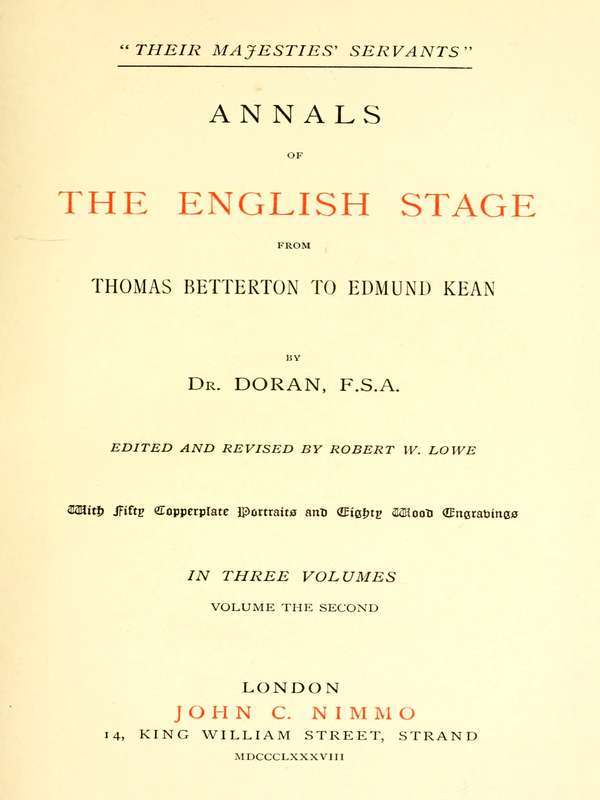 "Their Majesties' Servants." Annals of the English Stage (Volume 2 of 3)
by Dr. Doran
"Their Majesties' Servants." Annals of the English Stage (Volume 2 of 3)
by Dr. Doran