
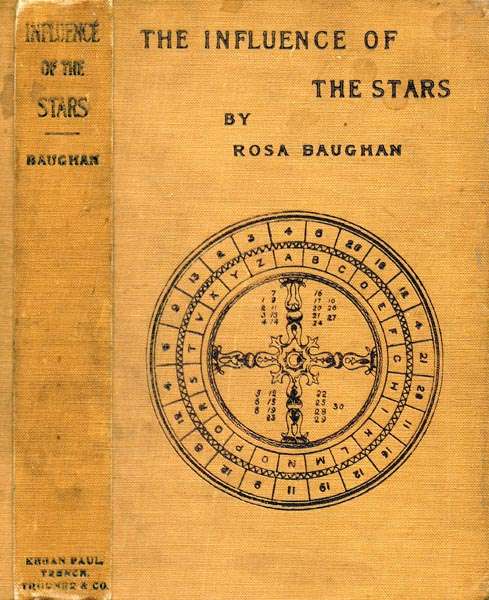
CHAPTER XXXIV.
CONCERNING THE MOLES WHICH HAVE NO CORRESPONDING MOLES ON THE FACE
A mole on the right side of the throat shows to a man great wit but short life, whatever may be its colour. To a woman it indicates a reasonably happy life, but danger and pain from childbirth.
A mole on the left side of the throat threatens a man with dangerous falls from horses or from high places. To a woman the same and, should the mole be of a pale colour, danger by water.
A mole at the nape of the neck indicates to either man or woman great danger of untimely death by water.
A mole in the midst of the throat—that is, on the gullet—shows to a man much danger of death by strangulation or hanging. To a woman peril in sickness and, if the mole should be black in colour, she dies.
A mole immediately under the right breast shows to a man that he will be lucky in agriculture. To a woman that she shall receive inheritance from the dead; if black, her father is killed by accident.
A mole under the left breast shows a man to be of a malignant nature and furious of temper, but strong in love. To a woman it indicates great constancy and suffering by reason of that constancy.
A mole on the knee, whether left or right, predicts, to either man or woman, long and various journeys. Such persons will marry entirely for their own fancy, probably foreigners, and will be very fortunate in their marriages.
A mole on the calf of the right leg shows to a man that by his own ingenuity and learning he shall attain a high position; if black, he will receive some sorrow from women; but if the mole should appear raised he marries a lovely person—has only one wife and lives happily. To a woman it shows a fortunate, good and rich husband and that she will have many children and live long.
A mole on the lowest part of the body shows to a man that he is of a very luxurious nature and that he shall be enriched by marriage. A woman having this mole is rather sensuous, but—on the whole—faithful to her husband.
A mole on the right shoulder shows a man to be fortunate in his undertakings; if red, he has a large fortune with his wife. To a woman it indicates a marriage above her expectations; but if black, she buries her first husband and marries again.
A mole on the right foot shows to a man that he will be clever in acquiring foreign languages and that he will be a great student of occult matters. To a woman it promises a fortunate and happy, long life; if black, this good fortune is somewhat chequered with troubles.
A mole on the left foot denotes a man to be rash and of an evil and vagabond disposition. To a woman it shows much care and trouble and, if black, danger in travelling.
If the second toe in a foot should stretch out much beyond the great toe, it shows, to either man or woman, riches and a happy and prosperous life.
A mole on the left shoulder predicts to a man much worry in money matters. To a woman it shows a life of continual anxiety and humiliation by reason of her own vanity. If black in colour, she suffers some serious disgrace from her own conduct.
A mole on the lower part of the neck on the right side near the shoulder shows a man to be very covetous. To a woman it indicates that she will be beloved of princes or great personages far above her in rank.
A mole on the neck near the left shoulder indicates to either man or woman disgrace from evil practices.
CHAPTER XXXV.
CONCERNING THE MARKS GIVEN AT BIRTH BY THE SIGNS OF THE ZODIAC
By a knowledge of the signature given by the signs of the zodiac, when rising at birth, we may sometimes ascertain the hour of nativity, or, at any rate, go near enough to it to be able to work out the horoscope after a fashion, supposing the exact date to be impossible of attainment.
A person born when the first part of the sign Aries is rising will have a small raised mole amongst the hairs of the head; if the second part of the sign happened to be rising at the birth, the mark or mole would be raised in the form of a pea or wart and would be seen on the forehead; if the third part of the sign arose at birth, the mark would appear below the mouth, or towards the chin. Those persons having these marks of Aries on any of the parts described will generally be found to have the mark of Mars in the lowest part of the body, also in the form of a raised mole or wart.
When Taurus is rising at a birth, the native bears a mark in the front of the throat, sometimes in the form of a raspberry or red-coloured mole, which mark is always ill in its effects. Should the second part of the sign Taurus have been rising at the nativity, the person will have the mark at the side of the throat. If the third, the same mark will appear on the nape of the neck, but then it will be more raised than the two former moles.
Those born under Gemini have their marks in the arms. If the first part of the sign arose at birth, they bear its mark on the right arm, near the shoulder; if the second, on the same part of the left arm and if the third part of the sign arises at birth, the native bears the mark on the right arm, but below the elbow and generally near the wrist.
When the sign Cancer is in the ascendant, the mark is on the upper part of the right breast in the form of a flower or a hare's foot, of a whitish colour, and commonly having a hair or two springing from it. In the older days this mark was supposed to be an evidence of witchcraft in a woman and many poor creatures have lost their lives for this. Those born under the second part of the sign Cancer have the mark lower down on the breast and when the third part of Cancer is rising at a birth, the sign is nearly under the breast.
When Leo is in the ascendant at birth, the sign is on the left breast and, in the same manner, if the sign appears high up on the breast it indicates that the first part of the sign was ascending; if near the middle, the second; and if on one side, towards the left armpit, the third part of the sign must have been ascending at birth.
In nativities under Virgo the mark is on the upper part of the stomach, that is, between the two breasts, when the first part of the sign ascends; those born when the second part is rising have the mark near the navel; and those when the third part is rising quite low down on the stomach. Those that are thus marked are very inconstant. The moles given by Virgo are flat, and of a reddish colour.
When Libra is in the ascendant, the marks are raised like warts, and are small, soft, and hairy; when the first part of the sign is rising the mark is near the loins; when the second, towards the centre of the stomach and the third part of the sign throws the mark to quite the lower part of the body.
Those born under Sagittarius have the mark of the sign in the thighs and these moles are raised like bulbs and are very big. When the first part of the sign is rising, the mark is on the right thigh; when the second part is rising, on the left thigh and those who have the third part of Sagittarius rising at their birth are so marked on the right haunch.
Those born under Capricornus have the marks on the knees, which marks are quite flat. When the first part is rising, the mark is on the right knee; when the second, on the left, and when the third, the mole is under the knee.
It will be remembered that the sign Aquarius governs the legs; therefore those who are born with this sign ascending have the mark of it (which is a long-shaped mole) on the right leg (this mark shows extreme inconstancy); when the sign Scorpio is rising at birth there is a dark mole on the belly showing ill fortune.
The sign Pisces, or the Fishes, governs the feet; therefore those who have this sign in their ascendant are marked on the feet. Those born under the first part have the marks (which are ordinary flat moles) on the right foot; those under the second, on the left; and those on the third, on the soles of the feet or on the heels. These last are called the Royal marks; they are large moles inclining to red, and those who are marked in those places are assured of honours and dignities.
CHAPTER XXXVI.
CONCERNING ALFRIDARIES
This word is taken from the Greek and refers to the certain time or number of years of the several planets which, in those years, dispense their benevolence or malignity according to their natures.
It will be observed from the plate at the beginning of this chapter, that each of the planets has his Alfridary, one after the other—and in this table will be seen the number of years in which each planet more particularly governs the life.
In all diurnal nativities the Sun begins the first Alfridary, and has seven years of government; Venus succeeds, having seven years of Alfridary; then Mercury, who has seven years of government. After him the Moon rules the existence for seven years; then Saturn for the same number; Jupiter succeeds him for seven years; afterwards Mars dominates the existence for seven years; after which the Dragon's Head and Dragon's Tail influence the life for three years; and then the Sun has five more years of government, when the life probably ends.
Those that are born in the night have their first Alfridaric years from the Moon, which are seven, followed by those of Saturn, who has seven years; after him Mars is dominant for seven years; then the Sun for the same number of years; succeeded by Venus and Mercury, each only seven years.
The years of an Alfridary are eighty-two—namely, the Moon, seven; Saturn, seven; Jupiter, seven; Mars, seven; the Sun, seven; Venus, seven; Mercury, seven; the Dragon's Head, three; the Dragon's Tail, two. These two last have their Alfridaric years separate from the others, and they are those which exceed the seventy years of life, which are weak and feeble. For these signs are not (as we have seen) planets, but only symbols of a place in the zodiac representing the Moon's north and south nodes.
It will be noticed in these tables that, after the years of seventy-five, the Sun in a diurnal nativity, and the Moon in a nocturnal nativity, take up again their government, as at the beginning of the life. These tables are interesting, as shadowing forth the dates of the events of the subject's life.
Those born under the Sun marry early, whilst those in whose nativity the Moon is powerful, generally marry rather late than early. In either nativity, when Saturn comes up, sorrows by death, sickness and loss of money may be expected; whilst, when Mars is powerful, evils of a strong and sudden nature appear, such as accidents, sudden deaths, quarrels and contentions of a vexatious character.
Those born under the Moon have very often serious and passionate loves quite late in life; this is accounted for in some measure by the fact that Venus has seven years of government in a nocturnal nativity from the age of fifty to fifty-seven. The age of forty-four, in a diurnal nativity, would be likely to bring about some misfortune during that year of the native's life, both the infortunes, Saturn and Mars, being then powerful. The same thing occurs in a nocturnal nativity at the age of thirteen, from which age up to twenty there is not much good fortune; it will be remembered that the latter part of the life of a person born at night is generally much happier and altogether more fortunate than the earlier years of existence.
CHAPTER XXXVII.
CONCERNING THE MYSTICAL WHEEL OF PYTHAGORAS AND THE METHODS OF WORKING IT
This mystical figure is copied from a work in old French on Chiromancy and Geomancy, compiled by the Sieur de Peruchio, and published at Paris in 1657.
Arithmancy, or divination by numbers, on which the working of this figure depends, was much practised in various ways during the Middle Ages; and much confidence appears to have been placed in this wheel of Pythagoras, which resolves questions by a species of sortilegy by numbers, in which the result depends upon the unfettered agency of the mind and will, or the serious intent to know any difficult thing. The wheel is said by the old-world writers to be able "to resolve all questions on all matters upon the result of which the querent desires information, whether of the past, present, or future."
Concerning the method of working it, the Sieur de Peruchio gives the following explanations:—
The wheel, it will be perceived, is divided into four equal parts, the upper part of which contains the numbers which are fortunate, and the lower half those which are unfortunate. Around the wheel are seen the letters of the Alphabet, above which are placed certain corresponding numbers, which are required in the calculations.
The following table gives the numbers to be chosen by chance (as will be explained further on) in working the questions:—
| 1 | 11 | 22 | 28 | 29 |
| 6 | 2 | 12 | 23 | 30 |
| 15 | 7 | 3 | 13 | 24 |
| 19 | 16 | 8 | 4 | 14 |
| 25 | 20 | 17 | 9 | 5 |
| 27 | 26 | 21 | 18 | 10 |
The inquirer, whilst thinking earnestly upon the matter he wishes resolved by the wheel, must choose a number out of the above Table.
This is better done with the eyes closed, and the number pricked out with a pin, so that there may be no premeditation in the choice. To this number, thus chosen, the inquirer must add the number answering to the first letter of his first name, which number is seen in the wheel itself where the numbers are above the letters of the alphabet. To this number must be added the number of the day of the week on which the question is asked and of the planet ruling that day. Then add all these numbers together and divide the sum by 30 as often as it can be done. Then look for that number which is the remainder in the inner circle of the wheel; observing in what part of the wheel it falls should there happen to be no remainder, then the number 30 must be looked for. If the question to be propounded should be whether anything about to be undertaken will succeed or not, should the number fall in the upper part of the wheel the matter will have a happy issue; but if, on the contrary, the number appears on the lower part of the wheel the thing in question will not be a success. In any question where time is concerned as, for instance, as regarding how long or how short shall be the matter in hand it must be borne in mind that the numbers in the right half of the wheel represent long time—that is, that the event about which the question is asked will be some time before it comes to pass; whilst those in the left half of the wheel signify short time—and so, whether for good or evil, shall the business quickly or slowly come to pass.
All questions are thus to be asked but one, and that is, whether a sick person shall recover or die; in which case, after proceeding to add the numbers of the Christian name, the day of the week and the planet, the number representing the Moon's age on the day the question is asked must also be added; for example, if a person whose name is Veronica—asks on a Wednesday, 20th day of the Moon, if a sick friend should live or die, and chooses from the Table the number of 23, the matter would be worked thus:—
| Number chosen | 23 |
| Number answering to the letter V | 9 |
| Number answering to Wednesday | 102 |
| Number answering to the planet Mercury | 114 |
| Number of the age of the Moon | 20 |
| 268 |
This, divided by 30, leaves 28 remainder, which will be found to fall in the unfortunate part of the wheel, showing that her friend will not recover.
The following table of the mystical numbers representing the planets, and also those belonging to the days of the week which each planet governs, is of much importance in working the wheel:—
| Planets. | Days of the Week. | |||
| Saturn | 55 | Saturday | 45 | |
| Jupiter | 78 | Thursday | 31 | |
| Mars | 39 | Tuesday | 52 | |
| Sun | 34 | Sunday | 106 | |
| Venus | 45 | Friday | 68 | |
| Mercury | 114 | Wednesday | 102 | |
| Moon | 45 | Monday | 52 | |
These several numbers attributed to the days of the week, as well as those of the planet ruling the day, are of very ancient origin and are, probably, as well as the wheel itself, a relic of former traditional foreknowledge by lots and numbers.
There are certain days, however, which are evil days, on which no question should be asked of the wheel of Pythagoras. These days are as follows:—
- Of January, the 3rd, 4th, 5th, 9th and 11th.
- Of February, the 7th, 13th, 17th and 19th.
- Of March, the 13th, 15th and 16th.
- Of April, the 5th and 14th.
- Of May, the 8th and 14th.
- June has but one ill day, which is the 6th.
- July has two, the 16th and the 19th.
- August has also only two, the 8th and 16th.
- September has three, the 1st, 15th and 16th.
- October has only one ill day, which is the 16th.
- November has two, the 15th and 16th.
- December has three, the 6th, 7th and 11th.
This is a very old tradition, and in mediæval ages these days were universally shunned as "ruled by evil influences." In conclusion, those consulting the wheel of Pythagoras are advised not to ask more than one question on the same day and to refrain from all gibing, sporting, or jesting, and—above all—from all unbelief whilst making use of this mystical wheel in order to know the truth.
ENVOY.
Go—little book—and teach the present age something of the wisdom bequeathed us by the Past.
Footnotes
- [1]
- The ambient means the heavens when spoken of in a general manner.
- [2]
- Saturn, Mercury and the Moon.
- [3]
- Aries is always opposite to Libra; Taurus to Scorpio; and so on of all the rest, as shown by the table given (p. 11).
- [4]
- The foregoing chapter explains this term.
- [5]
- The Chaldees averred that when Saturn was powerful in a nativity the person then born was "mystical and confederate in secrecy."
- [6]
- This animal has been probably assigned to him by reason of its sagacity and extreme fidelity--constancy in feeling being one of the attributes given by the planet Saturn when well-dignified.
- [7]
- Zadkiel's and Raphael's are both good; the following figure is worked after the Ephemeris of the latter.
- [8]
- The nebulous mass in the body of the Crab.
- [9]
- Hyleg is the word used for that body or point which is the giver of life.
- [10]
- This was the case at the birth of George the Third of England; at that of the Emperor Paul of Russia; Maria, Queen of Portugal; Charles the Second, King of Spain; and Murad the Fifth, Sultan of Turkey; and all these sovereigns, as is well known, became insane.
- [11]
- At Admiral Nelson's birth Mars was rising in the sign Scorpio.
- [12]
- Probably vivisectionists.
- [13]
- These aspects can all be judged from the Ephemeris of the year of birth.
- [14]
- And these secondary directions being so much easier to calculate, students are advised to follow the ancient methods in this as in all else relating to this old-world study.
- [15]
- Translated from a Hebrew manuscript found near Cairo in 1836 at the time of the removal of the obelisk to France.
- [16]
- Adda-Nari, Nature--that is, the deity known under the name of Isis by the Egyptians.
- [17]
- The date of this event would be determined by the place where the separation line crosses the Line of Fate.
- [18]
- If the Sun is one of the dominant planets, the Line of Heart broken under the Mount of the Sun shows serious physical affection of the heart; if this sign is on both hands it is fatal.
- [19]
- If the Head Line it placed very low, then the date where it crosses the Saturnian Line would be 30, and if the Heart Line is proportionately low the date where it crosses the Saturnian would be 45 years.
- [20]
- The noses of those born under Venus are frequently slightly upturned at the tip; they are never bent downwards over the lips.