
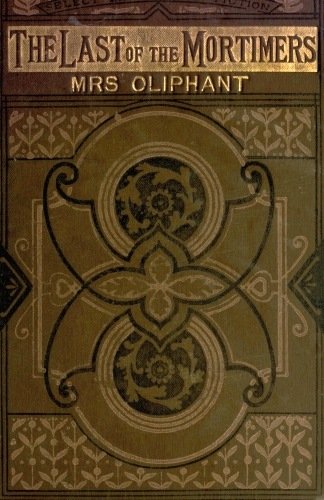
Chapter IV.
THE next morning Harry came radiant, quite like a new man. Was it all for joy of taking me home? or, perhaps he had got the money on this most convenient of all mornings? but such things don’t often happen just at the most suitable time. He came rushing in with a kind of shout,—“Milly, we’ve orders to march; we’re going next week. Hurrah!” cried Harry.
“And why hurrah?” said I.
“We’ll have ourselves to ourselves, and nobody in our way,” he said; but just then seeing Aunt Connor, who was at the other end of the room, stopped short and looked a little confused. He had not intended to say anything ill-natured to her.
“Oh, I am not affronted; you’re excusable, you’re quite excusable,” said Aunt Connor; “and I believe it is very lucky; you’ll have a fresh start, and nobody will know how foolish you have been. I was too angry to ask yesterday, or to think of anything but that deluded child there, that thinks herself so happy;—but young Langham, dear, have ye any friends?”
“None to whom I am answerable,” said Harry.
“Then that means no father nor mother, no parents and guardians?” said my aunt. “Well, what you’ve done is done, and can’t be undone; we must make the best of it. Have you put the boots into the corner, and tidied the cigars off the mantelshelf? and now Mrs. Grogram knows all about it,—when it happened, where it happened, and how you two took clever Mrs. Connor in?”
“Exactly,” said Harry, laughing; “you have quite described it all. I have done my best, Milly darling; come home.”
“You’re glad, you two young fools?” said my aunt.
“I should think so! and shouldn’t we be glad?” cried Harry. “If we have not a penny between us, we have what is much better. Milly, come.”
“Hush with your Milly, Milly,” said Aunt Connor, “and speak for yourself, young man. My poor Connor’s niece, if she is undutiful, shall never be said to be penniless. Well, I’ve won the battle. I will tell you, for I ought. As sure as she’s standing there in her white frock, she has five hundred pounds.”
“Five hundred pounds!” both Harry and I repeated the words with a little cry of wonder and delight.
She had said this with a flash of resolution, as if it were quite hard to get it out; now she fell suddenly into a strange sort of coaxing, persuading tone, which was sadly painful to me just as I was getting to like her better; and as she coaxed and grew affectionate she grew vulgar too. How strange! I had rather have given her the money than seen her humble herself so.
“But it’s out at the best of interest, my dears; what you couldn’t get for it elsewhere. Think of five-and-twenty pounds a-year; an income, Milly! My child, I’ll undertake to pay you the half year’s interest out of my own pocket to help you with your housekeeping; for, of course, you would never think of lifting the money, you nor young Langham, with such an income coming of it. No, no; let well alone, I say. I would not meddle with a penny of it if I were you. Rash young creatures that don’t know the value of money, you’d just throw it away; but think what a comfort there is in five-and-twenty pounds a-year!”
Harry and I looked at each other; it was as clear as day that she had it herself, and did not want to give it up. He was angry; I was only vexed and distressed. I never in all my life had thought of money before.
“Five hundred pounds would be very useful to Milly just now, Mrs. Connor,” said Harry; “she has not a trousseau, as your daughters would have; and I can only give her all I have, which is little enough. At least it’s my duty to ascertain all about it; where it is, and what it is, and——”
“Oh, what it is! half of it Uncle Connor’s own gift to the ungrateful creature—half of it at the very least; and ascertain, to be sure!—ascertain, and welcome!—call it in if ye please, and spend it all in three weeks, and don’t come to me for help or credit. What do you mean, sir? Do ye think it’s anything to me?”
“Oh, Aunt Connor, please don’t be angry. I never had but half-a-sovereign all my life,” cried I. “You’ll tell us all about it afterwards, to be sure. Harry—I mean Mr. Langham—doesn’t understand. But it would be so handy to have some of it. Aunt Connor, don’t you think so? Only please don’t be angry. I should like, all out of my own head, to spend ten pounds.”
Aunt Connor did not speak, but went to her desk and took something out of it that was already prepared—one envelope she gave to Harry and the other to me.
“Here is the half year’s dividend of your wife’s little money; it’s just come due,” said Aunt Connor, “and here, Milly, dear, is your aunt’s wedding-present to you. Now you can have your will, you see, without breaking in upon your tiny bit of fortune. See what it is to have thoughtful friends.”
For in my envelope there was exactly the sum I wished for—ten pounds.
And what do you suppose I did? Harry standing there as sulky as a statue, looking as if he would like to tear up his share and throw it into the fire. I was so delighted I ran and threw my arms round her neck, and kissed Aunt Connor. I hugged her quite heartily. I did not understand five hundred pounds; but I knew I could get something nice for Harry, and a new dress and a wedding bonnet, with orange-blossoms, out of what she gave me. And she cried, too, and kissed me as if I had been her own child; and it was no hypocrisy, whatever you may think. Harry snatched me away, and quite turned me out of the room to get my bonnet. He looked the sulkiest, most horrid fellow imaginable. I almost could have made faces at him as he sent me away; it was our first real quarrel; but I can’t say I was very much afraid.
When we got out of doors he was quite in a passion with poor Aunt Connor. “Kind! what do you mean by kind? why, you’ve been living on your own money. I am sure she has not spent more on you, besides making you her servant,” cried Harry. “And to take her present! and kiss her—pah! I would not do it for a hundred pounds.”
“Nobody asked you, sir,” said I: “but come this way, please Harry, I want to look at one shop-window—just one. I saw something there yesterday that would just do for me; and now I can afford to buy a dress.”
“By Jove!” cried Harry, “what creatures you women are; here we are, on as good as our wedding-day, walking home for the first time, and you are thinking of the shop-windows! Are you just like all the rest?”
“Oh, indeed, just precisely,” said I. “Ah, Harry, I never was in the street before that I felt quite free and yet quite protected and safe. Only think of the difference! I am not afraid of anybody or anything to-day. I am going home. If you were not so grave and proper I think I could dance all the way.”
Harry did not say another word; he held my arm close, and called me by my name. My name was Milly darling, to Harry; he said it sounded like the turn of an Irish song. He calls me Milly darling still, though we have been married two years.
And how pretty he had made that little parlour over Mrs. Grogram’s shop! Not a boot about anywhere that I could see, nor the shadow of a cigar; clean new muslin curtains up, and flowers on the table; and the landlady curtseying, and calling me Mrs. Langham. It was the very first time I had heard the name. How odd it sounded! and yet an hour after I should have laughed if any one had called me Miss Mortimer, as if that were the most absurd thing in the world.
And to make home does not require many rooms or a great deal of furniture. I have not a “house of my own” yet, and, perhaps, may not have for years. A poor subaltern, with nothing but his pay, when he is so foolish as to marry, has to take his wife to lodgings; but the best house in the world could not have felt to me a warmer, safer, more delightful home than Mrs. Grogram’s parlour above the shop.
Chapter V.
“IT is only right, however,” said Harry, “that before we leave we should know all that Mrs. Connor can tell us, Milly darling, about your family and your relations. Though she’s to have your five hundred pounds, she need not have your family archives too.”
“Why, Harry, you almost speak as if you grudged her the five hundred pounds!”
“And so I do,” said Harry. “Just now, while I am so poor, it might have made you a little comfortable. Please Heaven, after a while, five hundred pounds will not matter so much; at least it is to be hoped so. If there would only come a war——”
“Harry, you savage! how dare you say so!” cried I.
“Nonsense! what’s the good of a soldier except to fight?” he said. “Active service brings promotion, Milly. You would not like to see me a subaltern at forty. Better to take one’s chance of getting knocked on the head.”
“Ah, it is very easy for you to talk,” said I; “and if I could disguise myself and ’list like Lady Fanshawe——”
“’List! you five-foot creature! you could be nothing but a drummer, Milly; and besides, Lady Fanshawe did not ’list, she——”
“Never mind, I could contrive as well as she did,” said I. “I could get upon stilts or something, and be your man, and never disclose myself till I had cut down all your enemies, and brought you safe out of the battle, and then fainted in your arms.”
“Pleasant for me,” said Harry; “but I do believe, in spite of romance, Fanshawe himself would have given his head to have had his wife safe at home that time. Do you think it would be a comfort to a man if he was shot down himself to think his wife was there with nobody to take care of her? No, Milly darling; the truest love would stay at home and pray.”
“And die,” said I; “I understand it better now. If I were ’listing and going after you, it would not be for your sake, Harry, but for my own. How do women keep alive, do you think, when those that belong to them are at the wars?”
Neither of us knew; but to think of it made us shudder and tremble,—I that should have to bear it some day! for the very people in the streets said that war was coming on.
“In the meantime let me remind you,” said Harry, “that we’re going to Aunt Connor’s to bid them good-bye, and that I mean to ask her all about your relations, and get a full history of your family, in case you might happen to be a princess in disguise, or a great heiress. By the bye, she said something like that. Only don’t be too sanguine, Milly; if there had been anything more to get on your account, Aunt Connor would have ferreted it out.”
I thought he was rather hard upon her, but could not really say anything in her defence. I had myself begged Harry, after two or three talks with Aunt Connor about it, not to say any more to her about claiming the five hundred pounds. She had only her jointure, poor lady, and could not have paid it without ruining herself. And, after all, she had always paid Nurse Richards for me, and had kept me, and been kind enough to me. So it was settled she was to keep it, and give us the five-and-twenty pounds a-year. Not that she would allow, straight out, that she had it. She always pretended it was somebody else that paid her the interest, and that it was the very best investment in the world, and she wished she could get as much for her money. Poor Aunt Connor! her pretence did not deceive anybody; but I suppose it was a sort of comfort to herself.
I did not take any part in Harry’s questions at first; it was all I could do to answer the girls, who wanted to know all how we were going to travel, and everything about it. Patricia brought me down her warm cloak that she had worn all last winter. She said, though it wasn’t new, it would be a comfortable wrap for the journey, if I would have it; and indeed I thought so too, though Harry, I dare say, would have made a fuss about it, if I had consulted him. But when Aunt Connor really began to talk about poor papa and mamma, I hushed the girls and listened. I never had heard anything about them. It was natural it should be very interesting to me.
“It was more from hearsay than knowledge, for, of course, Milly’s papa was a great deal older than me,” said Aunt Connor, with a little toss of her head. “He was forty when he married Maria, my poor Connor’s only sister; and she was not very young either; and it went very hard with her when Milly there came into the world; but though she died, poor soul! he would not call the babe Maria, do what we would, but Millicent, because it was the great name in his family. That was how we came to hear about his family at all. His head was a little touched, poor soul! He said what if she should come into the Park property after all, and not be called Milly? He said Millicent Mortimer had been a name in the family from the Conquest, or the Restoration, or something; and the heiress that wasn’t Millicent had no luck. When he got weakly, he maundered on for ever about his family. It was cousins or cousins’ children had the property, and one of them had jilted him. He used to say, in his wandering way, that one would never come to good; she’d never bring an heir to the property. But whether there were sons, or if it was only a lady between him and the estate, or how the rights of it were, I could not tell you. We used to think half of it was maundering, and my poor dear Connor never put any faith in it. Except Maria Connor that married him being not so young as she once was, not a creature about knew Mr. Mortimer. He was an Englishman, and not much of a man any how. No offence to you, Milly, dear; he was the kind of man that never does any good after he’s been jilted; so, if you should happen to meet with that cousin of his that did it, you can put out your anger upon her. He left no particulars, poor man. I don’t believe it ever came into his head that it might really matter for his poor little girl to have friends that would help her on in the world. And to be sure, Milly was but a year old when papa died.”
“But this was worth taking some pains and making some inquiries about,” said Harry. “Where did those friends live? What county did he belong to?—you must surely have known.”
“We knew no more than I tell you, Langham, dear. My poor dear Connor, as I tell you, never put any faith in it. There’s some books in the house belonging to him, that I was always to have sought out and given to Milly. I’ll get them to-day, if I can, before you leave. But if you’ll trust my opinion, I don’t think it’s the least good in the world. At the best, he was but a distant cousin, if all was true, he said; and spoke about his little girl proving heir after all, more in spite against her that jilted him than anything else. Why, all he had, poor man, did not come to but a trifle over five hundred pounds;—I mean—dear! what a memory I have!—three hundred pounds, for poor dear Connor put a large slice to Milly’s little fortune. Now that’s all I have to tell you. But I’ll get Milly her father’s books.”
And I have not the least doubt it was all she had to tell us; every word she knew. But that very night we got the books just as we were packing up. They were as damp and mouldy as they could be, odd volumes of one thing and another; one of Shakespeare, with Richard A. Mortimer written in it, and “Haworth” underneath; another was Hudibras; another was an old French school copy of Racine, with “Sarah Mortimer, the Park, May, 1810,” upon it, and in it an old pencil drawing all curled up at the edges, and rubbed out in some places, of a great house with trees and gardens round it, and a young lady mounting her horse at the door; scribbled at the corner of this, in a strange scratchy hand, was a kind of little inscription: “Sarah as I saw her last, and the Park—I wonder was I in love with them both? R. M.” The last of this was evidently written at a later time than the first. But that was all. Not a single clue to papa’s grand friends, who they were, or where they were. I dare say there are a hundred thousand parks in England, and, unless we could find it out from the drawing (which, I am sorry to say, was a very poor one. Harry, being disappointed and spiteful, took the pains to point out to me that the house was leaning up against the trees, and off the perpendicular, and that the young lady was on the wrong side of the horse), there seemed no information at all in poor papa’s books. Poor papa! it was very cruel of Harry! most likely his heart was breaking when he drew “Sarah as I saw her last.” Do you say he might have put her on the right side of the horse for all that, you cruel savage? Perhaps there were tears in his eyes all the time, Mr. Langham. You are not sentimental. I dare say you would not cry if you were looking at me for the last time. But that has nothing to do with poor papa. I have no doubt he must have been a very feeling man.
However, we did not make anything out of the books; and I am sure I should not have said half so much about it except that Harry really took an interest in it which quite surprised me. I never expected to turn out an heiress, nor cared much whether I had grand relations or not; and a journey with Harry in that sweet September weather was far too delightful to let me think of anything else. It was as good as a wedding tour.
Chapter VI.
THE regiment was ordered to Edinburgh; and it was there we went accordingly in that lovely autumn weather. I don’t think Harry quite liked to hear me talk of Nurse Richards and the way she brought me up; but he was pleased enough to take walks with me all round that castle which was the centre of my recollections. At first we used to spend every leisure moment we had wandering up and down the steep walks, and always pausing to look up at the great precipice of rock. It was like a friend to me, rising up out of the soft tiers and green slopes of grass: the two churches down at its foot looking so mean and tiny beside it. People should not build churches there. I almost think even a great noble cathedral would look shabby under the shadow of that rock; and only to think of that dreadful West Church and the other one! how they can dare venture to stand there and don’t move and crumble down of themselves! They would if there was any feeling in stone.
We got our lodgings out to the south of the castle, two nice little cosy rooms. It was not a fashionable quarter, to be sure, nor were the rooms very grandly furnished; but we had such views from the windows! The Castle Rock, with its buildings jutting on the very edge, and yet standing so strong and firm; the harsh ridge of the crags behind, and the misty lion-head over all, gazing like a sentinel towards the sea. And it was not these only, but all the clouds about them. Such dramas every day! Now all sweet and serene like happiness; now all thundery and ominous like a great misfortune; now brightened up with streaks of home and comfort; now settling down leaden-dark, and heavy like death itself, or despair. I never was poetical that I know of; but it was like reading a very great poem every day to live in that little house at Bruntsfield. Harry enjoyed it as much as I did. We lived the very cheapest that ever was. We never went out anywhere; for Harry had always a little society with his brother officers and at mess, and I had him, and old Mrs. Saltoun, our landlady, to talk to when he was away, and was as happy as the day was long. All the pleasantest recollections I had as a child were connected with this place; and when I looked out of my window at night and saw the lights shining up on the top of the Castle Rock, and the stars higher still glimmering out above, or the moon revealing out of the dark where Arthur’s Seat lay quiet, couched like a sentinel; and heard the recall trumpet pealing out high into the clear air, my mind used to wander from dear Nurse Richards, and the stories she used to tell me, back to my great happiness now. When Harry found me at the window crying to myself, he thought I was low-spirited. Low-spirited! I was crying for pure happiness; because I was too happy to tell it, or put it in words, or show it anyhow else.
All this time we had never heard a single word from Harry’s uncle who promised him the present on his birthday. This uncle was the only relation he had except some cousins whom he did not know much about. He was very near as friendless as I was; only that he remembered his father and mother perfectly well, and had been brought up at home, which made a great difference. Harry of course had written to his uncle to say what had occurred; and he had never answered the letter. He was an old bachelor, and rather rich; and if he did not take offence, and nothing happened, it had always been supposed that Harry was to be his heir; though I did not know this till after we were married and could not untie ourselves, however angry any one might be.
One day, however, Harry came home to me with a wonderful face. I could not tell, though I knew what his face meant pretty well by this time, what it was that day; whether he was angry, or disappointed, or vexed, or only bursting with laughter. It turned out he was all of them together. He tossed a letter on the table, and laughed and stamped his foot, as if he did not quite know what he was doing.
“By Jove, it’s too absurd!” cried Harry; for I could not get him to leave off that stupid exclamation: but I thought it must be a little serious too, as well as absurd, by the look in his eye.
And what should it be but a letter from his uncle, declaring that, though nothing else would have induced him to do such a thing, yet, to punish Harry’s rashness and presumption, he had made up his mind to a step which everybody assured him was the most prudent thing he could do, and which it was only a pity he had not thought of sooner; this was, in short, that he had married as well as Harry. Enclosed his nephew would find cards addressed to his new wife: and, as for the expenses of such an undertaking, he assured Harry that it would be ridiculous to look for any assistance to a man in similar circumstances with himself. On a clear understanding of which he could certainly afford to wish his nephew joy,—but nothing else,—for he meant now to have heirs of his own.
Harry stared at me while I read this letter with a sort of angry fun and indignation in his face, which would turn either one way or another, I could see, according to how I received it. I cannot say I was the least disappointed. I threw down the letter, and clapped my hands and laughed. It was the most whimsical letter you could imagine; and, as for the birthday present, or any other assistance to us, I had never looked for it since Harry wrote what we had done.
“Weel, weel, it’s no ill news, that’s a comfort. But, Captain, you maunna come in rampaging and disturbing the lady when we’re no looking for you,” said Mrs. Saltoun, who had been sitting with me. “Now I’ll gang my ways ben the house; and you ken where to find me, Mrs. Langham, my dear, when you want me again.”
I had it on my lips to beg her not to go away, but stopped in time, for Harry naturally, though he likes her very well, does not take comfort in the good old lady as I do. When she was gone he laughed out again, but a little abruptly, and not as if he felt particularly happy about the news.
“Why, Harry, what’s the matter; did you expect anything?” said I.
“Well, not exactly, to be sure,” said Harry, with a half-ashamed look; “except the first moment when I recognised the old fellow’s handwriting. I did think it would be pleasant, Milly darling, to get some little comforts about you just now.”
“I have quantities of comforts,” said I; “and such a jewel of an old lady to look after me when you are away. There is nobody in the world so lucky as me.”
“Lucky!” said Harry, with a little shout. “If you should turn out a great heiress to be sure; that’s always a possible contingency, according to your Aunt Connor. Otherwise, with all sorts of things going to happen to us, and only my subaltern’s pay——”
“Mr. Langham, you forget my five-and-twenty pounds a year!” cried I.
And how do you think the savage answered me? “The old witch!” exclaimed Harry, “to think of her stopping your simple mouth with that ten pounds! I’d have seen her ducked, or burned, or whatever they do to witches, before I’d have taken it!—and cheating you out of your little morsel of fortune! How long do you suppose you’ll get your five-and-twenty pounds?”
“As long as poor Aunt Connor can pay it,” said I. “Things might come in the way to be sure; but she means to pay it regularly, and always will when she can. What makes you so discontented, Harry? We have enough for to-day, and God knows all about to-morrow.”
“Ah, yes! but He’s far off, Milly, to a poor fellow like me. How can I tell that He cares much what’s to become of us,—unless, indeed, it were for your sake.”
“Oh, Harry, Harry! how dare you say so!” cried I. “And see how good He has been to us two orphans. Neither of us had any home or any one belonging to us; and only look round you now!”
Do you think it was not very much that he had to look round upon?—a little room, low-roofed, and humbly furnished. It was nothing to any other man or woman in the world; but we were two of us together in it, and it was our home. Could I help but cry when I thought how different I was from Aunt Connor’s niece in the nursery? And Harry was just as thankful as I was, though he had his little pretences of grumbling like this now and then. Does anybody think he was really anxious, either about his uncle’s present that was never to come now, or my five hundred pounds that was not much more to be relied on, or what was to happen to us? No! he was no more anxious than I was; only now and then he pretended to make a little fuss about it, and to be wanting something better for me.
Chapter VII.
WE were nearly two years in Edinburgh; and it was there, of course, that baby Harry came into the world. He made a great difference in many things. I could not go out to walk with Harry any longer; I could not even sit and talk with him so much, and, however economical I was, it could not be denied that already three of us cost more than two of us had done. It is strange enough, but still it is true, baby, bless him, brought thorns upon the roses that came with him into the world. Harry had not lived in a family since his father died long ago; he had lived a young man’s life, and had his own fastidious fancies like (I suppose) most young men. He was very much delighted when baby came, but he was not so much delighted when baby was always with us, and occupying almost all my time and attention; and it fretted him when he saw traces about that once nice cosy sitting-room, which was nursery now as well as dining-room and drawing-room; even baby’s basket, all trimmed with white muslin and pink ribbons, which he thought very pretty at first, annoyed him now when he saw it about; and when I had to stop talking to him in order to see after baby, he would first laugh, then bite his lip, then whistle, then go to the window, and after a while say he had better smoke his cigar outside while I was so busy. I dare say this cost me a few tears, for of course I thought there was no occupation in the world so sweet as nursing baby, and was sadly disappointed just at first that Harry could not be content to watch his pretty ways every moment as I did; however, I had to make up my mind to it. And as it was my business to mind Harry as well as his son, I had to think it all over in my mind what was to be done. It was hard work considering what was best; for to think of getting a servant upon our small means went to my very heart. At last one day I formed a great resolution, and took Mrs. Saltoun into my confidence.
“Here is how it is,” said I, “I must have a maid to help me with baby when Mr. Langham is at home. Men can’t understand things; they think it so odd to see one always with a baby on one’s lap; especially when they have not been accustomed to anything of the sort. Mrs. Saltoun, I shall be obliged to have a maid.”
“I told you so, my dear, the very day the lammie was born,” said Mrs. Saultoun; “but I’m one that never presses my advice. I know experience is far more effectual than anything I can say.”
“But look here—I can’t afford it—it’s a disgrace to think of such a thing with our small means, while I am perfectly strong and quite able to take care of him myself; but what can I do?” said I.
“My dear,” said Mrs. Saltoun, “poverty’s dreadful, and debt is worse; but it’s heaviest of all the three to make a young married man discontented with his ain house. Dinna be affronted; I’m no saying a word! the Captain’s just extraordinary; but he’s no the lad to be second to the baby for a’ that; and it’s nothing to sigh about. Thae’s just the kind of troubles every woman has to set her face to, as sure’s she’s born. My dear, however much ye canna afford, you’ll have to contrive.”
“Well, I have been thinking. If you will promise faithfully never to tell anybody, and keep my secret, and above everything, whatever you do, never let Harry know!” cried I.
“I’ll promise,” said Mrs. Saltoun; “but I’ll not promise to give my consent unless it’s feasible and in reason; and no unbecoming the Captain’s bonnie young wife.”
“The Captain’s wife!—ah, if he were only the Captain!—but he’s just a subaltern yet,” said I; “however, you will be disappointed if you think I am meaning anything great. I can’t do anything to bring in money, and I am sure Harry would not let me if I could. No—it’s only—oh, Mrs. Saltoun, if you would help me!—I could get up all the linen myself. I can do it, though you may not think so. All Harry’s things that he is so particular about, the laundress here never pleases him; and baby’s frocks. I think if you would contrive to help me, I could save so many shillings a week. I’ll do those pretty collars of yours and your fine caps, and you shall see how pretty they’ll look.”
“But your pretty bits of hands, my dear?” said Mrs. Saltoun; “a small matter of work betrays itself on a lady’s hands that’s not used to do anything. They would let out your secret, however well I kept it. What would you do with your hands?”
“But it will not hurt my hands—such beautiful clean work—it is quite a lady’s work,” said I; “and then I can put gloves on when I am done, and get some of the kalydor stuff. Besides, it will be only one day in the week.”
Mrs. Saltoun sat thinking it over, but she could not say a single word against it. If I couldn’t have done it, it might have been slow work learning; but I had a genius for it! Ah, hadn’t I ironed out Aunt Connor’s lace much oftener than the clear-starcher did! So here was something at once that could be saved; and nobody knows how dreadful the laundress’s bill is when there’s a baby in the house; so now I thought I might venture to try and look for a maid.
“My great terror was you were thinking of giving lessons, or selling some trumpery of fancy work, begging your pardon, my dear,” said Mrs. Saltoun; “for the young ladies now-a-days would a’ break their necks to make money, before they would take a step out of their road to save it; and indeed, you’re not far wrong that clear-starching is lady’s work. It takes nice fingers, dainty, clean, and light. I was in an awfu’ fright it was lessons on the piano, or handscreens to take into the Repository. But it’s really very reasonable for a young creature of your years; if you’re quite clear in your own mind you can take the responsibility of shirts. Of all the things I’ve seen in my life I canna remember that I ever saw a man what you could call perfectly pleased.”
“I am not afraid about that; but remember, you have promised solemnly, upon your honour,” said I, “never, whatever you do, to tell Harry!”
“I’ll keep my word. But what put it into your head, a sensible young woman like you, to go and run away with the like of a young sodger officer, that everybody knows have scarcely enough for themselves, let alone a wife? And if it’s hard work now, what will it be when you’ve a large family? and how will you ever live or keep your heart if he goes to war?”
“Mrs. Saltoun, don’t speak!” cried I; “what is the use of making me miserable? He is not going to the war to-day. It is not certain there is to be a war at all. Why do you put such dreadful things in my mind? If he goes I’ll have to bear it like the other soldiers’ wives; but do you suppose I have strength to bear it now beforehand, before the time? God does not promise anybody so much. If such a dreadful, dreadful thing should be, I’ll get strength for it that day.”
The good old lady did not say a word, but stroked my hand that was resting on the table in a kind of comforting, coaxing way. I looked up very much alarmed, but I could not see anything particular in her face. I suppose she was sorry for me only in a general sort of way; because I was young, and poor, and just beginning my troubles. So strange! I was pitying her all the same for being old, and nearly at the end of hers. How different things must seem at that other end of the road! Some of her children were dead, some married, close at hand so far as space was concerned, but far distant lost in their own life. I dare say when she liked she could go back into memory and be again a young wife like me, or an anxious middle-aged mother like her own daughter-in-law—and here it had ended, leaving her all alone. But she was very cheerful and contented all the same.
Harry came in while I was busy with planning about my new maid. After I had decided that she would have to sleep somewhere, and wondered why neither Mrs. Saltoun nor myself had ever thought of that, I had begun to wonder what sort of a person I should get; whether, perhaps, she would be a dear good friend-servant, or one of the silly girls one hears about. If she were a silly girl, even, there might be good in her. But here Harry came in, and my thoughts were all dissipated. He looked a little excited, and had a paper in his hand, out of which he seemed just about to read me something. Then he paused all at once, looked first at me and then at baby’s cradle, and his face clouded all over. I got terribly alarmed; I rushed up to him and begged him to tell me, for pity, what it was.
“It’s nothing but fancy,” said Harry. “I was going to tell you great news, my Milly darling; but it came over me, somehow, what you would do, and who would take care of you if you should be left alone with your baby; even though I were not killed.”
“God would take care of us,” I cried out sharp, being in a kind of agony. “Say it out—you are going to the war?”
“No, no; nothing of the sort; only look here. It has thrown us all into great excitement; but we are not under orders, nor like to be,” said Harry. “Don’t tremble—we are all safe yet, you foolish Milly. Look here.”
Though I was leaning upon him, and he held the paper before my eyes, I could not read a word. But I guessed what it was. It was the Proclamation of War.
“Come out with me and hear it read at the Cross. It is to be done at twelve o’clock. Come,” said Harry, coaxing and soothing me; “it is something to see. Pluck up a heart, Milly! Come and hear it courageously, like a soldier’s wife. But, oh! I forgot baby,” he said, stopping short all at once with a soft of half-annoyed laugh.
“Baby shan’t prevent me this time,” I cried; for what between this dreadful news and the excitement in Harry’s mind, and the sudden way he stopped when he recollected I couldn’t rightly go out with him, I was desperate. “Mrs. Saltoun will keep him till I come back; and he will not wake, perhaps, for an hour.”
The old lady came when I asked her; and was quite pleased to sit down by the cradle while I tied on my bonnet with my trembling hands. Harry was very kind—very pleased. We went along winding up the steep paths, through the gardens to the Castle, my favourite walk, and into that long, grand, noisy old street with the yellow haze lingering between the deep houses, down the long slope towards Holyrood. I could see the people clearly enough about the streets, the little groups all clustered about the outside stairs, and the stir of something going to happen. But I could not look at the official people coming to say it again and make it more certain. If the trumpet had been a gun and killed somebody, my heart could scarcely have leaped more. Harry’s cheek flushed up; and I could almost fancy I felt the blood stir and swell in the arm I was leaning on. He was a soldier, and he forgot me as he held up his head and listened. Just then I could not hold up my head. The trumpet sounded to me, somehow, as if it came lonely out of the distance over some battle where men were dying who had wives and babies at home. A woman stood before me crying, and drew my attention for a moment. She dared say out what was in her heart, because, though perhaps she was no poorer, she was not a lady like me. “Eh, weary on them! it’s your man and my man that’s to pay for their fancies,” she was saying among her tears. “Glad! do ye ask me to be glad at sound o’ war? If our regiment doesna gang the day, it’ll gang some day. I’ve five weans that canna fend for themsels’, and I’m a sodger’s wife. God help us a’!” I dropped my veil over my face to hide my eyes from Harry, and slid my hand out of his arm—he, all excited in his soldier-mind, scarcely knowing it—to speak to my neighbour who had spoken to my heart. I had nothing to give her but my hand and my own troubled fellow-feeling, too deep and sore to be called sympathy. “For I am a soldier’s wife, too; and God help us, as you say!” I cried in her ear. She wiped off her tears, poor soul, to look at me as Harry drew me away. She and the other woman with her whispered about us as we went away through the crowd. They forgot their own anxiety to pity “the poor young thing, the young lieutenant’s wife.” I know they did, the kind creatures; for one of them said so another day.—God help us all, soldiers’ wives!
“But do you know this is like a little coward, Milly darling,” said Harry, as we walked home, when he found I could not speak, “and foolish as well. We are not going to the wars.”
“If you are not going to-day, you will go some day,” I cried, with a sob. She said true, poor soul; I felt it in my heart.
“To be sure we shall,” said Harry; “and you care neither for glory nor promotion, nor to have your husband do his duty, you poor-spirited Milly! But you can’t act Lady Fanshawe now; you will have baby to comfort you at home.”
“Do you mean that you are going?” cried I.
“Hush, hush! why this is like a child. I am not going. But, Milly, understand; if I don’t go some day, I shall be wretched. Make up your mind; you are a soldier’s wife.”
So I went home with this in my heart. Oh, my poor little economies, my little vulgar cares about the housekeeping! And perhaps he was going away from me to be killed. But hush, hush! I could not be Lady Fanshawe any more, now that there were three of us in the world; and Harry said the truest love would stay at home and pray.
Chapter VIII.
THE very next day after that, while I was singing baby to sleep, sitting all alone by the fire, there was a soft knock at the door. I said, “Come in!” thinking it was Mrs. Saltoun, when there suddenly appeared before me a figure as different as possible from the nice little cosy figure of our good old landlady. This was an overgrown girl, fourteen or thereabouts, in the strangest scanty dress. A printed cotton frock, very washed out and dingy, so short as to leave a large piece of legs, clothed in blue-grey stockings, uncomfortably visible; very red arms that somewhat looked as if they were all elbow and fingers; a great checked blue and white pinafore, much washed out like the frock, into the breast of which the hands wore thrust now and then by way of relief to the awkwardness of their owner; hair disposed to be red, and superabundant in quantity, thrust back as far as was practicable under the shade of a queer big bonnet, not only a full-sized woman’s bonnet, but one ten years old, and made in the dimensions common at that distant period. She stood at the door looking at me in a perfect agony of innocent awkwardness, shuffling one foot over the other, twisting her red fingers, holding down her bashful head, but all the time staring with wistful eyes at baby and myself, and so sincere a look of awe and admiration that of course I was touched by it. She did not say a word, but dropped a foolish curtsey, and grew violently red standing at the door. I could not think what such a strange apparition wanted with me.
“What do you want, my good girl?” said I at last.
“The mistress said I might come,” with another curtsey. Then, after a violent effort, “They said you was wanting a lass.”
A lass! Here she was then, the first applicant for the new situation of baby’s personal attendant! Oh dear, what a spectre! I had to pause a little before I could answer her. Really, though I was not much disposed to laughter, the idea was too ludicrous to be treated gravely.
“Yes, I want a lass;’ but not one so young as you,” said I. “I want somebody who can take care of my baby. Who sent you to me?”
“The mistress said I might come,” answered the apparition; “I can keep wee babies fine.”
“You can keep wee babies fine! How old are you?” cried I.
“I’m just fourteen since I was born, but some folk count different. I’m awfu’ auld other ways,” said my extraordinary visitor, with a kind of grotesque sigh.
The creature roused my interest with her odd answers and wistful round eyes. “Shut the door and come here,” said I. “Do you know me? and what tempted you to think you could do for my servant? Were you ever in a place before?”
“No; but I’ve seen you gaun by, the Captain and you, and I would be awfu’ glad if you would let me come. There’s plenty things I can do if I could get leave to try,” cried the girl with a wonderful commotion in her voice. “I’ve nursed bairns since ever I was a bairn myself, and I can wash, and I can sew. Oh, leddy, tak me! I’ll no eat very much, and I dinna want no wage; and I’ll learn everything you tell me, for the mistress says I’m awfu’ quick at learning; and I’ll serve you hand and foot, nicht and day!”
“But, my poor girl,” said I, quite amazed by this burst of eloquence, “why do you want so much to come to me?”
Upon this another extraordinary change came upon my would-be maid. She fidgeted about, she blushed fiery red, she thrust her red hands into the bosom of her pinafore, she stood upon one heavy foot, making all sorts of wonderful twists and contortions with the other. At last in gulps, and with every demonstration of the most extreme confusion and shame-facedness, burst forth the following avowal. “Oh! because you’re rael bonnie; and you smile—and oh, I would like to come!”
It was an extraordinary kind of flattery, certainly; but I felt my cheeks flush up, and I cannot deny my heart was touched. I remember too, when I was a little girl, taking fancies to people; I believe I might have fallen in love with a lady and gone and offered myself to be her servant, as likely as not if I could have done it. The uncouth creature no more meant to flatter me than to offend me. She was deeply ashamed of having made her confession. Her shame, and her admiration, and her passionate childish feeling quite went to my heart.
“You are a very strange girl,” said I. “What is your name, and where do you live? and do your parents know what you want with me?”
“They ca’ me Leczie Bayne. My father died six months since,” said the girl, falling into a kind of vacant tone after her excitement, as if this account of herself was something necessary to go through, but not otherwise interesting. “I never had any mother, only a stepmother, and lots of little bairns. She’s gaun back to her ain place, among her friends, and I’m to be left, for I’ve naebody belonging to me. We live down the road, and I used ay to see you gaun by. Whiles you used to smile at me, no thinking; but I ay minded. And the folk said you we’re awfu’ happy with the Captain, and had a kind look for everybody,—and oh, leddy, I’ve naebody belonging to me!”
I could have cried for her as she stood there, awkward, before the little fire, with great blobs of tears dropping off her cheeks, rubbing them away with her poor red hands. I knew no more how to resist her, in that appeal she made to my happiness, than if I had been a child like a baby in my lap. The tears came into my eyes, in spite of myself. In the impulse of the moment I had nearly broken forth and confided to her my terror and grief about Harry, and this dreadful war that was beginning. She took possession of me, like the soldier’s wife, with a nearer fellow feeling than sympathy. Poor, forlorn, uncouth creature, she stood before me like my old self, strangely transmogrified, but never to be denied. I could not answer her—for what could I say? Could I cast her off, poor child, led by the instincts of her heart to me of all people? And oh dear, dear, what a ridiculous contrast to all the passionate, elevated feeling of her story, could I take her all in her checked pinafore and blue stockings, a pathetic grotesque apparition, to be baby’s nurse and my little maid?
There never was a harder dilemma: and imagination, you may be sure, did its very best to make things worse, by bringing up before me the pretty, tidy, fresh little maid I had been dreaming of, with a white apron and a little cap, and plump arms to hold my baby in. What could I do? and oh, if I could not resist my fate, what would Harry say to me? How he would shrug his shoulders and admire my good taste; how he would look at her in his curious way as if she were a strange animal; how he would laugh at me and my soft heart! I got quite restless as the creature stood there opposite to me, twisting her poor foot and clasping her hands hard as she thrust them into the bosom of her pinafore. I could not stand against her wistful eyes. I grew quite desperate looking at her. Could I ever trust my child in those long red arms that looked all elbow—and yet how could I send her away?
“Lizzie, my poor girl,” cried I, remonstrating, “don’t you see I am very, very sorry for you? But look here now: my baby is very young, not three months old, and I could never dare trust him to a young girl like you. You must see that very well, a girl with so much sense; and besides, I want somebody who knows how to do things. I don’t think I could teach you myself; and besides——”
Here I fairly broke down, stopped by the flood of arguments which rose one after another, not to be defeated, in Lizzie’s round anxious eyes.
“But I dinna need to learn,” she cried out whenever my voice faltered and gave her a chance. “I ken! I would keep that bonnie baby from morning to night far sooner than play; if practice learns folk, I’ve been learning and learning a’ my life; and I’m that careful I would rather break every joint in a’ my body than have a scratch on his little finger; and I can hem that you wouldna see the stitches; and I can sing to him when he’s wakin’, and redd up the house when he’s in his bed. I’m no telling lees; and I’ll serve you on my knees, and never have a thought but how to please you, oh, leddy, if you’ll let me come!”
Could I resist that? I do not believe Harry himself could if he had heard her. I gave in because I could not help myself. I did it in shame and desperation, but what could I do? She was too many for me.
“Go down stairs and ask Mrs. Saltoun to come up,” said I.
She went off in a moment, almost before I could look up, and vanished out of the room without any noise—I suppose because of the high excitement the poor child was in. Mrs. Saltoun came up rather flurried, casting very strange looks at Lizzie. When I saw the dear prim old lady beside that extraordinary creature, and saw the looks she cast at her, the ludicrous part of it seized hold upon me, and I was seized with such a fit of laughing that I could scarcely speak.
“Mrs. Saltoun,” said I, “I don’t know really what you will think of me. I am going to take her for my maid.”
Mrs. Saltoun looked at me and looked at Lizzie, who made her a curtsey. She thought I had gone out of my senses. “It’s to be hoped it’s for lady’s maid and not for bairn’s maid then,” she said, with dreadful sarcasm. If Mrs. Saltoun was so severe, what would Harry say.
“She is an orphan and all alone; and she says she understands about children,” said I, humbly, in self-defence.
“Oh, if you please, I can keep bairns fine,” said Lizzie; “if ye’ll ask the neebors they’ll a’ tell; and oh, if the leddy will try me, dinna turn her against me again! I’m no a lassie in mysel. I’m awfu’ auld in mysel. Afore harm would come to the baby I would die.”
“And, my lass, what good would it do the lady if ye were to die,” said Mrs. Saltoun entering the lists, “after maybe killin’ her bonnie bairn?”
“I would a’ fa’ in pieces first!” cried Lizzie. “I would let them burn spunks in my fingers, or crush my feet as they did langsyne; there’s no a creature in the world I wouldna fecht and fell afore harm came to the wean!”
Mrs. Saltoun was not prepared for such an address; nor for the true fire of enthusiasm and valour that burned through Lizzie’s tears; but she did not give in. I had the satisfaction to look on and listen while the old lady demonstrated in the clearest way that she would never do, without any particular regard for her feelings; and then quietly enjoyed the triumph when Lizzie burst forth upon Mrs. Saltoun, and in two minutes routed her, horse and foot. Half an hour after Mrs. Saltoun and I sat contriving what dress could be got up on the spur of the moment to make the creature presentable; and that very night, while Harry was at mess, she sat in the little kitchen downstairs helping to make up a fresh new printed dress for herself in a fashion which justified part of her assertions, and with a rapidity which I could explain only under the supposition that excitement had still forcible possession of her. I confess I was myself a little excited; though she was only a girl of fourteen and a servant, not to say the most grotesque and awkward-looking person imaginable, it is wonderful what an effect this sudden contact with so strange and characteristic a creature immediately had. My fears about the war faded off for the moment. I could not help being quite occupied with thoughts about the new-comer:—whether, after all, I ever would venture to trust baby with her,—what Harry would say when he saw that odd apparition;—whether I had only been very foolish;—whether I might have resisted. Lizzie Bayne had made herself the heroine of that night.
Chapter IX.
TWO days after, when Lizzie made her appearance with a decently made dress, long enough and wide enough to suit her stature, whatever might be her age; with a clean collar, a white apron, and smooth hair, she looked quite presentable. I cannot say she was good-looking; but, undeniably, she looked a capable creature, and with her lively brown eyes, good colour, and clear complexion might improve even in looks by and by. But nobody could do anything for that grotesque awkwardness, which belonged to Lizzie’s age, perhaps, rather than to herself. She still stood upon one foot, and twisted the other round the leg that supported her. She worked uneasily with her big hands, making vain efforts to thrust them into the pinafore which recent improvements had swept away; and she still hung her head in agonies of awkwardness and self-consciousness. A creature so sensitively aware of observation, how could she be trusted with the most precious baby in the world? I repeated this five hundred times the first morning; but never once after I had fairly ventured to place the child in her arms.
“What on earth is that sprite doing here? Has Mrs. Saltoun taken her in, or where does she come from?” said Harry the first day. I felt quite piqued and affronted. I felt myself bound to defend her with all the earnestness in the world.
“Sprite! What do you mean? Why, that is my new maid, Henry, that I told you of; and a capital maid she is,” said I, firing up with all the consciousness of not having taken the wisest step in the world.
“Your new maid!” And Harry said, “Oh!” in the most aggravating manner in the world. I am obliged to confess that Lizzie’s arrival, so much out of the ordinary way, and the excitement of getting her up, of making her fit to appear, and of testing her qualities, had very much aroused my mind out of the heavy thoughts I had been entertaining a few days ago; so that I was no longer so subdued nor so entirely devoted to Harry but what I could be provoked with him now and then.
“There is nothing to cry out about; she is rather young, to be sure, and not the most graceful figure in the world; but she’s good and grateful, poor child, and I am quite content.”
“You must recollect though, Milly, that we can’t afford to keep anybody for charity,” said Harry; “she does not look very gainly; and if she can’t save you the half of your present trouble, I’ll turn out a tyrant, I warn you, and send her away.”
“I am quite the best judge, you may be sure,” said I, with a little internal tremor; “and I tell you I am satisfied. If you attempt to be tyrannical, it is you who shall be sent away.”
“Ah, Milly darling, how’s that! I shall be sent away soon enough,” said Harry, with a little sigh. “I have been thinking that all over since we talked of it the other day. What, you’ve forgot, have you, Milly? Thank heaven! I was only afraid you were fretting over it, and thinking where I should send you to be safe when the time came and I had to go away.”
“Oh, Harry, how cruel!” said I. “I had got it out of my mind just then. Now, I shall never forget it again. And where could you send me? What would it matter, except to be near at hand for the post, and get the earliest news.”
“Unless you were to go to your Aunt Connor; poor Milly,” said he with a pitiful look at me.
“Have you got your orders?” cried I, clasping my hands.
He said, “Nonsense!” getting up hurriedly. “Indeed, Milly, you must consider this question without thinking it is all over the moment I speak of it; and don’t burden yourself with an unsuitable maid. You know, whether we go to the Crimea or not, we are likely very soon to go somewhere. The regiment cannot be long here.”
“Then, Harry, if there is nothing certain don’t let us talk of it,” said I; “when one’s heart is to be broken, one cannot keep always anticipating the moment.” “Don’t make any arrangements; when it comes, that will be time enough. I shall care about nothing but letters. So long as I can have letters I shall do.”
Harry stayed, lingering about me before he went out. “I am not so sure that the Lady Fanshawe idea is a foolish one after all,” he said after awhile. “What fetters you put a man into, you wives and babes! I wish I only knew somebody that would be very good to you if I have to go away. Nineteen! and to be left all by yourself in the world! It’s hard work, Milly, to be a soldier’s wife.”
“If you don’t mean anything particular—if there’s no orders come—have pity on me, and don’t talk, Harry!” I cried out. “When you must go, I’ll bear it. I shall do as well as the other soldiers’ wives. I can never be all by myself as long as you are in the world, though you should be ten thousand miles away. Don’t talk of it. I shall get strength when the day comes; but the day has not come nor the strength; don’t put me to needless torture, Harry.”
“I won’t,” he said again, with that little sigh, and went away leaving me very miserable. Oh! if all this happy life were to finish and come to an end. If I was to waken up some dreadful morning and find him gone, and all the light gone out like the light in a dream! I durst not think upon it. I got up and rushed about my little occupations. Lizzie came upstairs when I was taking baby, who had just woke from his morning sleep, out of the cradle. She stood, shy and doubtful, looking at me, seeing in a moment that I was not so cheerful as usual. Poor child, with a strange self-recollection that was quite natural, but seemed very odd to me, she thought she had something to do with it. Her countenance fell directly. She came sidling up to me with her heart in her face. Mrs. Saltoun had taught her some faint outlines of common conventional civility, and succeeded in substituting “mem” for “leddy” in her style of address. She came up to me accordingly, with the tears ready to start, and every sign of grieved disappointment and restrained eagerness in her face. “Oh, mem,” cried Lizzie, “have I been doing wrong? Are you no pleased wi’ me?” The words went to my heart, I cannot tell how. It made me see more clearly than a dozen sermons how we were every one of us going about in a private little world of our own. To think that her shortcomings, the innocent grotesque creature, should throw me into such trouble! What a strange unconscious self-estimation that was not selfishness! In spite of myself, the load at my heart lightened, when I smiled up at the girl.
“Lizzie,” said I on the impulse of the moment, not thinking that I might perhaps wound her; “if we did not suit each other, should we quite break our hearts?”
Lizzie coloured high, made a momentary pause, and dropped her queer curtsey, “Eh no, mem, no you; I couldn’t expect it,” said Lizzie, with a long sigh. Then, after another pause: “If it was a’ to turn out a dream after twa haill days; and, to be sure, it’s three days coming; but if it was a’ to come to naething after a’ this,” smoothing down her new dress, “and a’ the thoughts I’ve had in my mind, eh me! I think I would have nae heart ony mair either to break or bind.”
Now, perhaps there was not very much in these words; but they were so exactly what I had been thinking myself, that they seemed to make a new link between me and my odd child-maid.
“That is just what I have been thinking—but with far, far more reason,” said I; “for, oh, Lizzie! war’s proclaimed, and Mr. Langham may have to leave me; it might happen any day; and what should I do alone?”
“Oh, mem, dinna greet!” said Lizzie loudly: “dinna let tears fa’ on the wee baby; but I ken what you would do. Just nurse the bairn, and pray the Lord, and wait. If you were sending me awa’, it would be never to come back again; but if the Captain gangs to the wars he’ll come hame a great general; maybe he would have a ribbon at his breast and a Sir at his name!” cried Lizzie, glowing up suddenly. “Eh, wouldna we a’ be proud! You might weary whiles, but the Captain would never forget you, nor be parted in his heart, if he was ten thousand miles away.”
“You strange little witch,” said I, crying, with the strangest feeling of comfort, “you say the very words that come into my heart!”
The creature gave me a bright affectionate look, with tears in her brown eyes. “And please can I take baby out for a walk?” she said, immediately falling back into her own department, with her little bob of a curtsey. “I’ll gang before the windows to let you see how careful I am. It’s the bonniest morning ever was. Eh, mem, if you’re pleased, I’ll ay see the sun shining,” cried my nursery-maid.
And I actually did trust her with my precious baby, and stood at the window watching her with breathless anxiety and satisfaction for a whole hour, afraid to lose sight of her for a moment. Steady as a judge walked Lizzie, grand and important in her “charge,” disdaining the passing appeals of “neighbours,” marching along on the sunny side of the way—for it was already cold enough to make that necessary—shading the child’s eyes with such adroit changes of his drapery and her own, preserving him from the wind at the corners, and picking her steps over the unequal road with such care and devotion, that I could have run downstairs and kissed her on the spot. The sight, somehow, drove half the bitterness of my thoughts out of my head. The sky was clear with that “shining after rain” which has so much hope and freshness in it. The wind was brisk, with plenty of floating clouds to knock about. Before us, in the clear air, the castle rock looked almost near enough to have touched it, with the sun shining on its bold grey front, and all those white puffs of clouds blowing against and around it, like heavenly children at their play. How it stood there, everlasting! How the sun smiled and caressed those old walls where Harry was, and warmed and brightened the cheerful bit of road where, to and fro, before my eyes, unconscious in his baby state, went Harry’s son. Ah, me! to-day is to-day, if one were to die to-morrow. I was too young to grope about for darkness to come, and lose the good of this beautiful hour. Besides, does not the good Lord know all about to-morrow? Beginning and end of it, one thing with another, it pleases Him. Presently we shall have it, and strength for it. So, away till your time, you dark hour! just now it is not God, but an enemy who sends you. The light is sweet, and it is a pleasant thing to behold the sun.
Chapter X.
WHEN Harry came home that evening, I knew he had something to tell me; but after the first start was over, I felt sure it was not anything painful from the look of his face. I may venture to say now that he was a very handsome young man in those days; but the thing that first drew my heart to him was the way he always betrayed himself with his face. Whatever he was feeling or thinking, you could tell it by his eyes; and if he sometimes happened to say anything he did not think, as happens to everybody now and then, his eyes woke up to a kind of sly, half ashamed, half amused expression, and let you know he was fibbing in the oddest way in the world.
“I almost fell upon a discovery to-night,” said Harry. “What should you have thought, Milly darling, if I had brought you home word about your father and that estate you are to come heir to? I actually thought I was on the scent of it for ten minutes at least.”
“But it was a mistake,” said I, very quietly.
“I confess, so far, it was a mistake; but still we may hear something,” said Harry. “You have heard me talk of old Pendleton scores of times. Fancy how I looked when he began about Haworth, a little town in Yorkshire, all sorts of stories, as if he knew all about it. After I had sat out a dozen anecdotes of other people, I asked him if he knew any Mortimers there. Oh yes, yes! he said briskly, old Mortimer lived in the brick house opposite the church; famous old fellow before he got so very rheumatic and useless—had a son about Pendleton’s own age. And here he shook his head: ‘Never did any good, sir! never did any good! Jilted in early life, and never got over it.’ You may suppose this made me prick up my ears.”
“My father!” said I.
“To be sure! it could not be anybody else; but it was your grandfather whom old Pendleton would keep talking of. I asked very closely all about him. It appears he only died about ten years ago; long after your father, Milly, and seems to have been tolerably rich, according to Pendleton. There’s none of the family remaining, Pendleton says. The red brick house is all falling to ruins; and how the money went, or whether there was any money, he can’t tell. I have a strong idea of making some inquiries about it. Don’t you think it would be worth while?”
“It seems to me of late that you’re always thinking about money. Why is it?” said I. “Why should we go and trouble ourselves about people that have never inquired after us.”
“You simpleton!” cried Harry. “Who cares whether they like us or no; but that red brick cosy house for my Milly darling, and a little comfort to console her—it would take all the pricks out of my pillow when——”
“Don’t talk, Harry. I’ll not listen to you. I’ll have no inquiries made,” cried I, in desperation. “Every time I comfort myself a little you pull me back again. To-night I am very happy and content, and don’t care for your to-morrows. Be quiet and let my grandfather alone, if I ever had one. What do I care for him? He was either in debt and had no money to leave, or he was living on an annuity, or he endowed a hospital, or something. And the red brick house of course is in Chancery. Let the old gentleman alone. I’ll tell you about baby. He certainly noticed Mrs. Saltoun’s bird swinging in its cage to-day.”
“Nonsense! Pendleton is to write to his brother, who lives there, and ask for all the particulars. He says your grandfather was a character,” said Harry. “He belonged to some good family: Welsh, Pendleton thinks—but professed to scorn all that, and called his son after Arkwright, the cotton-spinner; that’s what the A. means in your father’s name. By Jove! I wouldn’t write myself Richard Arkwright if I could help it. What humbug it is giving fellows other people’s names! They must have had a fancy for it in those days. Guess what Pendleton’s own name is? He signs himself E. B. quite modestly. It’s Edmund Burke, upon my honour!”
“Well,” said I, “we have only got three names among us; and they are all simple enough.”
“Oh, so is Richard Arkwright when it’s a man’s own name,” said Harry. “Now what do you think of my discovery? I confess I think it’s something to know where one’s family belong to. If I could only have taken you to our dear old Rectory, Milly. What a pleasure it would have been to have thought of you there! I could have watched you all round every turn of the garden, although I had been at the other end of the world.”
“You are not going to the other end of the world; and we have no claim upon the Rectory now, any more than on my grandfather,” said I. “Here is a cup of tea for you. Now do be content; and don’t talk, Harry; at least not on that subject. Of all the places in the world I like Edinburgh, a little to the south of the Castle, and close upon Bruntsfield Links.”
“You have no imagination, Milly,” said he. “However, we’ll hear what old Pendleton says; and if there is anything known about it I should be very much tempted, little as we have at present——”
“To throw our poor good money away,” cried I. “You who grudged baby his pretty hood! Oh, Harry, Harry, what wild fancies have you taken into your head?”
“To make my Milly a refuge when I’m away. Not so wild, after all,” he said to himself softly. I made a noise with my teacups, and would not hear him. It was hard work keeping cheerful when he would return and return to the same subject. Sometimes I trembled and wondered, with a sudden pang, was it a presentiment? But all the presentiments I ever heard of were sudden and did not last; and it was natural enough, too, that he should be anxious. If he did have to leave me, would not I work, or beg, or steal, or anything, to have everything comfortable for him? I forgave Harry for looking out for a home for his poor little wife; but yet every time he spoke of it, it went to my heart.
And I must say for myself that I never had the least hope either from my unknown relations or Harry’s. I could not believe in a grandfather, nor any cold strange people belonging to me. If I had friends they should have shown themselves friendly when I needed it most. Now I thought, in my pride, I did not want to know anything about them. I pictured to myself an old morose man, that would have nothing to say to his poor son’s only child. In my mind I took quite a prejudice against the very place, and dreamt all that night of a mouldy old red-brick house, with endless passages, and little steps now and then to throw one down and break one’s limbs in the darkness. Somehow, both Harry’s imagination and mine fixed on that old red-brick house. He thought it would be pleasant to settle me in such a place. I had the most frightful fancies about it. I could see myself going about the old grey faded rooms, and Harry away at the war. I could see a pale creature, that was me, go wringing her hands down the old staircase, and trembling at the window waiting for the post coming in. I could see dreadful shadows of scenes that might be when the letters came, which I would not look at, but could not shut out of my heart. Harry did not think how he was torturing me when he spoke of that old red-brick house. It seemed, somehow, as if all my fears took solid form, and became real when they got a shelter to house themselves in. I grew superstitious, as most people do when their hearts are in great trouble. Going on from less to more I came to settle upon this as a token for evil. If anyhow, by any dreadful chance, something should come of it, and I should ever have that house in my power, then I should know that the light was to depart from me, and that I was to be set down, all by myself, and desolate, to wither down and pine to death where my hard-hearted grandfather had died. In my own mind, and without saying anything to anybody, I settled upon this sign; and grew so assured of it, just by fancying things, that, if I had heard that my grandfather had left me a fortune, and that we should be comfortable all the rest of our lives, I should have sunk down as if the intelligence was a blow. To be poor and happy, and have our own way to make, seemed just enough, somehow; and in my superstition I almost thought God would punish us for wanting more. I thought if wealth should possibly come, happiness would fly away. I made sure if Harry got his will it would be death to me. The thought of it put a new terror into my life. His going away was not now the first thing I was afraid of. I was afraid of his finding that home for me that he was so anxious about—that place where I could be comfortable without him. Every grief in the world came to be implied and suggested to my mind by the mention of that red-brick house.