
INTRODUCTION
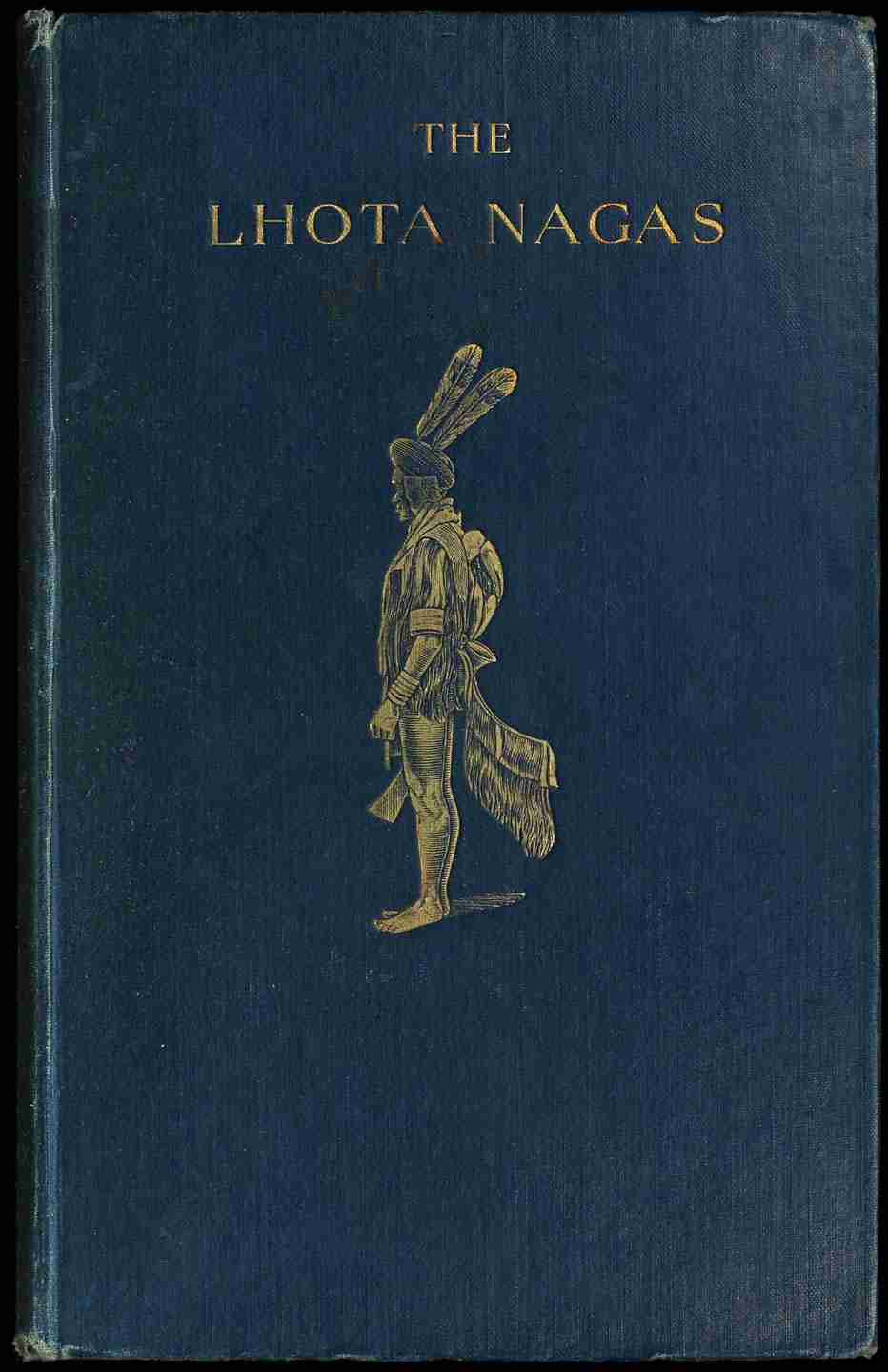
When I made over charge of the Mokokchung Subdivision of the Naga Hills to Mr. Mills in November 1917, I urged him to study in particular the Lhota tribe with a view to writing a monograph on them. The reason why I selected the Lhotas was that it appeared to me that they, more than any other tribe in the Naga Hills District, were beginning to lose their distinctive features and were in danger of early denationalization between the upper and the nether mill-stones of Christianity, as taught by the American Baptist Mission, and Hinduism, as practised by the Nepali settler or by the Assamese who are the neighbours of the Lhota on the plains side. It was already a very rare thing to see a Lhota in ceremonial dress, and it was a, to me, unpleasantly common thing to have Lhota ceremonies and the officials of the Lhota hierarchy spoken of in spurious terms of Hinduism. The Baptist Mission, with its headquarters at “Impur” in the Ao country, was at work in the north, and one of the first disputes I had to deal with when I went to Mokokchung in 1913 was a complaint from the village of Pangti that a missionary had been initiating his converts by immersing them in the village spring, to which the village elders objected both on sanitary and religious (or, if you will, superstitious) grounds on the lines of Tennyson’s Churchwarden when he complained of the Baptists—
“They wesh’d their sins i’ my pond, an’ I doubts they poison’d the cow.”
The Hindu tendency was most noticeable in the south, and it was at Kohima that one of my Lhota interpreters, by [xii]his office the natural guardian and exponent of tribal customs, came to me to ask for leave, as his village was about to perform the “Lakshmi puja,” by which he meant the Rangsikam.
I am happy in thinking that not only have Mr. Mills’ efforts in investigating the customs and beliefs of the Lhota tribe succeeded in putting them on record while there was yet time, but they have also incidentally contributed not a little to revivify their observance. For there is no question but that they had begun to lose their hold. The prohibition of head-hunting alone was bound to act in that direction. In one small and decaying village (Lisio) Mr. Mills found that there had been no Puthi, and therefore presumably no communal ceremonies, for twenty years. There is now a Puthi and the ceremonial life of the village has acquired fresh vigour, and I have some hopes that the decay that had set in may be thereby staved off, for it cannot contribute to healthy life to be deprived entirely of all public and communal ceremonies, and to revive them may do good. Again, at Okotso, when I first knew it, about a third of the village had turned Christian: the remainder, having observed that no immediate disaster seemed to follow the forsaking of ancestral customs, but being in no wise desirous to take up the burden of the angel of the Church of Impur, who looks with disapproval on tobacco and the national dress and insists on total prohibition as regards fermented liquor, had lapsed into a spiritual limbo in which they observed no religious customs at all. The “morungs” had fallen into decay and the young men would not take the trouble to renew them; the village ceremonies, if observed at all, were observed in the most perfunctory manner, and the community as a whole took neither part nor interest, giving at best an apathetic conformity not perhaps entirely unparalleled in modern Britain. How far it is due to Mr. Mills’ interest in Lhota custom I do not know, but the non-Christian population of Okotso has certainly reformed, rebuilt its “morungs,” and re-instituted the Oyantsoa in its fullness.
The hill country in which the Lhota lives is a very [xiii]beautiful one indeed. I am sitting on the banks of the Dayang as I write, and if the Abana and Pharpar, the rivers of Damascus, are one whit as lovely as the Dayang and the Chebi, then verily had Naaman the right of it. But the Lhota himself has not been fortunate in his critics. From Lieut. Bigge, the first to make his acquaintance, in 1841, down to even Col. Woods, whose acquaintance with the Lhota ended in 1912, he has been stigmatized as surly, sullen, or sulky. Yet it is most undeserved. Absurdly sensitive to ridicule, and, partly no doubt for that reason, extremely reticent, he is not near so readily moved to hilarity as his neighbour the Sema, or even the Angami. Dour he is, and very canny; hardly could even Mr. Punch’s Aberdonian better him in the virtue (or is it “vice”?) of thrift. If the Sema among Naga tribes be likened to the Irishman (I think the comparison is Mr. Mills’ originally), then the Lhota is the Scot among them. He is far from inhospitable and I think he has been misjudged, because his critics, while having more than the casual acquaintance which is predisposed to be attracted by the manly hill man, and having discovered that he is not so delightful a person as one would like to believe, have never penetrated to the real intimacy which would have ended in a very mutual esteem. Possibly too they may have judged him in some cases from the point of view from which La Fontaine writes of his cat,
“Cet animal est très méchant;
Quand on l’attaque il se défend!”
and it must be admitted that the Naga, suspicious of strangers as he is, is a little apt to defend himself before he has been attacked at all. However that may be, I can state without reserve that Mr. Mills, during the three and a half years in which he has had to decide their disputes and deal with the Lhotas in various ways, has fully gained their confidence—without it this book could not have been written—and has doubtless found them, as I have myself, very pleasant companions, particularly on the river or in the jungle or after dangerous game.
The Lhota occupies to some extent a midway position [xiv]among Naga tribes between the cultures typical of the north and of the south, and is particularly interesting as retaining very clear indications of the composite origin of the tribe. The main body are perhaps of the same origin as the Sangtams, and hence from the south, perhaps from the Chindwin valley in Burma to which the Southern Sangtams trace their origin. Thence there are traditions of Lhota sojourners at Kezakenoma (Keshur) and at Kohima in the present Angami country, and at Themoketsa and the extinct village of the hero Pembvo in the Rengma country. Indeed it is now no longer quite clear whether this chief was a Lhota or a Rengma, and whether he protected against the pursuing Angamis the rearguard of the Lhotas crossing the Dayang northwards, or that of the Rengmas migrating westwards to the Mikir Hills, but the Lhotas of the neighbouring villages jealously preserve his memory and all that touches him, while Chankerhomo, who is associated with him in legend and who slew in one day thirty Angami warriors of Phekekrima, only to be eventually captured and tortured to death by them, was undoubtedly a Lhota and the site of his execution is still shown. Indubitably the Lhotas have been subject to the influence of the same cultures as the Angamis, and it may be seen in their practice of the erection of monoliths on the performance of certain ceremonies, in the practice of burial and in the manner of taking omens, which both Angami and Lhota do by dropping chips cut from a reed instead of by the fire-stick like other Naga tribes. Like that of the Angamis too is the Lhota social organization into three phratries, though it is conceivable that in both tribes the use of the word apfu for mother, as in one phratry, is of southern or eastern origin and the use of azo or oyo by the others is of the western immigration from the plains of Assam, where ayo is still the Assamese word for ‘mother.’ The Rengmas, however, very like the Lhotas in many respects, and having a similar dual system, seem to have migrated generally from east to west, the bulk of the Rengma tribe having moved from the Naga Hills westward across the Dhansiri valley to the Mikir Hills only a hundred years ago. [xv]
Alongside the traces of immigration from the south we have the clear tradition among the Lhotas of an origin from the Himalayas and the plains of Assam, and the use of the cross-bow, the tradition of the tsonak and the strictly preserved yanthang “daos” alike connect the Lhota with the north bank of the Brahmaputra, or with the Singphos.
Thirdly, we have stories of fighting stones and of girls that came out of oranges or bamboo shoots1 almost identical in form with stories told by the Khasis,2 and traceable perhaps to Bodo or Mon-Khmêr survivals. The Lhotas too are prolific in families descended from “jungle men” caught and kept as slaves.
In the remaining pages of the Introduction I have endeavoured to give a general idea of the composition of the Naga tribes with a view to a better appreciation of the position among them of the Lhota tribe itself, and of the significance of many points in Mr. Mills’ account of that tribe.
It is generally assumed in a vague sort of way that those tribes which are spoken of as Nagas have something in common with each other which distinguishes them from the many other tribes found in Assam and entitles them to be regarded as a racial unit in themselves. It has been asserted that the Naga tribes are marked by a very strong affection for their village sites in contradistinction to the Kukis and perhaps other tribes like the Garos and Hill Kacharis.3 But this love of old sites, even if true of most Naga tribes, is certainly not true of all and really exists in a very marked degree rather among the Angamis than among Nagas as such, while even the Angamis can recount their genealogies back to a time when their tribe was still in that migratory stage still characteristic, more or less, of [xvi]Kukis, Garos and the Sema Nagas, and probably not far distant in the past of the Kacha Naga tribes. The truth is that if not impossible it is exceedingly difficult to propound any test by which a Naga tribe can be distinguished from other Assam and Burma tribes which are not Nagas.4
The expression “Naga”5 is, however, useful as an arbitrary term to denote the tribes living in certain parts of the Assam hills, which may be roughly defined as bounded by the Hukong valley in the north-east, the plains of the Brahmaputra valley to the north-west, of Cachar to the south-west and of the Chindwin to the east. In the south the Manipur valley roughly marks the point of contact between the “Naga” tribes and the very much more closely interrelated group of Kuki tribes—Thado, Lushei, Chin, etc.
This area now occupied by the Naga tribes is known to have been subject to at least three great immigrations of races from different directions. Thus there is known to have been (1) immigration from the direction of Tibet and Nepal;6 the Singphos are known to have come from this direction, and it is probable that the Akas, Mishmis7 and other tribes of the north bank of the Brahmaputra did also, while the Bodo tribes—Garos, Mikirs and Kacharis—[xvii]certainly came from the same direction. There has also been (2) immigration from the direction of Southern China across the valley of the Irawadi,8 of which movement the Tai races—Shans, Ahoms, Tamans, etc.—formed part. And at the same time there has been (3) immigration from the south which has barely stopped now, for the Lushei-Kuki migration was still progressing northwards until 1918, when it was only just prevented from spreading into the unexplored area north of the Ti-Ho (Nantaleik) river by driving the newly-formed colonies on the north bank back across the river at the end of the rains in 1918 before the operations against the Kukis opened in the following cold weather. By that time the Kukis in their attempt to migrate north had already attacked Makware.
The Lushei, Thado and other Kuki tribes are perhaps themselves another branch of the northern immigration,9 but if so they must have turned north again, for they drove up from the south in front of them both the old Kukis—possibly non-Kuki tribes10 already subjected to Kuki influence—and that very different race which became the predominating factor in the Angami Naga tribe, and which has probably entered to a lesser degree into the composition of a number of its neighbours. The Angamis or the ancestors of a section of what is now the Angami tribe were undoubtedly located far to the south of the present Naga Hills.
In addition to these immigrants we have (4) still another element in the Kol-Mon-Annam occupation which almost certainly extended over part of the area now inhabited by Naga tribes.11 [xviii]
There is evidence to support a contention that traces of all these race movements are to be found in the culture and composition of the tribes now occupying the Naga Hills and known collectively as “Nagas.”
First of all we have the Naga traditions of origin themselves, indicating, as one would expect to find, almost all the points of the compass. From Tamlu northwards there are the various Konyak tribes, whose traditions of origin at least include an ascription of their origin to the hills to the north and to migration from the plains in the west or north-west as well, though others, perhaps with Singpho affinities, reached their present country from the north-east, while one or two Konyak villages, indistinguishable from the Konyaks generally in culture, claim an origin from the country to the south of them at present occupied by Aos. Like the Konyaks, the Aos claim a part origin from the plains to the north-west, though the bulk of the tribe claims an autochthonous source at Chongliemdi.12 The Khoirao again, or some of them, for the Khoirao Naga villages are hardly uniform enough to be described as forming a tribe, claim a western origin from the plains of Assam, and this in particular is the case with Ngari and perhaps one or two neighbouring villages, who have been less affected by Memi Angami culture than the others, and of whose connection with the Semas there can be no doubt. The Semas trace their origin to the south, and may certainly be connected through the two villages called “Swemi” (one of which is still Sema though surrounded by Angamis) with the Khoiraos of Ngari and so with a western origin;13 while a connection [xix]is to be traced between the Sema with this western origin, and the Kacharis, Garos, Lynngams and Bhois. The same probably applies to the Kezami-Angamis, though the infusion of Angami blood and culture has swamped the Sema characteristics. It is to be noted that Grierson classes the Khoirao language as Naga-Bodo, and Kacharis, while allowing Nagas, or at any rate Kacha Nagas, to eat and sleep in the porches of their houses, refuse to allow Kukis inside them at all, giving as their reason for this that the Kacharis and the Nagas were originally descended from two brothers, whereas the Kuki is an alien entirely. Possibly there may also be some connection between certain elements of these Bodo tribes and the Manö and Southern Brè tribes of the Karens in Burma. At the same time the Semas have absorbed numerous villages of Sangtams who trace their origin to the south or south-east, the Southern Sangtams putting it ultimately in Burma.
From the north-east or east, as has been mentioned, some of the Konyaks derive their origin. The Kalyo-Kengyu tribe, with perhaps Singpho affinities, trace their origin to the north in so far as can be ascertained from the two or three villages on the Ti-Ho river with which we are at present in contact. The Sangtam claim to a south-eastern origin has been mentioned. The Northern Sangtams merely point to the south, but the Southern Sangtams derive their origin from the Chindwin valley to the south-east of them, and have a vague tradition that their tribe has become separated into two parts of which one went apparently west, while remnants are believed to exist in the Chindwin valley still. It seems likely that the part of the tribe that went westwards may be represented to-day in the Lhota tribe, who have a similar if more definite tradition about the splitting of their tribe into two parts, of which one stayed behind at the time of migration. The Tamans, again, located round Tamanthi in the Chindwin valley were at one time located in the hills to the east of them and returned to the valley, leaving some of their fellow-tribesmen behind in the hills, and might possibly be [xx]connected with those same Southern Sangtams. In any case they trace their origin to China across the Irawadi valley, and the descendants of part of their tribe are presumably still somewhere represented among the Naga tribes.
Of tribes with a southern origin, the Angami is the principal if not the only representative, though here again we find strong indications of a mixed origin. To their present site they came from the south-east, having come into their present country from the Tangkhul country to the south of them, but unmistakable traces of terraced cultivation have been found far to the south in the Lushai Hills, and it is possible that the immigrants, who brought in this method of agriculture so peculiarly the attribute of the Angami and, though in a less perfect form, of their Tangkhul neighbours, came from further south still. While a spirit in the sky is regarded by Angamis as the ancestress of them all, one legend of their origin, a legend apparently of the Kepepfüma division of the tribe, derives the Memi Angamis from the daughter of a local god at Mekrima (Maikel) impregnated by a cloud that came out of the south, and while a common Angami tradition points to a village, in the Tangkhul country, known to them as Piwhema, as the remotest place known to have been a fount of the Angami tribe, a commoner legend still traces the two divisions of the Angami tribe, the Kepezoma and the Kepepfüma, to two brothers who emerged from the bowels of the earth at Mekrima just as the ancestors of the Ao tribe emerged at “Six-Stones” on Chongliemdi Hill. In Kohima itself, however, the biggest Angami village, one important clan, the Puchatsuma, came from the west like the Khoiraos, while another clan claims to have come from the south-west where the present country of the Kacha Nagas is. Part of the Chang tribe again claims an origin from the south, though part admits to a common origin with the Aos from Chongliemdi, perhaps due to the Ao blood incorporated with the Changs in the course of their extension westwards. They would seem also to have Konyak, Kachin, or Singpho affinities in some respects. But the Changs have a very [xxi]clear and definite tradition of a complete change in their language, habits, dress and everything else having taken place a few generations ago.
Their immediate origin several tribes place in the south. The Rengmas thus migrated from the Kezami-Angami country, throwing out the Naked Rengmas eastwards to Melomi, and ultimately sending the bigger portion of the tribe westwards to the Mikir Hills. Tangkhuls point to the south or to the east, Lhotas to the south with Rengmas and Angamis, though there is one element in the Lhota country that points very definitely to the snows of the Himalayas seen far to the north-west as the home of their ancestors. All Naga tribes also have legends of clans descended from indigenous women out of caves or wild men caught in the jungle and tamed, whose descendants are now no longer distinguishable except by this tradition from the rest of the tribe. Thus there are many Lhota clans usually described as descended from jungle “spirits”14 captured by men of their tribe; the Phoms have a clan descended from a woman with a child who emerged from a cave when they occupied the country; the Angamis of Kohima have a clan descended from a far-distant ancestor “of the wood-cutting generation” who was caught in the forest and tamed by one of the earliest Angami occupants of Kohima village.
Again, just as each tribe, almost, contains traditions which cannot be reconciled with a homogeneous origin, so marked differences of type and physique are everywhere traceable, not only as between different tribes, where they are in some cases most pronounced, but as between individuals in the same tribe. Of course within the tribe each village tends to form its own type, and after some experience of any tribe it is possible to locate with some accuracy the villages of persons met by the shape and appearance of their faces, but beyond this the physical types are different. The Angami is tall and well proportioned, the Tengima and Memi sub-tribes in particular having straight eyes and a [xxii]nose sometimes even aquiline,15 but in any case features that are far more regular than the very Mongolian-looking Sema, whose tendency is most decidedly towards a flat nose and oblique eyes, combined with a figure shorter and squatter than the Angamis. Another distinguishing mark of the Angami among Naga tribes is the huge calves he has on his legs. This is so marked that it finds a place in Sema folk-lore and is a proverbial characteristic of the Angami. Yet one can see no reason in external circumstances for the development of the calf of the Angami leg any more than that of any other Naga leg. The Angami’s mountains are no steeper than any other Naga’s, nor does he descend and ascend them any oftener. The Kukis have a similar calf development, but it is not combined as a rule with the tall stature of the Angami. The Chang has the stature but not the breadth nor the calf, being rather curiously built on very marked lines of his own—tall, lean and narrow, though muscular enough.
In colour again there is much variation, and though the height at which a village is situated seems most definitely to affect the complexion of its occupants, it will by no means entirely account for the variation in colour to be found both between different tribes and again between different individuals within the tribes. Generally speaking three distinct colour types may be traced, corresponding more or less to the “straight-haired light brown race,” the “wavy-haired brown race” and the “crisp-haired dark-brown race” into which Ratzel divides the races of Indonesia.16 Generally speaking the predominating colour among the Naga tribes is red. A really dark skin, such as that of the Central Indian or Santali coolies who work on tea gardens, is spoken of with contempt and aversion, and the Changs go so far as to say that the only decent colour for a man is red, disliking white less than black, it is true, but nevertheless regarding it as decidedly unpleasing and classifying Nagas only as Mat-mei, “real men,” of whom a red skin is an attribute. With this red or light brown [xxiii]skin wavy hair is usual. In villages at a high altitude the skin is often so fair that the pink of the blood can be seen in the cheeks and a blush is easily detected. On the other hand, a fair and sallow complexion and straight hair are often to be seen in all tribes and at all altitudes, being apparently independent of climate and little affected by it, but much more prevalent among Manipuris and Kukis, in Ao Nagas and in the Konyak tribes, than among other tribes. It is less common in Lhotas and hardly to be seen at all among the Angamis, who are a very pronounced red, while among the Semas, who are a darker brown than the Angamis though in some high villages very fair (when washed), the sallow type is rarer than among Lhotas. Everywhere and in all these tribes alike the children are apt to have rusty-coloured reddish hair, which usually turns black17 as they get older.
Much rarer than the sallow type is that associated with a decidedly dark brown skin and fuzzy hair suggesting the Negrito type.18 Individuals of this type may be met with occasionally in all tribes, but they are nowhere very common, though perhaps least rare among Phoms, Konyaks and Aos. The fuzzy hair is always a subject for derision, being regarded as most unsightly (straight hair is by all looked on as the most becoming), and more so perhaps even than a dark skin.
Cephalic indices, as far as data are available, suggest a connection between Aos, Manipuris and the Ahoms and perhaps some other sub-Himalayan tribes of Assam, which might be due to a common infusion of Tai blood.
One very marked line of cleavage between Naga tribes and their neighbours is to be found in the methods of disposal of the dead. Burning is practised in this hill area only by the Hinduized Manipuris to the south and by the [xxiv]Singphos (or some of them)19 to the north-east, but the other methods practised in disposing of the dead may be roughly classified as burial, exposure and, for want of a better term, desiccation.
Burial is practised by the Angami, Sema, Rengma, Lhota, Sangtam, Yachungr, Tangkhul and Kacha Nagas and by the Kukis, but the burial is not in all cases absolute. Thus the Kukis, in the case of rich or famous men, sometimes detach the head after decomposition and place it in a cleft or hole in the side of a cliff where it could be got at only with great difficulty. This practice is very rare, but certainly exists or existed among some or all clans of Thado Kukis. Again, the Yachungr and some of the Southern Sangtams bury their dead inside the house under the bed, and do not hesitate to disturb the grave and dig out the bones of its last occupant to make room for a new one. The Tangkhuls and some, at any rate, of the Naked Rengmas build small houses over their graves with little ladders up to them for the ghost to inhabit, while the Lhotas, Sangtams and Semas build thatched roofs over their graves, which perhaps suggests that they formerly exposed the bodies in the miniature houses, since Aos who have turned Christian, though they bury the body, build a thatched roof over the grave like that which would be put over a body exposed on a platform if they followed the custom of their unconverted fellow-tribesmen. North of the tribes mentioned exposure on a platform is the rule, the body being in some cases smoked first. Among Aos rich men are smoke-dried in their houses for two months. The platform usually consists of a bamboo shelf thatched over like a house and covered in at the ends, though some Konyaks use a wooden dug-out like a boat to contain the body, reminding one of the Lhota practice of using a dug-out boat-shaped coffin. In the case, however, of the tribes that practise exposure, the practice here again may be described as not absolute. [xxv]The Phoms and some Konyaks separate the head from the body, wrenching it off after decomposition, the latter in some cases collecting the skulls in pots in a separate place, and in others putting them out on stone platforms, while the Phoms put them in niches in the cliffs. Both Phoms and some Konyaks bring the heads of deceased men into their houses for a time (the Phoms for a year) and treat them while there with some ceremony.20
The Chang tribe occupies a midway position both geographically and culturally between the burying tribes and the exposing tribes, and practises both customs indiscriminately and in accordance with the fancy of the individual, though exposure is believed to be the newer form of treating the dead.21
To the north-east or east of the tribes already mentioned in this connection the Kalyo-Kengyu tribe, or part of that tribe, practises what I can only describe as “desiccation” of the dead. This custom of theirs has probably not before been placed on record. The dead are smoked in their houses for two months over a fire and then the smoke-dried body is retained as it is in a wooden coffin like a lidless box with a mat or bit of thatch to cover it, either inside the house or just outside the mat-work walling and immediately under the eaves at the point nearest to the hearth. Here it is kept until the next sowing, when on an appointed day all those who have died since last year’s sowing are brought out, their withered bodies broken up, and their bones picked out and counted by a number of persons of both sexes, not fewer than a fixed minimum, slightly less for a woman than a man. The bones of each corpse are placed in an earthen pot and put at the back of the family granary, where they remain untouched till they dissolve into dust or [xxvi]till the granary rots and falls on them, while the broken bits of body together with the coffin and its appurtenances are thrown away into the jungle, preferably over a steep place near the edge of the village.
When the implements and weapons of the tribes in the Naga Hills area are examined, it appears that while some are of marked northern form, others are clearly connected with Indonesian forms such as those in use among the Igorot of the Philippines, while other patterns seem to show a very clear connection with the Kol-Mon-Annam types. One type of northern origin is represented by the Kabui dancing dao and by a similar dao intended for real use. The latter is very rare, but I have one specimen picked up in a remote Kacha Naga village. It is precisely similar to a dao figured on page 190 of Major Butler’s Sketch of Assam (Smith, Elder & Co., 1847) as a Bhutanese weapon. One kind of obsolete Lhota yanthang is also a northern type.22 Both these kinds of Naga daos are remarkable for the way in which the iron of the tang, which fastens the blade to the wooden handle, projects beyond the hilt into a sharp point, the object of which seems to be to facilitate sticking the dao in the ground by one’s side when sitting. The Garos use a similar type (and seem to be a tribe of northern origin), but so do the Khasis, and it is possible that the type may have some other source. In any case it is very marked and distinct from any kind of dao in general use among Naga tribes. Of weapons suggesting relationship with Philippine Island tribes there is a type of spear with ornamental barbs curving outwards from the shaft, of which some Angami patterns closely resemble the Igorot spear, while I have an old Kacha Naga spear with a head identical in shape with Igorot spear-heads. This barbed type seems not to occur north of the Angami country, though the Aos may at one time have used miniature imitations of such spears for money, and I have an obsolete Konyak spear-head with straight barbs closely [xxvii]resembling the straight-barbed Igorot type. Again, there is a rare Tangkhul dao with a long projection behind resembling a common type of Igorot dao, while the stone hammer used by all Naga smiths could scarcely be distinguished from a similar hammer from the Philippines.23
With the Kol-Mon-Annam family the shouldered hoe (see Gurdon, The Khasis, p. 12) has been intimately associated. The Yachungr Naga hoe (thoù), obtained from a tribe hitherto almost entirely isolated from regular intercourse with its neighbours, is almost identical with the miniature Khasi hoe used for hoeing sweet potatoes, and is very similar to the Mikir hoe of the same type, while Mr. Peal found shouldered hoes of a squarer type among some of the Konyak Nagas. Both these types closely resemble some Battak hoes from Sumatra in the Leipzig Museum of Ethnology (Ratzel, op. cit. I. p. 429) and are much the same shape as the Easter Island obsidian tanged blades.24
The question of the use of the bow is also to be considered. While the cross-bow is the weapon of Singphos, and has been adopted from them apparently by the Naga tribes of the north-east in direct or indirect communication with them, it is not in general use among the Naga tribes.25 The simple bow is also not the natural weapon of a Naga. While the Kukis, before they acquired guns, relied, like the Khasis, principally on the bow, the Naga rarely uses it. The weapon was known to the Semas and is still employed by children as a toy, and the Angamis have learnt the use of the pellet-bow, possibly from the Kukis, and use it for [xxviii]killing small birds, but as a serious weapon the bow is not used by either tribe; and though the Semas believe that their ancestors used it, the Angamis appear never to have done so, a fact which is interesting in view of the apparent absence or scarcity of the bow in Borneo, Sumatra, and the Celebes (vide Ratzel’s Map, op. cit., Vol. I. p. 145).
Another point to be noticed is the use of the war drum. Sangtams, or rather Northern Sangtams, Aos and the Konyak tribes, and probably the Yachungr and Chang tribes in some degree, make enormous drums out of a whole tree hollowed through a narrow slit in the top, and the ends carved usually with a mithan head and hornbill tail respectively. This drum, when beaten by the young men who can line up to twenty or thirty or more on each side with drumsticks like dumb-bells, will send a challenge, a pæan of victory, or a dirge for the dead, for miles. But the Southern Nagas—Lhotas, Semas, South Sangtams, Rengmas, Angamis etc.—do not make these drums at all.26
Diversity of origin on the part of the Naga tribes is suggested again by a number of miscellaneous considerations. Most Nagas for instance reap with a reaping-hook, but the Sema, like the Manö and Southern Brè (Karens) of Burma,27 and like the Garos,28 use their hand only, stripping the grain from the stalk straight into the basket, a most painful method if it does save threshing.
The use of terraced cultivation forms a very marked point of distinction between Naga tribes. The various branches of the Angami tribe practise it in its most elaborate form, followed closely by some Khoirao and Kacha Naga (Nzemi) villages very strongly dominated by Angami culture, and followed in a quite appreciably less elaborate way by Naked Rengmas, Tangkhuls and Maram Nagas. Other tribes do not use irrigated terraces at all, if we except the Semas, among whom it has been deliberately introduced by Government, and who still only practise this form of cultivation in [xxix]a very small degree, save in a few villages who have adopted Angami culture in general. At the same time, even among the Angamis, the Chakroma villages have no terraces. It may be noted that the Angami system of terraces produces physical features exactly like the system of the Bontoc Igorot in the Philippines.
Among the tribes that jhum there is a marked difference in the method of sowing rice. The more southern tribes—Angami, Lhota, Rengma, Sema—sow carefully, digging a little hollow and dropping in the grain. The Aos and Changs, on the other hand, sow anyhow, just chucking the seed down broadcast, and so do the Konyaks, in so far as they sow rice at all. The amazing fact about the latter is that taro, not rice, is the staple crop, and in spite of excellent land for rice cultivation, they only sow very little. They prefer taro (Colocasia antiquorum).29
Closely associated with terraced cultivation is the custom of erecting megalithic monuments. The erectors of the most numerous monoliths are the tribes practising terraced cultivation, though Kacha Nagas (Lyengmei) and Kabuis put up little dolmens and occasional monoliths, while the Lhotas and Rengmas proper, also having no terraced cultivation, yet erect monoliths and alignments of monoliths in all their villages. North and east of the two latter tribes, however, few Nagas seem to put up either, and the place of stones in ceremonial is apparently taken by wooden and Y-shaped posts, used by Semas, Sangtams, Kalyo-Kengyu, Chang and possibly other tribes, while the Ao uses round-topped posts or posts with a divided top.30 The Garos, it may be noticed, also use the Y-shaped post, while the similarity of both the Y-shaped Sema post and the round-topped Ao post respectively to the bifurcated and round-topped stones left by the old Kachari kings at Dimapur is too close for mere coincidence. It should be added that Mr. Mills tells us that Lhotas occasionally substitute a Y-shaped post for a [xxx]stone in their ceremonials where no stones suitable for erection can be found, while there is a kindred of a clan in Yekhum village which migrated from further east and which habitually erects posts, as it is not allowed to erect stones.31 In building, again, while the Angamis, Tangkhuls, Semas and other tribes south of them build on the ground, the Aos and other tribes to the north build on a bamboo platform or “machan.” The Lhota method is a sort of compromise, as when he builds on a “machan” he covers the floor with earth.
Even more than their customs the social constitution of several Naga tribes suggests a diversity of origin. In more than one tribe we find traces of a dual division crossed by a triple one, and indicating a division into three elements, either as three separate groups or as two primary groups, one of which is again split making three. In addition to these there are odd clans descended from “men caught in the jungle” and others, as already mentioned. Thus among the Aos are found two linguistic groups, Chongli and Mongsen, existing side by side in the same villages though retaining frequently their different languages, and always, among the women, their differences of tattoo and of hairdressing. The word for “mother” in the one of these two Ao languages is ocha (Chongli), in the other avu (Mongsen). Across this dual division of the Aos we get a triple division into three clans, Pongen, Langkam and Chami, which are nominally at any rate exogamous and which run through both the linguistic groups, though the nomenclature varies, and though the whole exogamous system is somewhat complicated by subdivision and by adoption from one group to [xxxi]another. Of the three groups mentioned Pongen is generally recognized as doyen, while the social position of Chami is usually regarded as decidedly inferior to the other two. Again, among the Southern Konyak villages at any rate there seem to be two linguistic and tattoo groups (one of which tattoos the face of the warrior and the other the chest only) called Thendu and Thenkoh, while there are said to be also three social divisions running through both groups, of which the first, called Ang,32 corresponds to the Ao “Pongen” and provides hereditary chiefs in those villages which possess them, though in the case of the Konyak chief the heir to the chieftainship has to be of Ang blood by both parents, contrary to the prevailing exogamous system. In the Rengma tribe we have again two linguistic groups, as among the Aos, existing side by side sometimes in the same village, and called Inseni-Kotsenu and Tseminyu respectively. Of these two groups the latter apparently are again divided into two parts distinguished by the use of different terms for “mother” (avyo and apfsü).33 The Angamis are again divided into two groups commonly known as Thevoma and Thekronoma (or Cheroma) or Solhima, using the words azo and apfu respectively for “mother,” although the former term only is in use among the numerous Chakrima sub-tribe of Angamis, though the distinction between the Thekronoma, called by them Solhima, and the Thevoma is recognized. These two divisions of the Angamis may be spoken of as Pezoma and Pepfüma respectively according to the terms they use for “mother.” The Pezoma group appears to be also subdivided into Sachema and Thevoma, two divisions of more or less equal status, though the former is actually the senior. Nowadays, however, the Sachema group, which is very small indeed numerically as compared with Thevoma, has been [xxxii]virtually lost sight of, and “Thevoma” includes the whole of the Pezoma. It should be added that according to tradition the Thekrono division was originally the elder, but was cheated of its birthright by the first ancestor of the Thevo division. The word Solhima, used ordinarily by a large part of the Angami tribe for the Thekronoma division, means “alien” or “stranger.”34 In the Memi group of the Angamis we have again a third division, called Cherhechima in some villages, which is regarded as socially inferior to such an extent that the other Memi will not intermarry with it. This division seems also to be regarded as the source of some unlucky emanation which has an evil influence on any who fall under it, though the neighbouring Tengima, Dzunokehena and Kezami Angamis have no objection at all to intermarrying with the Cherhechima. The Lhotas seem to be divided like the Angami into two phratries using oyo for “mother,” with a third using opfu, and, as in the case of the Angamis, the use of the distinct terms does not extend throughout the whole tribe, but seems to be dying out.35 [xxxiii]
Turning to the polity of the village, different tribes have very different customs. Among the Semas a system of hereditary chiefs exists, each chief having an almost feudal position as lord of the manor of his village, a system which seems to have obtained among the Kacharis, as the remnants of it are still perceptible among the remote Kachari villages of the south-west of the Naga Hills. The Changs have a system of chiefs very like that of the Semas, and both may be compared in this respect to the Thado Kukis, though among the latter the system is more elaborately developed. The Konyaks too have hereditary chiefs in the Thendu section of the tribe, though not in the Thenkoh division, but among the Konyaks the priestly side of the chieftainship seems more prominent than among the other Naga tribes with chiefs.36 On the other hand, the Ao and Tangkhul villages are governed by bodies of elders representing the principal kindreds in the village, while the Angami, Rengma and Lhota and apparently Sangtam villages are run on lines of democracy, a democracy so extreme in the case of the Angami that, in view of his peculiar independence of character, it is difficult to comprehend how his villages held together at all before they were subject to the British Government. The Angami has, however, hereditary priests, office descending in the line of the first founder of the village in question.
In the eschatology of the different tribes there is, on the one hand, a belief apparently universally accepted which regards the souls of the dead as inhabiting butterflies or other insects after death. Concurrently with this we find a belief in an existence in a future world in which the shades of the dead go on living just as they did in this world. Most tribes place this world underground and indicate [xxxiv]some mountain37—usually one formed as it were in a succession of rises vaguely suggesting steps from a distance—as the path by which this under-world is approached. The Angamis, however, believe that the souls of the dead who have conformed to the best (Angami) standard of life spend their future existence in the sky in the company of the ancestress or creatrix of all life. Other tribes, though believing in the existence of a sky world, or at any rate of sky spirits, do not locate the home of the dead there. Along with these a third belief is also to be found, as among the Semas, according to which the spirits of the good dead go to the East and those of the unsatisfactory dead to the West.
Among other points worth notice are the fact that lycanthropy practised by the Semas and other tribes to the north of the Angami country is never resorted to by Angamis, though they know of the existence in the belief and even believe in the common origin of the tiger and man.38 Similarly the Khasis seem to have heard the theory from the Garos, but do not claim ever to practise it themselves.
In folk-lore some stories seem common to nearly all tribes and to the Kacharis too, while the story of the girl who comes out of an orange and the stories of fighting stones and the belief that the human race is becoming gradually smaller and will so continue till it is small enough to climb up a chili plant, are common both to Nagas and to the Khasis.39 [xxxv]On the other hand, there seem to be certain groups of stories which are not common to the Angamis in the south and to the Changs and their neighbours in the north.
Linguistic considerations are notoriously dangerous in their application to ethnography, but even here it is impossible to pass over without remark the very decided cleavage between the vocabularies and numerals of the languages classified by Sir George Grierson as Western and Central Naga, and the vocabularies and numerals of the Konyaks and Changs to the north-east, though the Aos have words characteristic of both groups. This north-eastern group seems in fact to approach quite appreciably nearer to the Kuki and Bodo languages of the southern tribes than to the languages of the Central Naga tribes in between the two.
Emphasis has sometimes been laid upon an affection for old sites, or an aversion to migration, as characteristic of Nagas, distinguishing them from the migratory Kuki, who, like the Hill Kachari, moves his village by preference, whereas the Naga only moves his under compulsion. This, however, as has already been pointed out, cannot by any means be applied to all tribes at present designated Naga.
A perhaps trivial point is the belief that neglect of washing causes illness, and the concomitant habit of personal cleanliness which is so much more marked in the Angami tribe than among its neighbours to the north, though the Lhota seems to have it in a greater degree than the Rengma, Sema, or Ao; the Angami dwelling, on the other hand, is frequently filthy as compared to those of the other tribes mentioned, principally owing to his habit of keeping his cattle in the front room.
Such are the more outstanding facts of the case, and it is almost superfluous to state the more obvious conclusions to be drawn from them, that no Naga tribe is of pure blood, but the area which they inhabit has been the scene of a series of immigrations from north-east, north-west and south, and that the different stocks introduced in this way [xxxvi]have entered into their composition.40 Indeed, in view of the struggles that have taken place for the fertile plains of Burma to the east and India to the west, it is inevitable that some elements of the races worsted in these struggles should have been pushed up into the hills. In particular the line of the Dikhu and the Ti-Ho rivers would seem to mark more or less the point of contact between movements southward from the north and northward from the south, roughly marking as it does, except indeed for the Ao tribe, the line south of which dead are always buried,41 and also the marked cleavage between the languages of the Western Nagas and of the North-eastern Nagas, the latter bearing more resemblance perhaps to those of the Kukis in the south than to those of their immediate neighbours. The immigration of Singpho elements from the north and Tai elements from the east are absolutely clear.
The other conclusions I would suggest are some of them frankly speculative, but are perhaps not at variance with current views on the history of Indonesia in general. I should deduce a stage at which some race of Kol-Mon-Annam or Mon-Khmêr affinities was in occupation, leaving traces of that occupation in certain implements, weapons and perhaps in some folk-tales. I should describe the immigration from the north-west or west as definitely Bodo in character, and ascribe to this origin the erection of Y-shaped posts42 and the practice of reaping by hand, and the indications of the more recent existence of a matrilineal system. Beyond this, whatever the Singphos and Kacharis may be, an admixture of Tai blood from the east is beyond dispute. It is the nature of the immigration from the south which is most intriguing. No one who has had much to [xxxvii]do with the Angamis could fail to perceive the difference of disposition and character between them and the other Naga tribes, though it is very difficult to state in what it actually consists, and it is certainly not so great as to constitute an entire distinction between the Angamis and the rest of their fellow-Nagas. My own view is that the Angamis contain a very much greater proportion of blood bequeathed by a mixed body of immigrants from the south (some of them at any rate nearly related either in blood or culture or both to the Igorot of the Philippine Islands), who already consisted perhaps of two races of which the weaker and less numerous was a race of settled habits and developed civilization, while the stronger was of more barbarous but warlike type.43 The inhabitants they found already in occupation would be either absorbed into one of the two divisions of this mixed tribe or make a third class where they survived in sufficient numbers, and to this source I would ascribe the social institutions of the Western Naga tribes. I would ascribe the elaborate system of terracing to the more civilized of the southern immigrants, and to these southern immigrants in general the use of elaborate stone-work in building and the erection of stone monoliths and perhaps the practice of burying their dead—the Angamis even bury the heads of their enemies—and also perhaps the use of ultra-democratic institutions. If these deductions be correct I should regard the Semas as having received chiefs from the more barbarous of the southerners, and in the Lhotas I should see the result of a more intimate contact of both southern elements with the tribe at present represented by the Sangtams, who seem to have at one time occupied much more of the Naga Hills than they do now that a large and still increasing proportion of their tribe has been absorbed by the more virile Sema. The Khoiraos, Kacha Nagas, Tangkhuls and Marami have all been much more strongly influenced by the culture [xxxviii]of these southern immigrants, than have the other tribes north of the Angami country, and have accepted their culture to varying degrees.
To return to the Lhotas, this tribe is divided into three phratries—the Tompyaktserre, the Izumontserre and the Mipongsandre, meaning respectively “Forehead-clearing men,”44 “Scattered men” and “Fire-smoke-conquering men.” The expression “Forehead-clearing men” I do not attempt to explain,45 but the phratry corresponds to the Angami Kepepfüma, which I have taken to represent the weaker but more civilized section of the southern immigrants. Among the Lhotas it is to be noticed that this phratry is the superior. Among the Angamis it is the inferior, with the tradition, however, that it was once the elder. Its women are addressed by their children as Apfü (Angami) or Apfu (Lhota). The Lhotas, however, have no terraced cultivation. The clans of the “Scattered-men” phratry use oyo for mother in some cases, opfu in others, but oyo predominating on the whole; but the name suggests a tribe of very different habits to the community-loving Naga, and would better suit a people like the Kacharis or Garos, living in small moving settlements and perpetually shifting from one place to another, a few houses at a time. In the “Fire-smoke-conquering-men,” so called from the villages they burnt in warfare, one may see the influence of the more barbarous element of the (? southern) invaders, and the bulk of this phratry uses ayo for “mother” like the Kepezoma of the Angamis.46
I therefore conclude that in most if not all Naga tribes traces are to be found of the Mon-Khmêr and Bodo races, the Tai race, and a fourth race of southern origin akin to [xxxix]some of the inhabitants of the Philippines and Borneo and other parts of Indonesia.
For the history of this corner of the earth is yet to be written, and, if ever it is done, it is to studies such as Mr. Mills has given us that future investigators will turn, for the tribes themselves will have vanished past all recognition. Has not the very mingetung of Phiro hidden its grim fruit in the folds of its own bark, lest the village forget that the days of the head-hunter are gone? Education and Litigation, doubtful apparitions, are usurping his place; the old beliefs wither under the shrivelling touch of Civilization, and the voice of the Missionary is heard in the land. The axe is laid to the root of Igdrasil; the Jötunn are climbing into Asgerd.
J. H. H.
Khoro,
April, 1921.
[xli]
2 See Gurdon, The Khasis, p. 168, “The Story of U Loh Ryndi.” The version of this story with which I met in the Khasi Hills in 1911 substituted an orange for the fish. Another Khasi story derives the origin of the Jyrwa Nongsiet clan from a girl who came out of a bamboo shoot, but I cannot find it mentioned by Col. Gurdon, and it may be a Lynngam or Synteng clan. ↑
3 So, too, in the Khasi Hills the Khasis live in permanent villages, while Bhois and Lynngams are more or less migratory (Gurdon, op. cit., p. 34). ↑
4 In prescribing rewards for the learning of languages the Local Government has assumed a similarity of language between the tribes classed as “Naga” by giving a reduced reward for passing a test in a second Naga language after one has already been learnt, but in point of fact the linguistic test breaks down as badly as the migration test, for Sir George Grierson, in classifying the languages of the area, groups some Nagas with Kacharis, Mikirs and others in the Naga-Bodo group, some with Thado and other Kuki languages in the Naga-Kuki group, and others in different groups, and it would really be far more logical to base the examinations on these groups than on the false supposition based on the present use of the term “Naga,” which is really as inaccurate as the reputed divisions of the Hill tribes of Burma into “Tame Chins, Wild Chins and Ka-chins.” ↑
5 Nāga is a corruption of the Assamese Năga (pronounced “Nŏga”), probably meaning “a mountaineer” from Sanskrit Năg, a “mountain” or “inaccessible place.” ↑
7 Mr. T. P. M. O’Callaghan tells me that the Linghi sept of Mishmis came from the south; so, too, the Sotia clan of the Miri tribe is reported by Mr. R. C. R. Cumming as claiming a southern origin, though in both cases the rest of the tribe came from the north. The Apar Tanengs are also believed to have come from the south, and they, unlike their neighbours, practise the cultivation of irrigated rice with a certain amount of terracing. ↑
9 The origin of the Kuki-Lushai-Chin family is a matter of some doubt (see Gazetteer of Upper Burma and the Shan States, I. i. p. 451 sq.), but apparently they came originally from the north and are probably related to the Burmese and to the Singpho-Kachin group. ↑
11 Census of India, 1911. Part I. ch. ix. The Bodo race seems to have been widely intermingled with the Munda and Mon-Khmêr families, and though the latter is spoken of as an Austric race, it seems clear enough that the Bodos came into Assam from the north, and it may perhaps be questioned whether the Munda Mon-Khmêr races are not equally Turanian in origin, an origin which has also been claimed for the Polynesians and Melanesians in the Pacific. Vide Dr. George Brown, Melanesians and Polynesians, pp. 16, 17, 369, 370 (Macmillan, 1910). ↑
12 There are in Yacham and also in some Konyak villages to the east apparently definite traditions of an immigration from a place called Maibang of a clan which still preserves as heirlooms certain peculiar types of spiked armlets of bronze. “Maibang” is a Kachari place name = “Much paddy.” Besides the Kachari capital of that name in the North Cachar Hills, there is said to have been a Maibang village on the outer Lhota range. ↑
13 But even the Semas themselves contain traces of a mixed origin; there are clans in Vekohomi who admittedly came from the country to the south-east across the Tizu. These it is true claim that they were an offshoot originally of the genuine Sema, but there is little, not even probability, to support their claim. All the northern and eastern Semas contain large and demonstrable admixtures of Ao and Sangtam blood, and it is likely that the original blood of the Sema invaders is excessively diluted and that not even all the chiefly families are of true Sema descent. ↑
14 In Assamese the Lhotas speak of them as “spirits,” deo, but in their own language as “jungle-men,” orakyon. ↑
17 The black of a Naga’s or Kuki’s hair is normally a dull brownish- or reddish-black rather than the blue-black of some races. Children with reddish, or even yellowish, hair are particularly common in Phom villages. ↑
18 In the Konyak villages of Shiong and Tang there appears to be a whole clan whose hair is of this type. The member of the clan whom I saw had very curly hair which stuck out fuzzily in all directions. ↑
19 The Maru. Gazetteer of Upper Burma and the Shan States, I. i. p. 386. The Lolos also burn their dead (ibid. p. 615) and put their ashes in clefts in the rock. In the Assam hills north of the Brahmaputra the Taroan and Miju Mishmis first bury, then exhume and burn their dead. The Khasi and Garo tribes also burn. ↑
20 In Yacham, a composite Ao-Phom village, each family has its own place of exposure where the bodies of its dead are exposed on a platform under thatch in the Ao manner, but smoked out of doors in situ, after which the heads are ultimately wrenched off and the bodies in their wrappings added to the heap in the clan burial tree. ↑
21 It possibly dates only from the comparatively recent absorption by the Chang tribe of certain Ao villages east of the Dikhu. Colonel A. E. Woods, touring among the Changs in 1900, states definitely that they bury their dead. ↑
22 Mr. Mills tells me that all these obsolete Lhota yanthang seem to be connected with the partial migration from the north as opposed to the general immigration from the south. ↑
23 The story of people created with their noses upside-down so that they could not go out in the rain, because it ran off their foreheads down their nostrils, is not the sort of story that one would expect to occur spontaneously to different peoples in different parts of the world. It is reported from the Bila-an in the Philippines (Frazer, Folk-lore in the Old Testament, Vol. I. p. 16) and is found in the Naga Hills among both Changs and Semas. The Angamis have the story in which the Semas and Changs introduce the incident, but do not, apparently, relate this particular tradition. ↑
24 Stone hoes (or axes), both roughly shouldered and with very carefully squared shoulders, are to be found in various parts of the Naga Hills, and are regarded as thunderbolts. ↑
25 The Lhotas are to some extent an exception. They know and use the cross-bow, though their Ao, Rengma, Angami and even Sema neighbours do not. North of the Brahmaputra both the long-bow and cross-bow are in use, and one tribe uses the former for shooting fish, special long arrows being used for that purpose. ↑
29 The Konyaks also have the custom of blackening their teeth like the Brè Karens of Burma (U. B. and S. S. Gazetteer, I. i. p. 534). ↑
30 Phoms and some Konyaks put up a single erect stone with flat stones round it as a place for the exposure of enemy heads in front of the clan “morung.” ↑
31 The reason given is that this kindred has never been allowed to carry the village oha (sacred stones) at the time of migration, or indeed to touch them at any time.
The Khawlthang sept of the Haokip clan of Thado Kukis also uses Y-shaped posts (vide Col. Shakespear’s Lushei-Kuki Clans, p. 65).
The Angami uses them only in the case of the Lisü “genna” performed in Kohima villages only. At this “genna” the spirit of fertility is caused to perambulate the village, symbolized by a Y-shaped and by a phallic post, the former pulled by chaste boys, the latter carried by a man, and representing respectively the female and male organs of generation. It has been already pointed out that the Puchatsuma clan in Kohima has a western origin. ↑
32 In some cases the Ang has really no political influence at all, and seems to be kept as a sort of “fetish” rather than anything else. Thus Kamahu in 1920, having never had an Ang, obtained one from Wanching, “because it was good to have one.” ↑
33 They also have different words for “father,” aphu and apyu, like the Tengima Angamis apo and apvu. The present census shows a practical equality of those Rengmas using apfsü for “mother” with the total of the Tseminyu using avyo and the Inseni-Kotsenu using azao. ↑
34 The word is distinct in meaning from Teprima, a foreigner from the plains, including Assamese, Bengalis, Europeans, etc. The proportion, as worked out, during the 1921 census, of Kepezoma to Kepepfüma in the Angami tribe shows a nearly three to one majority of the former among the Tengima and Dzunokehena groups, and a nearly two to one majority in the Chakrima group of the “Thevoma” over “Solhima.” This excludes the Kezami and Mĕmi sub-tribes, of which the former seems to be wholly Pezoma and the latter wholly Pepfüma, at any rate as far as the terms used are concerned, though the division may exist in fact but have disappeared from the terms of address as in the case of the Chakrima. The bulk of the Memi group are in the Manipur state and were therefore outside the scope of the inquiry. The total figures actually returned from those groups in which the inquiry was made were—
| Kepezoma. | Kepepfüma. | |
| Tengima | 13,516 | 4,748 |
| Chakrima | 11,051 | 5,771 |
| Kezami | 4,670 | — |
| Memi | — | 1,099 |
| Total for those Angamis in the Naga Hills District | 29,237 | 11,618 |
The census for the Ao tribe showed the Chongli Aos 16,276 souls against 5,809 Mongsen Aos. ↑
35 The Sema clan of Chishilimi was perhaps originally organized on a dual basis, the clan being descended from two brothers, Chesha and Chishi, and the descendants of one brother being regarded as superior. Here again there was a dispute as to which was the superior division, the descendants of Chishi eventually establishing their claim by chicanery, though Chesha was the elder brother. ↑
36 Mr. Mills has pointed out to me that the Ung clan among the Changs is priestly, and that there must be one of this clan in every Chang village. As the Ung clan is usually spoken of with contempt it doubtless represents a conquered population acquainted with the gods of the soil, at any rate in the Chang country. Chang Ung probably = Konyak Ang in any case, and the Changs seem to be largely invaders in Phom, Ao or Konyak territory. ↑
37 So, too, the Garo dead point to the peak Chikmang (Playfair, The Garos, p. 103). North of the river Brahmaputra the hill tribes are said to have no beliefs as to transmigration into insects. ↑
38 Mr. Mills has pointed out to me that the Lhota word for a familiar spirit is Sonyo, and the familiar usually takes a leopard form, while the Ao word Chonyu means “leopard” pure and simple. The Chang word Saonyu = “tiger.”
The Thado Kukis, while not practising lycanthropy, believe very strongly in vampires and are extremely afraid of offending persons with the reputation of being such. The vampire sends his soul to suck the vitality of other men’s souls during sleep. The Meitheis also believe in vampires, but I have not met the belief in any Naga tribe. ↑
39 The Semas have a story of a stone at Champimi which fought with Tukahu (Japvo) mountain. The Aos have several stones that fight or fought, and the Lhota stories are given by Mr. Mills. It may be noticed that the Aos, like the Khasis, have the practice of divining by breaking eggs and observing the fall of the fragments of shell. ↑
40 McCulloch, quoted by Hodson (The Meitheis, pp. 68, 73), records a Manipuri tradition of the composition of the Manipuri people from different clans that came from the south, the east and the north-west. Mr. Hodson also suggests that the existing population was already located as at present in A.D. 1431 (op. cit. p. 74 note). ↑
42 These Y-shaped posts are also used by the Wa of Burma to commemorate the slaughter of buffaloes (Gazetteer of Upper Burma and the Shan States, I. i. p. 505), whose village defences (ibid. p. 504) must closely resemble those of the Angamis and Kacha Nagas. ↑
43 It might, of course, be possible to contend that this fusion took place as a result of two consecutive occupations of the Naga Hills themselves, but in my opinion all the evidence points to the fusion having taken place at any rate before the Angamis occupied their present sites. The barbarian element may have been Tai in origin. ↑
44 I am indebted to Mr. J. P. Mills for this explanation of the names of the Lhota phratries, which reached me long after I had formed the conclusions which they appear in some degree to strengthen. ↑