
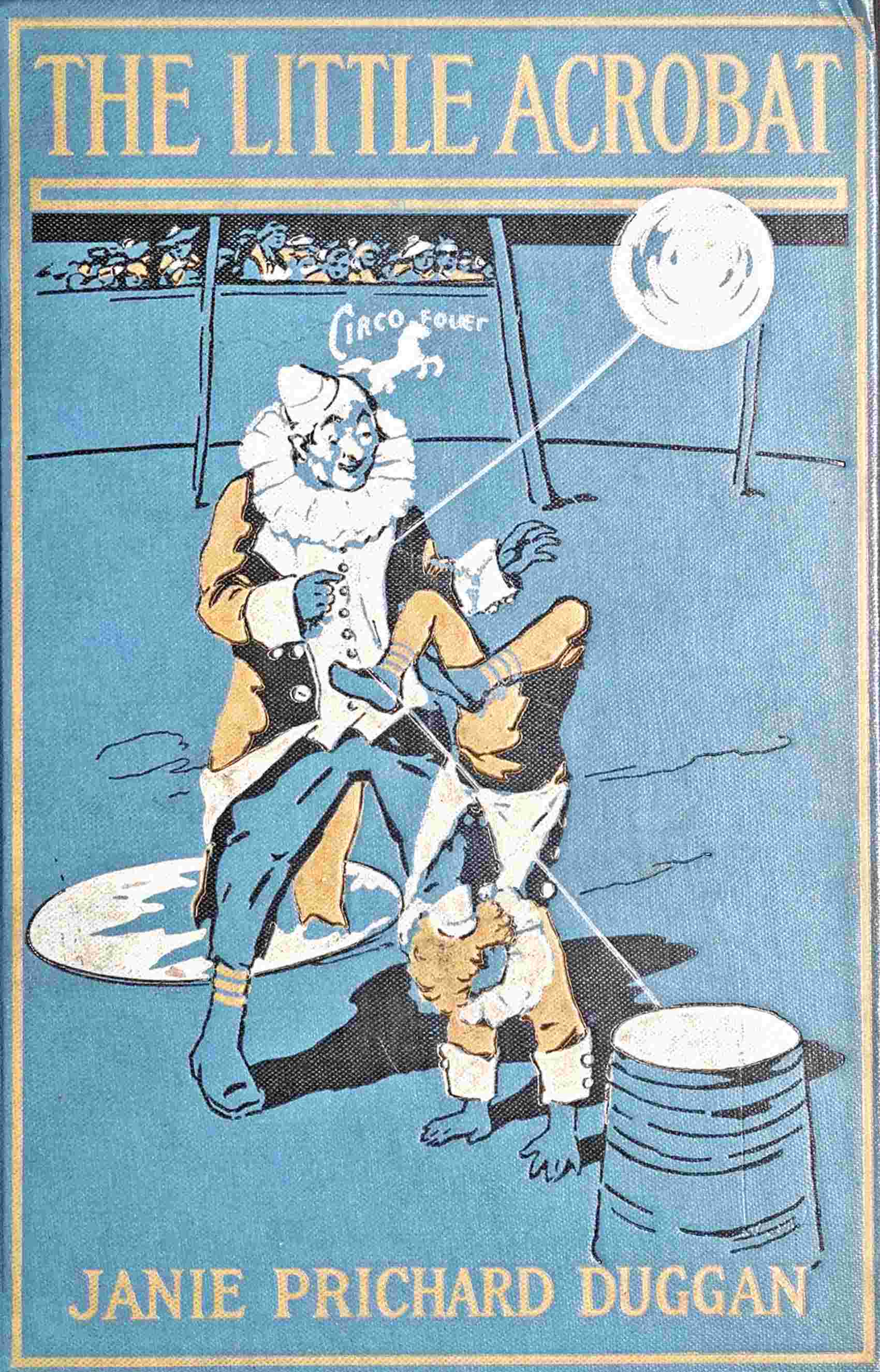
CHAPTER IV
THE FESTIVAL OF SAN LORENZO
Suddenly the small black figure of Natale appeared, kneeling at the horse’s side, although no one had seen him slip in. With his hands clasped in distress, he lifted his voice in such a disconsolate wail that even Betty started and wondered if the horse could be really dying.
The solemn march was still sounding in the tent, and before speaking the clown gave the spectators full time to take in the tragic tableau. Then he exclaimed briskly:
“What are you crying about, boy?”
“Because our horse is dead.”
“Do you think he is quite dead, Natale?”
“Oh, quite,” wailed the child.
“Get up and feel his pulse, boy. If there is any pulse he is not dead.”
Natale went nearer and took one of the great hoofs of the horse fearlessly into his little hands, and felt for the “pulse.”
“Well, what do you find?” asked the clown impatiently.
“There isn’t any pulse,” the little fellow wailed again, laying down the big black hoof with the utmost tenderness.
“Too bad,” quoth the clown, taking his seat deliberately on the prostrate horse, which lay as motionless as if certainly dead. Then, all in a moment, Natale’s manner changed, and he skipped around in front of Giovanni, remarking glibly that the gentleman had found a beautiful sofa to sit upon.
“And I shall have a kiss to prove that the beast is not dead,” exclaimed the clown, chirruping a little and smacking his lips. And the great brown head of the horse lifted itself from the dust, the graceful neck turned, and Il Duca actually kissed his master, then scrambled hastily to his feet as if glad for that job to be over, while Giovanni hurried him out of the ring.
“Such silly jokes!” commented Mrs. Bishop, otherwise Aunty, as the performance ended, and the rollicking crowd poured out of the tent. “Think of my having spent two whole hours listening to them, and all on pins too, for fear that poor, ill-used child should be forced to do some other unchristian thing.”
“But, Aunty, what did you expect when you came?” Betty asked impatiently. “Surely the little show was not bad, and there was actually nothing but what was quite decent in every way.”
“I call it ‘bad’ to beat and starve children into turning themselves into monkeys.”
“If people would not go to see the ‘monkeys’ it would be stopped,” was Betty’s retort.
“Well, I am sure I only went to oblige Mrs. Choky,” Aunty said in an injured tone. “She said she thought we ought to encourage the poor people on their first night. But it will be my last night there, as I shall very soon inform her. ‘Encourage’ them to martyrize that poor child, indeed!”
From the first performance in Cutigliano, therefore, Natale’s trouble began, although he did not know it. Contented and tired he lay down in his corner of the brown house on wheels and went to sleep, while the men let down the big yellow canvas of the large tent and furled it about the pole. But first, he ate his supper of macaroni with the rest of the actors, gathered in the small tent behind. Midnight suppers were the rule on the nights when there were performances, as it would have been at the risk of upsetting their stomachs in more ways than one to eat food beforehand.
Later, the stars kept quiet watch above the little encampment, where even Pietro slept well, with the open house door admitting the fresh air of the mountains.
For ten days the yellow “mushroom” spread over the grass of the field, although very much in the way of the fine city gentlemen, playing at ball with bats like tambourines. The noisy music at night and the cheering in the tent may have kept the invalids in the nearest boarding-houses awake and nervous, and the people at large may have grown tired of the performances which they soon learned by heart, but no one felt inclined to hustle the poor people away, and no one grumbled except Mrs. Bishop.
There was something pathetic about the clown in his everyday dress, his gayety and paint all gone and the deep lines of his face showing too plainly in the garish light of day, as he pottered about the tent, adjusting ropes, and keeping off the village boys who would throw stones upon the old canvas, or play hide and seek among the curtains. It gave one a queer feeling, also, to fancy the drooping figure of Pietro, with his pure little face like alabaster, a member of the “wicked circus troop.”
This child was perhaps twelve years old, and he had the face of an angel. He had begun to lose his daily feverishness after a week in the mountains, and was soon able to limp, and later to run feebly about the field with the village boys.