
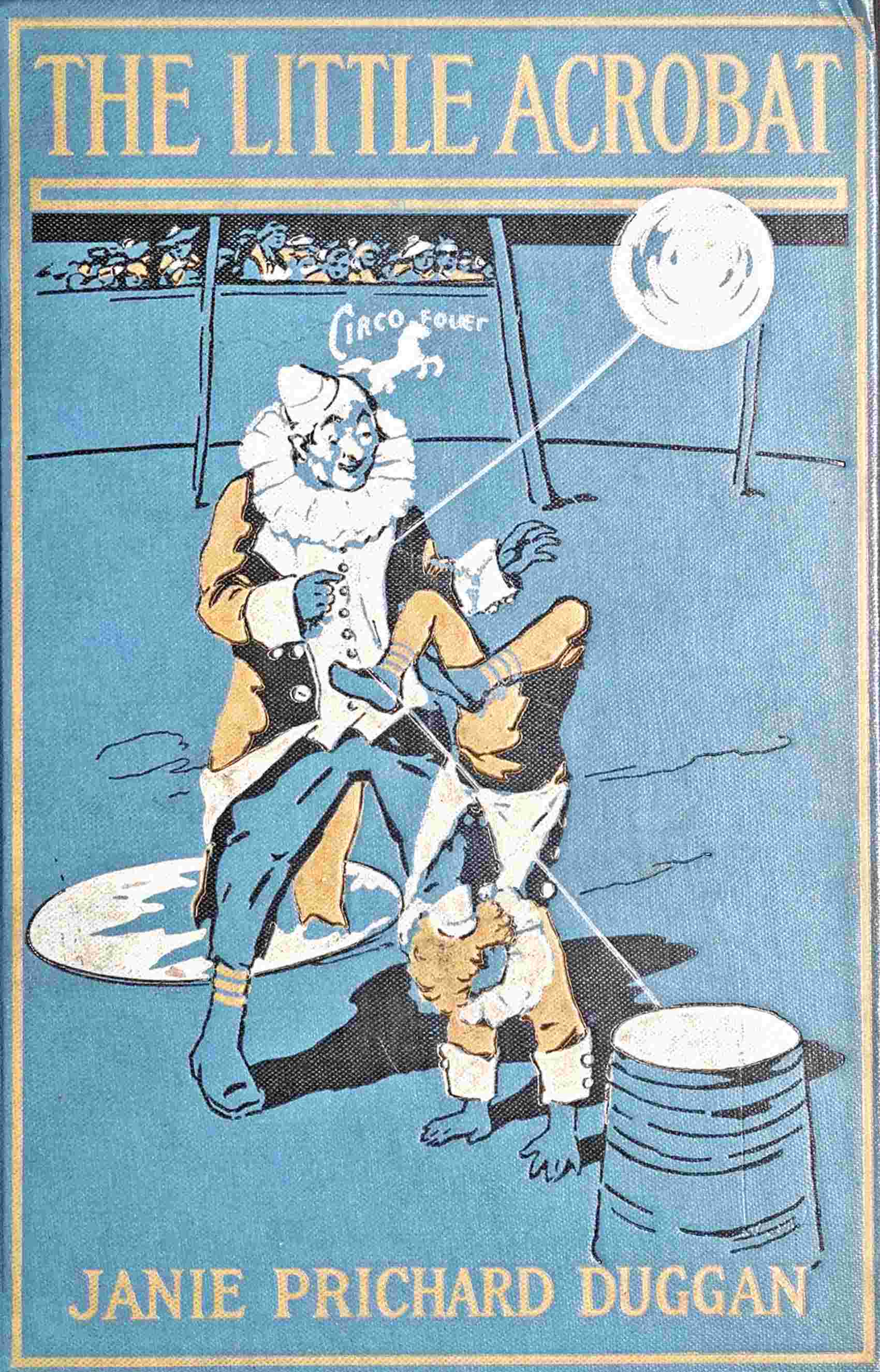
CHAPTER VII
THE CAGED BIRD OF THE FIELDS
There is a short, crooked street in Cutigliano, which leads back of the church and out upon the promenade of San Vito. This street is confined on either hand by stone houses and stone walls of gardens, and paved with large square stones. Here and there a gateway gives a peep at lapping hills across the river. The massive church tower rises directly from a narrow turn in this street, and when the bells ring down from the arches in the top of this tower, the stony street reverberates with a deafening clamor.
By the time the priest and Natale reached the foot of the church tower, the boy was weeping bitterly but quietly. His one free arm hid as much of his face as possible, and his feet in the clumsy new shoes stumbled so helplessly that Luigi had some trouble in preventing his falling.
As they had passed through the town, where everybody sat at their doors or lounged in the piazza, all had recognized the little acrobat, as Natale realized only too well. Many accosted him in wonder, and some would even have stopped him to inquire into his misfortune in being left behind by his family. But the young priest motioned such away with authority, silencing with a gesture of his long finger the too curious. Others had already learned how it had come about that Natale was to spend a year with Sora Grazia, and her son the priest, and these contented themselves with shrugs and smiles for the boy’s companion, as who should say: “We wish you well of your bargain, Signor priest.”
The great hands of the church clock pointed to ten minutes of four, as the bell boomed the hour of six. No one, however, ever thought of consulting the huge figures painted on the stone face of the tower clock, for those long iron hands had not stirred for many a day.
The deep sound of the bell struck so suddenly upon Natale’s ears that he started, and dropping his arm from before his eyes, gazed dully ahead. It was not often that he had strayed farther than this corner of the old church, and he had never followed the San Vito promenade to the end. Most of the town was left behind now; whither could this man be taking him?
A row of houses with numbers in blue figures on one side of the lintels extended back of the church, but before none of these did Luigi pause. Next came a low, broken wall, and then a house, detached from its neighbors and with a long, sloping roof, covered with slabs of slate. This house had no door opening on the street, and in the blank front wall there was only a very small window at one corner close under the eaves. Over a door in the end of the house nearest the church there was a small crucifix in carved stone set into the wall, but this door was seemingly closed and unused.
The priest led Natale a few steps farther, to the other end of the house, and then they left the street and entered a long balcony leading to a wide-open door.
A middle-aged woman sat just inside this doorway at the foot of a flight of stairs leading up into the room under the roof. She wore a kerchief of red and black cotton over her head and tied in a knot under her chin, and her eyes were bent upon a coarse piece of mending occupying her work-worn hands.