
This Book is Dedicated
To My Granddaughter
OZMA BAUM
To My Readers
Some of my youthful readers are developing wonderful imaginations. This pleases me. Imagination has brought mankind through the Dark Ages to its present state of civilization. Imagination led Columbus to discover America. Imagination led Franklin to discover electricity. Imagination has given us the steam engine, the telephone, the talking-machine and the automobile, for these things had to be dreamed of before they became realities. So I believe that dreams—day dreams, you know, with your eyes wide open and your brain-machinery whizzing—are likely to lead to the betterment of the world. The imaginative child will become the imaginative man or woman most apt to create, to invent, and therefore to foster civilization. A prominent educator tells me that fairy tales are of untold value in developing imagination in the young. I believe it.
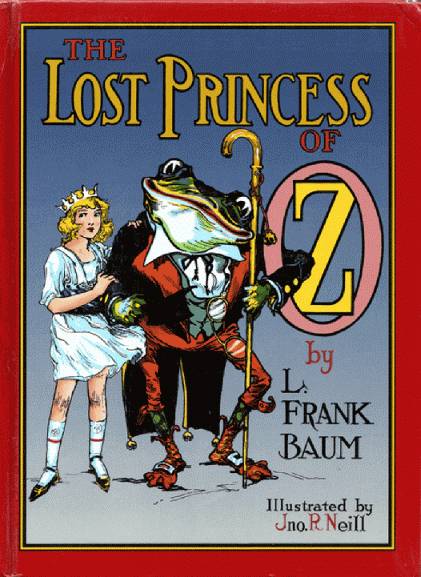
Among the letters I receive from children are many containing suggestions of “what to write about in the next Oz Book.” Some of the ideas advanced are mighty interesting, while others are too extravagant to be seriously considered—even in a fairy tale. Yet I like them all, and I must admit that the main idea in “The Lost Princess of Oz” was suggested to me by a sweet little girl of eleven who called to see me and to talk about the Land of Oz. Said she: “I s’pose if Ozma ever got lost, or stolen, ev’rybody in Oz would be dreadful sorry.”
That was all, but quite enough foundation to build this present story on. If you happen to like the story, give credit to my little friend’s clever hint.
L. Frank Baum
Royal Historian of Oz